
Why a Texas Acquisition Is a Different Wastewater Problem Than Indiana
When Samsung SDI acquires a Texas battery plant, wastewater compliance is triggered across three layers: EPA pretreatment (40 CFR 403) for organics, fluoride, and metals discharged to any POTW; a TCEQ TPDES industrial wastewater permit transfer under 30 TAC §305 for any direct discharge; and site-specific overlays such as TCEQ §213 Edwards Aquifer protection if the plant sits over the recharge zone. Because the 2026 ESS pivot means higher electrolyte-handling volumes and NMP/DMC solvent recovery, the acquirer must baseline legacy influent, model new lithium and fluoride loadings, and design or upgrade an MBR + DAF + RO train before start-up.
The August 11, 2026 announcement confirming Samsung SDI's 49.99% buyout of GM's stake in the New Carlisle, Indiana SynergyCells JV — part of a $3.5B investment originally targeting 1,600 jobs and 2027 prismatic production — is a deal-news event, not a Texas compliance event. The strategic logic behind it, however, is highly portable: slower-than-expected EV demand is pushing every Korean cell maker toward ESS, and LG Energy Solution's 2026 target of 60 GWh global ESS capacity (50+ GWh in North America) plus Ford's repurposing of BlueOval SK Kentucky to 5 MWh industrial ESS racks confirms that ESS retrofits are the dominant 2026 M&A pattern (per WardsAuto, 2026-08). A Texas plant on that pivot would not just inherit an Indiana-style compliance stack — it would inherit three additional layers: TCEQ §307.6 numeric effluent limits for TDS/chloride/sulfate that are far tighter than federal pretreatment baselines; the Edwards Aquifer rules (30 TAC §213) covering roughly 8,000 square miles where lithium-bearing effluent plus fluoride plus NMP solvent residue is a high-priority contaminant class; and a TPDES permit-transfer clock that starts on the closing date. The rest of this article walks that stack in order: permit triggers, parameter ceilings, a treatment train that mirrors the EV→ESS chemistry shift, and a 90-day due-diligence action list the deal team can hand to outside counsel.
Wastewater Permit Triggers When a Texas Plant Changes Ownership
Texas does not auto-transfer an industrial wastewater permit on a stock or asset deal; the new owner must affirmatively request the transfer or risk permit lapse within 30 days of closing. The triggers below are the ones an EHS manager should have on the pre-close checklist.
- TPDES transfer under 30 TAC §305.64: File Form TCEQ-00204 ("Core Data Form") and the permit-specific transfer request within 30 days of the ownership change. The permit is not assignable without written agency approval, and a missed filing can convert the prior owner's permit into an unpermitted discharge liability for the new entity.
- EPA pretreatment — 40 CFR Part 403: If the plant discharges to a POTW (Trinity River Authority, San Antonio Water System, Houston Water, North Texas Municipal Water District), the new owner must submit a Significant Industrial User (SIU) application to the Control Authority and re-issue any categorical industrial user (CIU) baseline monitoring reports covering battery-industry NAICS codes 335911 and 335912.
- Texas Risk Reduction Program (TRRP, 30 TAC §350): A Phase I ESA — and likely a Phase II ESA — is required if legacy contamination is suspected from the prior owner. Wastewater from prior operations creates successor liability that flows with the asset; closing reps and indemnities must carve out known and unknown legacy releases separately from operational compliance.
- Edwards Aquifer Authority (EAA) review: Sites over the recharge or contributing zone (San Antonio, Austin, parts of the Hill Country, Comal, Hays, Medina, Uvalde, and portions of eight other counties) must re-certify the Water Pollution Control Plan (WPCP) within 30 days of any operational change that alters the impervious cover, chemical storage, or process wastewater character.
- Stormwater — TXR150000: The multi-sector general permit (TXR150000) must be re-issued in the new owner's name. Lithium-handling areas are typically classified under Sector M (metal mining) or Sector N (scrap recycling) depending on whether black mass or cathode scrap is the feedstock; both sectors require benchmark monitoring for total suspended solids, total recoverable petroleum hydrocarbons, and pH.
- TCEQ Tier 1 antidegradation review (30 TAC §307.5): If the ESS retrofit increases pollutant loading to a stream already designated Outstanding State Resource Water (OSRW) or High Aquatic Life Use, a Tier 1 antidegradation demonstration is required before any permit modification.
| Permit / Filing | Authority | Trigger | Filing Window |
|---|---|---|---|
| TPDES permit transfer (Form TCEQ-00204) | TCEQ / EPA | Ownership change (asset or stock) | Within 30 days of close (30 TAC §305.64) |
| SIU / CIU pretreatment application | Local Control Authority | Discharge to a POTW | Before first discharge under new ownership (40 CFR 403.8) |
| Phase I / II ESA | TCEQ TRRP | Suspected legacy contamination | Pre-close; TRRP at 30 TAC §350 |
| Edwards Aquifer WPCP re-certification | TCEQ / EAA | Site over recharge/contributing zone | Within 30 days of operational change (30 TAC §213) |
| TXR150000 stormwater re-issuance | TCEQ | Change in operator of regulated site | Before next qualifying stormwater discharge |
| Tier 1 antidegradation review | TCEQ | Increased loading to OSRW / High AUL | Pre-construction; 30 TAC §307.5 |
Texas-Specific Effluent Limits Every Battery Plant Must Meet
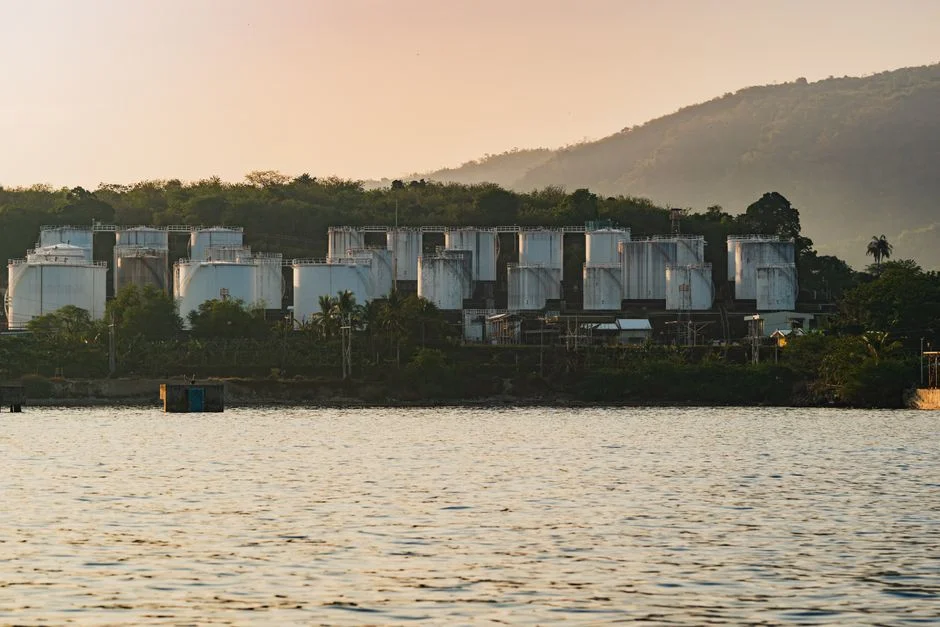
Most out-of-state engineers default to EPA's 40 CFR 401/403 baselines when sizing a battery-plant ETP. In Texas, the binding numbers are TCEQ's §307.6 Table 1 stream-segment limits, and on TDS, chloride, sulfate, and fluoride they are markedly tighter than federal pretreatment standards. Equipment selection — particularly RO membrane cut-off, RO concentrate disposal options, and whether zero-liquid-discharge (ZLD) is required — is driven by these numbers, not by the EPA defaults.
- TDS 1,000–2,000 mg/L, chloride ≤400 mg/L, sulfate ≤400 mg/L (TCEQ §307.6 Table 1, segment-dependent): Lithium-bearing streams from electrolyte salt dissolution and from RO concentrate easily exceed these ceilings; conventional biological treatment does not remove TDS, so RO or ion exchange is mandatory.
- Fluoride 4 mg/L chronic / 16 mg/L acute (TCEQ §307.6, most surface-water segments): LiPF₆ hydrolysis generates HF; LiFSI-based electrolytes raise F⁻ further. This single parameter drives the decision to specify thin-film composite RO over cellulose acetate, and often forces a calcium chloride precipitation stage upstream of the RO.
- Lithium — site-specific limit under TCEQ §307.6(b): Lithium is not on the federal priority pollutant list, but TCEQ routinely imposes site-specific numeric limits (typically 1–10 mg/L) when WET testing shows toxicity or when downstream potable-water intakes are present.
- BOD 100–400 mg/L / COD 200–800 mg/L from binder residue and PVDF/CMC coating wash water (HydropureWater field data, 2026): high variability and the presence of NMP/DMC residuals means biological treatment must be sized on peak COD, not average.
- TSS ≤30 mg/L monthly average for direct discharge under most TCEQ permits: NMP solvent streams carry PVDF fines that defeat conventional settling, so DAF or MBR filtration is required rather than a primary clarifier.
- Temperature ≤95°F (35°C) for most Texas surface-water segments (TCEQ §307.6): RO concentrate and evaporator condensate can exceed this; cooling or equalization ponds are often needed before discharge.
| Parameter | TCEQ §307.6 Limit (typical segment) | Battery-plant source | Treatment implication |
|---|---|---|---|
| TDS | 1,000–2,000 mg/L | Electrolyte salts, RO concentrate | RO mandatory; ion exchange if ZLD not feasible |
| Chloride | ≤400 mg/L | LiPF₆ hydrolysis, process wash | RO rejection target >95% |
| Sulfate | ≤400 mg/L | LiFSI electrolyte breakdown | RO + possible barium precipitation |
| Fluoride | 4 mg/L chronic / 16 mg/L acute | LiPF₆ → HF on moisture exposure | CaCl₂ precipitation + RO polishing |
| Lithium (site-specific) | 1–10 mg/L (typical) | Electrolyte handling, black-mass leach | RO; possible lithium recovery as sellable Li₂CO₃ |
| BOD / COD | BOD 30 mg/L monthly avg; COD site-specific | PVDF/CMC binder wash, NMP/DMC | Equalization + biological (MBR) required |
| TSS | ≤30 mg/L monthly avg | PVDF fines, electrode coating residue | DAF upstream of biological, or MBR |
| Temperature | ≤95°F (35°C) | RO concentrate, evaporator condensate | Cooling tower or equalization pond |
Recommended Treatment Train for an EV→ESS Retrofitted Texas Plant
The EV→ESS pivot is not a cosmetic change in product mix. ESS prismatic cells carry larger electrolyte volumes per MWh, run different NMP/DMC ratios in the electrode coating line, and discharge higher fluoride and lithium loadings per liter of process wastewater. A Texas plant that was permitted to make EV prismatic cells will not meet ESS effluent chemistry on its existing train, and the upgrade path below reflects the field data we have on comparable retrofits.
- Front-end screening. A GX-series rotary mechanical bar screen with 2–3 mm opening is the right first barrier for rag, PVDF-fines, and broken electrode-coating substrate. Without it, downstream MBR membranes foul in weeks rather than months. Typical flow envelope is 50–500 m³/h per unit, which covers most single-line ESS plants.
- Equalization and pH adjustment. Battery process wastewater swings between pH 4 and 10 depending on which cleaning cycle is discharging. A PLC-controlled chemical dosing skid feeding NaOH or H₂SO₄ into a 6–12 hour equalization basin is the minimum. Target pH is 6.5–7.5 before biological treatment; outside that band, nitrification collapses and MBR trans-membrane pressure spikes.
- Dissolved Air Flotation (DAF). A dissolved air flotation system is the right unit operation for FOG, binder residue, and colloidal PVDF. DAF outperforms a circular clarifier on the low-density (≈0.8–0.95 g/cm³) particles generated by electrode coating wash water; we typically see 60–80% TSS reduction and 40–60% FOG removal at hydraulic retention times of 20–30 minutes.
- MBR (membrane bioreactor). An integrated MBR membrane bioreactor with flat-sheet PVDF membranes at 0.1–0.4 μm pore size takes out residual COD (to <50 mg/L typical), ammonia (to <1 mg/L), and any TSS that escapes the DAF. The flat-sheet geometry is preferred over hollow-fiber for ESS wastewater because it tolerates the periodic solvent slug that follows a coating-line changeover.
- Reverse Osmosis. An industrial RO system with thin-film composite polyamide membranes is the workhorse for TDS, chloride, sulfate, fluoride, and lithium. Recovery is normally held at 65–75% to keep concentrate TDS within manageable bounds; sites over the Edwards Aquifer may need an evaporator/crystallizer (ZLD) on the concentrate, or a deep-well injection permit with a separate TCEQ Class I underground injection control review (30 TAC §331).
- Side-stream solvent recovery polish. NMP and DMC distillation columns typically run as a closed loop, but the condensate still carries 50–500 mg/L COD and trace solvent. Granular activated carbon followed by a polishing biological reactor (or a second-stage RO) is the standard finish before sewer discharge.
90-Day Wastewater Due-Diligence Checklist Before Closing
The 90 days before closing are when most of the wastewater risk is either priced in or missed. The sequence below is calibrated for a Texas ESS retrofit; the treatment-train CAPEX/OPEX numbers will vary by influent load, but the order of operations does not.
- Days 1–30 — Permit and DMR audit. Pull the existing TPDES permit file, the Discharge Monitoring Reports (DMRs) for the prior 3 years, and any Notice of Violation (NOV) history from TCEQ's Central Records. Any effluent exceedance, late DMR, or unresolved NOV is a price chip; pattern of fluoride, TDS, or temperature excursions in the DMRs is a strong signal that the legacy train is undersized for the ESS pivot.
- Days 31–60 — Baseline characterization. Commission a 14-day composite sampling program across all process wastewater streams, covering NMP, DMC, fluoride, lithium, TDS, chloride, sulfate, BOD, COD, TSS, pH, and temperature. Add Whole Effluent Toxicity (WET) testing if the receiving stream is Tier 1 or the receiving POTW has a local limit program. Confirm POTW/SIU capacity in writing from the Control Authority.
- Days 61–90 — Treatment train CAPEX/OPEX and transfer filing. Develop an engineering-level CAPEX and 5-year OPEX estimate for the MBR + DAF + RO train (or RO + ZLD if Edwards Aquifer), secure POTW capacity confirmation, and submit Form TCEQ-00204 plus the TPDES permit transfer request so approval lands before or at closing. File the EAA WPCP re-certification and the TXR150000 transfer in parallel. Ford and Stellantis both unwound battery JVs in 2025–2026 (Ford's BlueOval SK in December 2025; Stellantis's NextStar in February 2026 per WardsAuto) — a Texas site on the same vintage carries the same legacy-liability profile and should be priced in, not discovered post-close.
Frequently Asked Questions
Does a Texas industrial wastewater permit transfer automatically when Samsung SDI acquires a plant?
No. Under 30 TAC §305.64, a TPDES permit is not assignable without written TCEQ approval. The new owner must file Form TCEQ-00204 and a transfer request within 30 days of the ownership change; missing the window can convert the prior owner's permit into an unpermitted discharge.
What fluoride limit applies to a Texas battery plant discharging to surface water?
Under TCEQ §307.6, the typical surface-water segment limit is 4 mg/L chronic and 16 mg/L acute. LiPF₆ hydrolysis generates HF, so any plant handling LiPF₆-based electrolyte must design for fluoride removal — typically calcium chloride precipitation upstream of RO polishing.
Do I need a new pretreatment permit if the plant discharges to a Texas POTW?
Yes. Under 40 CFR Part 403, the new owner must submit a Significant Industrial User (SIU) application to the Control Authority before the first discharge under new ownership, and re-issue any categorical industrial user baseline monitoring reports covering NAICS 335911 / 335912.
What is the most common treatment-train mistake when a Texas EV plant is retrofitted to ESS?
Assuming the existing biological train can handle the higher electrolyte and NMP/DMC loadings. ESS prismatic cells generate roughly 30–50% higher COD and significantly higher fluoride per MWh than EV cells of the same capacity, and a primary clarifier cannot remove colloidal PVDF fines — a DAF and an MBR (or DAF + RO without biology) are typically required to hit TCEQ §307.6 limits.