
Treat the Acquisition as a Wastewater Transition, Not a Simple Asset Transfer
Wastewater from a CATL-controlled Texas battery gigafactory should be managed through segregated collection, chemical recovery, biological treatment, membrane-based reuse and a managed zero-liquid-discharge route, subject to site-specific permits and influent testing. During a CATL Texas acquisition, the buyer should audit TCEQ authorizations, drainage rights, sampling points and treatment assets before assuming operational transferability. Cathode, anode, electrolyte and general effluents should remain separate because mixing can destroy solvent-recovery value and transfer contaminants into biological treatment. The March 2026 Texas lithium-refinery case also shows why owners must coordinate directly with drainage districts even when state permit parameters are satisfied.
Buying the treatment equipment does not transfer the compliance obligation. Before closing, CATL should establish a responsibility matrix covering the treatment assets, sewerage agreements, discharge authorizations, sampling obligations, reporting, sludge disposal, laboratory contracts, control-room staffing and emergency response. The buyer must also determine whether an authorization can be transferred, must be amended for a new owner, or requires a new application. That conclusion requires the actual permit and site-specific legal review.
Inside Climate News reported on March 19, 2026 that TCEQ does not communicate directly with local drainage districts during the wastewater-permitting process. The reported Texas facility was permitted to discharge an average of up to 231,000 gallons per day, yet the drainage district said it had not known about the pipe crossing its easement. The same report stated that the permittee was responsible for obtaining the property rights required to use the discharge route. This is a direct warning against equating TCEQ permit compliance with complete local authorization.
The treatment train described in the supplied 2026 battery-gigafactory wastewater reference is an engineering basis, not evidence of CATL’s Texas permit or an approved design for an acquired facility. The gigafactory acquisition wastewater treatment guide provides useful transition context, but permit and design verification remain site-specific.
| Transition item | Evidence required before closing | Decision owner after closing |
|---|---|---|
| Treatment assets | Asset register, condition assessment, control narratives and operating records | CATL operations and maintenance |
| Wastewater authorization | Current TCEQ authorization, permit reports, notices of violation and transfer requirements | Site environmental manager |
| Discharge route | Easements, property rights, drainage-district records and route maps | CATL with legal and EHS support |
| Residual management | Sludge and salt disposal contracts, waste-characterization records and transport routes | CATL EHS and procurement |
Audit the Existing Wastewater Baseline Before CATL Changes Operations
A defensible baseline requires twelve months of operating and monitoring data covering every major wastewater stream and discharge point. The buyer should not select replacement equipment until it knows what the inherited system actually handles, how flows and concentrations vary, and how those conditions may change under CATL production plans.
Request the current TCEQ authorization, discharge permit, permit-compliance reports, wastewater monitoring records, applicable pretreatment or no-discharge requirements, notices of violation, corrective-action plans and correspondence. Also obtain the laboratory methods, sampling frequencies, flow-meter records, chain-of-custody procedures and names of personnel responsible for compliance. These records establish both the legal baseline and the practical reliability of the reporting program.
Map every outfall and internal discharge point rather than reviewing only the final permitted outfall. The March 2026 Inside Climate News report stated that the investigated Texas facility was permitted to discharge cooling-tower blowdown, water-treatment wastes and boiler blowdown. At the acquired battery factory, the inventory should also address cathode coating wash water, anode coating wash water, electrolyte salt flush, domestic sewage, stormwater and off-spec production wastewater.
Verify the physical route from collection point to outfall. Piping ownership, easements, crossing agreements, flow rights and drainage-district obligations belong in the due-diligence file. The reported South Texas case makes clear why those records must be obtained independently: a state permit can be current while the local infrastructure authorization remains unresolved.
The twelve-month record set should be reconciled against production records, maintenance outages, cleaning cycles, chemical purchases and reuse destinations. Flow meters should be checked for accuracy, and laboratory results should be traced from sample point to permit report. Any gaps should become a controlled sampling and instrumentation program before process changes are made.
| Audit area | Minimum record or field check | Acquisition finding |
|---|---|---|
| Authorization | Permit, compliance reports, violations, transfer conditions | Valid, amendable, expired or absent |
| Flows and streams | Twelve-month flow, chemistry and production correlation | Verified baseline or sampling gap |
| Monitoring | Meter calibration, laboratory methods, chain of custody | Reliable or corrective action required |
| Infrastructure rights | Easements, crossings, discharge agreements and district records | Documented route or unresolved exposure |
A Texas gigafactory wastewater acquisition guide can support the audit checklist, but CATL should validate every conclusion against the acquired facility’s records.
Keep Battery Wastewater Streams Separate
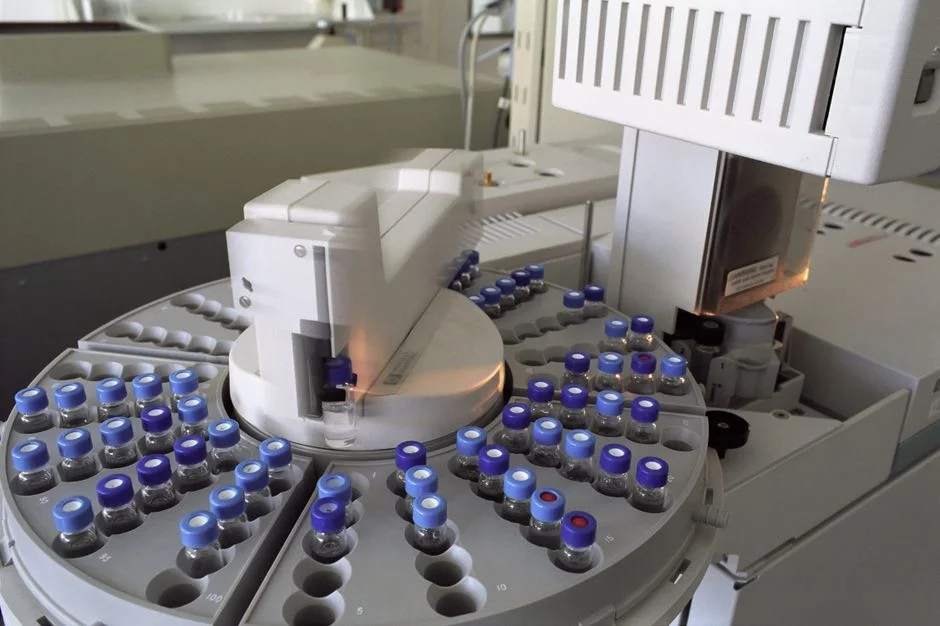
Battery wastewater must be segregated at the source because the four principal streams have different contaminants, recovery opportunities and treatment requirements. The supplied technical source identifies cathode coating wash water, anode coating wash water, electrolyte salt flush and general plant effluent as chemically distinct flows that cannot be treated as one combined stream.
Cathode coating wash water carries NMP solvent and PVDF binder residues and is the most demanding recovery stream. The source reports COD of 5,000–25,000 mg/L, fluoride of 50–500 mg/L, suspended solids of 500–3,000 mg/L and pH of 2–4 for concentrated cathode wastewater. These values define a design envelope for an engineering reference; they do not establish the concentrations at an acquired Texas site.
NMP recovery depends on keeping cathode wash water separate. The source describes NMP at roughly 1–5 wt% and states that commingling with general effluent destroys recovery value while increasing downstream contaminant loads. Coarse solids and separator-film fragments should be removed before solvent handling, and pH should be corrected with PLC-controlled chemical dosing systems before NMP enters the recovery unit.
Fluoride requires deliberate treatment. Electrolyte salt flush introduces fluoride and phosphate, while cathode wastewater can also carry fluoride. Equalization should not be used to dilute high-strength coating wastewater into a conventional biological load; doing so consumes chemical and treatment capacity while obscuring the concentration of individual streams. Staged precipitation and clarification are more defensible for fluoride-bearing flows.
Online pH, conductivity, fluoride and TOC measurements should feed the dosing and equalization controls where those parameters govern treatment decisions. Fluoride-ion measurement is particularly important because the chemical dose must respond to the actual stream condition. The PLC-controlled chemical dosing system can provide that feedback, but its configuration should follow validated analytical results and site-specific control requirements.
| Stream | Principal characteristics from the supplied reference | Collection and treatment priority |
|---|---|---|
| Cathode coating wash water | COD 5,000–25,000 mg/L; fluoride 50–500 mg/L; suspended solids 500–3,000 mg/L; pH 2–4; NMP roughly 1–5 wt% | Isolate, correct pH, remove solids and recover NMP before residual treatment |
| Anode coating wash water | CMC/SBR binder in aqueous slurry | Keep separate for source-specific solids and COD management |
| Electrolyte salt flush | Fluoride and phosphate from LiPF₆ hydrolysis | Control fluoride and segregate salts from general effluent |
| General plant effluent | Boiler blowdown, HVAC condensate and domestic sewage | Manage independently; prevent dilution and contamination of recovery streams |
Recover Chemicals Before Sending Residual Flow to Biological Treatment
The treatment sequence should preserve recoverable chemicals before biology, membranes and brine management. The supplied reference corrects collected cathode wastewater from its native pH of 2–4 to pH 6–8 with NaOH or lime, then uses 8–24 hours of hydraulic retention to equalize batch swings. Those steps provide a more controllable feed to solvent recovery than direct treatment of variable coating wash water.
Solids and binder residues must be removed before distillation. The reference identifies coarse screening, high-efficiency sedimentation and activated-carbon polishing as pretreatment. Coarse screening can protect pumps and sludge-handling equipment; the high-efficiency sedimentation tank can remove entrained solids, while carbon polishing addresses binder residues that could foul the recovery equipment. Equipment selection should follow a solids and solvent mass balance based on site samples.
For the reference NMP process, vacuum distillation operates at 50–100 mbar and 80–120 °C to concentrate NMP from roughly 1–5 wt% to greater than 99.5% reusable grade. The recovered solvent can then return to cathode-slurry preparation if its purity and site process controls allow. This is a chemical-recovery step first and a wastewater-treatment step second.
After NMP recovery, staged chemical precipitation and clarification remove the remaining metal and fluoride burden. The reference specifies calcium chloride dosing to precipitate fluoride as calcium fluoride and lamella clarification for hydroxide sludge. A rotary mechanical bar screen can protect upstream equipment from coating-defect scraps and separator film, while the PLC-controlled chemical dosing system coordinates chemical addition with pH and fluoride measurements.
Lower-strength residual flows then enter biological treatment. The source describes an A²/O or sequencing-batch configuration followed by submerged PVDF membranes in the MBR. An integrated MBR wastewater treatment system provides solids separation before reuse polishing. The sequence is:
- Segregate each production stream and equalize it independently.
- Correct pH, remove solids and recover NMP from cathode wash water.
- Precipitate metals and fluoride, then clarify the resulting solids.
- Apply biological treatment to lower-strength residual flows.
- Polish with MBR before RO or any other reuse treatment.
The MBR versus conventional activated sludge comparison is useful when evaluating biological retrofit options, but the choice must be based on the inherited hydraulic profile, residual COD and fouling evidence.
Close the Water Loop With MBR, RO and Managed ZLD
Reuse and residual disposal must be designed together because the RO concentrate determines the load on the evaporation and crystallization system. MBR permeate must protect the downstream RO membranes; the supplied reference specifies suspended solids below 1 mg/L and an SDI below 3 as the relevant permeate targets.
Cartridge filtration at 5 μm and antiscalant dosing precede high-pressure RO in the reference design. Its stated recovery range is 70–80%, with the resulting 20–30% concentrate directed toward ZLD. The industrial RO system for wastewater reuse should be sized from verified feed flows, salinity, recovery targets and the selected concentrate-management route—not from a generic plant-wide flow estimate.
Potential reuse points include cooling-tower makeup, toilet flushing and landscape irrigation, provided the site permit and operational conditions allow them. The supplied source describes these uses as typically reducing plant freshwater demand by 30–50%. At an acquired Texas site, CATL should verify each reuse destination against water chemistry, process requirements and current authorization.
Mechanical vapor recompression is the reference treatment for concentrated residual flow. The source reports electrical consumption of 20–35 kWh per m³ of distillate from HydropureWater field data in 2026. That figure is a vendor-reported benchmark, not a guaranteed consumption rate for CATL. Feed salinity, scale risk, recovery ratio, heat integration and fouling behavior require a project-specific mass and energy balance.
Salt and heavy-metal residues remain regulated-waste issues until their composition and disposal route are established. The plate and frame sludge dewatering press can reduce sludge volume before characterization, but dewatering does not convert a hazardous or otherwise regulated residue into an ordinary waste. Manifesting, acceptance criteria, transport and final disposal must be confirmed before startup.
CATL should verify all reuse and ZLD obligations against the current TCEQ authorization. A generic battery-industry treatment train does not create a site-specific no-discharge requirement. Additional design information for high-salinity residuals is covered in the 2026 high-salinity wastewater engineering reference.
| Stage | Reference requirement | Acquisition verification |
|---|---|---|
| MBR permeate | TSS below 1 mg/L; SDI below 3 | Confirm membrane condition and achieved permeate quality |
| RO pretreatment | 5 μm cartridge filtration and antiscalant dosing | Validate feed chemistry and scaling risk |
| RO recovery | 70–80%; 20–30% concentrate | Optimize against brine-management capacity |
| MVR | 20–35 kWh/m³ distillate, HydropureWater field data, 2026 | Re-evaluate through a site-specific energy balance |
| Residuals | Salt and heavy-metal residues require characterization | Confirm waste code, disposal route and receiver capacity |
Build a 30-60-90-Day Wastewater Transition Plan
The transition should close only when permit ownership, infrastructure rights, operating responsibility and treatment performance are defined. A 30-60-90-day structure turns the acquisition audit into a sequence of go/no-go decisions without prematurely assuming that inherited equipment can handle CATL production.
Days 0–30: Complete the permit, discharge-route, laboratory, monitoring and treatment-asset audit. CATL should not accept operational responsibility for an unidentified or expired authorization. Identify missing records, unresolved notices of violation, invalid flow measurements and undocumented easements. Confirm who operates each unit, who holds each permit and who performs sampling and reporting.
Days 31–60: Sample every major stream under representative operating conditions and verify the hydraulic balance. Review laboratory quality, meter calibration, chain of custody and production correlation. Model the inherited train against current loads and anticipated CATL production changes. If representative data cannot be obtained before the production transition, install temporary monitoring and retain additional control limits rather than extrapolating from a generic design.
Days 61–90: Resolve permit ownership, easements, discharge notifications and drainage-district coordination. Issue a controlled compliance and sampling plan, assign accountable operating personnel, confirm chemical suppliers, waste-disposal routes and utility interfaces, and approve the capital plan. The Austin factory wastewater treatment guide provides additional context for comparing industrial treatment alternatives, but the final decision must follow site evidence.
| Condition | Transition decision | Required proof |
|---|---|---|
| Existing assets perform reliably and authorizations are transferable | Retain and validate | Performance records, permit review, staff and maintenance readiness |
| One or more unit operations miss verified requirements | Retrofit | Root-cause analysis, capacity check and performance testing |
| Segregation, reuse or residual handling cannot be achieved reliably | Construct dedicated treatment | Source-characterized design, permit pathway and residual-disposal commitment |
Frequently Asked Questions
How much will wastewater treatment cost for an acquired Texas battery factory?
No defensible price can be stated without the acquired site’s flow and chemistry dataset, permit conditions, existing-asset condition, reuse targets and residual-disposal scope. Buyers should request a priced bill of quantities from each bidder, with separate allowances for segregation piping, NMP recovery, chemical dosing, MBR, RO, ZLD, sludge dewatering, utilities, controls, commissioning and permit support. The bidders should identify which costs are provisional and what site data would allow them to be fixed.
What information should CATL request before selecting a wastewater-treatment supplier?
Require evidence that the supplier can integrate industrial pretreatment, chemical dosing, membrane systems, controls and high-salinity residual management. The technical review should test the proposed treatment train against representative stream data, current TCEQ conditions and future production scenarios. Also request the supplier’s commissioning approach, operator-training plan, controls narrative, membrane-fouling strategy, chemical-supply assumptions and performance-test criteria.
What permit and drainage-district issues should be resolved before closing?
CATL should obtain the current TCEQ authorization, compliance history, discharge route, required property rights and any drainage-district correspondence. The March 19, 2026 Inside Climate News report showed that TCEQ does not communicate directly with local drainage districts during permitting, so state authorization alone does not resolve local access or easement issues. Closing should not leave the operating entity uncertain about who may convey wastewater, where it may be conveyed and who must be notified.
How should lead time, commissioning and utility requirements be managed?
Verify utility demand, chemical availability, waste-receiver capacity and operator competence before committing to an aggressive schedule. Long-lead items should be identified through the vendor’s approved submittal schedule, while temporary sampling and operating procedures cover the interval before permanent controls are commissioned. A permit- and easement-dependent start-up date should not be committed until the responsible legal, environmental and operations leads have approved the prerequisites.