High-salinity multi-effect evaporation treats industrial wastewater with TDS above 50,000 mg/L, recovering up to 95% of the water while concentrating brine toward zero-liquid discharge (ZLD). Typical systems apply a boiling point elevation (BPE) correction of 5–15°C, heat-exchanger areas of 100–500 m², and—when mechanical vapor recompression (MVR) is used—compressor power of 50–300 kW. For feed salinity near 70 g/kg, MEE/MVR trains can push concentrate to about 285 g/kg salt saturation under China’s GB 31573-2015 ZLD pathway.
Why High-Salinity Wastewater Needs Thermal Evaporation
High-salinity wastewater above 50,000 mg/L TDS needs thermal evaporation when RO recovery falls below 75% above about 70 g/kg feed. MEE/MVR typically uses 0.1–0.3 kWh/kg evaporated water, versus 0.5–1.0 kWh/kg for steam-only MED. Concentration toward 285 g/kg salt saturation supports ZLD pathways such as China’s GB 31573-2015.
High-salinity wastewater raises the boiling point of water as dissolved solids climb. For TDS above 50,000 mg/L, designers usually apply a BPE correction of 5–15°C, which widens the required temperature lift and heat-transfer area. Steam-only MED plants then burn 0.5–1.0 kWh/kg of evaporated water, which most continuous brine plants cannot sustain on OpEx alone.
Membrane options hit hard walls on the same streams. Reverse osmosis works on lower-salinity feeds, yet recovery often drops below 75% once feed salinity exceeds 70 g/kg because osmotic pressure and fouling dominate. Electrodialysis faces similar concentration ceilings. For plants that must reach salt saturation, membranes alone cannot finish the duty. Upstream polishing with a Multi-Media Filter for Water Treatment still helps protect downstream RO or evaporator heat exchangers from suspended solids.
Thermal concentration closes that gap. MEE trains reuse vapor from one effect to heat the next. When MVR compresses vapor for reuse, external steam demand falls sharply and energy use can drop toward 0.1–0.3 kWh/kg evaporated water. Most plants we size for brine polishing run at the lower end of that band only after fouling control and stable feed TDS are proven. Where feed is still below about 70 g/kg TDS, RO systems remain a practical pre-concentrator before the evaporator.
High-Salinity Multi-Effect Evaporation vs MVR: Specs Compared
Multi-effect evaporation (MEE) and mechanical vapor recompression (MVR) both concentrate high-TDS effluent under different salinity bands. MEE generally suits feeds of 30–70 g/kg TDS. MVR is usually preferred from about 70 g/kg up toward 285 g/kg salt saturation when ZLD is required.
MVR compresses evaporated vapor to a higher temperature and pressure, then returns that latent heat to the evaporator. A superheat eliminator desuperheats compressed vapor before the exchanger so the compressor stays protected and the overall heat-transfer coefficient holds. CapEx rises because of the compressor package, yet OpEx often falls where electricity is the main utility.
The following table keeps the head-to-head engineering parameters used for screening:
| Parameter | Multi-Effect Evaporation (MEE) | Mechanical Vapor Recompression (MVR) | Notes |
|---|---|---|---|
| Energy Demand (kWh/kg evaporated water) | 0.2 – 0.3 | 0.08 – 0.15 | MVR reuses latent heat, significantly reducing external energy input. |
| CapEx (for 10 m³/h system) | $500,000 – $1,000,000 | $900,000 – $1,500,000 | MVR has higher CapEx due to compressor and control complexity. |
| OpEx (per m³ treated) | $0.60 – $1.20 | $0.30 – $0.60 | MVR's lower energy demand drives lower OpEx. |
| Heat Exchanger Area (m² per 10 m³/h capacity) | 150 – 600 | 100 – 500 | Design varies based on BPE and overall heat transfer coefficient (Top 3). |
| Compressor Power (kW for 10 m³/h capacity) | Not applicable (uses external steam) | 50 – 300 | Critical component for MVR's energy efficiency (Top 3). |
| BPE Correction (°C) | 5 – 15 | 5 – 15 | Required for high-salinity streams, impacts operating temperature (Top 3). |
| Feed Salinity Range (g/kg TDS) | 30 – 70 | 70 – 285 | MVR is optimized for higher concentrations and ZLD (Top 2). |
| Water Recovery Rate (%) | 85 – 95 | 95 – 99 | MVR achieves higher recovery towards salt saturation. |
| ZLD Compliance | Typically requires crystallizer for full ZLD | Achieves salt saturation directly | MVR is inherently designed for high concentration to ZLD. |
2026 CapEx and OpEx Breakdown for MEE and MVR Systems
CapEx and OpEx for high-salinity evaporators scale with capacity, feed salinity, and local energy price. For a 10 m³/h duty, MEE CapEx commonly falls in the $500,000–$1,000,000 band. A comparable MVR package sits nearer $900,000–$1,500,000 because of the compressor and tighter controls.
Equipment CapEx usually splits as evaporator vessel and internals (~40%), MVR compressor (25–35% of MVR equipment cost), heat exchangers (10–15%), controls and instrumentation (15–20%), plus installation and commissioning at 20–30% of total project cost. Those shares move when exotic alloys are required for chloride service.
Energy dominates OpEx at 60–70% of operating cost for MEE/MVR trains. Maintenance typically takes 15–20%, labor 10–15%, and chemicals about 5% for anti-scalant and pH trim. At an electricity price of $0.08/kWh and an MVR specific energy near 0.1 kWh/kg evaporated water, energy remains the first lever to model. With maintenance, labor, and chemicals added, total OpEx often lands at $0.30–$0.60 per m³ treated for MVR and $0.60–$1.20 per m³ for MEE. Automatic chemical dosing systems keep anti-scalant and acid/base dose stable so exchanger fouling does not erase those OpEx gains.
Payback for a 10 m³/h MVR train on roughly 100 g/kg feed is often modeled at 3–5 years when electricity is about $0.08/kWh, mainly from reuse of distillate and avoided disposal fees. Use the capacity table below for first-pass screening:
| System Capacity (m³/h) | Feed Salinity (g/kg) | Estimated CapEx ($) | Estimated OpEx ($/m³) | Projected ROI (years) |
|---|---|---|---|---|
| 5 | 50 (MEE) | $400,000 – $800,000 | $0.80 – $1.50 | 4 – 7 |
| 5 | 100 (MVR) | $700,000 – $1,200,000 | $0.40 – $0.70 | 3 – 5 |
| 10 | 50 (MEE) | $700,000 – $1,200,000 | $0.70 – $1.10 | 4 – 6 |
| 10 | 100 (MVR) | $900,000 – $1,500,000 | $0.35 – $0.65 | 3 – 5 |
| 20 | 100 (MVR) | $1,500,000 – $2,500,000 | $0.30 – $0.55 | 3 – 4 |
| 20 | 200 (MVR) | $1,800,000 – $3,000,000 | $0.40 – $0.60 | 3 – 5 |
| 50 | 100 (MVR) | $3,000,000 – $5,000,000 | $0.25 – $0.45 | 2 – 4 |
| 50 | 200 (MVR) | $3,500,000 – $6,000,000 | $0.35 – $0.50 | 3 – 5 |
What Limits Semiconductor ZLD Reclaim Recovery?
Semiconductor ZLD reclaim recovery is limited first by brine salinity after primary RO. Once RO reject climbs past about 70 g/kg TDS, membrane recovery commonly sits below 75%. Thermal concentration then finishes reclaim toward about 285 g/kg salt saturation.
Fab reclaim loops usually stage UF/RO for ultrapure makeup, then send high-TDS reject to MEE or MVR. The practical ceiling is boiling-point elevation and fouling: BPE corrections of 5–15°C raise the temperature lift, while silica and hardness scale cut overall heat-transfer coefficients if pretreatment is weak. Designers therefore size heat-exchanger area in the 100–500 m² class for a 10 m³/h thermal block and keep compressor power in the 50–300 kW window when MVR is selected.
What scaling challenges hit semiconductor ZLD reclaim?
Semiconductor ZLD reclaim scaling challenges concentrate on exchanger surfaces as TDS rises from roughly 70 g/kg toward 285 g/kg. Calcium sulfate, silica, and fluoride-bearing salts drop out as water is removed, so anti-scalant dose, pH trim, and periodic clean-in-place determine whether the 0.08–0.15 kWh/kg MVR energy band holds in service. Plants that skip solids removal before the evaporator see faster ΔT creep and forced derates.
How Does Multi-Site Water Management Cut Costs?
Multi-site water management cuts cost when each plant matches salinity band to the cheaper utility. Use steam-fed MEE at 30–70 g/kg, and MVR above about 70 g/kg, instead of copying one design everywhere. Standardized 10 m³/h MVR blocks at $900,000–$1,500,000 CapEx and $0.30–$0.60 per m³ OpEx let corporate teams compare sites on one basis. Shared spare compressors, common dosing skids, and identical control setpoints trim maintenance labor that otherwise consumes 10–15% of OpEx.
Where electricity exceeds about $0.10/kWh, MVR’s lower specific energy usually wins life-cycle cost even if CapEx is higher. Where waste steam is cheap, MEE CapEx of $500,000–$1,000,000 for 10 m³/h can be the better entry point. Corporate water teams should lock feed TDS, distillate reuse credit, and disposal fee into one model before buying three different evaporator styles.
How to Select the Right Evaporator for High-Salinity Wastewater
Evaporator selection for high-salinity wastewater starts with measured feed TDS, then energy price, then the ZLD endpoint. Streams at 30–70 g/kg TDS often suit MEE when partial recovery is enough. Feeds above 70 g/kg that must reach about 285 g/kg usually need MVR or MEE plus a crystallizer.
Checklist used on most industrial bids:
- Measure feed salinity and flow: confirm whether TDS sits below or above 70 g/kg and whether flow is nearer 5, 10, 20, or 50 m³/h.
- Map utilities: if electricity is above $0.10/kWh, favor MVR OpEx; if low-cost steam is available, re-check MEE CapEx.
- Define the ZLD endpoint: full salt saturation near 285 g/kg under rules such as GB 31573-2015 needs MVR or MEE + crystallizer.
- Fix pretreatment: solids, oil, and hardness control protect the 100–500 m² exchanger area and the 50–300 kW compressor range.
- Model CapEx vs OpEx: use the capacity table bands, not single-point quotes, and stress-test energy at ±20% price.
- Plan hybrid trains: RO pre-concentration below 70 g/kg, then thermal finishing, often beats a single oversized evaporator.
- Confirm alloy and fouling risk: chloride level drives metallurgy and cleaning frequency more than brochure recovery claims.
For regional compliance context on high-salinity discharge planning, see the regional compliance guidelines for high-salinity wastewater treatment. Hybrid trains that place RO or MEE ahead of a crystallizer remain common when salt recovery is sold as a byproduct rather than landfilled.
Case Study: Petrochemical ZLD with Thermal Concentration
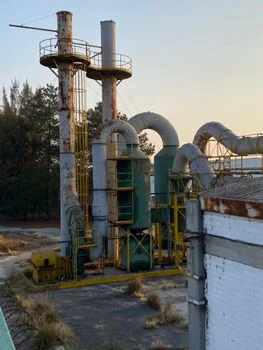
A petrochemical plant in Jiangsu Province, China, generated about 15 m³/h of wastewater at 85 g/kg TDS. Local rules aligned with GB 31573-2015 pushed the site toward ZLD rather than brine trucking. At 85 g/kg the feed sat above the 70 g/kg membrane comfort zone, so the screened path was MVR—or MEE plus crystallizer—toward roughly 285 g/kg salt saturation.
CapEx for an ~15 m³/h MVR block brackets between the 10 m³/h band ($900,000–$1,500,000) and the 20 m³/h band ($1,500,000–$2,500,000). OpEx stays nearer $0.30–$0.65 per m³ when energy is controlled. Distillate reuse and avoided disposal fees drive payback. The same 3–5 year ROI window used for 10 m³/h MVR at $0.08/kWh is the planning reference until site tariffs are locked.
Who This Is For / Who Should Look Elsewhere / Next Step
Plant engineers, EPC process leads, and procurement managers sizing ZLD on brines above about 50,000 mg/L TDS are the primary readers. Teams with feed well below 30 g/kg TDS and a membrane-only reclaim loop that already meets recovery targets should look at RO-first designs instead. Soft next step: send flow, TDS, chloride, and silica data through the project inquiry form for a duty-specific CapEx/OpEx screen.
Frequently Asked Questions
What feed salinity needs multi-effect evaporation instead of RO?
Feeds above about 50,000 mg/L TDS, and especially above 70 g/kg, usually need thermal concentration because RO recovery often falls below 75%. MEE fits roughly 30–70 g/kg; MVR is preferred from about 70 g/kg toward 285 g/kg when ZLD is required. RO remains useful as a pre-concentrator on the lower-salinity front end.
How much energy does MVR use compared with MEE?
MVR specific energy typically ranges 0.08–0.15 kWh/kg evaporated water for a well-controlled 10 m³/h-class unit, versus about 0.2–0.3 kWh/kg for MEE. Steam-only MED can sit at 0.5–1.0 kWh/kg. Actual draw depends on BPE (often 5–15°C) and how clean the exchangers stay.
What CapEx should I budget for a 10 m³/h ZLD evaporator?
Budget about $500,000–$1,000,000 for MEE and $900,000–$1,500,000 for MVR at 10 m³/h, before site alloys and installation. Installation and commissioning often add 20–30% of total project cost. OpEx after startup is commonly $0.60–$1.20 per m³ for MEE and $0.30–$0.60 per m³ for MVR at $0.08/kWh-class power.
Can MEE alone meet full zero-liquid discharge?
MEE alone usually needs a crystallizer to finish full ZLD, while MVR is often designed to reach salt saturation near 285 g/kg directly. Compliance examples such as China’s GB 31573-2015 still require the final solid or saturated brine endpoint to be defined in the permit. Choose hybrid trains when salt purity or staged investment matters.
What pretreatment protects high-salinity evaporators?
Solids removal, hardness control, and stable anti-scalant dosing protect exchanger area in the 100–500 m² range and MVR compressors rated 50–300 kW. Oil and silica spikes are the usual fouling triggers on petrochemical and electronics brines. Without that pretreatment, energy figures in the 0.08–0.15 kWh/kg band rarely hold after a few months.