Make the first selection from permit and reuse requirements
The MBR-versus-conventional activated sludge decision for mining and metals wastewater in Eufaula begins with the site’s legal discharge route, not with a generic equipment list. If the permitted destination is surface water, a publicly owned treatment works, an injection well or a reuse system, each creates a different effluent and pretreatment basis. Federal ore-mining and dressing provisions under 40 CFR Part 440 address arsenic, lead, zinc, copper, nickel and cadmium, but they are only one part of the applicable compliance envelope. Neither membrane solids retention nor clarifier capture establishes compliance by itself, and dissolved metals generally require precipitation or another dedicated removal step. Start with the current NPDES permit, identify every site-specific limitation, and then define the required output quality before comparing equipment.
Mine water reuse also has economic value only when the destination and operating demand are known. An MBR becomes more defensible when reliable solids separation, a constrained footprint or a defined reuse duty justifies the added membrane, power and cleaning burden. Conventional activated sludge remains credible for large dilute flows where electricity is inexpensive, there is no reuse or zero-liquid-discharge driver, and existing aeration and clarification assets have useful remaining life. The MBR cost per m³ guide is useful for preliminary screening, but it cannot replace site testing, the permit review or pilot results.
| Permit or reuse decision | Evidence to obtain | Initial equipment implication |
|---|---|---|
| Surface-water discharge | Current NPDES permit, receiving-water limits, site-specific selenium or sulfate conditions and compliance schedule | Define the complete treatment train before selecting MBR or CAS. |
| Publicly owned treatment works or sewer discharge | Industrial user requirements, permitted constituents, surcharge conditions and discharge restrictions | Test whether metals pretreatment is required before biological treatment. |
| Injection well | Permit limits, constituent profile and any antiscalant or chemistry restrictions | Do not assume MBR permeate alone meets the permitted quality basis. |
| Mine water reuse | End-use quality specification, hourly and seasonal demand, make-up-water cost and disposal alternative | Favor MBR when reliable solids separation or reuse quality has measurable value; retain CAS as a credible baseline. |
| Part 440 applicability | Facility classification, current permit, listed metals and any state or local conditions | Treat Part 440 as part of the compliance envelope, not the entire selection basis. |
The procurement record should therefore state the discharge or reuse destination, required constituents, flow basis, operating schedule, downstream treatment and the selected compliance pathway. That record also determines whether an integrated MBR wastewater treatment system is merely a biological option or a complete fit.
Test whether the wastewater favors MBR or activated sludge
The wastewater’s chemistry and variability determine whether solids separation should rely on settling or a membrane barrier. Request diurnal flow, BOD/COD, metals, sulfate, TDS, hardness, pH and settleability data before accepting nominal equipment capacity. HydropureWater’s 2026 field guidance identifies BOD/COD below 0.3, sulfate above 1,000 mg/L, hardness in the thousands of mg/L as CaCO₃ and TDS above 5,000 mg/L as demanding mining-influent conditions; these are screening flags, not universal design thresholds. Actual water must determine biological loading, equalization volume, precipitation chemistry and membrane pretreatment.
Conventional activated sludge depends on biological floc settling in a secondary clarifier. An MBR retains biomass through a physical membrane barrier, decoupling effluent solids concentration from floc settleability. HydropureWater’s 2026 comparison cites EPA MBR Fact Sheet effluent values of 0.01–1.31 NTU turbidity and 0.10–0.72 mg/L BOD₅ for referenced facilities; those values are not a guarantee for Eufaula water. HydropureWater 2026 field data report normal MBR operation at 8,000–12,000 mg/L MLSS, compared with 2,000–4,000 mg/L for CAS using the 2026 Lamella-clarifier engineering reference.
| Site input | Why it affects the choice | Required record |
|---|---|---|
| Flow and diurnal loading | Sets equalization, biological tankage, hydraulic peak and equipment redundancy | Measured flow series, peak conditions and permitted flow basis. |
| BOD/COD and settleability | Indicates biological carbon availability and the risk of solids carryover in CAS | Laboratory analysis plus observed floc settling and solids-loss behavior. |
| Sulfate, TDS and hardness | Can stress biology, increase osmotic effects and accelerate membrane fouling | Site-specific concentrations and pilot response under relevant variability. |
| Cyanide, ammonia and thiosulfate | Can cause oxygen-demand swings and biological instability | Batch characterization and equalization performance data. |
| Metal profile | Drives precipitation needs and the risk of metal-bearing solids escaping | Dissolved and particulate fractions, plus pulse-event characterization. |
Do not transfer municipal loading assumptions directly to a cyanide-related circuit. Cyanidation-related changes in cyanide, ammonia, thiosulfate and oxygen demand should be treated as equalization and biological-load issues. The mining and metals wastewater pretreatment review provides a useful framework for deciding which chemical and solids barriers must precede either biological route.
Check the two failure modes separately. For CAS, determine whether metal-bearing floc can escape when settling deteriorates. HydropureWater’s 2026 field observations report 30–60% loss of removal efficiency during a 24–72-hour window after a metal pulse; that observation is not a universal performance claim, but it demonstrates the sensitivity of a clarifier-based train to short disturbances. For MBR, measure how metal precipitation, hardness, sulfate and TDS affect transmembrane pressure, normalized flux and cleaning recovery. The selection should record which failure mode has the greater operational consequence at the actual Eufaula site.
Protect metals removal and membrane performance upstream
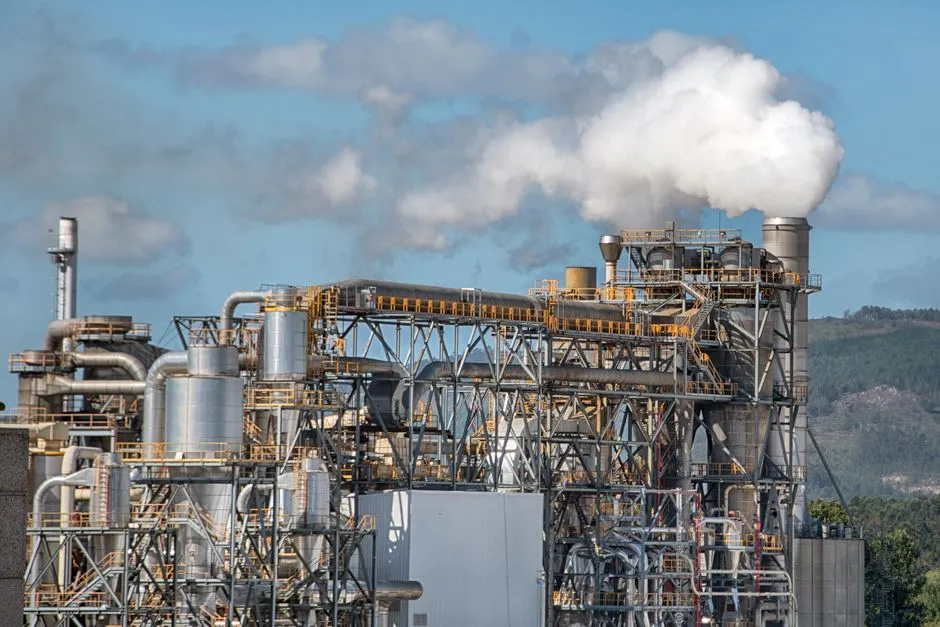
Neither biological route can substitute for dedicated metals treatment. MBR membranes and secondary clarifiers capture particulate-bound metals only when those solids form properly and remain in the retained sludge. Dissolved metals require precipitation or another dedicated treatment step before the biological and membrane stages, so the procurement scope must include chemical reaction, solids capture and sludge removal.
Specify automatic, controlled dosing rather than operator timing. HydropureWater’s 2026 comparison gives approximate precipitation pH ranges of 8.5–9.5 for a CAS precipitation stage and 6.5–7.5 ahead of MBR membranes, while stating that final targets require process design and permit review. These are comparison inputs, not universal operating instructions. Jar testing and the pilot must establish the required chemical sequence, pH, dose and residual response for the actual water. The automatic chemical dosing system should be integrated with pretreatment and membrane-cleaning controls rather than treated as a stand-alone accessory.
Fine screening must match the selected membrane module. HydropureWater’s 2026 MBR specification states 1–3 mm screening, with cited cutoffs of 1–2 mm for hollow-fiber modules and 2–3 mm for flat-plate modules. The rotary mechanical bar screen is an available screening component, but the selected aperture and bypass arrangement require confirmation against the module design. Equalization should reduce hydraulic and load shocks before biological treatment, while a rotary screen can remove damaging solids where influent conditions justify it.
Evaluate membrane fouling with actual wastewater rather than applying a generic cleaning interval. Elsevier’s 2021 review identifies membrane fouling as a main obstacle to broader MBR application. The pilot should therefore compare flux, transmembrane pressure, chemical demand, cleaning frequency and recovered performance under the site’s metal, sulfate, hardness and TDS profile. MBR waste sludge may also have lower settleability and more colloidal particles than CAS waste activated sludge, according to HydropureWater’s 2026 guidance, so sludge dewatering must be tested rather than assumed.
Compare equal-scope costs and operating risks
MBR and CAS should be priced against the same flow, effluent duty, civil scope and disposal responsibility. For a 1,000 m³/day example, HydropureWater 2026 field data and the 2026 Lamella-clarifier engineering reference place MBR capital cost at 20–40% above equivalent-flow CAS and operating cost at 15–30% higher per m³. These are screening figures, not Eufaula quotations or guaranteed project outcomes.
Require each bidder to price the same treatment duty: aeration, clarification or membranes, civil works, equalization, precipitation, fine screening, sludge handling, power, chemical cleaning, recovery, membrane replacement and any polishing required by the discharge or reuse specification. The DAF versus lamella clarifier comparison is relevant because solids separation remains part of the metals-removal train even if biological treatment is selected.
| Equal-scope cost element | CAS quotation requirement | MBR quotation requirement |
|---|---|---|
| Biological treatment | Aeration basin, diffusers, blowers and biological capacity | Aeration basin, membrane modules, cassettes and associated controls |
| Solids separation | Secondary clarifier, sludge return and wasting systems | Permeate extraction, membrane cleaning, recovery and replacement provisions |
| Common pretreatment | Equalization, screening, metals precipitation and pH control | Equalization, screening, metals precipitation and pH control |
| Civil and site works | Same site utilities, access, drainage and construction assumptions | Same site utilities, access, drainage and construction assumptions |
| Sludge | Thickening, dewatering, transport and disposal | Thickening, dewatering, transport and disposal |
| Reuse or discharge | All required polishing and disposal barriers | All required polishing and disposal barriers |
| Lifecycle inputs | Power tariff and confirmed equipment lives | Power tariff, cleaning frequency, recovery and replacement assumptions |
HydropureWater’s 2026 field data indicate an approximately 4–6-year payback condition when make-up water costs more than about $2/m³ or brine disposal has a real cost; the same source identifies electricity below about $0.07/kWh as favorable for CAS. Apply these figures as screening conditions, not guaranteed returns. Request a site model using the actual tariff, water value, duty profile, cleaning interval and replacement assumptions.
MBR permeate is not automatically suitable for process water, boiler feed, cooling water or zero-liquid-discharge reuse. Define the reuse specification first, then add UV, reverse osmosis or another barrier only if the application requires it. The lifecycle comparison should include the capital and operating consequences of that downstream treatment rather than assigning MBR permeate an assumed reuse value.
Issue a pilot-backed equipment selection
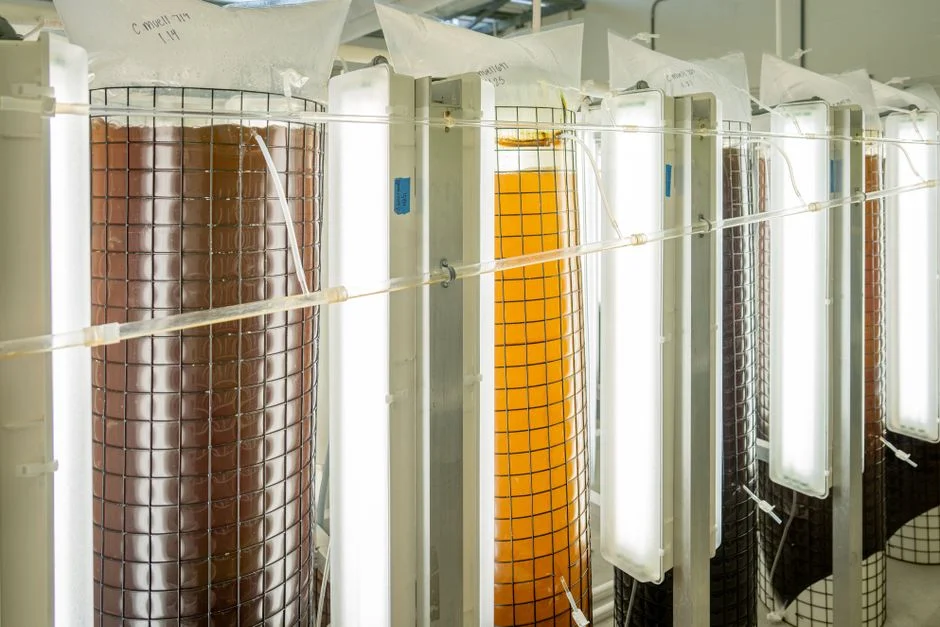
A pilot is required where metal pulses, low BOD/COD, sulfate, hardness or high TDS could undermine biology, settling or membrane flux. HydropureWater’s 2026 guidance recommends a 60–90 day cassette pilot using actual wastewater. This should become a procurement requirement before final equipment release, with the DF-series MBR module serving as a configuration reference rather than evidence of site suitability.
During the pilot, require:
- Solids-separation performance and particulate-metal carryover.
- Dissolved and total metals removal through the complete pretreatment train.
- Transmembrane pressure, normalized flux and membrane-fouling trends.
- Chemical consumption and recovered performance after cleaning.
- Sludge solids capture, settleability and dewatering performance.
- Response to representative flow, chemistry and metal loading excursions.
The final proposal must state the design flow basis, pretreatment, redundancy, membrane area and configuration, cleaning controls, sludge scope and the permit or reuse basis. Suppliers should document acceptance criteria in advance, including how results will be reconciled with the required effluent or reuse quality.
Use the integrated MBR system range of 10–2,000 m³/day only as an initial screen. HydropureWater’s verified catalog lists the DF series at 80–225 m² and 32–135 m³/day, but those catalog limits do not establish the required Eufaula capacity. Size from actual flow, chemistry, pretreatment, permit duty, reuse profile and confirmed redundancy. Any sludge-handling claim should also be supported by measured solids properties and a defined plate-and-frame filter press duty.
The selection record should close with one of three documented outcomes: select MBR, select CAS, or retain both pending additional testing. The decision basis must identify the controlling permit or reuse requirement, the chemistry and asset evidence, pilot acceptance results, the equal-scope lifecycle comparison and any conditions that would require reopening the selection.
Frequently Asked Questions
How should an Eufaula buyer compare MBR and CAS pricing?
Use the 1,000 m³/day comparison only as a screening scenario: HydropureWater’s 2026 field data and the 2026 Lamella-clarifier engineering reference indicate MBR capital cost at 20–40% above equivalent-flow CAS and operating cost at 15–30% higher per m³. Request equal-scope quotations based on actual flow, effluent duty, civil works, pretreatment, sludge handling, power, cleaning, recovery and membrane replacement. Add the applicable reuse value or disposal cost to the model rather than converting the screening percentages into a project price.
Which document should govern the final MBR or CAS selection?
The current NPDES permit and documented reuse requirement should govern the final selection, with actual-water testing and pilot evidence demonstrating that the chosen train can meet them. Part 440 addresses arsenic, lead, zinc, copper, nickel and cadmium, but it does not establish the entire compliance envelope. Require the equipment proposal to identify the permit provisions, dissolved and particulate metals, pretreatment, solids removal and downstream treatment being addressed.
What should a supplier prove when sizing an MBR?
Require the supplier to size from the permitted flow basis, diurnal influent, chemistry, pretreatment, reuse profile and redundancy rather than from a catalog capacity alone. The integrated system is listed for 10–2,000 m³/day, while the DF series is listed at 80–225 m² and 32–135 m³/day. Those ranges do not prove Eufaula suitability. The proposal must identify the design flow, membrane area, configuration, cleaning controls and expected fouling response under the actual wastewater matrix.
When is a pilot necessary before releasing mining-wastewater equipment?
Require pilot evidence where metal pulses, low BOD/COD, sulfate, hardness or high TDS could affect biological performance, secondary-clarifier settling or membrane flux. HydropureWater’s 2026 guidance recommends a 60–90 day cassette pilot using actual wastewater. Acceptance criteria should cover solids separation, metals removal, transmembrane pressure, normalized flux, chemical demand, cleaning recovery and sludge dewatering.