Match the equipment to the wastewater fractions
Gravity clarification removes dense mineral particles that settle under their own weight, while dissolved air flotation (DAF) removes conditioned floc, emulsified oil, and buoyant precipitates; neither mechanism removes dissolved metals by itself. Gainesboro mining and metals plants should map each mill discharge, thickener overflow, smelter stream, and finishing-rinse stream before combining them. The decision rule is straightforward: select a clarifier where dense settleable solids dominate, DAF where buoyant or colloidal material dominates, and both where those fractions coexist.
Classify each stream by five practical fractions: dense settleable solids, colloidal material, oils and greases, residual flotation reagents, and dissolved heavy metals. A high-rate lamella clarifier applies gravity sedimentation to particles with a specific gravity greater than water. Its inclined plates increase effective settling area without changing that mechanism. DAF attaches microbubbles to conditioned floc and floats it for skimming; Clearwater Industries reports that its microbubbles are 30–50 microns and that the process is paired with coagulation and flocculation (Clearwater Industries, 2026).
| Dominant stream fraction | Primary mechanism | Selection | Remaining treatment question |
|---|---|---|---|
| Dense mineral fines or metallurgical sludge with specific gravity greater than water | Gravity sedimentation | Clarifier | Determine whether colloidal, oily, or dissolved fractions also need treatment. |
| Colloidal clay, fine precipitates, or conditioned floc | Microbubble flotation | DAF with tested chemical conditioning | Verify residual solids with pilot data. |
| Emulsified oil, flotation reagents, or buoyant material | Microbubble flotation | DAF | Assess whether filtration or membranes are required for reuse. |
| Dissolved heavy metals | Chemical conversion or precipitation followed by solids separation | Clarifier and/or DAF after treatment | DAF alone is not a dissolved-metal removal process. |
| Tailings fines together with colloidal or oily contamination | Sequential bulk settling and flotation | Clarifier followed by DAF | Define the required final polishing step. |
DAF is not well suited to high levels of heavier, non-floating silt and clay, as stated by Fluence and reproduced in HydropureWater’s 2026 selection guidance (HydropureWater, 2026). Do not route a raw, high-silt stream directly to a DAF unit merely because the plant also has flotation reagents elsewhere. Keep each stream separate until chemistry, flow variability, and contaminant fractions are known.
Clarifier, DAF, or both
A clarifier is the correct primary unit when gravity separation can remove the dominant load; DAF is the correct primary unit when the target particles are buoyant or must be made buoyant by conditioning (HydropureWater, 2026). A combined train is the defensible choice when a stream contains both high settleable-solids loading and material that escapes conventional settling.
| Selection factor | Gravity clarifier or high-rate lamella clarifier | Dissolved air flotation | Clarifier followed by DAF |
|---|---|---|---|
| Target contaminants | Dense mineral fines, tailings, and metallurgical sludge with specific gravity greater than water | Oils, greases, flotation reagents, conditioned colloids, and buoyant fine precipitates | Bulk settleable solids first, followed by residual colloidal and buoyant contamination |
| Principal mechanism | Settling; lamella plates increase effective settling area for the same footprint | Conditioned floc attaches to microbubbles and is removed by a skimmer | Gravity removal followed by flotation polishing |
| Principal limit | Colloidal fines, oils, surfactants, and dissolved metals can remain in the overflow | Not well suited to high levels of heavier, non-floating silt and clay (Fluence, as cited by HydropureWater, 2026) | More process, controls, chemical use, and sludge-handling interfaces than either unit alone |
| Sludge handling | Underflow requires thickening or dewatering | Floated sludge may require little further dewatering when conditioning is effective (Clearwater Industries, 2026) | Separate handling or a coordinated solids-disposal plan for both residuals |
| Downstream need | Filtration, membranes, or other polishing where required quality is not achieved | Filtration, membranes, or other polishing where required quality is not achieved | Final polishing remains an engineering decision based on recovered-water requirements |
HydropureWater lists a 20–40 m/h surface-loading range for its lamella clarifier and a 4–300 m³/h range across 13 DAF models (HydropureWater, 2026). These are comparison points, not Gainesboro site guarantees. The clarifier’s required rise or surface-overflow rate must come from settling characteristics and the project flow; the DAF basis must come from flotation performance, recycle behavior, and the conditioned solids load. A broader DAF and lamella clarifier comparison for mining plants can help structure that review, but it does not replace project data.
Use a DAF system for mining wastewater as the polisher where a clarifier handles tailings fines but cannot reliably remove emulsified oil, flotation reagents, or conditioned colloids. Keep the clarifier ahead because its purpose is to remove bulk solids before flotation. Do not describe the combination as a complete treatment train until the dissolved-metal fraction and final reuse or discharge quality have been evaluated.
Build a treatment train that closes the gap
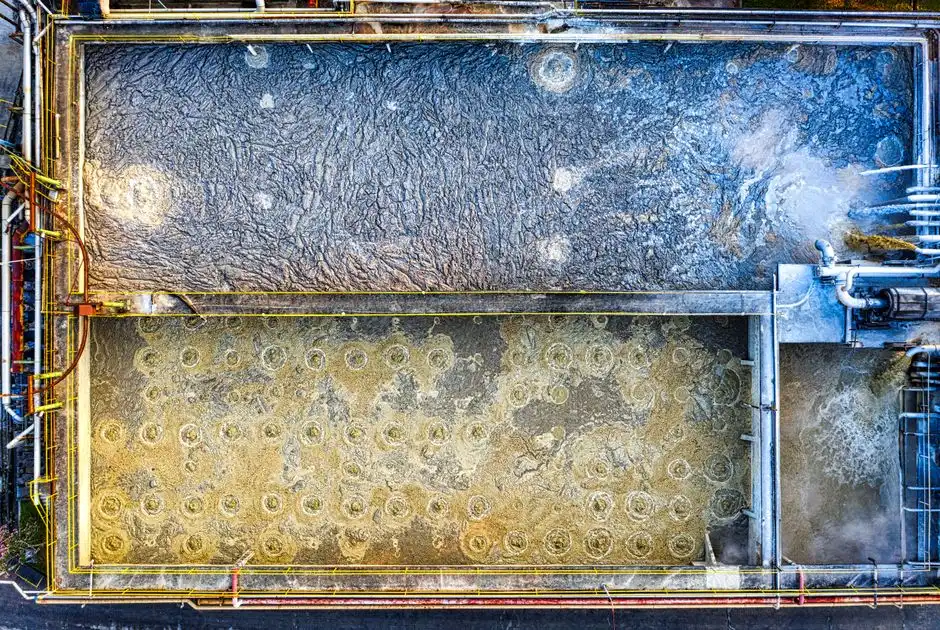
Clarification and DAF are solids-separation steps, not universal polishing technologies; the required final train depends on the water-quality target and the mass balance. Add filtration or membrane treatment when clarification or DAF alone cannot deliver the specified discharge or process-water reuse quality (HydropureWater, 2026). DAF can support process-water recycling, but its clarified overflow may still require a downstream solids-removal step (HydropureWater, 2026, citing Fluence).
- Characterize the fractions. Separate bulk settleable solids, colloidal solids, oils, flotation reagents, and dissolved metals for each plant stream.
- Apply chemical treatment where required. pH adjustment, coagulation, and flocculation must precede solids separation when the selected mechanism depends on particle conditioning.
- Select bulk and polishing separation. Use a clarifier for dense solids and DAF for conditioned buoyant or colloidal floc; use both when both fractions matter.
- Define final polishing. Add filtration, membranes, or another approved process where the recovered-water specification requires it.
- Close the solids loop. Route clarifier underflow and floated sludge to the selected thickening or dewatering method.
Dissolved metals require a separate decision. Metal-bearing water may require pH adjustment and precipitation, after which the resulting solids must be separated. DAF can remove the precipitated or conditioned particulate fraction, but DAF does not itself constitute dissolved-metal removal. No complete zero-liquid-discharge (ZLD) train should be promised without site chemistry, a mass balance, final-treatment data, and the permitted disposal route.
Include chemical conditioning, automatic dosing, instrumentation, and sludge dewatering in the process scope. An automatic chemical dosing system should maintain the dose established by testing, while a plate-frame filter press can be evaluated for the resulting sludge. Neither can be selected from flow alone; the solids concentration, volume, moisture target, and chemical conditioning determine the dewatering requirement.
Turn the selection into an RFQ
A defensible equipment quotation requires a characterized stream and a specified separation outcome, not a request for a generic DAF or clarifier price. The supplied research does not establish a reliable 2026 unit price for Gainesboro, so request budgetary quotations tied to the documented flow, TSS, contaminant fractions, materials, controls, and sludge-handling scope.
| RFQ package | Information or evidence to request | Why bidders need it |
|---|---|---|
| Flow and variability | Average, peak, minimum, batch, and seasonal flow for each stream | Defines hydraulic capacity and equalization requirements. |
| Solids | TSS, settleable solids, particle-size distribution, and solids density or specific gravity | Determines whether gravity separation is effective and whether DAF will be overloaded. |
| Oils and reagents | Oils and greases, free versus emulsified oil, flotation-reagent carryover, and surfactant evidence | Identifies the buoyant load and the need for DAF conditioning. |
| Metals | Dissolved and total metals by relevant analyte, with pH and temperature | Defines precipitation needs and separates dissolved removal from particulate capture. |
| Water chemistry | pH, temperature, alkalinity, hardness, conductivity, and relevant ionic composition | Supports chemical selection, materials review, and mass-balance calculations. |
| Test evidence | Representative mixed-influent jar tests and pilot results, including coagulant and flocculant doses | Shows the selected mechanism works with plant chemistry rather than clean water. |
| Design basis | Clarifier rise or surface-overflow rate; DAF recycle and air-to-solids basis; hydraulic and solids mass balance | Prevents equivalent equipment descriptions from representing different performance claims. |
| Scope and support | Materials, controls, instrumentation, commissioning, startup, training, maintenance, and sludge withdrawal | Makes the quotation operational rather than a bare vessel price. |
Do not accept supplier-default chemical doses. A Logan, Utah study reported an optimum aluminum sulfate dose of 30 mg/L for algae and phosphorus removal in lagoon effluent, and explicitly treated optimization as an empirical jar-test exercise (Utah State University, 2011). That dose belongs to that wastewater and cannot be transferred to a Gainesboro metals stream; the transferable point is that each bidder should use project-specific testing to establish its conditioning dose.
Ask each bidder to identify the required clarifier rise or surface-overflow rate and the DAF recycle and air-to-solids basis from the submitted chemistry. Also request comparable metallurgical references, corrosion-resistant material selections appropriate to the stream, automated controls, commissioning support, and a complete mass and solids balance. Require quotations that show how the chemical dosing system, separation equipment, and sludge-dewatering scope interact rather than pricing them as unrelated items.
Verify performance before purchase
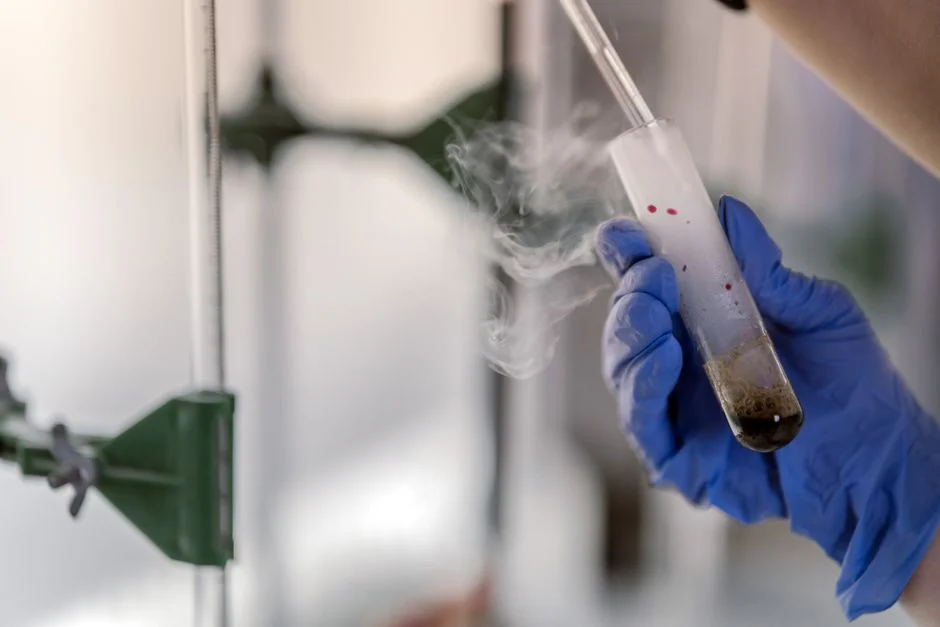
Performance acceptance should be tied to characterized plant influent and a documented water-quality target, not clean-water tests or generic removal claims. The supplied research contains no Gainesboro-specific discharge or reuse limits, so the buyer must confirm the current requirements with the facility’s actual permit and applicable reuse specification before bids are evaluated.
- Lock the acceptance criteria. Specify the required recovered-water parameters, applicable discharge or reuse limits, and test methods.
- Test mixed and seasonal influent. Use pilot or jar-test evidence with representative plant chemistry, including the streams expected to share the inlet.
- Measure the full performance case. Evaluate recovered-water quality, sludge moisture, chemical consumption, energy use, materials compatibility, and maintenance access.
- Define operational support. Confirm startup, operating, and troubleshooting support for chemical feed, recirculation, skimming, and sludge withdrawal.
Require bidders to identify which results come from bench testing, pilot work, or full-scale installations on comparable streams. The broader DAF versus clarifier decision guide is useful for comparing application claims, but final acceptance should be based on the Gainesboro stream. A pilot should also expose how mixed influent, seasonal chemistry, chemical dose, sludge withdrawal, and flotation stability behave together; a mechanism that performs in a beaker may not retain performance in a full plant.
Frequently Asked Questions
Should a Gainesboro factory buy DAF, a clarifier, or both?
Buy a clarifier when dense, rapidly settling mineral fines dominate; buy DAF when emulsified oil, flotation reagents, colloidal solids, or buoyant precipitates dominate; buy both when bulk settleable solids coexist with those fractions. Confirm the decision with representative jar or pilot testing rather than selecting from flow alone.
What should happen if the wastewater contains both tailings fines and emulsified oil?
Use a clarifier before DAF. The clarifier removes the bulk settleable load, and DAF polishes the remaining conditioned colloidal and buoyant fraction. Ask bidders to state how the clarifier underflow and DAF floated sludge will be handled and whether further dewatering is required.