Confirm the Artemus discharge route and controlling limits
Mining and metals plants near Artemus generally comply with sewer-discharge requirements through Clean Water Act §307(b) and 40 CFR Part 403, enforced by the receiving POTW. Ore mining and dressing may be subject to 40 CFR Part 437, while metal finishing may trigger Part 433. Because the local sewer-use ordinance can be stricter, engineers should size equalization, pH adjustment, precipitation, clarification or DAF, filtration and sludge dewatering to the controlling POTW limit—not the federal floor alone. Equipment selection must also account for batch flows, metal-bearing sludge and the need for automatic monitoring and chemical control.
The first engineering task is to identify the receiving POTW and distinguish the sewer route from direct surface-water discharges. The EPA’s industrial wastewater resources explain that NPDES permits address point-source discharges to surface waters and prevent interference with POTWs, while sewer discharges to a POTW are addressed through the pretreatment framework. Do not use an NPDES surface-water permit as the basis for sizing a sewer pretreatment train.
Next, determine whether the operation is covered by 40 CFR Part 437 for ore mining and dressing, Part 433 for metal finishing, or both. The supplied technical source reports Part 433 limits of 3.38 mg/L copper as a daily maximum and 2.07 mg/L as a monthly average, with total chromium at 2.77 mg/L daily maximum and 1.71 mg/L monthly average. These values belong to the metal-finishing category and do not replace the applicable local limits.
Before procurement, obtain the current sewer-use ordinance, industrial discharge permit, monitoring requirements, prohibited discharges, sampling protocol and fee schedule from the receiving POTW. Request written confirmation of the controlling limits, discharge point, flow basis and demonstration requirements. The mining and metals sewer pretreatment guide provides the broader regulatory workflow, but the local POTW’s written determination should control the equipment specification.
| Decision point | Engineering record to obtain | Effect on equipment selection |
|---|---|---|
| Discharge route | POTW sewer-use ordinance and written discharge authorization; separate NPDES information for any surface-water outfalls | Separates sewer pretreatment requirements from direct-discharge permitting |
| Categorical status | Process description confirming ore mining and dressing, metal finishing, or both | Identifies the applicable federal framework to compare with local limits |
| Controlling limits | Current local limits for pH, metals, TSS and other regulated parameters | Sets the chemical, separation and filtration performance targets |
| Authorization conditions | Monitoring frequency, sampling location, flow basis, reporting and fee schedule | Defines instrumentation, records and commissioning tests |
Define the wastewater and design basis
The treatment train must be based on measured wastewater characteristics and documented operating events, not only on the receiving sewer’s limits. The supplied technical source characterizes raw acid drainage and spent process solutions at pH 2–4, with TSS in the hundreds to several thousand mg/L. Test those streams for pH, TSS, Pb, Cu, Zn, Cd, Ni, As, sulfate and TDS, and document how each stream changes during dumps, leach-pad runoff events, clean-outs and production changes.
Equalization should dampen batch discharges before they reach the treatment equipment. The supplied source gives 8–24 hours of average daily flow as equalization guidance and calls for treatment equipment sized for peak two-hour flow with 20–30% turndown capacity. These are design inputs from the commercial source, not site-specific acceptance criteria; confirm them against the POTW’s flow basis and the plant’s actual batch profile.
Build the design record around a sequence of measurable steps: confirm authorization, sample each source stream, establish flow and chemistry envelopes, identify the controlling pollutant, select unit operations, size against peak flow, and define acceptance tests. If one stream is highly acidic while another is dilute or near-neutral, evaluate whether segregation improves reagent control and sludge generation before combining them.
Record batch dump-leach cycles, mill clean-outs, shift changes, maximum and minimum flow, chemical inventory and available operating staff. These inputs determine whether manual dosing is credible or whether automatic controls, standby power and operator alarms are needed. Do not accept a bid based on average flow alone when a single batch can exceed the equipment’s hydraulic or chemical capacity.
| Design input | Evidence or operating record required | Use in the pretreatment decision |
|---|---|---|
| Source-stream chemistry | pH, TSS, Pb, Cu, Zn, Cd, Ni, As, sulfate and TDS results for each relevant stream | Defines precipitation chemistry, clarification needs and filter loading |
| Flow envelope | Average flow, peak two-hour flow, minimum flow and batch-event frequency | Sets equalization and treatment-train capacity |
| Batch behavior | Dump-leach cycle, clean-out and shift-change records | Determines equalization residence time and control response |
| Chemical constraints | Reagent inventory, storage, delivery and operator availability | Supports the reagent and automatic-control selection |
Choose the chemical precipitation route
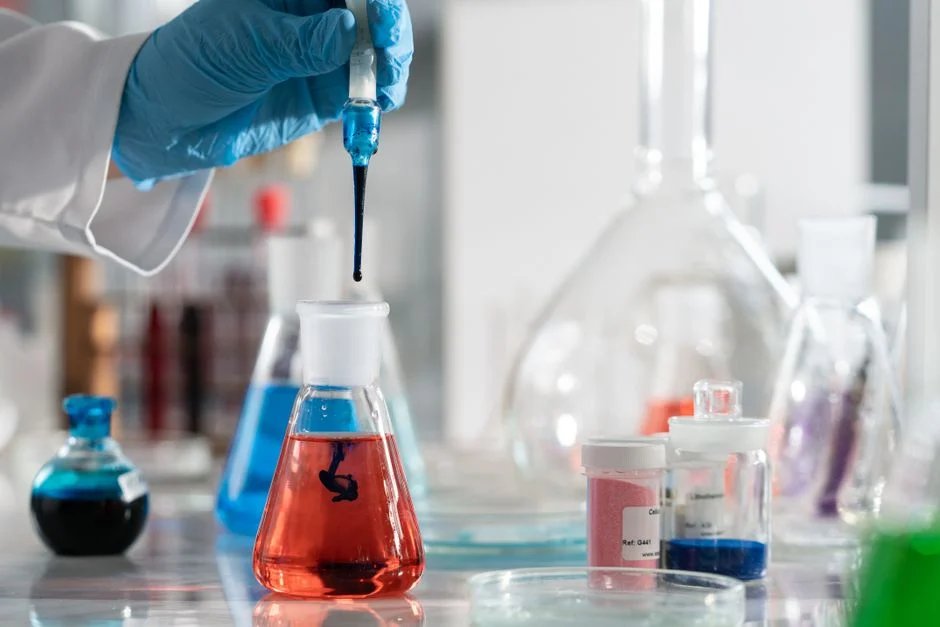
Hydroxide precipitation is the default treatment for most mining and metals streams because the chemistry is established and the reagents are widely available, but jar testing must establish the pH window for each metal and source stream. The supplied source gives a broad sewer-compatibility target of pH 6.5–9.0. That range is not itself a substitute for the POTW’s instantaneous limit, and it should not be used to claim compliance without the local authorization.
Use the required residual concentration to decide whether sulfide polishing is justified. The supplied source reports residual metals of 0.5–2.0 mg/L for hydroxide precipitation and 0.01–0.05 mg/L for sulfide precipitation. Sulfide polishing becomes relevant when the controlling local limit is below 0.3 mg/L, but the comparison must be made on the same pollutant, basis and analytical method. The source identifies copper, zinc, cadmium and nickel as examples for the sulfide residual comparison.
Sulfide is not simply a stronger version of hydroxide treatment. The supplied source states that sulfide reagent cost is 2–4 times higher and that sealed reactors with hydrogen sulfide scrubbing are required for off-gas control. A targeted sulfide-polishing step may be more practical than applying sulfide to the entire flow, but that conclusion requires site chemistry, reagent availability, operator capability and a documented control philosophy.
Use PLC-controlled pH and coagulant dosing to hold the treatment train within the ±0.2 pH band described in the supplied source. The control narrative should define the measured pH signal, dosing response, high and low-pH alarms, chemical inventory interlocks and the manual operating state. An automatic chemical dosing system should be evaluated against those requirements, not simply on tank capacity or pump count.
| Selection condition | Preferred route | Required verification |
|---|---|---|
| Hydroxide residual can meet the controlling POTW limit | Hydroxide precipitation followed by solids separation | Jar testing, pH control review and pilot confirmation of residual metals |
| Controlling residual-metal limit is below 0.3 mg/L | Evaluate sulfide polishing, potentially on a slipstream | Same-basis residual comparison, reagent cost review, sealed-reactor and H₂S-scrubber design |
| Influent pH swings substantially | Staged pH adjustment and reaction | Confirm reaction staging, mixing, probe location and control response |
| Operator availability is limited | PLC-controlled dosing with alarms and interlocks | Review control narrative, fail states and calibration plan |
Match DAF or lamella clarification to the solids stream
DAF is the stronger candidate when oil, grease, fine colloids or metal-bearing particles are the principal separation problem; lamella clarification is generally the better fit when the main load is metal-hydroxide sludge, flow exceeds 100 m³/h or footprint is constrained. The supplied source reports DAF hydraulic loading of 5–25 m/h and TSS removal of 90–98%, with a product range of 4–300 m³/h across 13 models. Lamella surface loading is given as 20–40 m/h.
Those values describe the supplied equipment basis, not a guaranteed site performance. Select the route after testing the actual solids: analyze oil and grease, settleable and non-settleable solids, floc behavior and the metal content of the waste stream. DAF may remove oil-coated and colloidal particles that would carry over in a conventional gravity-separation train, while lamella is effective for dense metal-hydroxide flocs but is less effective for free oil and colloidal fines according to the supplied source.
Where jar or pilot testing shows that floc formation is limiting, evaluate polymer coagulant aid within the supplied 0.5–3 mg/L range. Confirm dosage and residual polymer behavior, and check how the selected clarifier handles the resulting sludge blanket. The treatment unit must also have automatic sludge withdrawal and a design check for the peak batch flow and required turndown.
For an oil-bearing or colloidal stream, compare the DAF system for mining wastewater with the lamella option using the same influent data. For a metal-hydroxide sludge stream or constrained footprint, review the high-efficiency sedimentation tank option and use the DAF versus lamella clarifier comparison to structure pilot testing.
| Decision factor | DAF | Lamella clarification |
|---|---|---|
| Primary stream character | Oil, grease, fine colloidal metals | Metal-hydroxide sludge |
| Supplied hydraulic or surface-loading basis | 5–25 m/h | 20–40 m/h |
| Supplied flow-range basis | 4–300 m³/h across 13 models | Evaluate project-specific flow and footprint |
| Solid-stream response | Floats oil-coated and colloidal particles | Handles heavy metal-hydroxide flocs effectively |
| Required follow-up | Verify sludge withdrawal, filtration and peak-batch response | Verify sludge blanket, carryover and peak-batch response |
Verify final polishing and sludge handling
The final solids-separation barrier should be selected against the POTW’s limit and the clarifier’s expected carryover, not treated as an optional accessory. The supplied source recommends a multimedia safety filter after clarification, operated at a filtration rate of 1–2 m/h, with residual TSS below 10 mg/L. Size the filter for the backwash cycle and verify how backwash wastewater returns to the process.
Disinfection is conditional, not automatic. If the POTW requires disinfection, the supplied source identifies chlorine dioxide at 1–5 mg/L as an option because it provides residual control without the trihalomethanes associated with chlorine. A chlorine dioxide generator should therefore be included only where the permit, ordinance or POTW confirmation specifies the need, residual basis and monitoring method.
Metal-bearing sludge must have a defined end route. The supplied source describes a plate-and-frame filter press producing cake at 25–35% dry solids, with filtrate returned to the head of the plant. A plate-and-frame filter press should be specified with the clarifier and DAF sludge characteristics in mind, including solids concentration, metal content, cake handling and filtrate return. Confirm the disposal or recovery route with the applicable waste authority rather than assuming a landfill or metals-recovery destination.
Use a multimedia filtration system as the final polishing reference, but verify media, pressure rating, backwash demand and compatibility with the wastewater chemistry. Require automatic records for pH, flow, chemical dose and turbidity, plus a defined sampling plan for the POTW’s required parameters. The commissioning protocol should demonstrate steady-state flow, peak-flow response, turndown, chemical control, filtration performance, sludge withdrawal and filtrate return.
| Function | Design basis from supplied source | Acceptance evidence to request |
|---|---|---|
| Final filtration | Multimedia filter at 1–2 m/h; residual TSS below 10 mg/L | Filtrate TSS results, differential-pressure trend and backwash demonstration |
| Disinfection, if required | Chlorine dioxide at 1–5 mg/L | POTW requirement, residual result and monitoring record |
| Sludge dewatering | Plate-and-frame press to 25–35% dry solids | Dry-solids result, cake handling plan and filtrate-return verification |
| Compliance records | Automatic pH, flow, dose and turbidity records | PLC data export, calibration records and POTW sampling protocol |
Frequently Asked Questions
What should a mining or metals plant near Artemus request before buying pretreatment equipment?
Request the receiving POTW’s current sewer-use ordinance, industrial discharge authorization, written confirmation of applicable local limits, sampling and monitoring requirements, discharge-point details and fee schedule. Also request the applicable categorical classification determination for the operation, with 40 CFR Part 437 for ore mining and dressing and Part 433 for metal finishing considered where relevant. The supplier should receive the confirmed limits and wastewater characterization as procurement inputs, not general descriptions of the project.
How should a buyer compare costs for hydroxide and sulfide precipitation?
Request a written process comparison using the same wastewater sample, controlling residual-metal limit and treatment-flow basis. The supplied source reports sulfide residuals of 0.01–0.05 mg/L versus 0.5–2.0 mg/L for hydroxide, while sulfide reagent cost is stated as 2–4 times higher. It does not provide a project quotation, so the buyer must request reagent consumption, equipment additions, sealed-reactor and H₂S-scrubber requirements, sludge impacts, energy use and lifecycle-cost inputs before comparing alternatives.
Which solids-removal equipment should be selected for mining wastewater?
Select DAF when testing shows oil, grease or fine colloidal metals are important separation targets; select lamella clarification when metal-hydroxide sludge dominates, flow exceeds 100 m³/h or footprint is constrained. The supplied source gives DAF loading of 5–25 m/h and lamella surface loading of 20–40 m/h. Confirm the decision with representative batch and clean-out wastewater, peak two-hour flow, polymer testing and a downstream filtration trial.
How should a supplier demonstrate that the treatment train is ready for sewer authorization?
Request a guaranteed flow range, peak-flow performance, turndown capability, control narrative, materials-compatibility information, sludge-handling method and commissioning test protocol. Require documented tests for pH control, chemical dosing, solids separation, filtration, sludge withdrawal, filtrate return and monitoring records. The approval path with the POTW should be documented before purchasing equipment that depends on a specific discharge point, local limit or sampling protocol.
Related Equipment
- DAF system for mining wastewater — specifications, capacity range, and technical data