Choose by wastewater stream, not by a universal rule
Gladstone pulp-and-paper factories should choose DAF when representative wastewater contains low-density fibers, fillers, pitch, stickies, colloids, or floatable solids that must be recovered or removed; choose a clarifier when solids are heavier and settle reliably. For mixed or uncertain streams, pilot both. DAF provides compact primary clarification and fiber recovery, while lamella clarification polishes residual solids. Neither guarantees full BOD, COD, color, or TSS compliance, so the final choice must reflect the mill’s permit, reuse target, measured wastewater characteristics, and downstream treatment needs.
Start by separating streams that have different hydraulic loads, solids behavior, and treatment objectives. A paper-machine whitewater system, for example, should not be sized from the combined mill flow if its production peaks, grade changes, and reuse requirements differ from those of furnish or fiber-recovery wastewater. Combined effluent may also mix pulping, bleaching, coating, and washwater contributions that would not occur in the same proportions in every source.
For each source, request flow duration, peak flow, TSS, fiber and filler content, settleable and nonsettleable fractions, temperature, pH, conductivity, BOD, COD, color, and the required reuse or discharge quality. Record whether each sample is grab or composite, where it was taken, and whether it represents normal production, startup, cleanup, or mixed-grade operation. These pulp-and-paper pretreatment requirements for sewer discharge should be reconciled with the mill’s current permit and reuse plan before equipment selection begins.
| Mill stream | Selection focus | Information required before screening |
|---|---|---|
| Paper-machine whitewater | High-volume, variable feed; reuse and fiber-recovery value; solids behavior under production changes. | Flow-duration profile, peak and minimum flow, TSS, fiber and filler content, settleable and nonsettleable fractions, temperature, pH, conductivity, BOD, COD, color, and receiving-process quality limits. |
| Furnish or fiber-recovery streams | Low-density material with potential recovery value; consistency of solids concentration and flow. | Representative source sampling, solids characterization, recovery objective, chemical compatibility, required dryness or reuse specification, and downstream sensitivity to residual solids. |
| Combined mill effluent | Variable contributions from pulping, bleaching, coating, and washwater; interaction between source streams. | Source-by-source flow and chemistry, operating schedule, sampling across production grades, temperature and pH range, required pretreatment quality, and biological or polishing load. |
| Final discharge or pretreatment stream | Compliance, hydraulic capacity, controllability, and protection of downstream equipment. | Current permit, local pretreatment conditions, discharge or reuse specification, sampling protocol, anticipated peak flow, and measurable acceptance limits. |
Water balance matters as much as concentration. Hubbe and colleagues’ academic review, Wastewater Treatment and Reclamation, reports that pulp-and-paper mills can generate up to 70 m³ of wastewater per metric ton of paper, depending on raw material, finished product, and water reuse. This provides context for scale, not a Gladstone design flow; a source-separated flow survey must establish the actual duty.
Match DAF or clarification to the solids behavior
DAF is the stronger first candidate when representative solids have low effective density or do not settle reliably. As described by Ecologix Systems in DAF for Pulp & Paper Wastewater Treatment, dissolved air is released as microbubbles, attaches to suspended particles, increases their buoyancy, and forms a surface blanket that is skimmed. That mechanism suits wood fibers, fillers, pitch, stickies, colloids, and other floatable material when those materials must be removed or recovered.
Clarification depends on differential settling. Inclined lamella plates add settling area within a compact footprint, so a lamella plate clarifier becomes attractive when measurements show consistent gravitational settling and the project priority is routine solids removal rather than floatable-material capture. Reliability under actual flow, turbulence, temperature, and solids loading remains a test result, not a catalog assumption.
Cost direction should also be treated as a hypothesis. Ecologix Systems’ commercial DAF vs. Clarifier: Industrial Wastewater Selection Guide states that clarifiers generally have lower operating costs, while DAF may be more cost-effective for particular contaminants. Check that direction against the Gladstone site’s chemical demand, compressed air, power, sludge handling, labor, maintenance, and downstream effects.
Catalog limits are screening boundaries only. The verified HydropureWater catalog lists micro-bubble DAF systems from 4–300 m³/h across 13 models; it does not establish the required unit for a particular mill stream. The HydropureWater lamella catalog reports a vendor-reported surface-loading range of 20–40 m/h, which must be validated against the proposed feed and hydraulic conditions. A model name, catalog capacity, or generic removal percentage is not a sizing basis or performance guarantee.
| Decision factor | Prefer DAF when the evidence shows | Prefer clarification when the evidence shows |
|---|---|---|
| Solids behavior | Low-density fibers, fillers, pitch, stickies, colloids, or floatable material that does not settle reliably. | Heavier solids with reproducible settling under expected hydraulic conditions. |
| Primary objective | Fiber recovery, removal of buoyant solids, or compact primary clarification. | Bulk or residual solids removal where recovery is not the driver. |
| Key operating inputs | Air generation, saturation or recycle equipment, pressure control, and chemical conditioning must be tested. | Basin hydraulics, sludge withdrawal, and solids-loading capacity must be tested. |
| Plant consequences | Include the operating skid, air system, controls, recovered-fiber handling, and downstream impacts. | Include civil depth, footprint, sludge removal, access, and downstream impacts. |
| Evidence required | Representative feed characterization, flotation-zone loading, bubble-contact conditions, and polymer demand. | Settling behavior, hydraulic retention, solids loading, sludge characteristics, and turndown performance. |
For preliminary screening, the HydropureWater micro-bubble DAF system and HydropureWater lamella clarifier can define supplier data requests. Neither catalogue establishes the final selection. The DAF-versus-clarifier decision framework remains useful as a conditional screening method, but pulp-and-paper feed data must replace assumptions borrowed from another industry.
Pilot the uncertain stream before ordering equipment
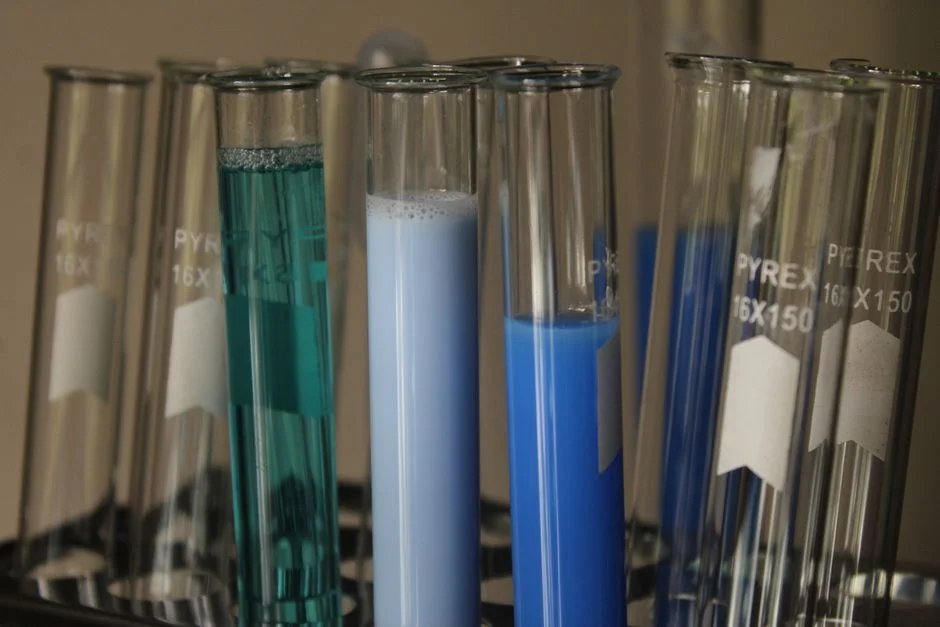
A pilot should test the separation behavior that will control final sizing, not demonstrate a generic removal percentage. Pilot both DAF and clarification when the stream contains a mixed or uncertain solids population, then compare fiber recovery, residual solids, downstream loading, footprint, and lifecycle consequences. Use the same representative feed, sampling method, and evaluation period so the comparison remains auditable.
Measure flotation or settling behavior, chemical-conditioning demand, performance under variable feed, turndown, and standby requirements. A test limited to stable production conditions may conceal the startup, grade-change, dilute-flow, or cleanup conditions that determine operating reliability. The pilot should also establish whether recovered material has a usable outlet and whether either mechanism creates a downstream bottleneck.
- Define the source, production condition, flow range, and required output before testing.
- Characterize the feed, including TSS, solids fractions, fiber and filler content, temperature, pH, conductivity, BOD, COD, color, and any components that affect chemical use.
- State the sampling method, analytical methods, polymer type and dose, hydraulic loading, test duration, startup condition, turndown condition, and inclusion of mixed-grade production.
- Measure removal, recovered or removed solids quantity, residual stream quality, chemical consumption, air and power demand, sludge or fiber characteristics, and operational stability.
- Issue a final duty point tied to the mill’s actual wastewater. Mark it as a contractual guarantee only if the supplier accepts responsibility for defined feed and operating conditions.
For each pilot report or bid, separate measured results from observations. Require a guaranteed duty point with its feed composition, sampling method, polymer dose, hydraulic loading, test duration, startup and turndown conditions, and mixed-grade coverage stated alongside it. A generic claim such as “high removal efficiency” does not establish performance at the Gladstone duty point.
Build the treatment train around reuse and compliance
Primary treatment should be selected for a defined downstream role, not treated as the entire treatment train. Hubbe and colleagues’ review identifies DAF, filtration save-alls, and kidney-like operations as upstream process-water treatment options that can reduce pollutant loads and effluent volume. It also describes biological, oxidation, bioreactor, membrane, and other advanced processes as necessary where higher removal is required.
Neither DAF nor lamella clarification guarantees removal of dissolved or finely dispersed BOD and color. If fiber recovery, low-density solids removal, or compact primary clarification drives the project, place DAF upstream and identify what remains for biological treatment, oxidation, membranes, or additional solids polishing. Where solids settle reliably and lower routine operating cost is the priority, clarification may be the stronger primary unit. A hybrid train is justified when upstream flotation must recover material or remove a troublesome low-density fraction while clarification protects downstream filters or handles residual solids.
For water reuse, establish the receiving process’s water-fit-for-use specification first. Then verify any filtration, biological treatment, or membrane step against temperature, corrosion, process compatibility, and contaminant accumulation. Fiber value, reduced fresh-water demand, and avoided sludge hauling are site calculations; none should enter an RFQ as a universal benefit without a mill mass balance.
For compliance, use 40 CFR Part 430 only as the federal framework identified by the supplied research. Before specifying equipment, confirm the current regulation, proposed permit, exact pulp, paper, or paperboard subcategory, furnish basis, state requirements, POTW ordinance, and sampling protocol. Review pulp-and-paper pretreatment requirements for sewer discharge as a due-diligence framework, not as a substitute for the Gladstone mill’s current legal requirements.
Compare bids on installed and lifecycle consequences
The bid comparison must use one installed-price scope and one lifecycle-cost format. Require equipment, foundations, piping, controls, electrical work, installation, exclusions, and schedule, together with site geometry, elevations, access, and construction constraints. This prevents a low equipment quotation from hiding civil work, utility upgrades, or installation obligations.
Require quantified assumptions for chemicals, compressed air, power, sludge volume and disposal, operator labor, maintenance, controls, and downstream effects. Ask bidders to state design consumption, operating hours, recovery assumptions, and sensitivity to dose and production variability. Recovered-fiber value, avoided hauling, lower biological loading, fresh-water reduction, and reuse benefits require site-specific prices and mass balances.
| RFQ acceptance field | Required bidder response | Procurement check |
|---|---|---|
| Scope and site conditions | Installed equipment and civil scope; foundations, piping, controls, electrical work, installation, exclusions, schedule, geometry, elevations, access, and construction constraints. | Confirm all bids use the same site and installation basis. |
| Guaranteed duty point | Feed composition, sampling method, polymer dose, hydraulic loading, test duration, startup, turndown, standby, and mixed-grade conditions. | Reject guarantees tied only to generic feed or generic removal percentages. |
| Operating resources | Design chemical consumption, air demand, power demand, operating assumptions, and annual quantities with sensitivity analysis. | Check whether utilities and operating hours match the mill’s forecast. |
| Solids and downstream effects | Expected solids yield, recovered-material characteristics, sludge route, biological loading, filter protection, and reuse quality. | Verify every volume and value against a site mass balance. |
| Commercial classification | Separate contractual guarantees from expected values, field observations, and catalog information. | Do not award on unverified generic performance claims. |
The DAF and lamella clarifier comparison provides a useful structure for lifecycle fields, but its wastewater context is not pulp-and-paper evidence. Use the structure to align bids; populate it only with mill data and supplier commitments. No defensible price or return on investment can be stated without site flow, wastewater chemistry, utility prices, sludge-disposal cost, and recovered-fiber value.
Frequently Asked Questions
How should a pulp-and-paper mill size D
Frequently Asked Questions
How do I size a DAF or lamella clarifier for a pulp and paper mill?
Sizing for a Dissolved Air Flotation (DAF) unit is based on the surface overflow rate (SOR), typically ranging from 2 to 5 m3/m2/h, and the solids loading rate, which should generally not exceed 10 to 20 kg/m2/h. For a lamella clarifier, sizing is determined by the effective settling area, calculated as the projected horizontal area of the plates divided by the cosine of the plate angle, with typical SORs for pulp and paper applications ranging between 0.5 and 1.5 m3/m2/h depending on the fiber density and flocculation efficiency.
Both systems require hydraulic and solids mass balance calculations based on peak flow rates and influent Total Suspended Solids (TSS) concentrations. For pulp and paper mills, engineers must account for the specific gravity of fibers and fillers, such as calcium carbonate or clay, which significantly influence the settling velocity in clarifiers or the floatability in DAF units.
Is DAF or a clarifier cheaper to operate for pulp and paper wastewater?
A lamella clarifier generally has lower operating costs because it relies on gravity separation and typically requires no energy input for air saturation or recycling pumps. However, DAF systems often have lower capital expenditures due to their smaller footprint and can achieve superior removal efficiencies for lightweight fibers and fats, oils, and grease (FOG), which may reduce downstream chemical treatment costs.
The total cost of ownership depends on the specific influent characteristics; DAF systems incur higher electricity costs for the air saturation system and compressor, as well as higher chemical costs for coagulants and flocculants required to create the air-particle bond. Clarifiers may require higher sludge thickening and dewatering costs if the settled sludge has a lower solids content compared to the concentrated float produced by a DAF.
What should a wastewater equipment supplier guarantee in a pulp and paper RFQ?
A supplier should provide performance guarantees for effluent quality, specifically targeting TSS removal percentages (typically 85% to 95%) and turbidity levels (NTU) based on a defined range of influent concentrations. The RFQ should also mandate guarantees for sludge consistency, expressed as a percentage of total solids (TS) in the underflow or float, and mechanical reliability metrics such as mean time between failures (MTBF) for critical components like scraper drives or saturator pumps.
Additionally, the supplier must guarantee specific chemical consumption rates in mg/L per unit of TSS removed and power consumption limits in kWh per cubic meter of treated water. These figures should be verified through onsite pilot testing or standardized bench-scale jar testing using the mill's actual process wastewater to account for seasonal variations in wood species and additive usage.
Which permits and discharge standards apply to pulp and paper wastewater in Gladstone?
Pulp and paper mills in Gladstone must comply with the Environmental Protection Act 1994 and the Environmental Protection (Water and Wetland Biodiversity) Policy 2019, overseen by the Queensland Department of Environment and Science (DES). Facilities are required to hold an Environmental Authority (EA) that specifies discharge limits for parameters such as Chemical Oxygen Demand (COD), Biological Oxygen Demand (BOD), TSS, and nutrient levels including Total Nitrogen (TN) and Total Phosphorus (TP).
Discharges into the Gladstone Harbour or local waterways must also adhere to the Australian and New Zealand Guidelines for Fresh and Marine Water Quality (ANZG 2018). Specific site-based discharge limits are determined by the mill’s proximity to sensitive ecosystems and the assimilative capacity of the receiving environment, often requiring continuous monitoring of pH, flow, and conductivity.
When does a pulp and paper mill need DAF followed by a clarifier?
A sequential configuration of a clarifier followed by a DAF is used when the wastewater contains a high concentration of both heavy inorganic fillers and lightweight organic fibers. The primary clarifier acts as a roughing stage to remove dense solids and large debris, protecting the downstream DAF from mechanical wear and preventing the overloading of the flotation system.
The DAF then functions as a secondary polishing stage to remove fine fibers, colloidal particles, and emulsified substances that do not settle effectively by gravity. This hybrid approach is particularly necessary in mills producing recycled paper or specialty grades with high additive content, where achieving strict regulatory discharge limits for TSS and turbidity requires multi-stage separation processes.