Start With the Wastewater Stream, Not the Equipment Name
For a Greenfield pulp and paper plant in 2026, choose DAF when the primary objective is rapid removal of fibers, fillers, pitch, stickies, or other low-density solids that do not settle reliably; choose a clarifier when the wastewater contains predominantly heavier, readily settleable solids. The strongest configuration often uses DAF for primary solids capture and fiber recovery, followed by biological treatment and, when needed, polishing. A review by Hubbe and colleagues identifies DAF as an upstream process-water treatment option, while conventional systems commonly pair primary clarification with activated sludge. The final choice must follow representative testing and the mill’s current permit because neither technology alone necessarily meets residual BOD, color, or solids requirements.
Separate four decisions before comparing equipment. Paper-machine whitewater is a high-volume, variable stream; furnish or fiber-recovery streams may have a different solids concentration and reuse objective; combined mill effluent may include pulping, bleaching, coating, and washwater contributions; and final discharge or pretreatment has a different compliance and polishing requirement. For each stream, request flow duration, peak flow, TSS, fiber and filler content, settleable and nonsettleable solids, temperature, pH, conductivity, BOD, COD, color, and the required reuse or discharge quality.
The review by Hubbe and colleagues, Wastewater Treatment and Reclamation: A Review of Pulp and Paper Industry Practices and Opportunities, states that wastewater properties depend on the process, raw material, effluent recirculation, and water use. No generic selector replaces representative sampling. As a conditional starting point, DAF is usually stronger for low-density fibers and fillers, while gravity clarification remains appropriate where solids settle reliably. For preliminary equipment screening, compare the HydropureWater DAF system for pulp and paper wastewater with the high-efficiency lamella clarifier for residual solids polishing.
How DAF and Gravity Clarification Separate Pulp Mill Solids
DAF and gravity clarification remove solids by different physical mechanisms, so the feed solids’ settling behavior determines which process deserves the first test. DAF dissolves air under pressure and releases it as microbubbles at atmospheric pressure; bubbles attach to suspended particles, create a buoyant floc, and carry it to the surface for skimming. A commercial pulp and paper application source describes DAF as suitable for suspended solids, wood fibers, fillers, oil, grease, and colloidal matter.
Gravity clarification depends on differential settling: particles settle when their effective settling behavior overcomes upward flow and turbulence. In a lamella clarifier, inclined plates increase the available settling area within a compact footprint. Ecologix’s commercial selection guide, DAF vs. Clarifier: Industrial Wastewater Selection Guide, makes the mechanistic distinction directly: DAF floats light particles, oils, and greases, whereas a clarifier removes heavier settleable solids by sedimentation. That source also reports that clarifiers generally have lower operating costs, while DAF can be cost-effective for particular contaminants; that is a directional comparison, not a Greenfield cost conclusion.
Physical separation does not guarantee removal of dissolved or finely dispersed BOD and color. Hubbe and colleagues identify advanced biological, oxidation, bioreactor, and membrane treatments as supplementary options where higher removal is required. Their review also notes that coagulants, flocculants, filter aids, and other agents can improve treatment performance.
Both technologies can therefore have different roles in one train. A DAF may recover fiber and remove bulk solids upstream; a lamella clarifier may then polish residual solids, or biological treatment may address biodegradable material. The sequence should follow measured separation behavior, reuse quality, and discharge or pretreatment obligations—not the assumption that one tank can replace the complete treatment train.
DAF vs Clarifier for Greenfield Mills
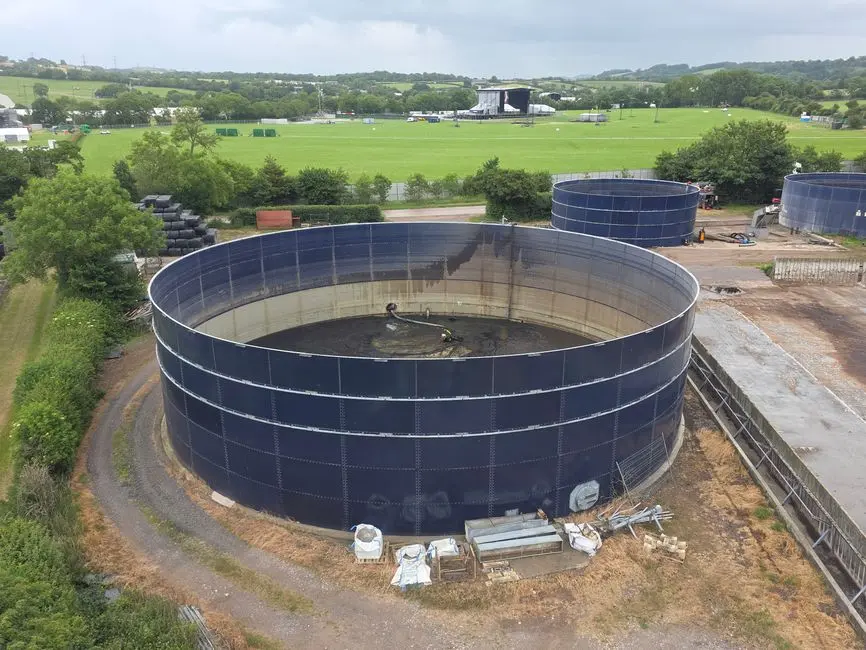
DAF is the stronger candidate when fiber recovery, removal of low-density solids, or compact primary clarification drives the project; a clarifier is the stronger candidate when the solids load is reliably settleable and lower routine operating cost dominates the decision. The table below separates screening logic from guarantees that require pilot evidence.
| Decision factor | DAF | Gravity or lamella clarifier | Procurement evidence required |
|---|---|---|---|
| Best-fit material | Fibers, fillers, pitch, stickies, colloids, and floatable material | Solids with reliable gravitational settling characteristics | Settleable and nonsettleable solids fractions; representative particle characterization |
| Separation control | Bubble contact, saturation or recycle conditions, and flotation-zone loading | Settling velocity, hydraulic retention, and solids loading | Duty curves and performance at peak, average, and turndown conditions |
| Civil arrangement | Potentially compact, but requires an operating skid and air system | Conventional basins generally require larger footprints and deeper civil construction | General arrangement, elevations, utilities, and installed-price schedule |
| Operating subsystems | Air generation, saturation or recycle equipment, pressure control, and potentially chemical conditioning | Fewer mechanical subsystems, but requires dependable sludge withdrawal and basin hydraulics | Controls narrative, alarm list, chemical compatibility, and maintenance plan |
| Cost hypothesis | Potentially valuable where fiber recovery or downstream-load reduction is material | Ecologix’s commercial guide reports generally lower operating costs | Lifecycle comparison including chemicals, air, sludge, labor, maintenance, and downstream treatment |
| Catalog reference | Verified HydropureWater catalog: micro-bubble technology, automatic skimming, 4–300 m³/h across 13 models | HydropureWater catalog data cited by S5 reports 20–40 m/h as a vendor-reported lamella range, not a universal design value | Requested model, guaranteed duty point, test protocol, and exclusions |
Do not compare purchase price alone. DAF introduces chemical and compressed-air demand, while clarification introduces basin, sludge-withdrawal, and civil-work consequences. Neither equipment category resolves the full BOD, COD, or color obligation. A bid should identify which removals are guaranteed, which are expected, and which downstream unit remains responsible for residual pollutants.
Use a Five-Step Selection Framework
A defensible Greenfield selection requires five documented gates, with representative mill data preceding any equipment commitment. The framework is designed to produce an auditable basis for concept design, pilot testing, and competitive bidding.
- Characterize the stream. Build a mass balance from representative sampling across furnish grades, grades of change, shutdowns, and peak production. Separate whitewater, recovery streams, combined effluent, and discharge or pretreatment flows; do not average them into one design load.
- Set the target and decision boundary. State whether the project prioritizes fiber recovery, process-water reuse, POTW pretreatment, or final discharge compliance. Define water-fit-for-use quality, including what can enter each paper-machine or furnish process.
- Pilot the separation step. Run jar tests to establish chemical demand and solids behavior. Where flotation versus sedimentation remains uncertain, compare representative DAF and clarifier performance rather than extrapolating from a vendor case study. Use the DAF coagulation, flocculation, and sizing guide to structure the test work, while recognizing that starch-wastewater guidance does not replace pulp-and-paper sampling.
- Model the complete train. Include screening, equalization, primary clarification, biological treatment, polishing, sludge handling, and reuse constraints. Neither DAF nor a clarifier replaces these functions.
- Validate commercially. Issue the RFQ with measured flow ranges, TSS and fiber targets, temperature, chemistry, duty and standby requirements, controls scope, guarantees, and a common lifecycle-cost format. Polymer programs must be optimized for the actual furnish because Hubbe and colleagues identify coagulants and flocculants among the agents that can improve separation performance.
Each gate should produce an auditable record: sampling plan, raw laboratory results, test protocol, calculations, pilot observations, unresolved risks, and the decision signed by operations, process engineering, environmental, and procurement. A pilot result that does not cover production variability is not a basis for final sizing.
Connect Equipment Choice to Compliance and Water Reuse
The primary-unit decision influences biological loading, fiber reuse, residual solids, and downstream polishing, but it does not establish discharge compliance by itself. The federal framework referenced in S5 is 40 CFR Part 430, the pulp, paper, and paperboard point-source category. Applicable requirements vary by pulp, paper, and paperboard subcategory and furnish type, so no generic limit should be placed in an RFQ.
| Decision path | Primary treatment role | Downstream requirement | Evidence before selection |
|---|---|---|---|
| Final discharge | Remove solids and fiber-associated pollutants before biological or advanced treatment | Residual BOD, COD, color, and solids treatment as applicable | Current permit, exact subcategory, furnish basis, and state requirements |
| POTW pretreatment | Reduce suspended solids and material prohibited or restricted by the local pretreatment authority | Additional biological or solids polishing if required by the discharge permit | Current POTW ordinance, permit, sampling protocol, and local limits |
| Process-water reuse | Recover fiber and clarify whitewater to the receiving process’s water-fit-for-use specification | Filtration, biological treatment, or membranes only where the reuse target requires them | Reuse quality, process compatibility, temperature, corrosion, and contaminant accumulation |
Confirm the proposed mill’s exact process, current regulation, permit, and state or POTW requirements before relying on any compliance statement. DAF can remove solids and fiber-associated BOD, but residual biodegradable material and color may still require biological or advanced treatment, consistent with Hubbe and colleagues. A lamella clarifier may be justified after primary treatment to protect filters or control residual TSS, but measured performance must establish that need.
Reuse economics also require a site balance. Hubbe and colleagues report that the pulp and paper industry uses about 70% of its water intake as process water and that internal recirculation saves money and reduces environmental resource use. Do not carry S5’s claimed heating savings or payback period into a Greenfield business case as universal figures. Require bidders to substantiate any thermal, fiber, or water benefit from the site’s own energy and mass balances.
Build the Budget and ROI Case Before Ordering
A defensible budget compares lifecycle consequences and separates guaranteed process metrics from unverified claims. No Greenfield ROI can be calculated without site flow, wastewater chemistry, utility prices, sludge-disposal cost, and recovered-fiber value.
| Cost or value element | Information required from the mill | Information required from bidders | Comparison treatment |
|---|---|---|---|
| Installed equipment and civil works | Site geometry, elevations, access, and construction constraints | Equipment, foundations, piping, controls, electrical, installation, exclusions, and schedule | Compare a common installed-price basis |
| Chemicals and utilities | Water analysis, pilot dosage, utility tariffs, operating hours | Design dose, consumption calculation, air demand, power, and operating assumptions | Track annual quantity and sensitivity to dose |
| Sludge and recovered fiber | Disposal route, hauling cost, and fiber value or reuse specification | Expected solids yield and recovery, with test conditions | Do not assign value to unrecovered material without a market or reuse basis |
| Labor, maintenance, and downstream effects | Staffing model, maintenance policy, downstream bottlenecks | Controls scope, preventive maintenance, spare parts, startup, turndown, and mixed-grade operation | Include effects on biological loading, filters, and reuse quality |
Ecologix’s commercial guide reports that clarifiers generally have lower operating costs and that DAF may be more cost-effective for specific contaminants. Treat that as a hypothesis to validate, not a final award criterion. Value may arise through recovered fiber, reduced fresh-water demand, lower biological loading, avoided sludge hauling, or reduced sensitivity to reuse requirements—but each benefit needs a site-based calculation.
Require every bidder to state feed composition, sampling method, polymer dose, hydraulic loading, test duration, startup and turndown conditions, and whether results include mixed-grade operation. Ask vendors to identify which values are contractual guarantees and which are vendor-reported field observations. That distinction is essential because the available commercial material includes claims that cannot be transferred reliably to a Greenfield pulp mill.
Frequently Asked Questions
Should a Greenfield pulp and paper mill choose DAF or a clarifier?
Choose DAF when representative sampling shows low-density fibers, fillers, pitch, stickies, colloids, or floatable material that must be recovered or removed as a primary solids stream. Choose clarification when the solids are demonstrably heavier and settle reliably under the expected hydraulic conditions. For mixed or uncertain streams, pilot both mechanisms and evaluate fiber recovery, residual solids, downstream loading, footprint, and lifecycle cost. The review by Hubbe and colleagues supports DAF as an upstream process-water option and describes conventional primary clarification followed by activated sludge as a widely implemented arrangement.
What information is needed to size the equipment?
Require representative flow duration, peak flow, TSS, fiber and filler content, settleable and nonsettleable solids fractions, temperature, pH, conductivity, BOD, COD, color, and the intended reuse or discharge quality. A model name or catalog capacity is not a sizing basis. Pilot results should also establish polymer demand, flotation or settling behavior, performance under variable feed, and the required turndown and standby arrangement.
How should bidders be selected without overstating vendor performance?
Require a guaranteed duty point, representative pilot evidence, a complete controls scope, documented chemical compatibility, and a performance-test protocol tied to the mill’s actual wastewater. Ask each bidder to state test conditions, feed composition, sampling method, polymer dose, hydraulic loading, and whether performance includes startup, turndown, and mixed-grade operation. Treat unsupported field claims and generic removal percentages as unverified until reproduced under the proposed conditions.
How should cost and budget be compared?
Compare installed equipment, civil works, chemicals, compressed air, power, sludge volume and disposal, operator labor, maintenance, controls, and downstream impacts. Request a common lifecycle-cost format with quantified assumptions. A lower routine operating cost does not necessarily mean the lower total cost if one option adds fiber recovery, reuse value, or lower downstream treatment demand. No defensible price or ROI can be stated without the site flow, chemistry, utility prices, sludge-disposal cost, and recovered-fiber value.
Can DAF or clarification alone demonstrate regulatory compliance?
No. The applicable United States framework is 40 CFR Part 430, but requirements depend on the exact pulp, paper, or paperboard subcategory and furnish type. Confirm the current regulation, proposed permit, state requirements, and any POTW pretreatment conditions. DAF or clarification can remove solids and reduce related loads, while residual BOD, color, or solids may require biological or advanced treatment and additional polishing. Use the MMBR and conventional activated-sludge comparison only as a downstream-treatment reference; it is not pulp-and-paper permit guidance.