Determine Whether Part 433 Applies to the Seattle-Area Plant
Fabricated-metals plants near Seattle meet sewer pretreatment limits by first determining whether their operations fall within 40 CFR Part 433, then characterizing the wastewater and selecting treatment matched to the contaminants. A shop operating zinc, nickel, or chromic-acid plating or anodizing lines is more likely to be a categorical industrial discharger than one that only fabricates dry metal and sends parts to a separate finisher. If Part 433 applies, the facility must comply with federal categorical requirements and King County local limits, using the stricter requirement for each parameter. The resulting treatment train commonly includes equalization, oil removal, chromium reduction, cyanide oxidation, metals precipitation, clarification, pH adjustment, monitoring, and sludge dewatering.
40 CFR Part 433 applies to the Metal Finishing point source category when operations such as forming, finishing, forging, foundry work, metal spraying, or machining wash are co-located with plating or anodizing lines. A stamping operation that produces only dry parts for shipment to an outside finisher is generally outside that category. A facility operating its own zinc, nickel, or chromic-acid tank is inside it. This distinction should be documented with the process inventory, not inferred from the company’s “fabricated metals” description.
Part 433 contains Pretreatment Standards for Existing Sources, or PSES, and Pretreatment Standards for New Sources, or PSNS. The PSNS limits are tighter and apply to sources constructed after the rule’s promulgation date. The regulated pollutants are cadmium, chromium, copper, lead, nickel, silver, zinc, and total toxic organics. King County states that categorical dischargers must obtain a full permit regardless of wastewater volume. A shop should therefore resolve its regulatory category before ordering equipment. The fabricated-metals wastewater pretreatment guide provides a useful process for organizing that classification work.
| Decision point | Evidence to document | Regulatory consequence |
|---|---|---|
| Metal-finishing operations | Plating, anodizing, chromic conversion coating, or related wet finishing performed on site | Evaluate 40 CFR Part 433 applicability |
| Fabrication only | Dry parts shipped to a separate finisher; no covered wet-finishing line | Generally outside the categorical category, subject to confirmation from King County |
| Existing or new source | Construction date and applicable federal standard | Compare PSES or PSNS with local limits |
| Discharge volume | Daily wastewater flow | Does not remove the full-permit requirement for categorical dischargers |
Build the Permit Basis from Federal and King County Limits
King County local limits are additional to federal limits, and the controlling requirement is the stricter limit for each parameter. The supplied 2026 pretreatment research explains that local limits established under 40 CFR 403.5 are at least as stringent as categorical standards and commonly add controls for copper, nickel, zinc, lead, silver, oil and grease, total suspended solids, and pH. Equipment should therefore be specified from the King County permit table and confirmed influent data, not from the federal rule alone.
King County’s pH requirements establish both an instantaneous and a daily compliance boundary. The maximum discharge pH is 12.0. A grab sample or continuous recording below pH 5.0 violates the instantaneous minimum. A recording below pH 5.5 for 15 minutes or longer violates the daily minimum; four consecutive grab samples at intervals of at least 15 minutes within 24 hours can also trigger a violation. These rules make continuous pH recording and a verified low-pH diversion strategy important for acidic batch dumps.
The nonpolar fats, oils, and grease limit is 100 mg/L under King County’s discharge rules. Facilities handling nonpolar FOG may need an approved oil-and-water separator plan submitted to the King County Industrial Waste Program, which approves pretreatment systems and conducts discharge monitoring. Permits may contain concentration limits in mg/L as well as mass limits in lb/day, particularly for metals. The controlling permit must be checked for both forms; generic metal caps should not be substituted for permit terms.
Temperature is another independent constraint. King County prohibits wastewater above 150 degrees Fahrenheit at discharge and above 104 degrees Fahrenheit when it reaches the treatment plant. An industrial sewer discharge permit must therefore address cooled return lines, temperature control, and any effect of cooling on the chemical mass balance.
Before detailed design, obtain the current permit, application status, local-limit tables, separator requirements, and reporting forms from the King County Industrial Waste Program. The agency’s discharge limits and regulations are the controlling references for these local requirements.
| Control area | King County requirement | Design implication |
|---|---|---|
| pH | Maximum 12.0; instantaneous minimum 5.0; daily minimum applies to 15 minutes or longer below 5.5 | Continuous recording, chemical control, and diversion provisions |
| Nonpolar FOG | 100 mg/L | Determine whether an approved separator plan is required |
| Metals | Permit may specify concentration and mass limits | Use the permit-specific value, not a generic cap |
| Temperature | Maximum 150 degrees Fahrenheit at discharge and 104 degrees Fahrenheit at the treatment plant | Provide cooling or hot-waste exclusion |
Characterize Batch Wastewater Before Sizing the System

A short composite sample can miss the batch dump that controls equalization volume and chemical demand. HydropureWater’s 2026 field characterization reports oils of 50–500 mg/L, total dissolved metals of 5–200 mg/L, TSS of 100–1,000 mg/L, and pH varying from 2 to 12 across batch dumps at mixed floor-drain pretreatment inlets. These figures are characterization context, not a substitute for site sampling. The same research recommends a full week of composite flow before equipment specification because a four-hour composite can miss a major production dump and undersize the basin.
The process contrast matters more than the shop average. A stamping cell may remain near pH 7 with low metals, while a hard-chrome rinse dump can push Cr(VI) above 50 mg/L and pH below 2, according to HydropureWater’s 2026 field data. Treating these streams in one uncharacterized response would make dosing unstable and could expose the permit to pH, chromium, or solids violations.
Prepare a process inventory covering tank lines, rinse-water flow, batch volumes, dump timing, floor-drain routing, compressed-air condensate, pickling, plating, anodizing, machining oils, and washdown practices. Separate streams where practical, especially oily condensate and high-strength plating rinses. Equalization volume should reflect the largest documented dump and the incoming flow during the release period, not average daily flow alone.
The sampling program should distinguish total metals from dissolved metals and separate free oil, emulsified oil, and dissolved oil. Include grab samples for individual batch dumps and flow-proportioned composites across representative production periods. Confirm Cr(VI) separately where chromium reduction may be required, and identify whether cyanide is present and whether the permit addresses total cyanide or cyanide amenable to chlorination. The guide to selecting a DAF system for FOG and TSS explains why oil and solids characterization must precede flotation sizing.
Match Each Contaminant Family to Its Treatment Step
The functional treatment train is screening, equalization, oil removal, hexavalent chromium reduction, cyanide oxidation, pH-controlled metals precipitation, DAF or lamella clarification, pH trim, and final polishing when the permit or reuse objective requires it. Each stage has a different mechanism: oil is removed physically or by chemical break, Cr(VI) is reduced, cyanide is oxidized, and dissolved metals are precipitated as hydroxides. Combining incompatible demands in one reaction tank does not remove the need for those mechanisms.
Cyanide must be destroyed before metals precipitation because it can resolubilize downstream precipitates. Hydroxide treatment therefore follows cyanide oxidation, not the reverse. The precipitation stage must also be able to raise the treated stream to the selected metal-hydroxide pH range without creating an uncontrolled downstream pH excursion.
For chromium, HydropureWater’s 2026 pretreatment research specifies reduction of Cr(VI) to Cr(III) with sodium metabisulfite or ferrous sulfate at pH 2–3, with ORP controlled around 250–300 mV. The resulting Cr(III) precipitates as Cr(OH)₃ during the pH 8.5–9.5 stage. Hexavalent chromium hydroxide would remain comparatively soluble under that chemistry, so adequate reduction must be verified before precipitation.
A DAF or lamella clarifier then separates conditioned metal-hydroxide floc. A DAF system for metalworking wastewater is appropriate where oil-bearing or low-density floc must be removed, while a high-efficiency sedimentation tank can provide compact inclined-plate clarification after flocculation. Chemical feed should use a PLC-controlled automatic chemical dosing skid with feedforward and feedback control rather than fixed-dose manual operation.
Polishing is justified when local limits are tighter than PSNS, rinsewater reuse requires additional quality, or a future rule creates a numerical requirement. EPA had chrome-finishing PFAS rulemaking in progress in 2026, but the supplied research identified no current numerical PFAS limit for chrome finishers. That supports reserving space and connection points, not purchasing specialty PFAS equipment without a controlling requirement. For BOD/COD tightening or reuse, an MBR integrated wastewater treatment system may be appropriate. For sub-ppm TDS or very tight dissolved-metal targets, an reverse osmosis system may be needed; the research specifies multi-media filtration upstream of RO to protect the membranes.
| Contaminant or objective | Required mechanism | Verification point |
|---|---|---|
| Free and emulsified oil | Oil-water separation or chemical break | Oil concentration after separation |
| Hexavalent chromium | Reduction to Cr(III) | Reduction-stage pH and ORP, then chromium results |
| Cyanide | Oxidation before precipitation | Cyanide result before downstream metals treatment |
| Dissolved metals | pH-controlled hydroxide precipitation | Total and dissolved metals after clarification |
| Metal-hydroxide floc | DAF or lamella clarification | TSS and floc capture |
| Reuse or tighter permit | MBR, RO, or other validated polishing | Permit- or reuse-specific quality data |
Size the Flotation and Solids Handling for Variable Loads
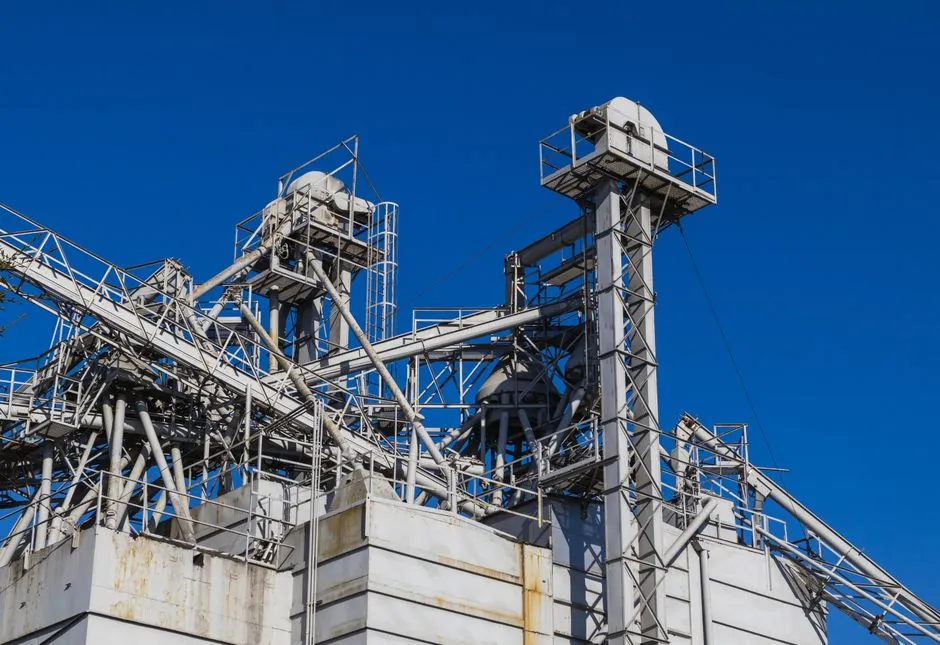
DAF sizing depends on hydraulic surface loading, air-to-solids ratio, and recycle rate. HydropureWater’s 2026 design guidance gives hydraulic surface loading of 4–20 m/h depending on model and floc density, an A/S ratio of 0.005–0.060 with 0.02 as a typical design point, and recycle of 10–30% of forward flow. These parameters must be selected from the characterized oil, solids, and floc conditions rather than applied as universal values.
Increasing A/S can dry the float, but it also increases blower demand and can break fragile floc. Increasing recycle can improve TSS removal, but it dilutes the chemical condition and increases equalization demand. Both changes affect the mass balance: recycle water carries flow and chemicals back into the process, so the basin and treatment train must be sized for the selected operating point.
DAF is suited to oil-bearing, low-density floc and metalworking wastewater. Lamella clarification provides compact inclined-plate separation after flocculation and may be appropriate where the conditioned sludge is denser and the required footprint is smaller. The selection should reflect the float characteristics, hydraulic variability, maintenance access, and sludge-removal method.
Solids handling must be included in the equipment scope. HydropureWater’s 2026 research reports floated metal-hydroxide sludge at 2–5% dry solids and 25–35% after plate-and-frame filtration. A plate-and-frame filter press is therefore part of the dewatering train when those performance claims are required. A rotary mechanical bar screen can remove rags, wipes, and tramp metal before they interfere with dewatering equipment.
Controls protect both equipment and permit compliance. Interlocks should divert flow to the equalization basin header when pH or ORP leaves its control range, when TSS indicates an upset, or when chemical service becomes unavailable. Confirm that diversion piping has enough hydraulic capacity for the complete production dump and that the basin can receive the returned flow without overtopping.
| DAF design parameter | Research basis | Selection question |
|---|---|---|
| Hydraulic surface loading | 4–20 m/h depending on model and floc density | What loading is supported by the characterized floc and flow profile? |
| Air-to-solids ratio | 0.005–0.060; 0.02 identified as a typical design point | What float dryness and floc strength are required? |
| Recycle | 10–30% of forward flow | How will recycled flow affect chemical concentration and equalization? |
| DAF versus lamella | DAF suits oil-bearing, low-density floc; lamella provides inclined-plate separation | Which mechanism matches the conditioned solids and site constraints? |
Verify Compliance Through Monitoring and Operating Controls
Compliance must be demonstrated against the applicable PSES or PSNS daily-maximum and monthly-average limits before discharge, together with any stricter King County limit. This is a permit-and-operation obligation, not a procurement option. The compliance sampling point should see the final treated stream, and the chain of custody, calibration records, laboratory methods, and operating log must connect each result to the equipment state that produced it.
A PLC-controlled dosing system should combine feedforward tied to flow with feedback tied to pH and ORP. Calibrate the pumps and retain the calibration records. Stroke-count totalizers provide a check on actual chemical use and help operators detect changing batch chemistry that would otherwise appear as unexplained reagent consumption.
The operating record should include flow, pH, ORP, oil and grease, total and dissolved metals, TSS, cyanide, chromium speciation where relevant, temperature, and chemical usage. Equalization serves treatment and compliance at once: it buffers batch dumps, allows the chemistry to stabilize, and provides temporary storage for an upset. Continuous recording is especially important where King County’s pH violation depends on the duration of an excursion.
King County notes a conditional reporting simplification: facilities outside significant-industrial-user status that discharge less than 5,000 gallons per day may need to comply only with instantaneous limits. That statement does not remove other permit, monitoring, reporting, or hazardous-waste-notification duties. Confirm the facility’s status and permit conditions with King County rather than inferring the reporting basis from flow alone.
Commission in a sequence that tests the complete compliance function: dry checks, water testing, chemical-response testing, alarm validation, operator training, and permit-submission documentation. Validate each diversion route and each permit analyte during commissioning rather than waiting for the first production dump.
Use a Decision Framework to Select Pretreatment Equipment
The equipment scope follows from drainage segregation, contaminant character, and the required effluent quality—not from a generic metal-fabrication package. Segregated oily drains may justify oil-water separation; mixed floor drains generally require equalization followed by multichemistry treatment; and high-purity reuse demands validated polishing after the primary treatment train. The complete regulatory sequence begins with the fabricated-metals wastewater pretreatment guide, followed by the FOG and TSS inputs used in how to select a DAF system for FOG and TSS.
Require the supplier to base equalization volume on documented batch dumps, including the largest event, release duration, and simultaneous incoming flow. Require the control narrative to cover pH, ORP, TSS, high-flow, chemical-out-of-service, and return-to-equilization interlocks. Equipment proposals should identify recycle rate, A/S, hydraulic surface loading, chemical storage, duty cycle, sludge yield, and maintenance access so the technical basis can be reviewed against the permit and influent data.
Do not purchase specialty PFAS polishing solely because a rulemaking is pending. Request the current permit, current agency guidance, proposed reuse specification, and any confirmed future requirement. Cost should be evaluated against the complete scope—treatment equipment, chemical storage, controls, sludge dewatering, utilities, maintenance, monitoring, and permit-related engineering—not against an equipment price alone.
| Site condition | Equipment branch | Buyer must request |
|---|---|---|
| Segregated oily drains | Oil-water separation before equalization or treatment | Oil fractions, flow profile, separator plan requirements, and measured separation basis |
| Mixed floor drains | Equalization plus multichemistry treatment and solids removal | One-week characterization, batch-volume record, permit limits, control narrative, and sludge handling |
| High-purity reuse | Primary treatment followed by validated polishing | Reuse quality specification, required recovery and reliability criteria, and membrane-protection requirements |
Frequently Asked Questions
Does a Seattle metal fabricator need 40 CFR Part 433 treatment?
Not every fabricated-metals facility is a categorical discharger. Part 433 generally becomes relevant when forming, finishing, forging, foundry, metal-spraying, or machining-wash operations are co-located with plating or anodizing. A shop shipping only dry parts to a separate finisher is generally outside the category, while one operating zinc, nickel, or chromic-acid tank is inside it. Submit the process inventory to King County and document the classification before selecting equipment.
What cost inputs should a buyer request before setting a pretreatment budget?
Request a complete installed-cost breakdown covering equalization, oil removal, chemical dosing, chromium reduction, cyanide oxidation, precipitation, DAF or lamella clarification, pH control, sludge dewatering, controls, utilities, maintenance, monitoring, and permit engineering. The supplied research provides no defensible project price, so a buyer should not rely on a generic equipment quotation. The quote should identify the design basis, duty cycle, chemical consumption, recycle rate, sludge yield, and excluded site works.
How should a supplier size DAF equipment for a batch-waste stream?
Require the proposal to connect equipment selection to the characterized flow and solids data. HydropureWater’s 2026 guidance identifies hydraulic surface loading, A/S ratio, and recycle as the governing design parameters. The buyer should also require confirmation that the selected recycle returns to a basin with enough available volume to receive a full production dump and upset diversion.
Which operating controls are essential for permit compliance?
At minimum, require continuous pH recording, flow-paced and feedback-controlled chemical feed, pump calibration records, stroke-count totalizers, and automatic diversion to equalization on pH, ORP, high-TSS, or chemical-service upsets. The operating log should also track flow, oil and grease, total and dissolved metals, TSS, cyanide, chromium speciation where relevant, temperature, and chemical usage.
When is polishing equipment justified?
Use polishing when the controlling permit is tighter than the applicable categorical standard, when rinsewater reuse requires a defined water quality, or when a confirmed future rule requires it. EPA had chrome-finishing PFAS rulemaking in progress in 2026, but the supplied research identified no current numerical PFAS limit for chrome finishers. Validate the requirement against the current permit and agency guidance before buying PFAS-specific equipment; reserve physical space and connection points where future expansion is credible.