Determine Which Discharge Rules Control the Plant
A chemical plant’s sewer-discharge obligations are established by the applicable pretreatment standards, prohibitions, local discharge limits, and City of Lubbock authorization—not by a single concentration number. EPA’s Local Limits Development Guidance, published in 2021, states that indirect dischargers are governed by permits or equivalent control mechanisms issued by POTW industrial users and by regulatory requirements; when guidance conflicts with a permit or regulation, the permit or regulation controls. The City of Lubbock administers local, state, and federal regulations affecting businesses and wastewater quality at its POTW (City of Lubbock, 2026).
Begin with this hierarchy:
| Rule layer | Question the engineer must answer | Design consequence |
|---|---|---|
| Prohibited discharges | Does the waste contain a characteristic the sewer ordinance or applicable regulations prohibit? | Eliminate or separately manage the waste before it enters the treatment train. |
| Categorical pretreatment standards | Does the plant’s industrial category have applicable categorical standards? | Identify the pollutants and limits that apply to that category. |
| Local discharge limits | Has Lubbock established local limits for the pollutants of concern? | Set site-specific pretreatment and monitoring objectives. |
| Permit or equivalent control mechanism | What conditions, monitoring points, sampling frequencies, reporting duties, and discharge provisions apply? | Define the enforceable compliance boundary. |
Do not treat hauled-waste acceptance as approval for direct industrial sewer discharge. Lubbock prohibits waste haulers from delivering grease-trap or interceptor waste, grit or sand-trap waste, oil, grease, antifreeze, battery acid, vehicle or engine fluids, and RCRA hazardous waste to the Southeast Water Reclamation Plant (City of Lubbock, 2026). Those restrictions govern the receiving station; they do not replace evaluation of a direct industrial discharge under the wastewater contribution permit or equivalent mechanism.
Before purchasing an automatic chemical dosing system for pH and coagulation control, ask Lubbock’s Industrial Waste Monitoring and Pretreatment office for the current permit, sewer-ordinance requirements, and a written determination of the plant’s categorical-standard and local-limit applicability.
Characterize Every Chemical-Plant Wastewater Stream
Industrial wastewater characterization requires a stream-by-stream analysis because process, wash, laboratory, floor, and contaminated-stormwater flows contain different contaminants, schedules, and discharge destinations. EPA’s 2021 local-limit framework identifies a sequence: determine pollutants of concern, collect and analyze data, calculate allowable loadings, designate applicable limits, and address collection-system concerns. A plant should apply that logic to its own discharge while waiting for the City’s written requirements.
Map each source before combining it with another stream. Request production schedules, water-use records, chemical inventories, batch-dump descriptions, cleaning practices, and operating logs that identify intermittent high-strength flows. For each stream, define the sampling point, flow representation, frequency, analytical method, and whether the result is a grab or composite sample.
| Characterization input | What to obtain | Why it affects pretreatment |
|---|---|---|
| Flow profile | Average flow, peak flow, batch-discharge flow, production schedule, and equalization volume | Defines hydraulic and batch-loading conditions. |
| Source chemistry | Process and cleaning inventories, incompatible materials, and waste-generation practices | Identifies toxic constituents and treatment incompatibilities. |
| Wastewater data | Parameters required by the permit, categorical-standard review, local limits, and process chemistry | Converts compliance obligations into treatment objectives. |
| Monitoring plan | Sample type, location, frequency, analytical method, laboratory, and data validation process | Produces defensible evidence for design and compliance. |
Include pH, flow, BOD5, and TSS when they apply to the discharge characterization; do not substitute them for pollutants known to be present in the process. EPA also emphasizes sampling locations, frequencies, methods, analytical methods, and flow data when developing and evaluating local limits.
Flow and concentration must be considered together. A high-concentration batch may create a disproportionate pollutant load even when its volume is small, while a larger dilute stream may impose a different hydraulic demand. If flow data are incomplete, obtain them before selecting equipment. A rotary mechanical bar screen can protect downstream equipment from larger debris, but it does not replace source characterization or remove dissolved pollutants.
Build the Pretreatment Process Train
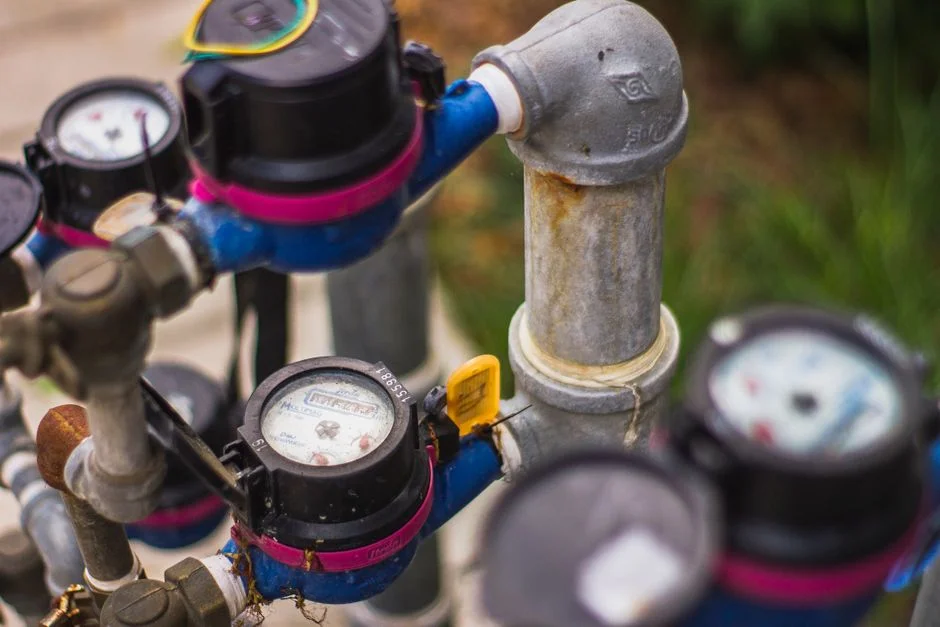
A defensible chemical-plant pretreatment train generally progresses from segregated collection to equalization, controlled chemical addition, solids separation, biological treatment where required, optional disinfection, and monitored final discharge. Engineers must ensure the sequence follows the permit and waste profile rather than a standard equipment package.
- Segregate and screen: Keep incompatible and high-strength streams separate until their treatment requirements are established.
- Equalize: Use flow equalization to buffer production variation and batch dumps before treatment.
- Control pH and chemistry: Apply metered chemical dosing only where characterization establishes a treatment objective.
- Remove solids: Select coagulation, flocculation, flotation, clarification, or filtration according to contaminant type.
- Treat biodegradable organics: Add biological treatment where the permit and data establish an organic-removal requirement.
- Disinfect only when justified: Select disinfection only if monitoring data and the discharge authorization establish a microbiological treatment objective.
| Process step | Use when | Main design issue |
|---|---|---|
| Equalization and flow equalization | Flow or batch conditions are variable | Retained volume and controllable discharge to downstream treatment |
| pH adjustment and coagulation | Characterization identifies pH, suspended solids, colloids, or metals requiring chemical control | Chemical demand, mixing, dose control, and residual management |
| Dissolved air flotation | The waste contains suspended solids, FOG, oil and grease, or colloidal material | Hydraulic and contaminant loading, recycle performance, and sludge handling |
| Biological treatment | Biodegradable organics require removal | Process suitability, control, residuals, and sludge production |
| Solids handling | Treatment concentrates pollutants into sludge or cake | Dewatering, transport, disposal route, and operating labor |
An automatic chemical dosing system for pH and coagulation control should be selected based on the actual chemical, dose range, storage requirements, and control strategy established during characterization. A dissolved air flotation system for industrial pretreatment is appropriate for applicable suspended solids, FOG, oil and grease, or colloidal loads, not for every chemical stream.
EPA’s 2021 framework treats collection-system damage, interference, pass-through, sludge impacts, and worker protection as concerns that local limits should address. The applicable permit and regulations remain controlling. Sludge handling is part of that evaluation: chemical precipitation and flotation create concentrated solids whose cake characteristics, dewatering needs, and disposal route determine whether the treatment process is practical.
Size Equipment Against Permit and Surge Conditions
Equipment sizing must distinguish average wastewater flow, peak flow, batch-discharge flow, and retained equalization volume; a catalog flow rating alone does not demonstrate permit compliance. EPA’s 2021 local-limit guidance requires evaluation of flow data and allowable loadings, while Lubbock’s surcharge provisions recognize that high-strength BOD5 and TSS discharges are more difficult and expensive to treat (City of Lubbock, 2026).
Do not select DAF, chemical dosing, or membrane capacity from flow alone. The designer needs the wastewater profile, applicable concentration or loading limits, chemical requirements, operating controls, and treatment objectives. Where the wastewater contribution permit specifies monitoring and compliance conditions, those conditions belong in the sizing basis.
| Equipment | Available configuration or range | Engineering verification required |
|---|---|---|
| Dissolved air flotation system | Available range of 4–300 m³/h across 13 standard models | Hydraulic loading, contaminant loading, feed characteristics, recovery, sludge withdrawal, and permit compliance |
| Automatic chemical dosing system | PLC-controlled, skid-mounted, pre-wired, and factory-tested configuration | Compatible chemicals, tankage, metering range, control logic, and verified dose range |
| Plate and frame filter press | Available filtration-area range of 1–500 m² | Solids generation, cake handling, pressure and cycle requirements, and disposal route |
Those catalog ranges identify available configurations, not automatically compliant capacities. For a batch-dump service, ask the designer how equalization protects downstream equipment, what alarms and interlocks control upset conditions, how bypasses prevent untreated discharges, and whether duty and standby arrangements are needed. The plate and frame filter press also requires a practical cake-removal and disposal plan before purchase.
Verify Compliance Through Sampling and Reporting

Compliance monitoring must occur at the sampling point and under the conditions designated by the City of Lubbock or the wastewater contribution permit. Startup and challenge monitoring establish whether the treatment train performs as designed; routine monitoring then provides the record required to demonstrate compliance.
Compare each result with the applicable permit limit or other enforceable requirement. Do not use the 250 mg/L surcharge reference as a blanket chemical-plant concentration limit. Lubbock identifies 250 mg/L as C, the normal domestic sewage strength, in surcharge formulas based on V (million gallons), B (total user contribution in mg/L), C, 8.34 (pounds-per-gallon conversion), and the applicable BOD or TSS cost factor. Its sewer ordinance also addresses pretreatment to normal domestic sewage strength for qualifying high-strength waste accepted with surcharge (City of Lubbock, 2026).
Significant industrial users must submit self-monitoring reports throughout the permit term. Lubbock states that each report includes all sampling results from the reporting period and the applicable general and special certification statements. Maintain sampling records, laboratory reports, flow data, calibration records, and corrective-action logs.
Contact IWMP at [email protected] or (806) 775-3221. Its listed physical location is 3603 Guava Avenue, Lubbock, TX 79404. Obtain the current wastewater contribution permit, sewer-ordinance requirements, and written determinations before changing a process or wastewater characteristic. The DAF selection guide for FOG and TSS can support equipment screening, but it cannot replace the City’s authorization.
Assemble the Pretreatment Procurement Checklist
Procurement should begin with the permit and waste profile, not a treatment-equipment price list. Give each bidder the current permit or control mechanism, wastewater characterization, flow profile, applicable limits, analytical methods, monitoring schedule, and proposed sampling points. Require a written process objective, design assumptions, pretreatment needs, removal mechanisms, control narrative, electrical requirements, maintenance plan, sludge disposition, and startup support.
Ask bidders to price and explain chemical consumption, sludge removal, equipment sizing, redundancy, operator training, data reporting, and life-cycle responsibilities. A proposal that names a unit operation without defining its design basis is not comparable.
For additional planning context, a Texas package wastewater treatment plant comparison can help structure scope questions. City of Lubbock lists a $1,100 wastewater contribution permit application fee (City of Lubbock, 2026). That is an application fee only; it is neither a treatment-system budget nor evidence of equipment cost. Request itemized capital and operating-cost proposals based on the verified waste profile and permit conditions.
Frequently Asked Questions
Is 250 mg/L the maximum concentration a chemical plant may discharge to the Lubbock sewer?
No. Lubbock identifies 250 mg/L as C, the normal domestic sewage strength used in its BOD5 and TSS surcharge calculations (City of Lubbock, 2026). It is not a universal blanket discharge limit for chemical plants. The enforceable concentration or loading requirement must come from the wastewater contribution permit, applicable categorical standards, local limits, and sewer-ordinance provisions.
What data are needed to size pretreatment equipment near Lubbock?
Request the complete flow profile, source-by-source wastewater characterization, batch and surge information, applicable permit conditions, chemical requirements, monitoring plan, and sludge-disposal path. Compare each proposed unit by its intended function, design assumptions, controls, removal mechanisms, operating burden, and ability
Frequently Asked Questions
What pretreatment limits apply to a chemical plant discharging to the Lubbock POTW?
Chemical plants discharging to the City of Lubbock Publicly Owned Treatment Works (POTW) must adhere to the City’s Industrial Pretreatment Program and federal categorical standards under 40 CFR Parts 400-471. Local limits typically restrict pollutants such as Total Suspended Solids (TSS) and Biochemical Oxygen Demand (BOD) to concentrations generally below 300 mg/L, though specific mass-loading limits are determined by individual Wastewater Discharge Permits. Prohibited discharges include substances that cause pass-through or interference, such as flammable or explosive materials with a closed-cup flashpoint below 140°F (60°C) or pH levels outside the 5.0 to 11.0 standard range.
How much does industrial wastewater pretreatment cost for a chemical plant near Lubbock?
Capital expenditures for industrial pretreatment systems in West Texas typically range from $250,000 for modular skid-mounted units to over $2 million for complex, multi-stage facilities, depending on flow rates and contaminant profiles. Operating costs are heavily influenced by Lubbock’s industrial sewer surcharges for high-strength waste, which apply when BOD or TSS concentrations exceed threshold limits. Facilities should anticipate annual O&M expenses—including chemical reagents, sludge dewatering and disposal, and energy consumption—to range between $0.02 and $0.15 per gallon of treated effluent.
Should I use DAF, chemical dosing, or biological treatment for chemical-process wastewater?
Selection depends on the specific chemical constituents: Dissolved Air Flotation (DAF) is highly effective for removing fats, oils, grease (FOG), and suspended solids, often achieving 80-90% removal efficiency. Chemical dosing (coagulation and flocculation) is essential for heavy metal precipitation and pH adjustment, while biological treatment is reserved for high-BOD/COD streams that require carbonaceous degradation. For complex chemical-process streams, a hybrid approach—starting with chemical dosing for neutralization followed by DAF for primary solids removal—is frequently required prior to secondary biological polishing or discharge.
How do I size an industrial pretreatment system for batch dumps and peak flows?
System sizing must be based on the hydraulic retention time (HRT) required for the slowest unit process, typically determined by the maximum instantaneous discharge rate rather than daily averages. To manage batch dumps, facilities must install an equalization tank sized to hold at least 1.5 times the volume of the largest process dump, combined with automated flow-proportional pumping to maintain a steady hydraulic load on downstream equipment. Engineers should design for peak flow capacity at 125% of the highest expected process discharge to ensure compliance with POTW permit flow limits during surge events.
What sampling and self-monitoring records does Lubbock require from industrial users?
Industrial users are required to maintain a comprehensive self-monitoring program, which involves collecting representative 24-hour flow-proportional composite samples for regulated pollutants. Records must be kept on-site for a minimum of three years and include the date, exact place, method, and time of sampling, as well as the name of the person performing the collection and analysis. Reports must be submitted to the City of Lubbock Pretreatment Coordinator on a schedule defined by the facility’s permit, typically quarterly or semi-annually, certifying that all discharge parameters remain within the established local and federal limits.