What Is a Package Wastewater Treatment Plant?
A package wastewater treatment plant is a pre-engineered, factory-built system designed for rapid on-site installation, typically serving decentralized wastewater flows from 1,500 to 100,000 gallons per day (GPD). Unlike massive centralized municipal facilities, these units are modular, compact, and often skid-mounted or designed for burial, making them ideal for off-grid or remote applications. They provide a complete, turnkey treatment process—including aeration, clarification, and disinfection—in a single, transportable unit. This makes them the standard solution for remote subdivisions, industrial parks, motels, and rural communities where extending municipal sewer lines is geographically challenging or cost-prohibitive.
Key Technologies in Texas Package Plants
Selecting the core treatment process is the most critical technical decision, as it dictates effluent quality, operational complexity, and footprint. The three dominant technologies deployed across Texas each offer distinct advantages for different discharge requirements and site constraints.
MBR (Membrane Bioreactor): This process combines conventional activated sludge with ultrafiltration membranes, physically filtering suspended solids. It achieves exceptional effluent quality, with >99% TSS removal and BOD consistently <10 mg/L (HydropureWater field data, 2025). This makes it the preferred choice for water reuse applications (e.g., irrigation, cooling tower make-up) or for discharge into environmentally sensitive watersheds, despite its higher initial capital cost.
SBR (Sequencing Batch Reactor): An SBR system performs treatment—aeration, settling, and decanting—in a single batch reactor tank on a timed cycle. It is highly efficient for variable flow conditions, removing 90–95% of BOD and TSS. Its simplicity and compact footprint make it suitable for sites like schools, hospitals, and commercial complexes with fluctuating occupancy.
A/O (Anoxic/Oxic) Process: This continuous-flow system uses a two-stage biological contact oxidation process to remove 85–90% of BOD and TSS. It is a robust, cost-effective workhorse technology ideal for residential communities and rural areas with more stable flows. Some systems, like those utilizing extended aeration, enhance sludge stabilization, significantly reducing the frequency of sludge disposal.
| Technology | Effluent Quality (BOD/TSS) | Footprint | Ideal Use Case | Operational Complexity |
|---|---|---|---|---|
| MBR | <10 mg/L / <5 mg/L | Smallest | Reuse, Sensitive Discharge | High (Membrane Maintenance) |
| SBR | <20 mg/L / <20 mg/L | Compact | Variable Flows (Schools, Motels) | Medium (Automated Cycles) |
| A/O Process | <25 mg/L / <25 mg/L | Largest | Stable Flows (Subdivisions) | Low |
For projects demanding the highest quality effluent, a high-efficiency MBR system for reuse-quality effluent is often the optimal solution. For cost-sensitive applications where burial is desired, a buried package wastewater treatment system with 1–80 m³/h capacity using A/O or extended aeration provides reliable performance.
Performance Metrics and Texas Regulatory Requirements
Compliance with the Texas Commission on Environmental Quality (TCEQ) and EPA standards is non-negotiable. Package plants discharging to surface water must consistently meet permit limits, which for most standard permits include effluent with BOD ≤30 mg/L, TSS ≤30 mg/L, and fecal coliform ≤200 MPN/100mL. MBR systems are uniquely capable of surpassing these requirements, routinely achieving BOD <10 mg/L and TSS <5 mg/L, which is essential for securing more stringent Class I discharge permits or authorizing effluent reuse.
Disinfection is mandatory. Chlorine dioxide (ClO₂) and ozone are preferred methods as they meet EPA guidelines without forming harmful disinfection byproducts (DBPs) associated with chlorine gas. Odor control is also a critical compliance and community relations factor, especially for plants near residential zones. While biological additives are common, integrated ozone or carbon filtration systems offer a more sustainable and hands-off solution for long-term odor management. A comprehensive guide to federal and state wastewater compliance is essential reading during the planning phase.
Sizing and Flow Capacity Guidelines
Correctly sizing a package plant is paramount to its performance and compliance. Under-sizing leads to permit violations, while over-sizing unnecessarily inflates capital and operational costs. System capacities, such as those for the WSZ Series (1–80 m³/h or ~265–21,100 GPD), cover a wide range of applications. A 5,000 GPD unit typically serves a 100-home subdivision, while a 50,000 GPD system can support a mid-sized industrial facility.
Engineers must apply appropriate peak flow factors. Commercial sites like motels and restaurants experience significant daily surges and require systems buffered for 2.5–3x the average daily flow. A prudent strategy is to include 20–30% additional capacity in the initial design to future-proof for phased development or unexpected expansion, avoiding the need for a complete system replacement later.
Cost Analysis: What You’ll Pay in Texas
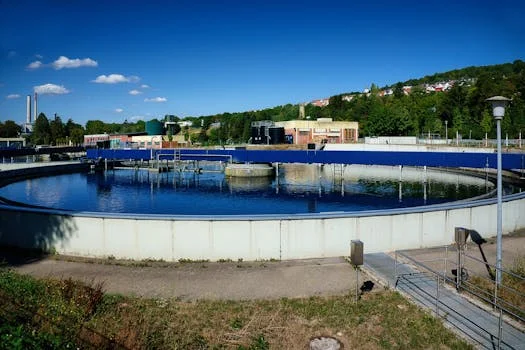
Budgeting for a package plant requires accounting for equipment, installation, and permitting. Costs are directly tied to technology selection, treatment capacity, and the stringency of discharge limits.
Basic A/O package plants represent the most cost-effective entry point, ranging from $50,000 to $150,000 for systems between 5,000 and 20,000 GPD. MBR systems, due to the complexity of membranes and advanced controls, command a premium, with prices between $200,000 and $500,000 for capacities of 10,000 to 50,000 GPD. It is critical to budget an additional 15–25% on top of equipment costs for site-specific installation, civil works, and TCEQ permitting fees. The return on investment improves dramatically for facilities that implement effluent reuse, with many high-water-use industries seeing a payback period of 3 to 5 years through reduced water procurement costs.
| Cost Component | Low Estimate | High Estimate | Notes |
|---|---|---|---|
| A/O System (5,000-20,000 GPD) | $50,000 | $150,000 | Ideal for residential, low-compliance needs |
| MBR System (10,000-50,000 GPD) | $200,000 | $500,000 | Required for reuse & sensitive discharge |
| Installation & Permitting | +15% | +25% | Site-dependent; add to equipment cost |
How to Choose the Right System for Your Project
The optimal package plant technology depends on a clear assessment of your project's wastewater characteristics, site constraints, and long-term operational goals.
For Industrial Parks or Manufacturing Facilities: Prioritize systems capable of handling variable and often high-strength waste. An MBR system is superior for consistent high-quality output, while a DAF (Dissolved Air Flotation) unit may be required as pre-treatment if oil, grease, or suspended solids are present in significant quantities.
For Remote Motels or Highway Service Stations: Choose durability and low maintenance. Corrosion-free concrete tanks paired with an extended aeration process provide reliable, long-term operation with minimal operator intervention.
For Schools, Hospitals, or Sensitive Commercial Zones: Select fully automated, odor-free systems. SBR or MBR technologies with ozone disinfection ensure compliance and eliminate nuisance odors, which is critical for public acceptance.
For Land-Scarce or Aesthetically Sensitive Sites: A buried installation is ideal. Systems like the WSZ Series are engineered for subsurface placement, allowing for landscaping above and minimizing visual and auditory impact on the surrounding area.
| Project Type | Recommended Technology | Key Considerations |
|---|---|---|
| Industrial Facility | MBR (with pre-treatment if needed) | High-strength waste, reuse potential, strict compliance |
| Subdivision / Residential | A/O Process, Extended Aeration | Cost-effectiveness, stable flow, low operational complexity |
| Motel / Restaurant | SBR, Extended Aeration | Peak flow buffering, odor control, durability |
| Hospital / Campus | MBR, SBR with Ozone | Public health, full automation, zero odor |
Explore specific solutions like a high-efficiency MBR system for industrial applications or a specialized medical wastewater treatment system for healthcare facilities.
Frequently Asked Questions
What is a package wastewater treatment plant?
A package wastewater treatment plant is a factory-built, modular system designed for decentralized wastewater treatment, typically serving flows from 1,500 to 100,000 GPD. It contains all necessary components in a single, pre-engineered unit for rapid deployment.
How much does a package plant cost in Texas?
Total project costs typically range from $50,000 to $500,000+. The final price depends on the treatment technology (A/O vs. MBR), system capacity, and site-specific installation and permitting requirements.
What is the best technology for remote sites in Texas?
MBR is best for projects requiring high-quality effluent for reuse or sensitive discharge. The A/O process is the best choice for cost-effective, low-maintenance operation in residential or rural applications.
Do package plants meet Texas TCEQ standards?
Yes, when they are properly sized, designed, and equipped with TCEQ-approved disinfection methods, such as chlorine dioxide, UV, or ozone. System selection must be based on the specific permit requirements for the discharge location.
Can a package plant be buried underground?
Yes. Many series, like the WSZ, are specifically designed for subsurface installation with full automation, allowing the surface land to be used for parking, landscaping, or other purposes.
For detailed regulatory planning, consult our comprehensive guide to federal and state wastewater compliance or a local case study on industrial treatment compliance in North Texas.