Start With the Wastewater Fraction, Not the Equipment Name
For mining and metals wastewater in Ary, choose a clarifier for dense, rapidly settling mineral fines and choose dissolved air flotation for oils, flotation reagents, and low-density or conditioned floc. Combined streams usually justify a lamella clarifier for bulk-solids removal followed by DAF polishing; a DAF-only train is more appropriate when the clarified feed is already low in heavy grit. DAF performance depends on jar-tested chemistry, with air/solids ratio, hydraulic loading, chemical addition, pressure, and flow among the key design variables. Confirm the final choice with site-specific characterization and pilot data.
The first engineering task is to identify the fractions that must be removed. A plant may combine dense tailings fines, colloidal clay, oil and grease from equipment or wash systems, residual flotation reagents, and dissolved metals. Those fractions respond differently to gravity separation, flotation, and chemical precipitation. A tank cannot compensate for a contaminant it cannot separate.
Request a characterization program covering TSS, particle-size distribution, pH, temperature, dissolved copper, lead and zinc where relevant, oil and grease, and reagent carryover. Sample normal production, startup, shutdown, washdown and peak-flow periods rather than designing from one average influent. The DAF selection checklist for FOG and TSS provides a useful sampling structure.
Dissolved heavy metals require a chemistry-based removal step before clarification. Precipitation can convert dissolved metals into particulate hydroxides, but pH and reagent control determine whether those particles form, remain suspended and are then removed by flotation or settling. Neither gravity settling nor flotation alone removes contaminants that remain dissolved.
Flow variability should be addressed before equipment selection. Hahn’s academic review, Fundamentals of Wastewater Flotation (2010), identifies equalization as a way to stabilize variable wastewater characteristics and improve treatment efficiency. For an Ary operation, determine whether industrial wastewater equalization is required for hydraulic peaks, changing chemistry or both; that requirement may affect the choice between one unit and a staged train.
How DAF and a Clarifier Separate Different Contaminants
Dissolved air flotation separates particles by attaching gas bubbles to floc and floating the aggregate, while a clarifier separates by gravity; this mechanical difference determines which contaminant fractions each unit can address. The academic flotation source identifies bubble generation, solid attachment and buoyancy as the flotation mechanism, with air/solids ratio, hydraulic loading, chemical addition, pressure and flow identified as critical variables (Hahn, Fundamentals of Wastewater Flotation, 2010).
In a DAF unit, pressurized water releases approximately 30–50 µm micro-bubbles in the flotation cell. The bubbles attach to oil droplets, conditioned colloids, fine precipitates and floc, which rise to a floating blanket removed by a skimmer. The water is withdrawn below that blanket. Clarifiers instead allow settleable particles to fall; inclined plates in a lamella clarifier shorten settling paths and increase effective settling area within a compact tank.
Dense mineral fines and metallurgical sludge are normally suited to gravity separation because their specific gravity exceeds that of water. DAF is more appropriate for oils, greases, flotation reagents, biological flocs, fine precipitates and conditioned colloids. The boundary matters: a high silt and clay load is difficult for DAF to lift, while a clarifier does not remove emulsified oil or buoyant, low-density floc.
An industrial DAF system also depends on upstream chemistry. Coagulant, pH adjustment and flocculant must create particles with suitable flotation characteristics. That chemistry cannot be transferred from another mine or copied from a generic performance table.
| Selection issue | Dissolved air flotation | Clarifier or lamella clarifier |
|---|---|---|
| Primary mechanism | Micro-bubble attachment and buoyancy | Gravity settling; inclined plates shorten the settling path |
| Best-matched fractions | Oil, grease, residual flotation reagents, conditioned colloids, fine precipitates and buoyant floc | Dense mineral fines, tailings solids and metallurgical sludge with specific gravity greater than water |
| Key operating variables | Air/solids ratio, hydraulic loading, chemical addition, pressure and flow (Hahn, 2010) | Particle settleability, surface overflow rate and sludge withdrawal |
| Important limitation | High silt and clay loads are difficult to lift | Emulsified oil, colloids and buoyant low-density solids may pass through |
| Typical process role | Primary treatment for suitable buoyant streams or polishing after bulk-solids removal | Primary treatment for bulk solids or roughing before DAF |
Match the Unit to the Stream
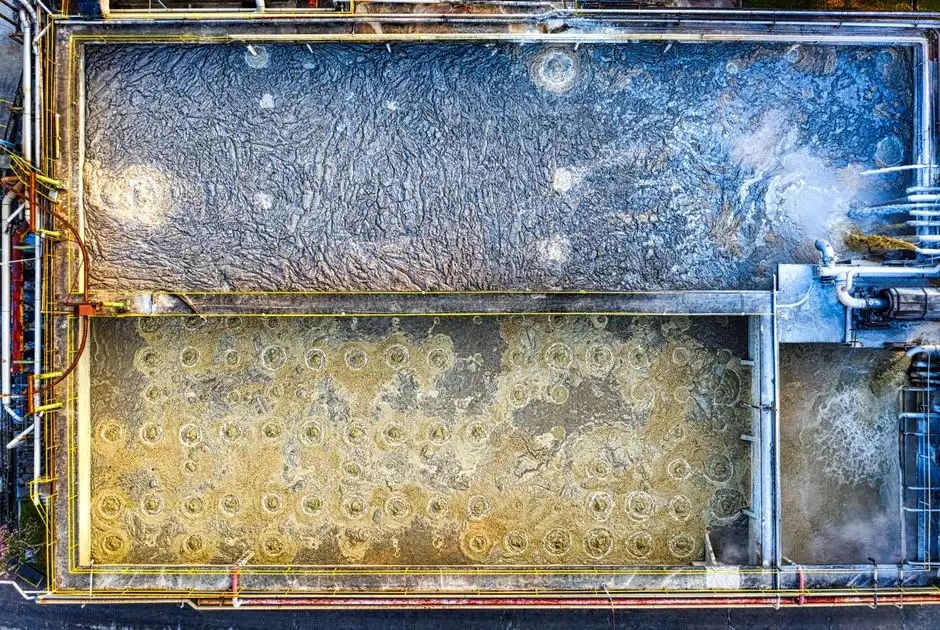
Tailings overflow, aggregate wash water and grit-dominated mill streams normally begin with a lamella or conventional clarifier because their primary contaminant is settleable mineral material. Verify particle settleability, underflow behavior and surface loading on the actual solids before treating the tank geometry as proven performance.
Metal-finishing rinse water is a different case. Oils, surfactants and metal hydroxides may require pH adjustment, coagulation and flocculation before flotation. In that application, DAF follows the required chemistry rather than replacing it. If the rinse stream also carries heavy non-floating solids, remove that load by clarification or establish an acceptable DAF inlet condition through pilot testing.
Neutralized acid mine drainage treatment presents both hydraulic and chemical variability. Compare a full-flow DAF with a staged lamella-roughing and DAF-polishing train. The staged arrangement can lower the solids burden entering flotation, but it adds a second unit, sludge stream and control layer. Neither arrangement should be selected without representative feed data.
For a combined mill stream, do not size DAF for raw tailings merely because it will also remove oil. First remove heavy non-floating solids, or demonstrate through pilot testing that the inlet solids load and particle characteristics are compatible with flotation. The appropriate comparison is the complete treatment train, not the purchase price or nominal capacity of one vessel.
| Wastewater stream | Starting selection | Required verification |
|---|---|---|
| Tailings overflow, aggregate wash water, grit-dominated discharge | Lamella or conventional clarifier | Settleability, particle-size distribution, surface loading and sludge withdrawal |
| Metal-finishing rinse water with oil, surfactant or conditioned hydroxide floc | DAF after pH adjustment, coagulation and flocculation | Oil and reagent carryover, chemical demand, floc rise behavior and effluent quality |
| Neutralized, reagent-bearing acid drainage | Compare full-flow DAF with lamella roughing followed by DAF polishing | Seasonal flow and pH profile, chemistry control, hydraulic loading and sludge handling |
| Combined mill stream | Clarification before flotation unless the DAF inlet load is demonstrated to be suitable | Raw-stream pilot trial and mass balance across both treatment stages |
The outcome should be selected from a site-specific pilot comparison rather than an assumed universal efficiency advantage. Use the same influent dataset, duty assumptions and downstream objectives for every candidate arrangement.
Decide Between One Unit and a Hybrid Train
A clarifier-only train is appropriate when the objective is bulk suspended-solids removal and the discharge or reuse objectives do not require separate removal of oil, colloids or residual precipitates. A DAF-only train is appropriate when the non-floating-solids load is manageable and the principal objectives are oil, reagent, colloidal or buoyant-floc removal.
A lamella-plus-DAF train is appropriate when both settleable solids and buoyant or colloidal fractions must be removed. The clarifier removes the bulk heavy solids and reduces the load entering flotation; DAF then captures the fractions that escape gravitational settling. This arrangement should be evaluated as a hydraulic and chemical system, not as two independent tanks.
Do not treat DAF as the final barrier by default. If reuse or downstream membrane treatment requires a lower residual-solids level, include filtration or another solids-removal barrier in the RFQ. The commercial sources identify process-water and materials recycling as potential DAF benefits, but recovered-water quality and recycling economics must be demonstrated for the Ary stream.
Chemical conditioning is also part of the decision. A PLC-controlled chemical dosing skid can implement jar-tested pH, coagulant and polymer setpoints, but the skid does not remove the need for a valid chemical trial. Evaluate operator workload, chemical storage, corrosion protection and fail-safe response together.
| Treatment arrangement | Selection condition | Principal scope to verify |
|---|---|---|
| Clarifier only | Bulk solids are the principal target and no separate oil, colloid or residual-precipitate polishing is required | Surface loading, underflow removal, effluent TSS and reuse or discharge suitability |
| DAF only | Non-floating solids are manageable and oil, reagents, colloids or buoyant floc dominate | Chemical conditioning, air supply, skimming capacity and effluent solids |
| Lamella followed by DAF | Both settleable and buoyant or colloidal fractions require removal | Stage-by-stage mass balance, chemical sequencing, controls and two sludge streams |
| DAF or hybrid followed by filtration | Reuse, membrane pretreatment or discharge objectives require additional solids control | Filtration basis, backwash, solids handling and final-water quality |
Parameters That Belong in the 2026 RFQ
An auditable RFQ must define the hydraulic basis before asking bidders to size tanks or pumps. Require the design flow, flow-duration basis, equalization need, seasonal peak treatment approach and whether the quoted system is intended for continuous operation, batch treatment or both.
For a clarifier, request the selected surface-loading rate, settling-velocity basis, sludge-withdrawal design, plate configuration and expected underflow condition. The supplied lamella product data lists a surface-loading range of 20–40 m/h; the bidder must show why its selected value applies to the actual solids and flow profile rather than copying the range.
For DAF, request the air-to-solids basis, saturation pressure, recirculation arrangement, hydraulic loading, contact-time basis, bubble-generation method, skimming capacity and clean-water startup requirements. Require jar-test support for pH, coagulant and polymer selection. The Logan study’s optimum aluminum sulfate dose of 30 mg/L applies only to that application; it is not a default mining dose (Elder, Utah State University, 2011).
Commercial scope should also cover compatible materials of construction, corrosion protection, chemical storage and dosing, instrumentation, controls, installation, commissioning, operator training and downstream sludge dewatering. Where solids are conditioned or precipitated, PLC-controlled chemical dosing skid requirements should identify alarms, calibration, storage compatibility and manual fallback.
| RFQ package | Clarifier | DAF | Common requirement |
|---|---|---|---|
| Hydraulic basis | Surface loading, settling basis and peak flow | Hydraulic loading, air/solids basis and recirculation | Design flow, duration, equalization and seasonal profile |
| Chemistry | Coagulant aid if justified | Jar-tested pH, coagulant and polymer program | Chemical consumption, storage and dosing controls |
| Mechanical scope | Plate configuration and sludge withdrawal | Saturation system, contact zone and skimmer | Materials, corrosion protection, controls and utilities |
| Solids handling | Expected underflow condition | Float removal and skumming capacity | Dewatering scope and disposal route |
| Performance evidence | Representative settling or pilot data | Representative flotation and jar-test data | Same influent dataset and acceptance criteria |
Ask every supplier for pilot data on the closest representative wastewater and an explanation of how the proposed loading and chemistry were selected. Where a clarifier underflow enters a filter press, include that downstream plate-and-frame filter press scope in the same responsibility matrix.
Compare Total Cost and Compliance Exposure
Budgetary quotations should be tied to the actual flow, TSS, particle-size distribution, contaminant fractions and seasonal profile. The supplied research does not establish a reliable 2026 unit price for either equipment type, so any procurement estimate must begin with site data and a documented supplier quotation.
Compare the complete train: chemical demand, air and power, sludge volume, dewatering, operator attention, maintenance, corrosion protection, equalization and any downstream filtration or membrane barrier. A tank price is not a treatment-system price.
The supplied Phelps comparison describes a lamella as the lower-CAPEX option for grit-dominated, pH-stable streams and DAF as requiring more chemical and utility inputs. Treat that as a use-case comparison, not a universal price statement for Ary.
Well-conditioned DAF can produce a thicker float that may require little additional dewatering, according to Clearwater Industries as summarized in the supplied commercial research. Compare the DAF, chemical skid and sludge-handling line as one scope. If those savings are credited in the commercial case, request the supporting float-solids and dewatering data from the pilot or operating history.
Compliance exposure must be verified against the Ary site’s current permit, receiving-water or pretreatment requirements. No site-specific regulatory limits for Ary were supplied, so the project engineer should establish the applicable criteria before finalizing guarantees. A vendor should guarantee defined test conditions, not performance copied from another location.
| Cost or risk item | Information required from bidders | Basis for comparison |
|---|---|---|
| Capital equipment | Flow, solids, fractions, materials and installation scope | Comparable budgetary quotations for the complete train |
| Chemicals and utilities | Estimated consumption and demand-control strategy | Specific operating scenario and chemical-price assumptions |
| Sludge and float | Expected volume, solids character and dewatering requirements | Direct pilot data or traceable operating data |
| Operation and maintenance | Instrumentation, controls, clean-water startup and maintenance access | Lifecycle labor and consumables |
| Compliance | Guaranteed parameters, test methods and conditions | Current Ary permit and receiving requirements |
Build the Selection and Pilot Test Plan
A defensible selection begins with representative sampling across production, shutdown, washdown and high-flow periods before the design basis is fixed. The same dataset should then be used for settling tests, jar tests and pilot trials, avoiding a comparison in which each vendor receives a different influent characterization.
Run settling tests on the actual solids to establish whether a clarifier can handle the intended load. Run jar tests on the actual chemical and flotation system, including oil and reagent carryover. These tests determine pH, chemical selection, floc properties and whether the fractions are suitable for flotation.
Pilot the leading candidate or staged train at representative loading. Measure TSS, particle-size distribution, relevant metals, oil and grease, pH, sludge characteristics and recovered-water quality. Include chemical consumption, float or underflow behavior, controls and operator access. The output should be a mass balance across the full train, not only an effluent percentage from one vessel.
Challenge each bid with the same influent dataset, duty assumptions, guarantee criteria and downstream-discharge or reuse objectives. Use the DAF selection checklist for FOG and TSS to structure the comparison, then require the supplier to identify which conclusions depend on site data.
- Characterize the stream across operating and seasonal conditions.
- Classify settleable, buoyant, colloidal and dissolved fractions.
- Select clarifier-only, DAF-only or staged candidates.
- Verify chemistry through settling and jar tests.
- Pilot the leading candidate at representative loading.
- Compare the complete treatment train and commercial scope.
- Select the supplier that can meet documented acceptance tests.
Supplier selection should reflect relevant mining or metals experience, traceable engineering calculations, commissioning support, operator training and acceptance-test capability. A claim that one technology is universally more efficient is not equivalent to a documented test on representative feed.
Frequently Asked Questions
What is the least expensive way to choose between DAF and a clarifier for an Ary plant?
Request budgetary quotations for the same complete duty basis: actual flow, TSS, particle-size distribution, contaminant fractions and seasonal profile. Ask each bidder to separate equipment, chemicals, utilities, sludge handling and downstream filtration. The supplied research does not support a defensible 2026 equipment price for Ary, so no universal price comparison should be used in the budget.
Which supplier should be selected if the plant cannot demonstrate full-scale pilot data?
Select the supplier that provides the strongest traceable basis: representative jar and settling tests, calculations linked to measured influent, clearly stated assumptions and willingness to run an onsite pilot. If no relevant pilot data exist, tighten the acceptance criteria and avoid performance guarantees based only on another mine’s wastewater.
Can a clarifier remove the metals from neutralized acid mine drainage?
Only the metals converted into sufficiently settleable particulate solids can be removed by gravity. Confirm dissolved-metal concentrations, the pH program, precipitation characteristics and residual particulate size through testing. Oil, reagent carryover and colloids require separate evaluation, so a clarifier should not be assumed to provide complete treatment.
When is a lamella-plus-DAF train preferable to DAF alone?
Prefer the hybrid arrangement when the feed contains substantial heavy non-floating solids and also requires flotation for oil, reagents, conditioned colloids or buoyant precipitates. Verify the advantage through a stage-by-stage pilot mass balance, including chemical demand, hydraulic variation and the cost of handling both underflow and float.