Separate the Wastewater Streams Before Choosing Equipment
A data center in Nasiriyah generally needs separate industrial treatment trains for humidification and ancillary wastewater, and concentrated cooling-tower blowdown. The blowdown train normally requires filtration, scaling control, reverse-osmosis polishing, and controlled return to the cooling loop; conventional brackish RO commonly reaches 75–80% recovery before silica, calcium carbonate, and calcium sulfate become limiting (IDE Tech, 2026). A practical design should use source-water analysis, cooling cycles of concentration, reuse targets, and Nasiriyah discharge permits to select the final train. Sanitary sewage should remain separate. Final discharge limits must be confirmed with Iraq’s Ministry of Environment and the relevant Nasiriyah authority rather than transferred from another Iraqi city.
The adjacent-city Najaf guide is useful for planning structure, not as evidence of Nasiriyah conditions. It identifies cooling-tower blowdown as approximately 60–70% of total site flow and gives humidification-drain chemistry of TDS 500–1,500 mg/L, silica 5–30 mg/L, and suspended solids 10–50 mg/L (HydropureWater, 2026). Those values must be replaced by Nasiriyah sampling, not assumed to apply.
Build a source-by-source inventory covering cooling-tower blowdown, data-hall humidification drainage, ancillary process water, RO reject, and sanitary sewage. Treat sanitary and cafeteria wastewater as a separate biological stream; keep it out of the industrial CTBD and humidification-drain process trains. Any ammonia wet-scrubber blowdown also requires its own assessment because the Najaf guide identifies it as a distinct stream requiring nitrification or air stripping before entering a main biological train (HydropureWater, 2026).
Require a 30–60 day source-water and blowdown characterization campaign covering flow, pH, TDS, silica, calcium, hardness, conductivity, suspended solids, metals, residual biocides, corrosion inhibitors, and the cooling system’s chemical program. Obtain the cooling operator’s cycles of concentration, make-up-water volume, evaporation rate, blowdown volume, operating temperature, and expected IT-load ramp before sizing membranes or blowdown controls.
| Stream | Primary design concern | Required project input |
|---|---|---|
| Cooling-tower blowdown | Concentrated salts, scaling compounds, treatment chemicals, corrosion risk | Cycles of concentration, blowdown flow, full chemistry, chemical program |
| Humidification drainage | Corrosion products, biofilm fragments, intermittent flow | Flow profile, TDS, silica, suspended solids, sampling across operating modes |
| Ancillary process water and RO reject | Variable quality and potential contamination of reuse streams | Source-by-source flow and composition; proposed reuse destination |
| Sanitary and cafeteria wastewater | Organic load and biological treatment requirements | Separate flow, load, discharge route, and local acceptance conditions |
The adjacent data center wastewater and cooling blowdown treatment guide provides a useful planning reference for stream separation, but it does not establish Nasiriyah’s receiving-water or permit conditions.
What Treatment Does Nasiriyah's Water Supply and Permit Require?
Nasiriyah’s final treatment train must be based on source-water chemistry and a written Nasiriyah-specific permit; the supplied research does not provide a verified Nasiriyah industrial-discharge schedule. Confirm the applicable federal and provincial requirements with Iraq’s Ministry of Environment, the relevant provincial directorate, and the municipal or sewer authority receiving the discharge. A discharge route cannot be selected merely because it appears in an adjacent-city design.
Do not transfer the HydropureWater Najaf figures of BOD₅ at or below 50 mg/L, COD at or below 200 mg/L, TSS at or below 50 mg/L, and free chlorine below 1 mg/L to Nasiriyah. The source describes these values as a proposed Najaf envelope pending a Najaf-specific ministerial decree (HydropureWater, 2026). They are neither a national schedule demonstrated by the research nor a Nasiriyah permit.
Before selecting the effluent train, obtain the receiving-water or sewer route, permitted flow, seasonal conditions, groundwater and soil constraints, tanker-disposal rules, and any indirect-discharge or pretreatment requirements. Request these in writing with the responsible authority. If the route is a municipal sewer, obtain confirmation of industrial acceptance, inhibitory chemicals, discharge timing, monitoring, and pretreatment requirements. If tanker disposal is contemplated, establish the receiving facility, permitted chemistry, documentation, and disposal route.
Water Utility Report, last updated 2026-04-14, states that blowdown chemistry varies with source water, chemical treatment, and cycles of concentration and may contain salts, heavy metals, biocides, corrosion inhibitors, and altered pH. That variability supports source segregation and representative sampling rather than a single assumed influent value.
MoENR industrial-discharge approval for Nasiriyah must be treated as an unresolved design input until confirmed in writing; the supplied research does not establish a defensible local numerical envelope.
The water-supply review must also establish whether freshwater is potable, industrial, or otherwise pretreated. This affects source-water TDS, scaling risk, chemical demand, and the feasibility of reusing treated water. The Iraqi wastewater regulatory context can support engagement with authorities, but it cannot substitute for a site-specific permit or receiving-water assessment.
Build a Pretreatment Train That Protects the Membranes
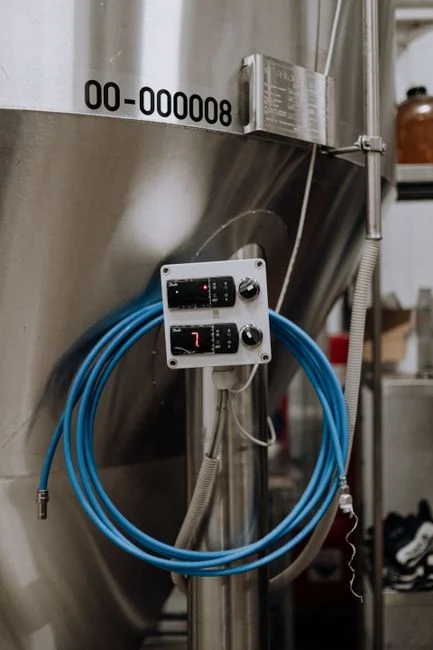
Effective pretreatment begins with removing debris and controlling hydraulic variation before chemicals or membranes are selected. Install fine screening or a mechanical bar screen at the works inlet to remove rags, plastics, fibrous debris, and grit that could damage pumps or downstream equipment. Provide equalization and flow control because humidification drains and cooling blowdown can be intermittent. In the adjacent Najaf design, dissolved air flotation serves as the hydraulic-surge buffer for humidification-drain cycles (HydropureWater, 2026).
Apply dissolved air flotation where suspended solids, colloidal material, oil and grease, or corrosion-product carryover require removal. The dissolved air flotation equipment range supplied by HydropureWater spans 4–300 m³/h across 13 standard models. This is an equipment-selection range, not a statement that a Nasiriyah DAF requires any particular model or duty. Final sizing must reflect measured flow, peak factors, removal duty, recovery, and operating redundancy.
Use multimedia filtration before RO when suspended solids or colloids could compromise the membranes. HydropureWater states that its multi-media filters produce SDI values suitable for downstream RO protection (HydropureWater, 2026). The adjacent Najaf design places multimedia filtration ahead of CTBD RO and targets SDI below 5 (HydropureWater, 2026), but that value should be included in the supplier’s membrane warranty and acceptance criteria rather than used as a universal Nasiriyah requirement.
Provide automatic chemical dosing for the hazards actually present: antiscalant, biocide, pH control, coagulation, and any additional inhibitor required by the cooling-water program. The supplied Najaf guidance treats automatic antiscalant and biocide dosing as mandatory for the CTBD RO scope (HydropureWater, 2026). An automatic dosing system for antiscalant and biocide control should therefore be specified around measured chemistry, dosing demand, chemical storage, duty/standby arrangement, and local utility availability.
- Confirm stream segregation and flow metering.
- Remove debris and grit.
- Equalize hydraulic surges and variable loads.
- Remove suspended solids, colloids, and oily material where present.
- Protect RO feed with filtration and chemistry control.
- Verify pretreatment performance before accepting membrane startup.
For an illustrative 30–45 m³/h treatment need, the DAF catalog range is only a compatibility check. Final DAF, ultrafiltration, or filter sizing depends on measured peak flow, minimum flow, required recovery, cleaning access, and redundancy.
Choose MBR, RO, and Disinfection by the Reuse Destination
Treatment selection should follow the destination and required water quality, not the largest wastewater flow. The HydropureWater MBR system is intended for lower-strength wastewater requiring biological treatment and near-reuse-quality solids separation; its stated filtration is below 1 micrometre, its footprint is reported as 60% smaller than conventional systems, and its available capacity range is 10–2,000 m³/day (HydropureWater, 2026).
Do not route cooling-tower blowdown directly through a biological system merely because it carries the largest flow. Source segregation and the selected pretreatment path should protect biological media and membranes from concentrated salts, residual treatment chemicals, and variable loading. Sanitary sewage follows its own biological design rather than joining the industrial CTBD train.
Use industrial RO for CTBD polishing and make-up-water recovery. HydropureWater specifies industrial RO systems with recovery rates up to 95%, while IDE Tech and the adjacent Najaf guide place conventional brackish RO on CTBD at approximately 75–80% recovery (IDE Tech, 2026; HydropureWater, 2026). The adjacent Najaf design uses DAF, MBR, multimedia filtration, and RO at 65–75% recovery for CTBD polishing (HydropureWater, 2026); validate that sequence for Nasiriyah rather than copy it as a universal plant layout. For equipment selection, review the industrial RO system for cooling-tower blowdown polishing against the actual scaling calculation and recovery guarantee.
Use on-site chlorine dioxide generation where it is selected for final microbial control. HydropureWater offers configurations from 50 g/h manual units to 20,000 g/h fully automated systems (HydropureWater, 2026). Required capacity and residual must be established from the confirmed permit and reuse application; they cannot be inferred from the nearby Najaf proposal.
| Destination | Treatment duties to evaluate | Key acceptance question |
|---|---|---|
| Sanitary or biological discharge | Screening, equalization, biological treatment, solids separation, disinfection as applicable | What route and quality conditions are confirmed in writing? |
| Lower-strength industrial reuse | Filtration, biological treatment where required, multimedia filtration, disinfection, chemistry control | Does the reuse specification permit the proposed biological solids and residual chemistry? |
| Cooling-tower make-up | CTBD segregation, filtration, scaling control, industrial RO, residual disinfection and cooling chemistry | Is the permeate compatible with scaling, corrosion, biological control, and the make-up-water specification? |
| High-recovery reuse or ZLD | Advanced scaling control, precipitation or evaporation, brine or salt management, polishing and disinfection | Does the site water balance, utility availability, operator competence, and disposal route support the added complexity? |
Do not reuse treated water as cooling make-up solely because it meets a discharge limit. Verify cooling-water chemistry, scaling and corrosion compatibility, residual treatment chemicals, and the data center’s make-up-water specification. The RO versus ultrafiltration comparison can help define pretreatment duties, but membrane selection still requires site chemistry and design flow.
Compare Discharge, Partial Reuse, and High-Recovery Treatment
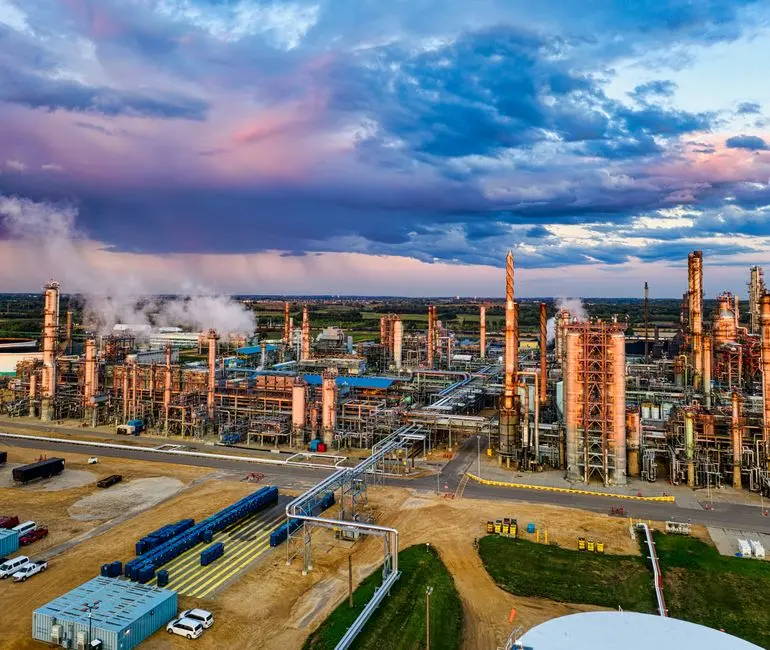
A partial-reuse design normally combines filtration, CTBD-specific pretreatment, and industrial RO, returning permeate to cooling make-up while managing the remaining concentrate. The adjacent Najaf guide uses a 65–75% RO polishing range and an 85–90% overall site-recovery target (HydropureWater, 2026). High-recovery reuse requires additional chemistry management: IDE Tech’s MAXH₂O reference removes sparingly soluble salts through controlled precipitation before further RO and reports approximately 95% overall recovery with permeate silica around 1 mg/L (IDE Tech, 2026).
A conventional discharge solution may be appropriate only after confirming that the receiving route can legally and hydraulically accept the flow and chemistry. The supplied research does not establish that route for Nasiriyah. Do not prescribe mechanical vapor evaporation or zero-liquid-discharge solely because reuse is the objective. Require a site-specific water balance, energy tariff, brine or salt disposal route, operator competence, and comparison against high-recovery RO before selecting a more complex train.
The HydropureWater Najaf guide reports directional energy use of 0.8–1.6 kWh/m³ for an MBR-equipped plant and 0.4–0.9 kWh/m³ for DAF only (HydropureWater, 2026). Use these as screening benchmarks, not Nasiriyah tariffs or guarantees. Obtain local energy prices and equipment quotations.
For a 50,000 GPD CTBD RO polishing system, the same guide gives directional installed CAPEX of $250,000–$500,000 and OPEX of $1.50–$3.00 per thousand gallons treated (HydropureWater, 2026). These are not Nasiriyah bids and do not include a confirmed local logistics, civil, electrical, or disposal adjustment.
| Option | Confirmed research boundary | Decision required for Nasiriyah |
|---|---|---|
| Permitted discharge | No Nasiriyah receiving route or numerical permit is established by the supplied research. | Obtain written route, capacity, chemistry, monitoring, and disposal conditions. |
| Partial reuse | Adjacent Najaf guide: 65–75% CTBD RO polishing and 85–90% overall site-recovery target (HydropureWater, 2026). | Calculate site water balance, concentrate route, energy, and make-up-water compatibility. |
| High-recovery reuse | IDE MAXH₂O reference: approximately 95% overall recovery and permeate silica around 1 mg/L (IDE Tech, 2026). | Validate scaling chemistry, solids handling, controls, operators, and utilities. |
| ZLD | The supplied research discusses evaporation and crystallisation but does not establish a Nasiriyah requirement. | Compare energy, capital, maintenance, salt disposal, and alternative recovery routes. |
Use the industrial RO selection and cost guide to structure commercial comparisons, then require each bidder to state the design basis, recovery basis, exclusions, and local delivery scope.
Plan for Nasiriyah Logistics, Redundancy, and Commissioning
The adjacent Najaf guide reports that standard ISO containers generally require 7–14 days to clear Umm Qasr, followed by 3–5 days for more than 500 km of overland haul to Najaf, with a total FOB-to-commissioned-ready lead time of 10–16 weeks (HydropureWater, 2026). Treat this as a logistics benchmark, not a confirmed Nasiriyah quotation or route. Require bidders to identify the actual port, transport corridor, customs path, shipment scope, and site-delivery schedule.
Ask suppliers for a delivered, commissioned scope covering import documentation, foundations, electrical design, local spare-part support, membrane warranties, operator training, and a defined battery limit. Separate costs for equipment, freight, insurance, import duties, civil works, utilities, installation, commissioning, training, and first-year spares.
Compare skid redundancy and critical-spares strategy. The supplied Najaf guidance recommends a seven-day chemical autonomy buffer and a two-year consumables and critical-spares kit (HydropureWater, 2026). Confirm those requirements against actual Nasiriyah utility reliability, chemical delivery lead times, operator capability, and treatment-train availability. Do not accept redundancy that exists only on paper; identify the standby equipment, power source, control logic, and essential consumables.
Specify remote monitoring for permeate and concentrate flow, conductivity, pH, differential pressure, turbidity, and oxidation-reduction potential where relevant, with alarms for each critical membrane or biological stage. Use the RO and UF membrane and filter-element information to establish the required monitoring boundary and compatible replacement strategy.
Require factory acceptance testing, site acceptance testing, operator training, and a performance test against agreed flow, recovery, permeate-quality, concentrate-disposal, chemical-consumption, energy-use, and availability targets. Define safe-failure and bypass responses for each train. Spare membranes, pumps, blowers, dosing pumps, instruments, and control modules should be covered by the treatment-parts and filter-media schedule.
Questions to Resolve Before Freezing the Project Scope
The project scope should be frozen only after the source waters, permit route, and treatment objectives are documented. Secure a signed source-water and wastewater characterization report, the cooling-water chemical program, and a monthly and peak water balance. The characterization should support each stream’s mass and water balance rather than rely on a neighboring-city assumption.
Obtain written confirmation of the permitted discharge route and any sewer, groundwater, surface-water, or tanker-disposal conditions applicable in Nasiriyah. Identify the regulator, required sampling, permit duration, renewal process, and whether reuse changes the permit scope. If the receiving authority cannot provide enforceable conditions in writing, retain that uncertainty in the risk register.
Set measurable acceptance criteria for flow, recovery, permeate quality, concentrate disposal, chemical consumption, energy use, and operating availability. Require suppliers to disclose membrane materials, pretreatment requirements, cleaning intervals, spare-part lead times, controls architecture, and all utility requirements. Specify how each guarantee changes if the source chemistry or cooling-water program changes.
Compare discharge, partial-reuse, and high-reuse scenarios over the planned IT-load ramp rather than pricing one equipment train in isolation. Use the circular-water-economy regional analysis as a policy and market framing tool, while keeping the project decision dependent on Nasiriyah’s own water balance, utilities, permit, and disposal evidence.
Frequently Asked Questions
How much does wastewater and cooling blowdown treatment cost?
The supplied directional benchmark for a 50,000 GPD CTBD RO polishing system is $250,000–$500,000 installed CAPEX and $1.50–$3.00 per thousand gallons OPEX (HydropureWater, 2026). These figures are not Nasiriyah quotations. Request itemized pricing for equipment, freight, import, foundations, electrical works, installation, commissioning, membranes, chemicals, energy, sludge or brine handling, maintenance, and spares.
Should the data center discharge cooling blowdown or reuse it?
Do not decide from freshwater savings alone. Check the confirmed Nasiriyah discharge route, permit conditions, available water supply, blowdown flow and chemistry, concentrate-disposal route, energy requirements, and operator capability. If no lawful discharge route is available, develop partial or high-recovery reuse around the site water balance; if reuse is selected, verify cooling-water compatibility.
Which equipment is needed for cooling-tower blowdown?
A practical CTBD train can include screening, equalization, filtration, scaling control, and industrial RO, with disinfection added according to the reuse or discharge destination. Biological treatment should be added only where the segregated wastewater requires it and after concentrated CTBD is protected from the biological process.
How should the plant be sized?
Size from measured peak wastewater flow, source-water chemistry, blowdown generation, cycles of concentration, recovery target, redundancy, and planned IT-load growth. Request the water balance and equipment sizing calculation from each bidder, including minimum-flow operation, cleaning demand, standby capacity, and future expansion.
What should a supplier demonstrate before selection?
Require a guaranteed water balance, process guarantees, source-water and scaling calculations, membrane and biological design bases, FAT and site acceptance plans, local support, spare-part availability, and a clear treatment of Nasiriyah permit conditions. Also require confirmation that every utility, chemical, waste-disposal route, and operating assumption included in the offer has a defined provider and delivery schedule.