What Makes Resort Wastewater Different
Resort wastewater must be designed as several distinct streams rather than as ordinary domestic sewage. Guest suites and staff housing generally produce relatively uniform flows, while kitchens, laundry, housekeeping, pools, spas, golf-course irrigation, boiler blowdown and cooling water can produce variable-strength or process-specific waste. The supplied research does not provide hotel-specific flow or pollutant figures, so each stream must be measured or otherwise verified before equipment selection. Summer occupancy, holiday peaks, food events, staff accommodation and future reuse should be treated as separate design scenarios.
Location is not a substitute for site data. Virginia Tech’s 2010 report, Water Use and Sustainability in La Altagracia, Dominican Republic, identifies community-needs assessment as the first step toward a sustainable water future and calls for detailed investigation of saltwater intrusion into coastal aquifers. It does not establish a wastewater technology, discharge limit or reuse rule for a specific resort. Coastal-aquifer risk must therefore be assessed separately for each site. Bávaro-Punta Cana also presents a governance context: a 2014 University of Toronto dissertation, Resort Urbanism, describes tourism development as reshaping the area while local institutions have limited capacity to ensure the public good.
| Wastewater stream | Condition to verify before design | Design consequence |
|---|---|---|
| Guest accommodation and staff housing | Occupancy pattern, flow variation and wastewater characteristics | Establish domestic-sewage hydraulic and organic loading |
| Kitchen and food-service operations | FOG, food solids, cleaning chemicals and discharge timing | Determine whether FOG pretreatment and equalization are required |
| Laundry and housekeeping | Fibers, solids, detergents and whether treatment is centralized | Protect pumps and biological treatment; assess solids separation |
| Pools, spas, cooling and boiler systems | Flow, chemistry, temperature and whether streams are segregated | Decide whether separate treatment or controlled blending is appropriate |
| Golf-course irrigation | Seasonal demand, irrigation quality objective and rainfall contribution | Define storage, seasonal treatment demand and reuse criteria |
For grease-bearing flows, review DAF pretreatment for FOG and solids as a candidate stage rather than assuming it belongs in the main wastewater train.
Build the Wastewater and Reuse Design Basis
The equipment basis should begin with measured flow by stream and operating period, not an unverified occupancy multiplier. Request peak daily and peak hourly data for normal operation, holiday occupancy, staff housing and major events. Include baseline drawdown, storm events, groundwater infiltration and planned occupancy changes as separate design questions. These conditions determine equalization, pretreatment capacity, treatment capacity and storage requirements.
Representative samples should characterize kitchen FOG, laundry characteristics, suspended solids, pH, temperature, nutrients and identifiable process contaminants. No supplied source provides generic Dominican hotel wastewater limits, so resort-specific analysis is necessary. Sampling design should capture normal operations and identifiable excursions rather than relying on a single grab sample.
Next, define where every treated flow will go: municipal sewer, permitted surface-water discharge, irrigation, toilet flushing, cooling, laundry or another reuse application. Each route requires a different quality and disinfection basis. For coastal sites, include the receiving water and the proposed discharge point in the assessment. Do not infer that reuse is permitted merely because the treatment technology can produce the required water quality.
Virginia Tech’s 2010 La Altagracia report discusses water quality, conservation, rainwater harvesting and reverse osmosis for water supply. Those findings provide coastal-resource context, but they do not establish that reverse osmosis is required for resort wastewater reuse. The reuse process should follow the destination, health and environmental requirements, and site-specific salinity assessment.
| Required input | Question to resolve | Why it affects equipment selection |
|---|---|---|
| Stream-by-stream flow | What are the peak daily and peak hourly flows? | Sets hydraulic capacity, equalization and transfer-pump requirements |
| Representative analyses | What contaminants and operating excursions are present? | Sets pretreatment and biological loading requirements |
| Reuse destination | Who receives the flow and under what conditions? | Defines the treatment and disinfection objectives |
| Site and future conditions | How do storms, drawdown, groundwater and occupancy changes affect the plant? | Defines resilience, storage and spare-capacity requirements |
| Permit conditions | Which requirements apply to the discharge point and reuse pathway? | Prevents equipment selection that cannot meet the governing obligation |
A compact MBR wastewater treatment system should advance only after these inputs establish the required hydraulic capacity, treated-water quality and reuse scope.
Match Pretreatment to the Wastewater Risk
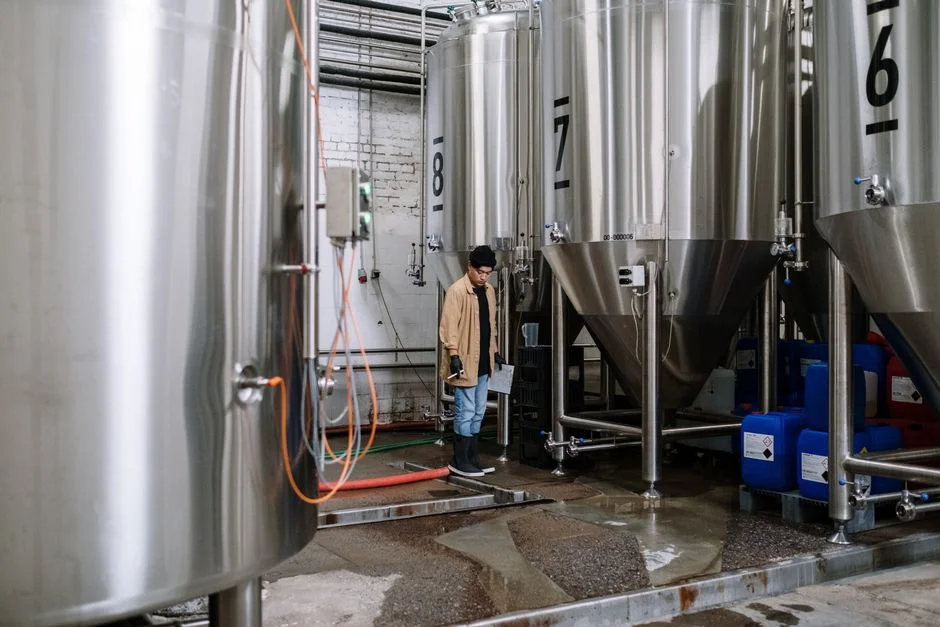
Pretreatment should address the contaminants most likely to impair downstream equipment. Kitchen wastewater carrying FOG, oil, grease or light solids may require DAF; laundry and domestic sewage can contribute fibers, plastics, suspended solids and rags that need reliable removal before pumps or biological treatment.
HydropureWater’s product data lists 13 standard DAF models covering 4–300 m³/h. That range is an equipment offering, not a resort sizing conclusion. DAF should be sized from the contributing kitchen or other grease-bearing flow and its hydraulic peak, rather than from the resort’s total wastewater flow. The DAF selection checklist for FOG and TSS provides a structured basis for that review.
Where rags, plastics, fibers and debris could overload pumps or downstream biological equipment, evaluate a rotary mechanical bar screen. HydropureWater’s rotary mechanical bar screen forms part of the available pretreatment options, but the selected mechanism must suit the actual debris characteristics and service-access constraints.
Where reuse depends on dependable solids separation, the submerged PVDF membranes in HydropureWater’s MBR wastewater treatment system provide filtration below 1 μm according to the supplier’s product data. That membrane stage does not remove the obligation to design reliable upstream pretreatment or to manage the solids it captures.
| Risk in the incoming waste | Pretreatment decision | Acceptance check |
|---|---|---|
| FOG, oil, grease or floatable food solids | Evaluate DAF or another approved removal stage | Confirm contributing flow, peak hydraulic load and float-removal capacity |
| Rags, plastics, fibers and suspended debris | Evaluate mechanical screening before transfer and biological stages | Confirm retained solids, screen cleaning and accessible collection |
| Variable-strength discharges | Evaluate equalization or segregation | Document operating volume, mixing requirements and return-to-treatment controls |
| Solids that would impair membrane performance | Require upstream protection | Review screening, DAF performance and membrane-fouling controls |
Before accepting the train, specify how screenings, DAF float, sludge and odors will be removed, stored and disposed of. A treatment unit without a defined solids route is an incomplete design.
Compare MBR and Buried Package Treatment
MBR and buried package treatment should be compared against the resort’s treatment objective and operating conditions, not selected from nominal capacity alone. An MBR combines activated-sludge treatment with submerged PVDF membrane filtration in a compact installation, making it a candidate for sites with limited footprint and for reuse projects requiring low suspended solids. HydropureWater lists MBR capacities from 10–2,000 m³/day and describes filtration below 1 μm.
The same compactness creates lifecycle obligations. Membrane cleaning, eventual replacement, biological-process control, solids handling, power availability and pretreatment performance must be included in the operating concept. The operator must be able to monitor biological conditions, recognize fouling or process upset, and implement the manufacturer’s cleaning procedure without exceeding the membrane warranty conditions.
A buried package sewage treatment plant follows a different site and maintenance model. HydropureWater describes its WSZ series as a buried package combining anoxic and aerobic biological contact oxidation, sedimentation and disinfection, with automated operation and no routine operator requirement. The listed equipment range is 1–80 m³/h. The approach can reduce visible plant equipment within the site, but excavation, installation, access for maintenance, incoming wastewater variability and power reliability remain design issues.
| Decision criterion | MBR option | Buried WSZ option |
|---|---|---|
| Treatment configuration | Integrated activated sludge with submerged PVDF membrane filtration | Buried package with anoxic/aerobic contact oxidation, sedimentation and disinfection |
| Published equipment capacity | 10–2,000 m³/day | 1–80 m³/h |
| Main site consideration | Compact footprint; verify plant layout and maintenance access | Excavation and installation; verify access and above-ground operating interfaces |
| Primary lifecycle consideration | Membrane cleaning, replacement, biological controls and solids handling | Incoming load variation, access, electrical reliability and package-specific servicing |
| Reuse assessment | Advance when the specified quality objective supports membrane separation and the reuse scheme | Advance only after the treated-water specification and disinfection route are demonstrated |
| Procurement evidence | Require membrane warranties, cleaning procedures and performance-test criteria | Require installation scope, access provisions, controls scope and acceptance testing |
For a resort, apply the following sequence:
- Confirm hydraulic and organic loading from measured data.
- Define the final effluent or reuse objective.
- Identify pretreatment needs and solids-handling routes.
- Test available footprint, odor, noise, redundancy and access constraints.
- Confirm operator capability and local service support.
- Verify the selected route against current permit conditions.
A broader equipment perspective is available in this comparison of package sewage treatment and MBR systems, but resort selection must remain anchored to local flows and site requirements. Neither an MBR wastewater treatment system nor a buried package sewage treatment plant automatically satisfies every Dominican permit.
Plan Disinfection, Sludge and Operational Reliability
Disinfection should follow the intended reuse or discharge path and the associated microbial-risk assessment; generator output should be matched to a measured design dose and required production rate. HydropureWater’s chlorine dioxide generator range extends from 50 g/h to 20,000 g/h across eight configurations. These equipment configurations allow preliminary comparison, but they do not establish the required dose or confirm legal suitability for a particular reuse pathway.
Solids are an operating liability and a potential source of odor. Define thickening, storage, dewatering and disposal for solids separated during biological treatment or DAF. HydropureWater lists a plate and frame filter press with filtration areas from 1 m² to 500 m² and manual, hydraulic or fully automatic PLC operation. The appropriate configuration depends on solids generation, operating hours, container arrangement, filtrate handling and operator involvement.
For reef- or environmentally sensitive receiving waters, require odor, noise, spill-control and site-impact criteria in the design package. These requirements should influence plant location, excavation, screening and solids storage—not remain as general contractor notes.
Reliability planning should cover pumps, aeration, controls and critical treatment stages. Decide which duty and standby arrangements are necessary for the resort’s risk profile. Prepare operating procedures for peak occupancy, power interruption, membrane cleaning, chemical supply, sludge removal and equipment alarms. Chemical dosing also needs controlled access and training; HydropureWater’s automatic chemical dosing system is an equipment option, but the chemical, dose, containment and response requirements must come from the process design.
| Operational element | Information required before approval | Operating deliverable |
|---|---|---|
| Disinfection | Reuse pathway, microbial-risk basis and design production rate | Dose-control, monitoring and emergency-response procedure |
| Sludge and float | Generation basis, storage time, dewatering and disposal route | Collection schedule and handling records |
| Critical equipment | Duty, standby and power-failure arrangements | Alarm list, escalation contacts and restart procedure |
| Site impacts | Odour, noise, spillage and access criteria | Monitoring and corrective-action plan |
| Membrane operations | Cleaning method, replacement responsibility and inventory plan | Maintenance schedule and operating log |
For solids handling, evaluate the available plate and frame filter press and the chlorine dioxide generator only within the completed process train, not as isolated purchases.
Verify Compliance, Suppliers and Lifecycle Cost
Compliance must be confirmed for the specific resort and discharge point. Request the applicable current discharge permit, sewer-acceptance rules, reuse conditions and written confirmation from the environmental authority for the proposed route. The supplied research does not establish a universal hotel or resort effluent limit. Equipment specifications and general location guides cannot replace project-specific regulatory review.
Virginia Tech’s 2010 La Altagracia research remains useful as wider due-diligence context: tourism water demand, water quality and coastal-aquifer conditions affect the sustainability case. Its recommendations on rainwater harvesting and reverse osmosis concern water supply and conservation; they are not wastewater-treatment mandates. The report’s call for detailed investigation of saltwater intrusion also does not establish a site-specific groundwater constraint.
Supplier screening should require wastewater-specific references, membrane or biological-process experience, factory testing, installation scope, commissioning criteria, local service capacity, critical spare parts, warranty terms and operator training. A supplier should identify who performs civil works, electrical installation, controls integration, testing, training and first-year service. The water-treatment parts, valves and media scope should also be defined so that quoted equipment does not leave essential ancillary items outside the supplier’s responsibility.
Compare lifecycle cost across membrane replacement, chemicals, energy, sludge hauling, laboratory testing, preventive maintenance, downtime and disposal—not purchase price alone. Require startup documentation, as-built drawings, operating manuals, training records, controls access, emergency procedures and the recommended preventive-maintenance schedule as contractual deliverables.
- Obtain the governing permit and written acceptance conditions.
- Define the tested performance basis, including peak hydraulic and organic loading.
- Allocate civil, electrical, controls, pretreatment, disinfection and solids responsibilities.
- Price energy, chemicals, consumables, maintenance, testing, sludge disposal and downtime over the agreed evaluation period.
- Make handover documents, training, warranties and local support contractual deliverables.
Frequently Asked Questions
How much does a hotel wastewater treatment system cost in the Dominican Republic?
The supplied research does not provide a verified hotel-specific price. Request a site-specific quotation covering treatment capacity, reuse quality, pretreatment, civil works, disinfection, controls, sludge handling, commissioning, utilities and operating costs. Ask the supplier to separate equipment price from installation and lifecycle expenses, and state the capacity, performance basis and warranty assumptions attached to the price.
Should a Dominican Republic resort choose MBR or a buried package sewage plant?
Compare measured flows and loads, reuse requirements, footprint, odor and noise, maintenance access, operator capability and local service. HydropureWater lists an MBR wastewater treatment system from 10–2,000 m³/day and a buried package sewage treatment plant from 1–80 m³/h. Those ranges support preliminary screening, but they do not establish which system meets the permit or reuse specification.
What wastewater data does a resort supplier need before quoting?
Request stream-by-stream flows, normal and peak operating periods, representative wastewater analyses, the intended reuse or discharge destination, site constraints and applicable permit requirements. Occupancy alone is insufficient because kitchen, laundry, pool, cooling and staff flows may differ in both volume and concentration. Ask the supplier to identify any missing survey or sample that could change the selected process.
Can resort wastewater be reused for irrigation or toilet flushing?
It can be considered when the reuse pathway, treated-water quality objective, health or environmental requirements and site rules support that use. Request a written design basis for the intended reuse, including seasonal demand, storage, additional treatment and monitoring. Do not treat any packaged treatment system as guaranteeing legal reuse without the applicable project approval.
What should be included in a resort wastewater equipment supplier qualification checklist?
Require relevant wastewater references, defined engineering and installation scope, factory and site performance tests, local commissioning and service support, critical spare parts, operator training, warranty terms and handover documents. Verify that the supplier has responsibility for the complete performance test and that operating staff can access controls, manuals and emergency procedures after acceptance.