What Changes for Medan Trade Waste in 2026
Medan manufacturers generally treat high-COD trade waste with a staged train rather than one universal unit: characterize the wastewater, equalize and screen it, remove fats or suspended solids, reduce soluble COD biologically, separate biomass, and polish the effluent when reuse or tight discharge limits require it. For orientation, a Medan reference article cites COD below 75 mg/L and BOD below 55 mg/L, but permits must be checked. The Pulo Brayan plant uses UASB followed by an aerated lagoon and reports COD of 50–75 mg/L. MBR or RO should be reserved for projects needing reliable reuse quality, not used as a substitute for source control and pretreatment.
Trade waste is not ordinary domestic sewage. It may carry detergents, fats oils and grease, color, salts and process chemicals that inhibit microorganisms, foul membranes or overload a biological reactor. The Medan engineering source reports food-processing FOG at 500–2,000 mg/L and textile COD at 800–3,000 mg/L with color above 500 Pt-Co; these are reported sector examples, not universal plant limits or acceptance criteria.
The same source gives COD below 75 mg/L, BOD below 55 mg/L and TSS below 50 mg/L as planning references, but the factory’s current permit and receiving authority determine the binding requirements. A discharge project may be satisfied by biological treatment and clarification. A reuse project normally needs tighter solids separation and may also need membrane treatment. Review the Medan industrial wastewater compliance guide before fixing the design basis.
Build the Treatment Train Around the COD Mass
The equipment train should follow the contaminant mass rather than a standard package arrangement. Begin with industrial discharge control and stream segregation, then flow and COD equalization, screening, grit removal, pH adjustment where necessary, FOG or solids removal, biological COD reduction, secondary clarification, polishing, disinfection where required and sludge dewatering. Each stage needs a defined purpose: equalization stabilizes shock loads, screening protects downstream equipment, biological treatment removes soluble organics, clarification separates biomass and polishing addresses the remaining solids or dissolved contaminants.
Do not design from one sample. Batch production can change COD, pH, toxicity, FOG and color during a shift. Obtain representative samples across production, cleaning and shutdown cycles, then use those results to set hydraulic and contaminant loading. The supplier should state the design flow, influent COD range, process COD-removal basis, final effluent objective, footprint, sludge-generation basis and operating controls. These inputs should appear in the high-COD trade-waste treatment process used to structure procurement.
Pulo Brayan provides a useful Medan benchmark, not a factory design template. The BPPT presentation records a 10,000 m³/day treatment train comprising two screens, a grit chamber, a UASB reactor, a facultative lagoon and aeration. It reports effluent COD of 50–75 mg/L and BOD of 40–55 mg/L, with aerators operated for 4–5 hours each day to reduce energy use (BPPT, “The Domestic Wastewater Management in Indonesia,” November 2017). Because the Medan reference gives an ambient operating context of 28–32°C, oxygen-transfer and biological-loading checks must use local conditions rather than temperate-climate defaults.
| Design input | Information required from the supplier | Engineering check |
|---|---|---|
| Hydraulic load | Average and peak flow, operating hours and batch-discharge profile | Equalization and downstream peak capacity |
| Organic load | Influent COD and biochemical oxygen demand ranges | Process COD-removal basis and biological loading |
| Physical contaminants | FOG, TSS and grit characteristics | Source control, screening and solids-removal selection |
| Chemical constraints | pH, color, salinity, toxicity and process chemicals | Compatibility of biology, membranes and chemical dosing |
| Objectives and residuals | Permit or reuse target, land, utilities and sludge route | Complete process and operating scope |
The industrial DAF pretreatment system and integrated MBR wastewater treatment system address different stages and should not be evaluated as interchangeable alternatives.
Pretreat the Wastewater Before Biology
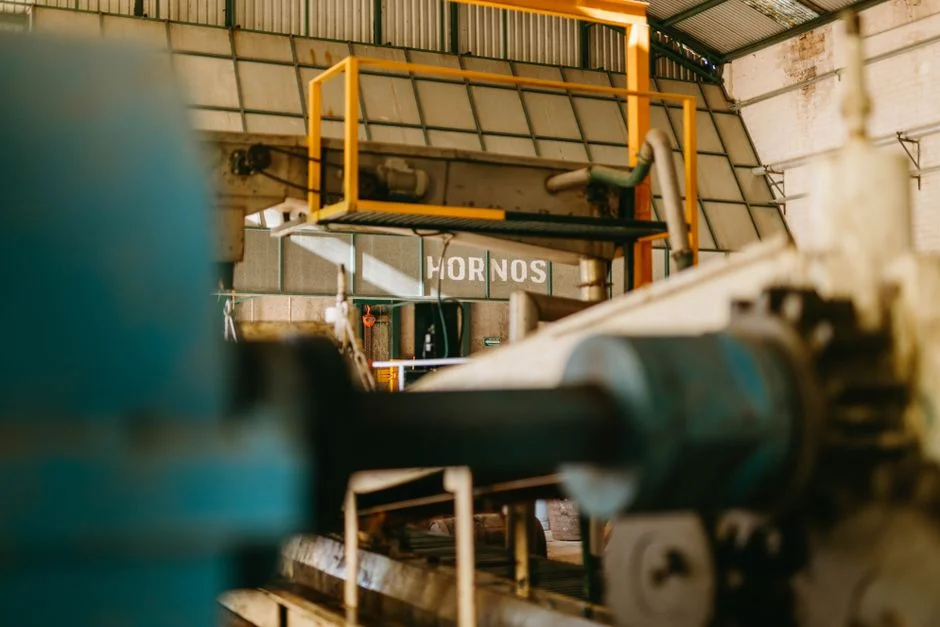
Screening protects pumps, valves, aerators and biological stages from rags, plastics and fibrous debris; it is not a COD-removal device. Coarse and fine screening should be followed by grit removal where the stream contains sand, fruit residues, packaging fragments or other settleable material. The goal is to remove material that can cause blockage, abrasion or unstable biological loading before selecting an industrial wastewater bar screen.
DAF fits streams containing emulsified FOG, light suspended solids and colloidal material that does not settle reliably. The catalogued industrial DAF pretreatment system covers 4–300 m³/h across 13 standard models, while the Medan reference reports up to 95% TSS removal for DAF. Those values describe catalogued and reported performance; the model must still be checked against flow, contaminant loading and required capture. Use the DAF selection checklist for FOG and TSS to request hydraulic and contaminant-loading data rather than relying on a model name.
Textile and detergent-bearing streams require site testing for pH, color, COD and toxicity before PAC, PAM or an adsorbent is selected. Chemical identity and dose must follow the actual wastewater chemistry, not a generic recipe. An automatic chemical dosing system should be tied to defined control logic, day storage and containment requirements.
Activated carbon is a polishing option, not a substitute for biological treatment. In a laundry-wastewater study by Alimano and Syafila, HCl 0.1 N produced 73.30% COD removal, 71.53% BOD removal and 75.73% detergent removal in batch testing; the continuous 25 cm bed reached 97.12% COD removal, but the 20 cm bed gave the highest average pollutant-load reduction. Hydraulic conductivity declined from 0.000058 to 0.000036 m/s during operation, indicating progressive pore blockage and saturation. The implication is direct: media replacement and hydraulic-performance monitoring belong in the operating plan.
Choose Biological Treatment for the COD Load
UASB or another anaerobic reactor can provide bulk COD reduction for suitably screened, equalized and readily biodegradable industrial wastewater, but only after pH, toxicity, temperature and upgradability have been checked. Anaerobic treatment is not a justification for allowing FOG, grit, color or detergent shocks to pass directly into the reactor. Equalization should cover batch variation, and the biological loading basis should reflect the measured influent—not domestic-sewage defaults.
Pulo Brayan demonstrates the relevance of an anaerobic stage followed by aerobic polishing in Medan. Its 10,000 m³/day UASB-and-aerated-lagoon train reportedly produces COD of 50–75 mg/L and BOD of 40–55 mg/L (BPPT, November 2017). Those results belong to that plant and wastewater; they do not establish guaranteed performance for a factory. Aerobic treatment provides a polishing function when the anaerobic stage alone is insufficient, while aeration calculations should reflect the Medan reference’s 28–32°C operating context.
MBR couples biological treatment with membrane solids separation. The catalogued integrated MBR wastewater treatment system covers 10–2,000 m³/day and provides filtration below 1 μm. It is appropriate where compact treatment and reliable solids separation are required, but membrane selection still depends on feed chemistry, fouling potential and the required final quality. The MBR design guide for food-processing wastewater outlines the application-specific checks.
| Route | Primary role | Entry conditions | Key failure risk |
|---|---|---|---|
| Anaerobic reactor | Bulk COD and biogas production | Screenable, equalizable, biodegradable feed with controlled pH and toxicity | Organic or hydraulic shock, acidification and sludge flotation |
| Aerobic stage | Residual organic oxidation and nitrification where required | Biologically compatible influent and verified oxygen-transfer basis | Under-aeration, pH instability and sludge separation failure |
| MBR | Integrated biological treatment and membrane solids separation | Controlled pretreatment and membrane-compatible feed | Fouling, membrane cleaning and loss of solids retention |
For unusual industrial chemistry, require pilot or bench verification and define loading and hydraulic rates from site data. Domestic-sewage performance is not an acceptance test for a factory treatment train.
Match the Final Stage to Discharge or Reuse
For compliant discharge, biological treatment plus clarification is usually the relevant baseline, followed by verification of final COD, BOD, TSS, pH and sector-specific parameters against the current permit. For water reuse where reliable solids separation is required, MBR offers a compact biological route with filtration below 1 μm. RO becomes relevant when dissolved salts or other dissolved constituents must be reduced; membranes should not be added merely because the project is described as reuse.
For industrial pretreatment or polishing, the catalogued ultrafiltration water treatment system handles 2,000–40,000 L/h, uses 0.03 μm PVDF membranes, accepts turbidity up to 300 ppm and provides automatic backwash and air scour. It removes fine solids, bacteria and colloids without chemical dosing, but it does not replace biological COD reduction. If dissolved salts are the constraint, evaluate the industrial reverse-osmosis water purification system after upstream biological and solids-separation stages.
| Objective | Indicative process path | Decision evidence required |
|---|---|---|
| Permitted discharge | Equalization and pretreatment, biological treatment, clarification, required disinfection | Current permit parameters, sector limits and receiving requirements |
| Reuse with low suspended solids | DAF or clarification where needed, biological treatment and MBR | Application-specific turbidity, solids, COD and operating requirements |
| Reuse requiring dissolved-solids control | MBR followed by RO | Feed salinity, recovery, concentrate disposal and end-use specification |
Pulo Brayan is a local biological benchmark, not proof that one configuration meets every industrial permit or reuse specification. Confirm the intended cooling, washing or process-feed quality separately for each use. “Near-reuse-quality” is not a universal acceptance criterion.
Compare Equipment Options by Project Objective
Compare equipment by contaminant role, sizing basis and operating burden—not by package name. DAF removes suspended solids, FOG, oil and grease and colloidal matter before biology. MBR combines biological treatment with submerged-membrane solids separation. UF provides fine solids, bacteria and colloid removal without chemical dosing. Chemical dosing addresses selected chemical contaminants, while a package treatment unit may consolidate several functions within a constrained footprint. Each option requires different feed data, utilities, controls and sludge handling.
| Equipment | Job in the train | Catalogued capacity | Procurement check |
|---|---|---|---|
| DAF | Suspended solids, FOG, oil and grease and colloidal matter | 4–300 m³/h | Hydraulic load, contaminant loading, recycle rate, solids capture and sludge interface |
| MBR | Integrated biological treatment and submerged-membrane solids separation | 10–2,000 m³/day | Influent profile, membrane flux, cleaning method, controls and replacement intervals |
| UF | Fine solids, bacteria and colloid removal | 2,000–40,000 L/h | Feed turbidity, flux, backwash, air scour and cleaning strategy |
| Automatic chemical dosing | Controlled treatment of selected chemical contaminants | No catalogued capacity supplied | Target pollutant, chemical compatibility, dose range, storage and containment |
| WSZ package treatment | Space-constrained integrated treatment option | No catalogued capacity supplied | Process scope, footprint, outlet quality and utility requirements |
Include sludge dewatering in the purchase scope because every solids-removal stage creates residuals that require collection, storage, dewatering and disposal. The plate-and-frame filter press is one dewatering option to evaluate alongside the biological solids, DAF float and chemical sludge. Ask for wet and dry sludge-yield assumptions, polymer demand, filtrate quality and disposal frequency. Omitting sludge handling can make an otherwise compliant treatment proposal incomplete and uneconomic to operate.
Plan Costs, Controls and Commissioning
A defensible quotation requires the flow range; COD, BOD, TSS, FOG and color profile; discharge or reuse target; land and utility constraints; sludge route; operating hours; automation requirements; and local service capability. The Medan engineering source describes energy as commonly 30–50% of operating expenditure, chemicals as 20–40% and sludge disposal as up to 20%. Treat these shares as budgeting hypotheses, not a Medan quotation; replace them with supplier pricing and site-specific consumption data.
Specify online COD, pH and flow monitoring where required, automatic chemical control, aeration control and alarms. The commissioning protocol should identify agreed influent and effluent sampling methods, a stabilization period, acceptance parameters, sludge-volume records and residual-media replacement intervals. For DAF, request hydraulic and contaminant-loading calculations and verify recycle rate, solids capture and sludge-interface performance. Regulatory verification remains necessary before acceptance, and the site permit controls final design decisions.
Frequently Asked Questions
How much does a high-COD wastewater treatment train cost in Medan?
No verified current Medan quotation was supplied for DAF, MBR or a complete treatment train, so a defensible price cannot be stated without site inputs. Request a quotation showing hydraulic and contaminant loading, pretreatment, biological capacity, final treatment, civil works, controls, sludge dewatering, installation, commissioning and operating assumptions. Separately price energy, chemicals and sludge disposal; the Medan reference’s 30–50%, 20–40% and up-to-20% operating-cost shares are hypotheses to test, not quotations.
Which pretreatment equipment should protect the biological reactor?
Use screening and grit removal for debris, and DAF where the characterized wastewater contains emulsified FOG, light solids or colloids. For detergent- or dye-bearing streams, test pH, color, COD and toxicity before specifying chemical dosing or adsorption. The DAF-versus-clarifier selection guide can support that equipment decision, but the selected unit must be sized from measured flow and contaminant loading.
When should a Medan factory choose MBR or RO?
Choose MBR when biological treatment must be combined with reliable solids separation for discharge or reuse; its catalogued range is 10–2,000 m³/day with filtration below 1 μm. Add RO when the intended reuse application requires dissolved-solids control that MBR does not provide. Confirm the final quality for the specific use—such as cooling, washing or process feed—rather than accepting “near-reuse-quality” as a specification.
How should supplier selection and acceptance be controlled?
Shortlist suppliers against a documented design basis and ask them to state flow, influent COD range, COD-removal basis, final objective, footprint, sludge generation and operating controls. For sizing, provide representative samples across production cycles and require pilot or bench verification where industrial chemistry is unusual. At acceptance, use agreed sampling methods, a stabilization period and agreed limits for COD, BOD, TSS, pH and sector-specific parameters. The cited benchmarks are orientation values; the factory’s current permit and receiving authority control the final decision.
Related Equipment
- industrial DAF pretreatment system — specifications, capacity range, and technical data