
What treatment train suits Pune trade waste?
Pune manufacturers generally treat high-COD trade waste with a source-controlled treatment train: equalise variable flows, remove suspended solids, oil, grease and floatables, reduce biodegradable organic load through biological treatment, then clarify the effluent. High-strength streams may need segregation, pH correction or a staged biological process, while DAF is useful where suspended solids, FOG and colloidal matter interfere with treatment. In 2026, reuse projects may add MBR or tertiary treatment, while sludge is separated and dewatered. Final equipment sizing must use measured flow, COD, BOD, TSS, FOG, pH and reject-water data, together with the applicable MPCB consent conditions.
Trade waste is production wastewater whose flow and composition vary with the factory’s operating cycle. A high COD value identifies an organic load, but it does not establish biodegradability, hydraulic loading, solids separation requirements or the outlet standard. The design should therefore connect a measured influent profile to the treatment objective, not select a biological reactor from COD concentration alone.
NITI Aayog’s Urban Wastewater Scenario in India white paper, published in August 2022, describes primary, secondary and tertiary treatment as the basic treatment hierarchy. For industrial high-COD flows, that hierarchy needs additional control: source segregation, equalisation, oil and grease removal, and protection of biological equipment from shock loads.
- Characterise each production stream and segregate incompatible discharges.
- Equalise the accepted flow and correct pH where required.
- Screen the wastewater and remove solids, floatables and FOG.
- Use DAF or lamella clarification to protect the biological stage.
- Reduce biodegradable organics through an appropriately loaded biological process.
- Clarify biological solids and route sludge to handling and dewatering.
- Add filtration, membranes, disinfection or other tertiary treatment when required by the receiving route.
Electrocoagulation is a documented COD-removal method evaluated with aluminium or iron electrodes in the International Journal of Advanced Research article COD Removal from Municipal Wastewater Using Electrocoagulation by Different Al/Fe Electrodes. It should therefore be treated as a project-specific option to test against the actual effluent, not as the default plant for every industrial wastewater.
The final train must reflect the applicable MPCB consent category, the receiving environment and whether the outlet is a discharge, sewer pretreatment or reuse application. The Pune effluent treatment plant engineering and buyer guide provides a broader purchasing framework for this site-specific selection.
| Decision stage | Required evidence | Engineering output |
|---|---|---|
| Source control | Stream inventory and production schedule | Segregation, diversion and equalisation strategy |
| Primary treatment | Flow, solids, FOG and process-contaminant data | Screening and DAF or clarification selection |
| Biological treatment | COD, BOD, biodegradability, nutrients and hydraulic profile | Process type, loading basis and aeration requirements |
| Tertiary and reuse | Intended use and receiving-route requirements | Filtration, MBR, disinfection and validation plan |
| Residuals and handover | Sludge characteristics and acceptance criteria | Handling, dewatering, monitoring and responsibility matrix |
Characterise the wastewater before selecting equipment
A single laboratory result cannot size an industrial effluent treatment plant for a production stream that changes by shift, campaign or cleaning cycle. The buyer needs a time-based sampling plan covering normal production, peak production, shutdown, idle periods and reject-water events, with samples identified by date, time, production state and sampling point.
Measure flow, COD, BOD, TSS, oil and grease, pH, temperature, nutrients and contaminants specific to the manufacturing process. The proposal should state the measurement basis and units before comparing equipment. It should also distinguish total and filtered COD where relevant, because the dissolved and particulate fractions affect whether biological treatment or physical separation carries more of the load.
High COD must be classified as readily biodegradable, slowly biodegradable or non-biodegradable. The Sustainability review Integrated Management of Industrial Wastewater in the Food Sector, published in 2023, notes that food-processing effluent can contain considerable concentrations of proteins and lipids. That makes source recovery or biological treatment potentially relevant, but it does not establish the biodegradability of a particular factory’s discharge.
Production and idle-period flow data matter as much as average concentration. A plant sized around average COD but exposed to short, high-strength discharges may suffer biological shock, while an equalisation tank based only on average flow may not contain the actual peak. The comparison between MBR versus conventional activated sludge comparison must therefore use the same influent and hydraulic basis.
| Required input | Design question | Why it changes selection |
|---|---|---|
| Flow and production schedule | What are the peak, average, idle and reject flows? | Determines equalisation and hydraulic loading |
| COD and BOD | How much organic load is biodegradable? | Determines biological process loading and test needs |
| TSS and oil and grease | How much material must be removed physically? | Determines screening, DAF or clarification duty |
| pH and temperature | Does the stream require correction or temperature control? | Determines chemical dosing and biological conditions |
| Nutrients | Are nitrogen and phosphorus sufficient and balanced? | Determines biological nutrient requirements |
| Process contaminants | Are compounds inhibitory, toxic or non-biodegradable? | Determines segregation or specialized removal |
| Reject and cleaning water | Can concentrated or incompatible streams be diverted? | Determines emergency controls and tank sizing |
Equalise and protect the biological process
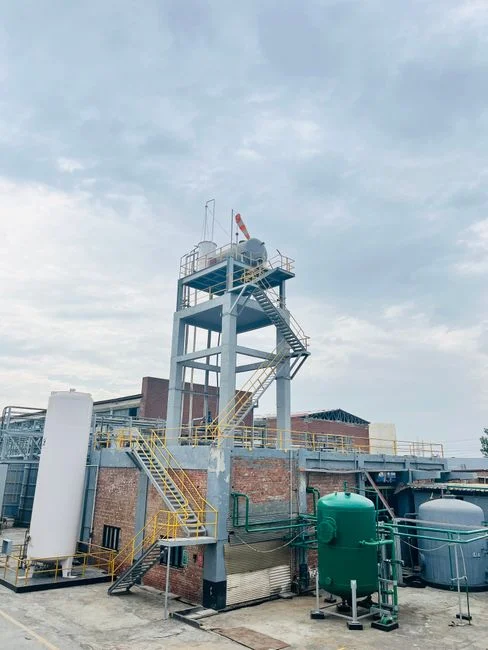
Equalisation is the control step that separates variable production flow and COD spikes from the biological reactor. Mixing prevents local settling, aeration can control odour and oxidation demand, and controlled release allows the biological stage to receive a more stable load. Working volume and outlet control must be derived from measured production and idle-period flow rather than an assumed daily average.
Segregation should occur before incompatible streams enter a shared ETP. The segregation register should identify the source unit, responsible owner, composition, flow, permitted combination, emergency diversion point and release procedure. This matters because equalisation can redistribute a shock load; it cannot make a non-biodegradable or inhibitory stream biologically acceptable.
Where repeatable chemical addition is required, PLC-controlled dosing provides a defined sequence for pH adjustment, coagulant, flocculant or specialty chemicals. The automatic chemical dosing system should be assessed as part of the process control scope, including calibration, duty and fail-safe arrangements.
Biological COD and BOD removal depend on adequate aeration, balanced nutrients, active biomass, suitable retention conditions and stable hydraulic loading. Amalgam Biotech identifies weak or inactive microbial populations, nutrient imbalance, sludge bulking, foaming and poor settling among the causes of unstable ETP performance in its 2026 supplier information. Its listed services include diagnosis, dosage optimisation, process stabilisation and troubleshooting.
Biologic products and process additives therefore support the reactor; they do not replace influent characterisation, equalisation, nutrient correction or verification of oxygen transfer and mixing. A nominal reactor volume can still fail if loading is excessive or the microbial population is not maintained.
Choose DAF or clarification for the solids load
DAF is the stronger primary-treatment candidate when floatables, oil and grease, suspended solids or colloidal material are significant and rapid separation is needed to protect downstream biological equipment. An industrial DAF system for high-COD pretreatment should be assessed against wastewater character, hydraulic variation, recovered sludge and control requirements.
HydropureWater’s DAF specification covers 4–300 m³/h across 13 standard models and describes micro-bubble technology with automatic skimming. These are product specifications, not site-specific performance data; the selected model still requires the factory’s flow and solids profile.
A lamella clarifier is relevant where compact solids separation, flocculation and sludge recirculation are priorities. HydropureWater specifies surface loading rates of 20–40 m/h and up to 30% lower chemical consumption for its product configuration. Again, the comparison must be made against the actual wastewater, coagulation chemistry, operating flow and sludge-handling route.
| Selection factor | Favours DAF | Favours lamella clarification |
|---|---|---|
| Primary contaminant | Floatables, FOG, suspended solids or colloidal material | Flocculated suspended solids requiring compact separation |
| Solids recovery | Float sludge recovery with automatic skimming | Clarified solids recovery and sludge recirculation |
| Plant arrangement | Compare skid footprint with the required separation duty | Compare inclined-plate packing height with the required hydraulic duty |
| Chemical use | Assess coagulant, flocculant and recycle-air requirements | Assess coagulant and flocculant requirements against the specified configuration |
| Downstream effect | Verify reduction of solids and FOG carry-over to the biological stage | Verify settled solids and overflow performance before biological treatment |
| Maintenance | Inspect skimmer, recycle system, nozzles and controls | Inspect sludge collection, recirculation and packing condition |
Neither device is a substitute for biological COD reduction. Physical pretreatment primarily removes floatables and solids that would burden the reactor. Selection should therefore be based on measured wastewater character, required solids capture, footprint, recovered-sludge properties, chemical use, maintenance and downstream treatment requirements, not on a generic efficiency claim.
Reduce COD biologically and confirm the final effluent route
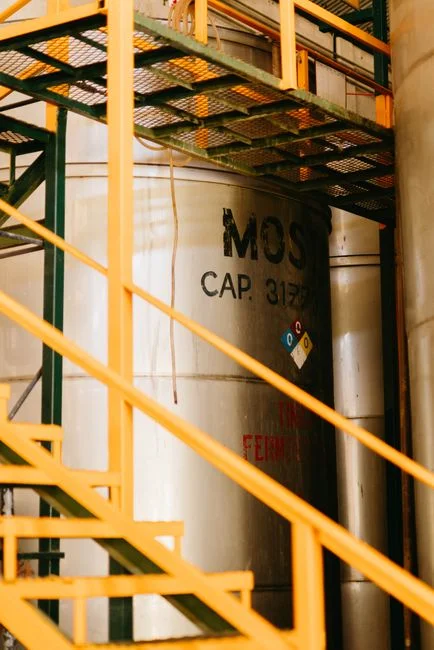
The biological stage oxidises biodegradable organics, but the reactor cannot be selected from a COD value alone. Design must address feed characteristics, nutrient balance, aeration, retention conditions, microbial health and hydraulic stability. Treated effluent then requires solids separation before discharge or reuse.
Activated sludge or another established biological process may be appropriate when the outlet objective and available footprint make it suitable. MBR becomes more relevant when the reuse target justifies membrane separation and tighter solids control, but it does not remove the need for physical pretreatment or stable biological loading.
HydropureWater’s MBR specification covers 10–2,000 m³/day, filtration below 1 μm, a 60% smaller footprint than conventional systems and near-reuse-quality effluent. These are stated product attributes. The factory still needs to verify feed compatibility, membrane fouling control, pretreatment, aeration, controls, cleaning and the water-quality parameters required for its actual reuse application.
Source treatment and reuse polishing must remain separate decisions. Biological treatment can reduce COD and BOD; filtration, disinfection, membranes and water-quality validation determine whether the water is fit for reuse. The MBR wastewater treatment system for industrial reuse should therefore be evaluated as a biological and solids-separation package, while the EDI electrodeionisation system belongs only where the specified reuse application requires demineralised water.
For a wastewater containing substantial dissolved salts, colour, organic micropollutants or other contaminants not removed by the selected biology, neither COD removal nor filtration below 1 μm establishes suitability for reuse. Final route selection must follow measured effluent data, process validation and the receiving requirement.
Manage sludge and verify performance before handover
Sludge production should be estimated from observed solids capture and the measured waste characteristics, then followed through thickening, dewatering, storage and disposal or reuse. Chemical dosing, pH correction and biological reaction can all change sludge volume, moisture content and handling requirements, so the purchase order should not separate the main ETP from the residuals plan.
HydropureWater’s plate and frame filter presses are specified with filtration areas from 1 m² to 500 m² and manual, hydraulic or fully automatic PLC-controlled operation. The plate and frame filter press should be selected against measured feed solids, cake discharge method, operating cycle, plate availability and operator requirements rather than filtration area alone.
The site acceptance and performance protocol should monitor COD, BOD, TSS, pH, oil and grease, dissolved oxygen, sludge volume and relevant operating conditions. The protocol must define sampling points, test methods, operating states and the consequences of failed results. This is more defensible than requiring a single untested composite result.
Operational abnormalities also need defined responses. The supplier should provide procedures for COD spikes, FOG carry-over, poor settling, sludge bulking, odour, foaming and abnormal flow. These are operating conditions with owners and escalation steps, not merely commissioning observations.
Before handover, require the supplier to define chemical and power consumption, expected sludge output, spare parts, operator training, control-system scope, preventive maintenance and ongoing service responsibilities. The equipment guarantee should be linked to the agreed influent envelope and test protocol.
Build a Pune supplier and compliance checklist
Comparable quotations require the same influent dataset, flow basis, treatment objective and outlet requirement. If each bidder works from a different interpretation of flow, COD or reuse quality, the prices are not comparable and the apparent low bid may transfer risk to the factory.
Ask each bidder for the proposed process flow, hydraulic calculations, equipment sizing calculations, control philosophy, performance guarantees, acceptance protocol, O&M scope and references from comparable industries. The supplier must also identify which party owns biological health, chemical dosing, sludge handling, documentation and regulatory coordination.
Confirm that the supplier will work against the applicable MPCB consent conditions and State Pollution Control Board requirements. No universal high-COD discharge limit should be inserted into the specification without identifying the consent category and receiving route.
Local support requires a specific commitment. Amalgam Biotech, in its 2026 supplier information, identifies its Baner, Pune address and lists diagnosis, dosage optimisation, process stabilisation and troubleshooting among its services. A vendor’s presence alone is not evidence of ETP capability; ask for named response personnel, site-access arrangements and responsibility for biological process problems.
| Procurement check | Evidence required from bidder | Buyer decision |
|---|---|---|
| Design basis | Signed influent dataset and outlet definition | Are bids based on the same scope? |
| Process design | Flow diagram, calculations and equipment duties | Is the proposed train suitable for the actual wastewater? |
| Performance | Guarantee tied to test conditions and protocol | Can the supplier be held to an auditable result? |
| Compliance | Consent-condition and receiving-route compliance matrix | Are responsibilities and documentation defined? |
| Operations | Consumption, sludge output, training and maintenance scope | Is whole-life operation understood? |
| Local support | Named contacts, response scope and escalation process | Can operating problems be supported in Pune? |
Use the supplied reference on industrial pretreatment limits and acceptance planning as a source of questions for pretreatment verification, while keeping the final Pune acceptance criteria specific to the applicable consent and outlet route.
Frequently Asked Questions
What information must a Pune factory provide before an ETP supplier can quote accurately?
Provide a flow log covering production, idle and reject periods; time-based COD, BOD, TSS, oil and grease, pH, temperature and nutrient results; process-specific contaminant information; the applicable consent conditions; and the required discharge, sewer-pretreatment or reuse route. State sampling methods, units and whether COD and TSS are total or filtered so bidders calculate from the same basis.
How should a buyer size a DAF system for high-COD wastewater?
Do not size flotation from COD alone. Request the DAF duty to be calculated from measured flow, suspended solids, floatables, FOG, colloidal characteristics and the required downstream solids condition. Require the supplier to show how peak flow, recycle system, skimming, coagulant or flocculant demand and recovered sludge affect the selected unit.
When is MBR preferable to conventional activated sludge?
MBR is worth evaluating when the reuse objective requires tighter solids separation or the footprint available at the site makes the membrane configuration more suitable. Require evidence from comparable wastewater, adequate physical pretreatment, stable biological loading, aeration and fouling controls, cleaning access and site-specific validation of the reuse parameters. The additional MBR versus conventional activated sludge comparison should use the factory’s measured feed, not a catalogue claim.
How should buyers compare vendor price, local service and acceptance testing?
Compare the full scope: equipment, civil works, chemicals, power, biological support, sludge handling, controls, training, maintenance and documentation. Request a site-access commitment and named technical responsibility, then tie payment or acceptance to an agreed performance test under defined operating conditions. The lower equipment price may not be the lower whole-life cost if downtime, sludge handling or consumables are excluded.