Separate the data center's wastewater streams
Sukkur data centers need separate treatment trains for cooling-tower blowdown, maintenance wastewater, and sanitary sewage because their chemistry, hydraulic loads, and reuse options differ. Evaporative cooling produces concentrated blowdown; closed-loop and direct-to-chip systems reduce routine consumption but still generate commissioning, flushing, maintenance, and refill waste. A single blended plant would obscure the main industrial hazards and could incorrectly route sanitary organics through industrial polishing equipment. Design should therefore begin with the selected cooling architecture, projected operating mode, and a sampling plan for every discharge point.
RSP Engineers identifies cooling-tower blowdown as the primary process-wastewater stream in most large data centers, while Valicor’s data center cooling-blowdown treatment guide distinguishes evaporative systems from sealed coolant loops. The Sukkur flow balance remains site-specific: it depends on cooling configuration, source-water chemistry, evaporation, drift, the selected cycles of concentration, and the data-center operating profile.
| Waste stream | Primary characteristics | Design implication |
|---|---|---|
| Cooling-tower blowdown | Concentrated dissolved solids, treatment chemicals, corrosion products, and possible biocides | Keep separate; determine cooling chemistry, reuse quality, and permitted destination before sizing |
| Humidification or process drains | Water chemistry varies with process contact and upstream treatment | Sample separately before combining with blowdown |
| Air-handling condensate | Generally lower in dissolved salts; composition depends on equipment and contamination control | Confirm suitability for reuse or discharge rather than assuming an automatic route |
| Equipment-cleaning wastewater | May contain suspended material, cleaning chemicals, oils, or glycol | Capture at the point of use and characterize the cleaning agent |
| Water-treatment backwash | Concentrated solids and treatment residuals | Route through equalization or recovery rather than dilute it into another stream |
| Sanitary sewage | Organic wastewater with variable hydraulic loading | Provide a separate biological treatment or sewer route |
Switching to closed-loop liquid cooling does not remove wastewater obligations. Valicor notes that these systems still require initial filling, construction flushing, periodic draining, cleaning, and refilling; their fluids may contain glycol, corrosion inhibitors, suspended solids, or dissolved metals. The arid-site data center wastewater planning reference is useful as a comparative design framework, but it does not establish a discharge route or requirement for Sukkur.
Characterize blowdown before selecting equipment
Cooling-blowdown chemistry must be measured before equipment selection because source-water salts, evaporation, cycles of concentration, and the chemical treatment package jointly determine treatment objectives. RSP Engineers lists elevated TDS, chlorides, sulfates, phosphates, residual biocides, treatment chemicals, and metals such as copper and zinc among the constituents that can complicate disposal. No single universal Sukkur composition can be assumed from an external benchmark or a neighboring city.
Issue a sampling and laboratory protocol for source water, circulating cooling water, and blowdown under representative operating conditions. The analysis should cover pH, TDS, conductivity, suspended solids, silica, calcium, hardness, sulfate, alkalinity, chlorides, phosphorus, iron, copper, zinc, residual biocides, corrosion inhibitors, and scaling chemicals. Also record temperature and the cooling system’s cycles of concentration. Freshwater-source changes and chemical-package changes can alter the load on neutralization, filtration, metal removal, and membrane systems.
| Design input | Method | Decision supported |
|---|---|---|
| Source-water and blowdown chemistry | Representative sampling and accredited laboratory analysis | Treatment targets, chemical compatibility, and permit application |
| Cooling-water balance | Account for evaporation, make-up water, drift, blowdown, backwash, cleaning losses, reuse demand, and disposal | Equalization, pretreatment, membrane, and storage sizing |
| Cooling chemical package | Obtain safety data sheets and dosing records for biocides, corrosion inhibitors, and antiscalants | Metals treatment, dechlorination, residual-disinfectant controls, and permit parameters |
| Temperature | Measure or calculate at the discharge and reuse points | Equalization and cooling requirements before discharge |
| Future operating stage | Separate current and future IT-load water demands | Modular capacity and reserve treatment headroom |
Build the water balance before fixing equipment. It should connect the cooling cycle to freshwater withdrawal and every wastewater destination, including backwash and maintenance losses. Without this mass balance, a supplier can size pumps and membranes to an assumed daily flow while missing peak blowdown, cleaning campaigns, or reuse demand.
Define pH neutralization, metals removal, filtration, and disinfection as functions. Do not automatically install every process. A pH-adjustment skid is justified only if analysis or permit conditions show it is needed; similarly, disinfection should follow the intended reuse and discharge requirements. The automatic chemical dosing system can support controlled application, but the chemical, dose, containment, and interlocks must come from the design basis. The industrial wastewater treatment planning checklist provides a useful format for documenting those interfaces.
Match the treatment train to the cooling system
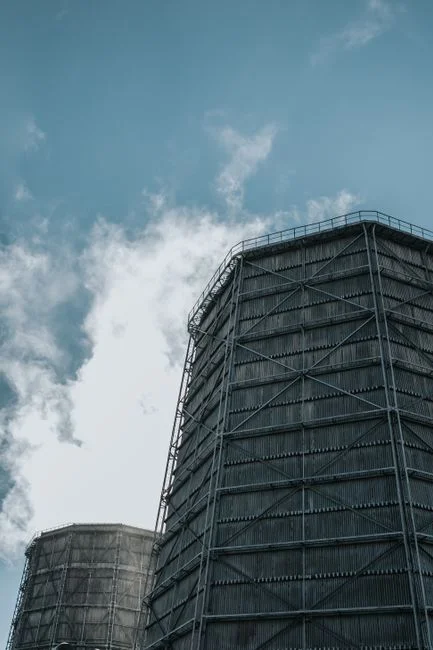
Evaporative cooling requires the largest and most chemistry-sensitive treatment train because dissolved constituents concentrate as water evaporates. A defensible sequence starts with equalization and temperature control, followed by suspended-solids removal, pH and chemical control where required, filtration, optional reverse-osmosis polishing, and disinfection only where specified for reuse or discharge. The final step is reuse or controlled disposal under a confirmed route. This sequence should be adapted to the measured chemistry rather than copied as a standard skid.
For closed-loop or direct-to-chip cooling, design for smaller but still necessary maintenance streams. Valicor identifies glycol, corrosion inhibitors, suspended solids, and dissolved metals as possible constituents. These streams may require collection, segregation, pH or chemical control, and targeted filtration, but they should not be assigned the full industrial blowdown treatment scope without evidence.
Where suspended solids, colloidal material, oil and grease, or floatables could compromise downstream polishing, an industrial DAF pretreatment system can remove them before filtration or membranes. The supplier’s stated catalog range is 4–300 m³/h; that is a product-selection range, not a Sukkur flow recommendation. Apply the DAF only where the influent characterization supports it.
Multi-media filtration is a logical barrier before RO when the objective is to reduce suspended solids and SDI and protect the membranes. A multi-media pretreatment filter should be selected from membrane feed-water requirements and actual blowdown analysis, not from a generic solids target. An integrated MBR treatment system is more relevant where sanitary or process wastewater requires biological treatment before reuse or discharge; it is not the default pretreatment for relatively clean cooling blowdown.
| Cooling configuration | Indicative train | Key decision gate |
|---|---|---|
| Evaporative cooling | Equalization and cooling → solids removal → chemical or pH control → filtration → optional RO → specified disinfection → reuse or discharge | Measured blowdown chemistry and confirmed reuse or discharge criteria |
| Closed-loop or direct-to-chip | Segregated collection → maintenance analysis → targeted neutralization or filtration → approved reuse or disposal | Coolant inventory, cleaning chemicals, drain frequency, and contaminant profile |
| Hybrid cooling | Parallel collection for tower blowdown and closed-loop maintenance waste → separate characterization → dedicated treatment stages | Operating scenarios and flows during changeover between cooling modes |
| Sanitary sewage | Separate A/O or packaged biological treatment → disinfection or reuse stage if required | Headcount and sanitary demand, not cooling-blowdown flow |
Keep sanitary sewage physically separate from the industrial train. Its organic load, hydraulic variability, biological treatment requirements, and potential reuse destinations differ from cooling blowdown. The Hyderabad-style planning cannot be transferred directly to Sukkur; this is a segregation principle, not a claim that either jurisdiction has the same permit framework.
Decide between reuse, controlled discharge, and high recovery
Reuse is generally the strongest water-resilience option when blowdown chemistry is stable, the treated water meets cooling make-up requirements, and lifecycle treatment cost is lower than the combined cost of freshwater and disposal. Reuse can also reduce freshwater withdrawal and discharge exposure, but it creates a continuing obligation to control silica, calcium carbonate, calcium sulfate, corrosion products, and treatment-chemical residues.
An Islamabad reference provides a comparative scenario, not a Sukkur standard. Its industrial RO train operated at 65–75% recovery, while increasing cooling cycles from 4 to 6–8 was associated with a 30–50% reduction in make-up water (Genesis Water Technologies 2026, as cited by HydropureWater’s 2026 Islamabad guide). The comparison is useful for testing the economics of more cycles and RO polishing, but the article does not establish that the same figures or outcomes apply to Sukkur.
IDE Tech states that conventional brackish-water RO typically reaches 75–80% recovery before scaling becomes difficult to manage. Higher recovery requires proactive control of silica, calcium carbonate, calcium sulfate, and other scale-forming constituents. An industrial RO blowdown polishing system can therefore support reuse, provided the pretreatment and antiscalant strategy are derived from the feed chemistry and membrane design.
| End-of-line strategy | When it is technically credible | Evidence required before commitment |
|---|---|---|
| Cooling-tower make-up reuse | Stable chemistry, suitable reuse quality, available distribution and storage, favorable lifecycle economics | Water balance, treated-water analysis, membrane projection, energy and chemical demand |
| Controlled sewer or utility discharge | Receiving utility accepts the industrial stream and applicable pretreatment satisfies its rules | Written route acceptance, temperature and pH limits, metals limits, residual-disinfectant requirements, sewer capacity |
| High-recovery reuse | Conventional RO scaling limits would otherwise constrain recovery | Concentrate chemistry, scaling projections, salt-balance calculation, downstream brine or salt-management route |
| Zero liquid discharge | Reuse is mandatory or no liquid discharge is contractually or regulatorily required | Crystallizer or equivalent salt-management feasibility, residue classification, solids handling, energy and maintenance basis |
Controlled discharge may suit a lower-flow site only after the Sindh regulator and receiving utility confirm that the route is acceptable. The review must cover sewer capacity, trade-waste approval, temperature, pH, metals, residual disinfectants, and monitoring obligations. The Islamabad guide’s BOD₅, COD, TSS, free-chlorine, and total-chromium values are source-specific and must not be presented as Sukkur limits without written confirmation.
Where zero liquid discharge is required, evaluate crystallization or another salt-management stage. Standard RO alone does not remove the dissolved salts that must leave the water balance. If crystals or sludge are produced, include a plate-and-frame filter press in the solids-management evaluation, then confirm residue handling requirements with the relevant authorities.
Build a site-ready treatment and compliance plan
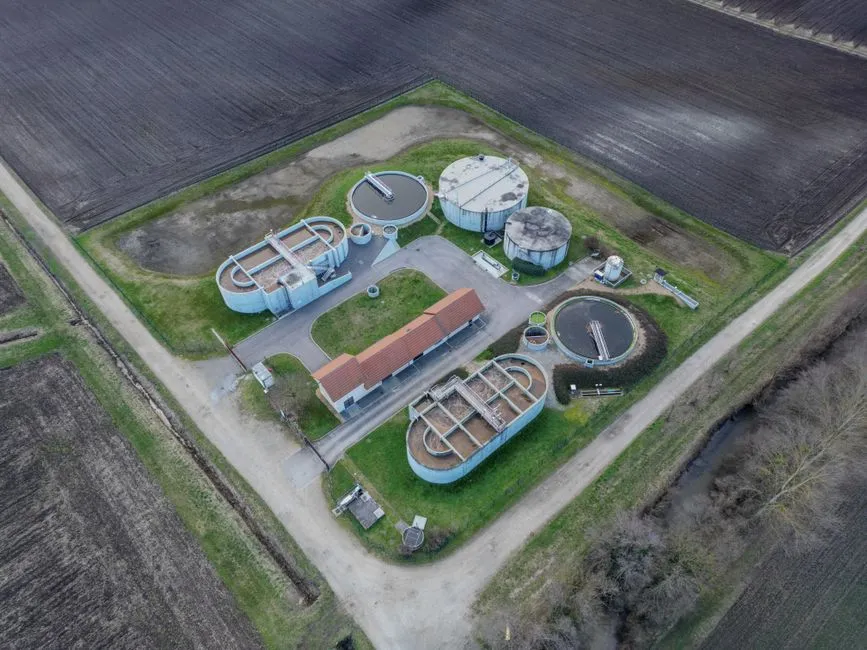
Wastewater treatment must enter the site plan before equipment orders are placed. Reserve space for equalization, DAF or clarification, filters, membrane equipment, chemical storage, RO concentrate management, sludge dewatering, sampling, controls, and vehicle access. RSP Engineers warns that treatment systems require tanks, pumps, chemical storage, spill containment, drainage, and maintenance access; late allocation can force redesign and schedule changes.
Specify PLC-controlled dosing for pH adjustment, coagulants, antiscalants, or other required chemicals only after the process design establishes the dosing basis. Chemical systems need secondary containment, safe delivery arrangements, interlocks, and an operating response for loss of control. Avoid treating automatic dosing as a substitute for chemical characterization.
Include automated monitoring and representative sample points for flow, pH, conductivity, and every parameter defined by the final permit or reuse specification. Provide laboratory access, calibration responsibilities, data retention, and operator procedures. RSP Engineers identifies regular sampling, certified laboratory analysis, reporting, and continuous pH and flow monitoring as recurring permit obligations where required.
Plan maintenance before commissioning: membrane cleaning, cartridge replacement, sludge handling, spare membranes, critical spares, operator training, and contingency arrangements for an unavailable treatment stage. HydropureWater’s UF catalog specifies 2,000–40,000 L/h capacity, 0.03-micron PVDF membranes, automatic backwash, air scour, and acceptance of feed turbidity up to 300 ppm. These are supplier-screening benchmarks, not Sukkur design flows or feed limits.
| Stage gate | Required deliverable | Procurement release condition |
|---|---|---|
| Cooling and wastewater basis | Cooling selection, stream inventory, water balance, representative chemistry, and operating scenarios | No process sizing before the design basis is approved |
| Regulatory route | Written Sindh approval pathway and receiving-utility acceptance, where applicable | Reuse or discharge destination confirmed before final equipment specification |
| Process guarantee | Feed-water basis, flow, recovery, product quality, concentrate route, and operating assumptions | Supplier bid evaluated against the same basis |
| Site integration | Civil footprint, utilities, containment, drainage, access, controls interface, and future expansion | Mechanical, civil, process, and environmental leads approve the integrated layout |
| Commissioning plan | Factory tests, site acceptance, sampling, training, spares, and O&M documentation | Order release only after acceptance criteria are written |
Require a signed water and wastewater basis-of-design report covering mechanical, civil, process, electrical, controls, and environmental disciplines. The report should state the selected cooling architecture, each wastewater stream, the water balance, chemistry, treatment objectives, reuse quality, discharge route, residual handling, monitoring, and assumptions. This is the control document against which procurement should be checked.
Frequently Asked Questions
What does a Sukkur data center wastewater treatment budget need to include?
Request an itemized lifecycle cost covering source-water treatment, pretreatment, membrane area, recovery target, concentrate or zero-liquid-discharge equipment, civil works, controls, chemical storage, sludge handling, energy, membrane replacement, commissioning, operator training, and imported-equipment logistics. The supplied research does not provide a defensible Sukkur price, so a quotation should not be inferred from the Islamabad capital-cost benchmark or from IT load alone.
Which treatment train should a closed-loop data center in Sukkur use?
Start with segregated collection of commissioning, flushing, draining, cleaning, and refill wastewater. Analyze the actual coolant and cleaning chemicals before assigning neutralization, filtration, biological treatment, or RO. The cooling-technology distinction confirms that closed-loop operation reduces routine evaporation but does not eliminate wastewater.
How should treatment equipment be sized for a staged IT build?
Require the site water balance, representative blowdown analysis, cooling chemistry, operating hours, peak and cleaning flows, backup strategy, and future IT-load stage. Do not select equipment from IT megawatts alone. The supplier should state its feed-water basis, design flow, recovery definition, treatment objectives, and future-expansion provisions.
Which supplier qualifications should be checked before ordering?
Require documented process guarantees, feed-water limits, recovery definition, membrane-replacement assumptions, controls integration, local technical support, critical spares, commissioning records, and O&M training. For discharge-based designs, also require evidence that the proposed treatment and monitoring approach can satisfy the written Sindh and receiving-utility conditions.
What must be confirmed with Sindh authorities and the receiving utility?
Confirm the acceptable discharge route, current industrial or trade-waste limits, temperature and pH requirements, metals and residual-disinfectant controls, monitoring and sampling duties, connection conditions, and treatment requirements. The Islamabad SDU values in the HydropureWater 2026 guide are comparative only; they are not confirmed Sukkur limits and should not be copied into a permit basis.
Related Equipment
- industrial DAF pretreatment system — specifications, capacity range, and technical data