Choose DAF or Lamella from the Wastewater Profile
Norfolk chemical factories should generally choose a dissolved air flotation system when wastewater contains appreciable oil, emulsions, colloids, or buoyant solids; the Norfolk fabricated-metals guide reports 90–99% emulsified-oil removal and 90–99% TSS removal with proper testing, sizing, and dosing. A lamella plate clarifier is better suited to low-FOG streams dominated by dense, settleable inorganic floc, but it does not remove free or emulsified oil. For variable chemical streams, specify DAF primary separation, optional lamella polishing, automatic chemical dosing, and a representative pilot before purchasing.
A packaged dissolved air flotation system separates material by buoyancy. Pressurized recycle water releases microbubbles that attach to conditioned oil droplets, colloids, and suspended solids; the resulting float is removed by a skimmer. A high-efficiency lamella clarifier separates by gravity: conditioned solids settle onto inclined plates, slide into a sludge hopper, and clarified water leaves through an overflow launder.
The decision boundary is the wastewater profile, not the equipment category. The Norfolk guide gives lamella 60–85% removal of settleable metal-hydroxide TSS and approximately 0% removal of free or emulsified oil. It places standalone lamella use below roughly 50–100 mg/L FOG; above approximately 100 mg/L, it calls for oil skimming or pre-DAF. Those figures come from fabricated-metals applications, so they are screening values rather than guarantees for unidentified chemical wastewater.
| Wastewater characteristic | Primary selection | Reason |
|---|---|---|
| Free or emulsified oil above approximately 100 mg/L | DAF, with chemistry | Oil is buoyant and cannot be reliably removed by gravity settling. |
| Colloids, emulsified product, or buoyant solids | DAF, with coagulation and flocculation | Conditioning must enlarge particles and make them attach to bubbles. |
| Low FOG and dense, confirmed settleable inorganic floc | Lamella, subject to jar testing | Gravity separation is appropriate after the particles are conditioned. |
| Buoyant material plus residual settleable floc | DAF followed by lamella | DAF captures oil and bulk solids; lamella polishes residual TSS and thickens sludge. |
Before selecting a unit, obtain 12 months of composite sampling plus event samples covering total oil and grease, TSS, and pH, including production-cycle variability. The source specifically calls for this waste-profile review. For a broader process comparison, see the chemical wastewater DAF-versus-clarifier comparison.
Match the Process to Norfolk Chemical Waste streams
DAF is the more credible primary separator for oil-, solvent-, emulsified-product-, and colloid-dominated chemical waste because those contaminants require flotation rather than ordinary gravity settling. Lamella clarification is more defensible when FOG is low and the stream consists mainly of dense inorganic precipitates that remain settleable after chemical conditioning. Neither conclusion should be inferred from contaminant names alone; the physical waste characteristics and treatment chemistry must be tested.
For a mixed chemical stream, use DAF as the primary unit when recoverable buoyant material is present and lamella as the polishing and sludge-thickening stage. The Norfolk guide identifies this DAF-to-lamella arrangement as the standard hybrid pattern for more difficult industrial streams. The lamella stage then captures fine chemical floc that escapes flotation while consolidating the solids burden for downstream handling.
Do not transfer removal results from food processing, fabricated metals, or another industry without representative validation. The Norfolk source’s DAF percentages and lamella limits were drawn from fabricated-metals planning data. A chemical plant with toxic constituents, solvent changes, variable pH, or incompatible products may have a different chemical demand and solids behavior. The metals-wastewater DAF-versus-clarifier guide provides a related matrix, but its results should not be treated as chemical-plant performance data.
The compatibility review must cover construction materials, product chemistry, pH correction, temperature, and the sequence of coagulation and flocculation. A PLC-controlled automatic chemical dosing skid should be specified only after jar tests establish the required coagulant, flocculant, and pH-control sequence.
SigmaDAF’s process description, published by Clearwater Industries on April 27, 2026, identifies microbubbles of 30–50 microns and states that efficient chemical conditioning increases particle size and attachment to the bubbles. That mechanism explains why a hydraulically adequate DAF can still underperform if polymer dose, mixing, or feed control is poor.
Compare Performance, Operating Complexity, and Maintenance
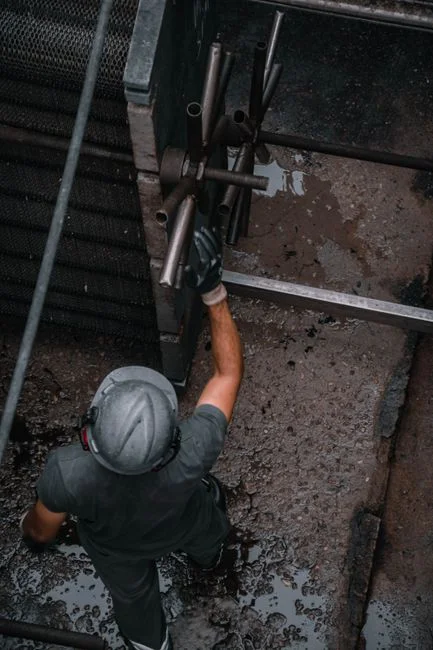
DAF has the stronger published separation performance for oily or finely suspended industrial waste, while lamella has the simpler mechanical arrangement. The comparison below uses planning values from the Norfolk fabricated-metals guide rather than site-specific guarantees.
| Planning parameter | DAF with chemistry | Lamella clarification |
|---|---|---|
| TSS removal | 85–98% | 60–85% of settleable metal-hydroxide TSS |
| FOG removal | 90–99% | Approximately 0% for free or emulsified oil |
| Planning effluent TSS | Below 30 mg/L | 30–80 mg/L on well-flocculated metal-hydroxide streams |
| Principal equipment | Saturation vessel, recycle loop, compressed-air supply, flotation cell, and skimmer | Inclined plates, sludge hopper, and scraper; no saturation pump, compressor, or recycle loop |
| Chemical demand | Coagulant and flocculant are critical to flotation performance | Up to 30% lower chemical consumption than conventional rectangular clarification on suitable streams |
| Plate surface loading | Not the controlling catalog value in the supplied research | 20–40 m/h |
Chemical conditioning is the make-or-break DAF input. The Norfolk guide states that coagulant and flocculant selection determines whether a DAF reaches below 30 mg/L TSS or stalls at 150 mg/L. By comparison, lamella can be mechanically simple, but that simplicity comes with a structural limit: buoyant oil can leave through the overflow rather than settle onto the plates.
DAF operating complexity comes from the saturation system, recycle flow, compressed-air demand, skimmer, and dose control. Lamella eliminates those particular auxiliaries, although sludge collection, inspection, and corrosion protection remain. Maintenance planning should also address pumps, valves, air quality, polymer preparation, plate fouling, and instrumentation.
Both float and underflow need a defined disposal route. The Norfolk source reports DAF float at 2–6% solids and states that a plate and frame press can dewater it to 25–35% for cheaper hauling. Chemical sludge can impair downstream biological, membrane, or disposal processes if it is not conditioned, so sludge yield and compatibility must enter the purchase decision rather than appear after award.
Size the Equipment for Peaks and Production Slugs
Size pretreatment equipment for the worst combination of flow and contaminant loading, not the average discharge. A production batch, cleaning cycle, or rejected product can create a hydraulic or solids slug that an average-flow calculation conceals. The final design should therefore state design flow, peak flow, TSS loading, FOG loading, pH range, recycle duty, air demand, and expected sludge yield.
For a 50–200 gpm industrial duty, the Norfolk guide supplies a DAF planning envelope of 10–30 minutes hydraulic retention time, 4–8 gpm/ft² surface loading, 10–50% recycle ratio, and 0.02–0.06 lb air per pound of solids removed. These are Ergil design-envelope values cited in the guide, not equipment guarantees.
| Sizing input | Published planning basis | Procurement requirement |
|---|---|---|
| Hydraulic retention | 10–30 minutes for a 50–200 gpm DAF duty | Confirm against peak flow, equalization and flotation-zone configuration. |
| DAF surface loading | 4–8 gpm/ft² | State the effective flotation area used. |
| DAF recycle | 10–50% | Verify recycle pump and saturation-vessel duty at the upper bound. |
| Air-to-solids | 0.02–0.06 lb air/lb solids removed | Calculate from pilot-measured solids removal. |
| Lamella plate loading | 20–40 m/h | Confirm that plate area accommodates peak flow and selected solids loading. |
| Equipment scale | Packaged DAF modules typically serve 20–500 gpm; the supplier catalog spans 4–300 m³/h across 13 standard models | Check the proposed model, parallel-unit arrangement and future expansion. |
Hydraulic retention, surface loading, recycle, and air-to-solids ratio cannot be checked independently. A flow-only calculation may satisfy retention while providing insufficient flotation contact, recycle capacity, or air. Conversely, selecting the largest published footprint without a peak-load profile can add capital cost without resolving chemistry.
For lamella, require the supplier to identify the proposed plate area and confirm the 20–40 m/h design basis against the selected solids-loading condition. For either technology, ask the vendor to state whether equalization upstream or a bypass is included. The equipment proposal should then be checked against 12 months of flow and production data.
Build a Pilot-to-Purchase Acceptance Plan
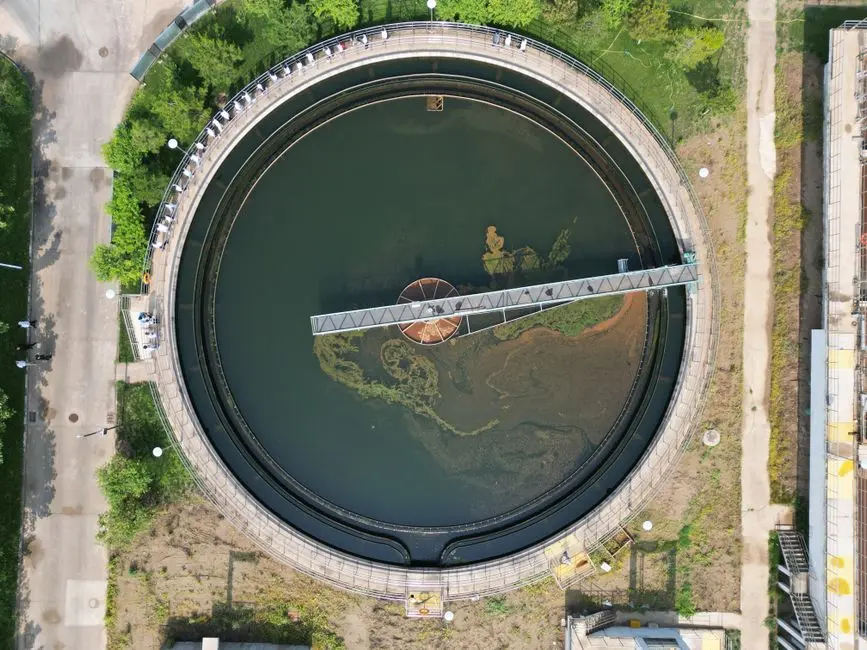
A representative pilot turns chemistry and hydraulic assumptions into site-specific acceptance evidence. The Norfolk guide identifies polymer dosage, air-to-solids ratio, sludge volume, and removal performance as outputs from a one- to two-week DAF pilot when wastewater varies materially.
The same source reports rental DAF pilots at 48–100 gpm, making that test scale relevant below approximately 50 gpm and during pilot or demonstration phases. A pilot should not be selected because its nominal flow matches the plant average; it should cover representative production conditions and the most demanding operating periods that can safely be sampled.
- Complete 12 months of composite and event sampling for TSS, FOG, pH, and flow variability.
- Run a parallel jar-test program to identify coagulant and flocculant dose ranges and confirm that inorganic floc settles.
- Test the DAF across normal production, concentrated batch discharge, and cleaning-cycle conditions.
- Record TSS, FOG, pH, flow, chemical dose, recycle ratio, float volume, and underflow solids during each condition.
- Write acceptance criteria before the trial for effluent quality, chemical consumption, hydraulic stability, float handling, underflow handling, and automatic-dosing response.
Acceptance criteria should be written as measurable outcomes: the required effluent TSS and FOG under defined peak conditions; chemical consumption per unit volume; stable operation without overflow; recoverable float and underflow volumes; and correct PLC or automatic-dosing response when influent conditions change. The supplier should identify which results came from the pilot and which are design assumptions.
Pilot removal results are site-specific performance evidence. They should not be replaced by a manufacturer’s generic removal curve, and food-processing or fabricated-metals results should not be transferred without validation. The pilot report should also update the final solids-handling and chemical-storage basis, because the automatic chemical dosing system must be sized for the demonstrated dose range rather than an assumed average.
Compare Installed Cost and Long-Term Operating Exposure
Published 2026 figures provide a budget range, not a quote. The Norfolk guide estimates $180,000–$450,000 for an installed packaged DAF skid serving 50–200 gpm, including the saturation pump, recycle loop, controls, and chemical-feed integration. A separate market estimate in the same source places a fully integrated 100 gpm DAF skid at $140,000–$210,000 in 2026, with price affected by materials of construction and PLC automation.
| Cost or operating item | Published 2026 planning basis | Budget treatment |
|---|---|---|
| Installed packaged DAF, 50–200 gpm | $180,000–$450,000 | Obtain a site-specific quotation with the stated scope. |
| Integrated 100 gpm DAF skid | $140,000–$210,000 | Use only as an early market range; confirm materials and automation. |
| Lamella tank and plates | Approximately 30–45% less than comparable DAF equipment | Price oil skimming, pre-DAF, foundations and installation separately. |
| DAF operating inputs | Not quantified in the supplied research | Request energy, compressed air, chemical and polymer-preparation consumption. |
| DAF capital recovery estimate | 18–36 months on high-FOG streams in the Norfolk source | Recalculate using the plant’s actual sewer surcharges, penalties and downstream loading. |
| Sludge handling | DAF float at 2–6% solids; plate-and-frame dewatering reported at 25–35% solids | Price hauling, filter consumables and final-disposal fees. |
The lower tank-and-plate price of a lamella unit may not produce the lowest total cost on a high-FOG stream. A skimmer or pre-DAF may be required, narrowing the capital gap. DAF also adds energy, compressed-air, chemical, polymer-preparation, operator-attention, float-handling, and downstream-disposal costs; these should appear as separate lifecycle-cost lines.
Every RFQ should define mechanical equipment, materials, controls, chemical integration, electrical work, foundations, installation, commissioning, training, performance testing, and sludge handling. Excluding these boundaries makes two bids non-comparable. For solids handling, request an option for a plate and frame sludge filter press where reduced hauling volume is justified by pilot results.
Specify the Complete Pretreatment Train
The equipment choice should be specified as a treatment train, not as an isolated tank. Include equalization ahead of DAF where chemical production discharges are intermittent. The Norfolk food-processing guide identifies flow equalization as important for slug-loading industrial streams; a chemical plant should use its own batch and cleaning records to set the required equalization volume.
Specify an automatic chemical dosing skid for coagulant, flocculant, and pH adjustment. The skid should use flow-paced control where appropriate, provide alarms for abnormal consumption, and expose the actual dose to the PLC and historian. Final chemical selection and control logic should follow jar tests and the pilot, not precede them.
Where a hybrid train is justified, define DAF as the primary oil and bulk-solids removal step and lamella as the polishing and sludge-thickening step. Then specify how float and underflow are collected, equalized, conditioned, and routed to disposal or dewatering.
Include a plate and frame filter press when the project objective is to dewater DAF float or lamella underflow for lower-volume hauling; the supplier catalog covers filtration areas from 1 m² to 500 m². The selected press should be based on pilot sludge characteristics, expected batch frequency and disposal acceptance criteria.
The RFQ should also separate mechanical, process, controls, chemical, electrical, installation, commissioning, training, and performance-test responsibilities. For permit and surcharge context, consult the chemical plant pretreatment compliance guide, then verify the site’s current HRSD industrial-user permit and surcharge schedule rather than relying on generic limits.
Frequently Asked Questions
Should a Norfolk chemical plant choose DAF or a clarifier?
Choose DAF as the primary unit when the wastewater contains appreciable free or emulsified oil, colloids or buoyant solids; the Norfolk fabricated-metals guide reports 90–99% emulsified-oil and 90–99% TSS removal with proper testing, sizing and dosing. Choose standalone lamella only for low-FOG streams dominated by dense, confirmed settleable inorganic floc; the same source reports 60–85% removal of settleable metal-hydroxide TSS and approximately 0% removal of free or emulsified oil. Provide 12 months of composite and event data for TSS, FOG, pH and flow variability. These are screening values from another industrial matrix, so pilot validation remains necessary.
What inputs are needed to size DAF or lamella equipment?
Provide average and peak flow, TSS and FOG loading, pH range, production-cycle data and expected sludge yield. For DAF, the source’s planning envelope for a 50–200 gpm duty is 10–30 minutes retention, 4–8 gpm/ft² surface loading, 10–50% recycle, and 0.02–0.06 lb air per pound of solids removed. For lamella, the catalog surface-loading range is 20–40 m/h. These values must be checked together against the worst-case load and confirmed during pilot testing.
How much should the buyer budget for a DAF or clarifier?
The Norfolk source gives two 2026 planning ranges: $180,000–$450,000 for an installed packaged DAF skid serving 50–200 gpm, and $140,000–$210,000 for a fully integrated 100 gpm DAF skid. It also estimates comparable lamella tank-and-plate costs at approximately 30–45% less. These are not quotations. Request vendor pricing with materials, PLC scope, chemical skid, foundations, electrical work, installation and sludge handling separated.
How should a supplier be selected without transferring unverified performance claims?
Require site-specific pilot evidence, written acceptance criteria, materials compatibility information, automatic chemical-feed integration, and clear controls and service responsibilities. A supplier should provide test results under defined TSS, FOG, pH and flow conditions rather than transferring food-processing or fabricated-metals removal curves. Check local service capability and require the contract to distinguish equipment guarantees from pilot observations.
Which compliance documents should control the final specification?
The buyer’s current HRSD industrial-user permit and surcharge schedule should control; the supplied research does not establish a chemical-plant-specific limit applicable to every Norfolk facility. Before ordering, reconcile the selected TSS and FOG targets with current permit conditions, local surcharge triggers and downstream pretreatment requirements. Record any unresolved permit or surcharge interpretation as a hold point in the procurement schedule.