How to Choose DAF or a Clarifier for Chemical Wastewater
For Charlotte chemical factories, choose dissolved air flotation (DAF) when oil, grease, FOG, colloids, or floatable solids are important and chemical conditioning can create flocs that attach to microbubbles. Choose a conventional or lamella clarification system when the objective is settling chemically precipitated or naturally settleable solids with a simpler solids-handling route. Neither device removes dissolved contaminants by itself; source characterization, coagulation testing, peak-flow analysis, and downstream treatment must be included in the decision. DAF should follow equalization and appropriate chemical conditioning, while clarifiers may follow precipitation or pH control.
The contaminant fraction determines the starting point, not the equipment label. Chemical wastewater may contain free oil, emulsified oil, colloids, suspended solids, precipitable metals, and dissolved compounds simultaneously. DAF removes material that can be conditioned into particles with enough buoyant attachment to rise. A clarifier separates particles that settle, whether they originated in the process or were formed by precipitation.
Neither DAF nor clarification replaces biological treatment, dissolved-solids removal, filtration, or discharge compliance where those steps are required. For a Charlotte-area selection, make the final decision after source sampling, chemical jar testing, and, where practical, an on-site pilot. That evidence is more defensible than comparing generic flow envelopes. For an initial equipment screen, review the industrial DAF system alongside the separation train and downstream obligations.
Characterize the Wastewater Before Selecting Equipment
Representative sampling across operating conditions is required because each industry produces wastewater with a characteristic contaminant profile and unique treatment problems, according to DAF Corp’s 2025 website. A single off-peak sample can omit batch dumps, cleaning discharges, emulsions, or process upsets that control equipment selection.
Build the sampling plan around production, cleaning, dumping, upset, and shutdown periods. Record flow alongside peak and minimum conditions, then characterize suspended solids, oil and grease/FOG, colloids, pH, and every constituent covered by the plant’s discharge or sewer-pretreatment obligations. Request chemical analysis for dissolved constituents that may require precipitation, neutralization, biological treatment, or another downstream process.
| Information to obtain | Why it affects the decision |
|---|---|
| Average, peak, minimum, and batch-discharge flow | Establishes equalization, hydraulic loading, controls, and peak-flow treatment requirements. |
| TSS, oil and grease/FOG, and colloids | Indicates whether flotation, settling, or a combined treatment strategy deserves priority. |
| pH and upstream chemical additions | Defines chemical-conditioning needs, corrosion considerations, and downstream reactions. |
| Dissolved constituents | Shows whether clarification leaves permit-relevant dissolved loads requiring another process. |
| Production-cycle variability | Tests whether dosing, hydraulic loading, flotation, settling, and sludge collection can absorb upsets. |
DAF Corp states that a comprehensive wastewater study is often warranted because considerable study and supporting information must be analyzed before selecting a solution. That recommendation is particularly important where multiple manufacturing streams are combined. A PLC-controlled chemical dosing system can respond to changing feed conditions, but automation does not correct an inappropriate chemical recipe or an undersized hydraulic design.
How Each Separation Process Removes Pollutants
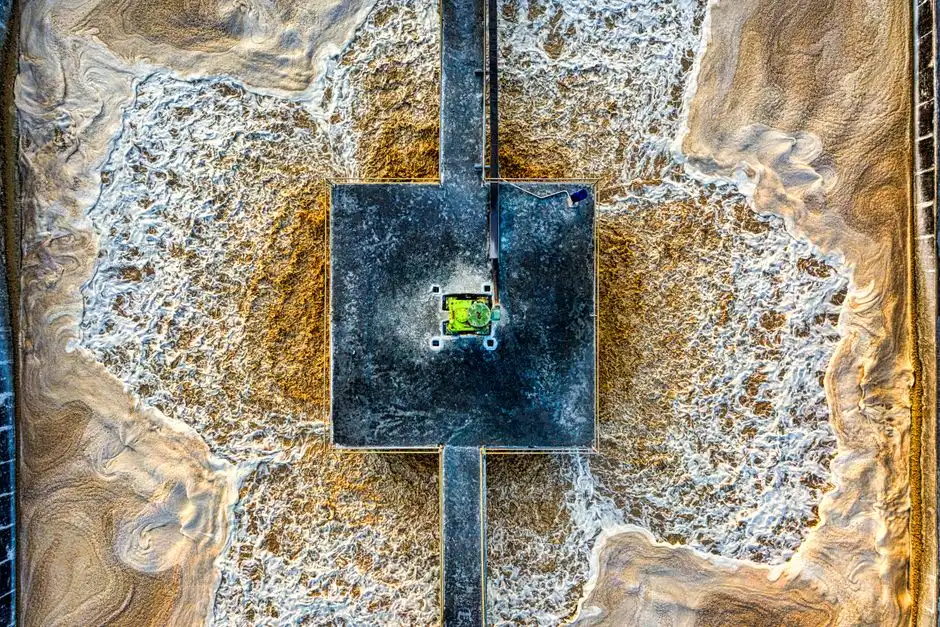
A DAF unit separates conditioned particles by flotation, while a clarifier separates particles by gravity settling. The typical DAF train comprises equalization, chemical mixing and flocculation, dissolved-air saturation or fine-bubble generation, flotation and skimming, and sludge removal. Clearwater Industries, in an April 2026 technical article, describes microbubbles measuring 30–50 microns and explains that chemical conditioning increases particle size and contact with the bubbles.
The typical clarifier train also begins with equalization, but the downstream sequence centers on chemical reaction or pH adjustment, mixing and flocculation, settling, and sludge withdrawal. A lamella clarifier uses inclined plates to increase effective settling area within a compact structure. Plate geometry does not remove the need to establish feed chemistry, floc properties, hydraulic loading, and the required clarified-water quality.
These mechanisms should not be presented as equivalent treatment technologies. EPA’s Detailed Costing Document for the Final Effluent Limitations Guidelines and Standards for the Centralized Waste Treatment Industry lists DAF, secondary clarification, gravity separation, precipitation, and filtration as distinct parts of treatment trains. A chemical plant may need several of them in sequence.
The practical process boundary is equally important. DAF may recover floatable oil and collect conditioned solids at the surface, while heavier material can settle in a collection zone. A lamella clarifier relies on the solids settling through the plate stack. For either route, define the required endpoint before selecting equipment; otherwise “clarification” may describe only an intermediate step.
DAF Versus Clarifier: Performance and Operating Trade-Offs
DAF is the stronger starting candidate when the target fraction is floatable or can be made floatable through conditioning, while a clarifier is the stronger candidate when precipitated or naturally settleable solids are the target. The decision then depends on chemical demand, hydraulic behavior, sludge handling, controls, footprint, and retrofit constraints—not on a generic removal percentage.
| Decision factor | DAF | Conventional or lamella clarifier |
|---|---|---|
| Dominant mechanism | Microbubble flotation and surface skimming | Gravity settling and bottom sludge withdrawal |
| Typical target fraction | Floatable oils, FOG, colloids, and conditioned solids | Precipitated or naturally settleable solids |
| Chemical conditioning | Often essential to create flocs with effective bubble contact | Required when upstream pH adjustment or precipitation must form settleable solids |
| Hydraulic form | Shallow or lamella-pack flotation arrangements may provide high surface separation | Lamella plates increase effective settling area within a compact structure |
| Residuals | Floatated material plus settled heavy solids | Concentrated settled sludge |
| Key operating risks | Dose and floc instability, bubble generation, skimming, and flow variability | Floc disturbance, solids carryover, sludge removal, and hydraulic overload |
DAF Corp’s 2025 website reports scope-specific TSS removal of 92%–98% for its round FC Maximizer at 10–11,000 gpm and 85%–90% for its rectangular RC UniMax at 10–1,000 gpm. These are supplier-reported figures tied to those equipment envelopes, not universal performance guarantees. The same source describes an FC-150 system designed for 500 gpm, clarification to 50 ppm, and a 2,000 ppm suspended-solids loading; site performance still requires confirmation against the actual wastewater.
Clearwater Industries explains that DAF models can be configured for small-to-medium or high-flow duties and that its FPBC model uses lamella-pack technology to reduce flow velocity and improve separation efficiency. The broad industrial DAF system range spans 4–300 m³/h across 13 models for industrial applications involving suspended solids, FOG, oil and grease, and colloidal matter. A lamella clarifier should be evaluated on the same wastewater and peak-flow basis rather than compared using generic footprint claims.
Size the System Using Verified Wastewater Data
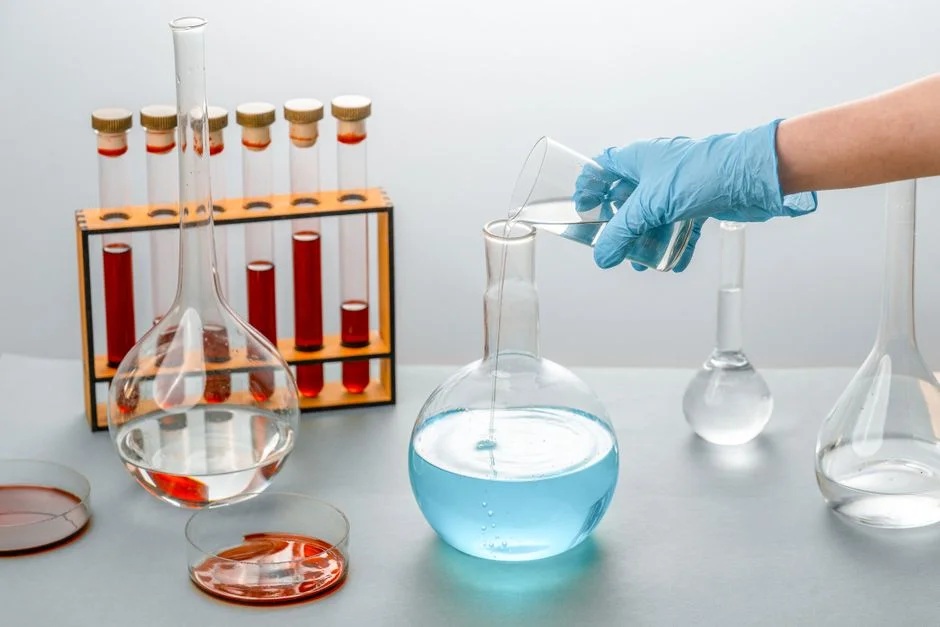
A defensible equipment size starts with documented flow and wastewater data, not a catalog maximum. Require the designer to state the average-flow basis, peak-flow basis, batch-discharge events, and expected future production changes. The selected loading rate must then be supported by TSS, FOG, colloid behavior, floc properties, and observed settling or flotation performance.
Published equipment envelopes are only an initial screen. DAF Corp lists 10–11,000 gpm for the FC Maximizer, 10–1,000 gpm for the RC UniMax, and 48–450 gpm for skid-mounted FC Maximizer units. HydropureWater’s catalog range of 4–300 m³/h can be compared with the plant’s average and peak flow, but the final model still requires a documented hydraulic and solids-loading calculation.
| Required sizing input | What the supplier must demonstrate |
|---|---|
| Average and peak flow, including batch discharges | Selected treatment capacity and behavior during peak hydraulic loading. |
| TSS, FOG, colloid, and pH profile | Feed characteristics used to select the applicable loading rate. |
| Jar-test or pilot results | Observed floc formation, flotation response, settling rate, and clarified-water quality. |
| Equipment envelope | Confirmation that the proposed model covers the required flow with the stated configuration. |
| Acceptance criteria | Performance guarantees and test methods tied to representative operating conditions. |
When wastewater variability, chemistry, or regulatory performance cannot be predicted reliably, make pilot testing or a full-scale performance test a condition of acceptance. A pilot should use a representative operating period and report the feed condition, chemical recipe, flow, solids removal, effluent quality, and residual-solids behavior. That record gives procurement a defensible basis for comparing equipment rather than relying on catalog claims alone.
Build a Charlotte-Area Pretreatment and Compliance Plan
The governing requirements depend on whether the factory discharges to a municipal sewer, a permitted treatment system, or another receiving point, so the compliance plan must start with the receiving authority’s applicable obligations. No universal discharge limit can be assigned without a specific plant, pollutant profile, receiving system, and permit.
Map each process step to a measurable objective. Equalization controls hydraulic variation; pH control creates the required chemical condition; reaction forms the intended precipitate; flocculation develops settleable or floatable particles; separation removes the solids; and downstream biological treatment, filtration, or polishing addresses whatever remains. If the objective is soluble constituents, clarification alone does not finish the treatment train.
Include chemical feed capacity, instruments, controls, alarms, and sludge handling in the equipment scope. Verify that the control strategy covers changing feed chemistry without applying excessive chemical doses. An PLC-controlled chemical dosing system should be evaluated as part of the treatment process, not as a detached accessory.
Plan residuals before selecting the separator. Settled sludge and DAF floatate can differ in volume, solids concentration, oil content, and handling requirements. Where sludge dewatering is required, evaluate a sludge dewatering filter press as part of the integrated solids train. For broader context on plant-specific requirements, review chemical plant sewer pretreatment requirements, then obtain written confirmation from the applicable Charlotte-area authority for the actual discharge scenario.
Compare Total Cost Without Inflating Performance Claims
Equipment price alone does not establish the lower-cost treatment system. Separate initial costs—equipment, installation, foundations or retrofit work, controls, chemical-feed systems, and sludge handling—from lifecycle operating costs. Then compare both proposals against the same wastewater basis and performance requirement.
EPA’s costing framework identifies maintenance, taxes and insurance, labor, electricity, treatment chemicals, and residuals management as operating-cost components. The document estimates DAF electricity at 0.5 kWh per 1,000 gallons of wastewater treated. That figure comes from the costing document’s DAF technology context; it is not a current Charlotte utility rate or a universal energy guarantee.
| Cost category | Information required for comparison |
|---|---|
| Initial equipment and installation | Separators, tanks, pumps, aeration, controls, foundations, piping, electrical work, and retrofit alterations. |
| Chemical use | Coagulants, polymers, pH reagents, precipitation chemicals, and expected consumption at representative feed conditions. |
| Utilities and labor | Electricity, operator attention, maintenance, cleaning, and controls support. |
| Residuals management | Sludge or floatate volume, dewatering needs, disposal basis, and hauling or handling cost. |
| Risk and availability | Downtime consequences, upset sensitivity, spare parts, and the performance guarantee. |
Chemical consumption, sludge hauling or dewatering, operator labor, downtime, and scale-cleaning requirements belong in the comparison because they can reverse an equipment-price ranking. Request site-specific quotations using identical flow, wastewater, performance, controls, and installation assumptions. Do not compare one vendor’s complete system against another vendor’s separator-only price. Include residuals handling in the bid documents and, where required, evaluate a sludge dewatering filter press within the complete scope.
Make the Decision With a Pilot-Tested Selection Checklist
A pilot-tested decision preserves the reasoning behind the selected treatment train. Start with source characterization and identify priority contaminants. Run chemical jar tests that compare coagulation and flocculation conditions for flotation against settling, using the same representative wastewater.
Use pilot testing when solids distribution, oil content, chemistry, or flow variability could change the equipment ranking. Test average and relevant peak conditions and record chemical dose, phase separation, recovered solids, effluent quality, and residual accumulation.
- Characterize production, cleaning, dumping, upset, and shutdown wastewater.
- Identify whether floatable material, settleable solids, or both govern the treatment objective.
- Compare DAF and clarifier jar-test responses, including chemical consumption.
- Pilot the credible configuration when variability or compliance risk warrants it.
- Request a mass balance covering feed solids, removed solids, treated effluent, and residual sludge.
- Normalize vendor proposals by flow, guaranteed performance, chemicals, utilities, controls, footprint, maintenance, and sludge handling.
Select DAF when floatables and colloidal material dominate after successful conditioning. Select clarification when settleable solids dominate and gravity separation provides a simpler route to the required endpoint. If both fractions matter, evaluate whether staged treatment is justified rather than forcing one separator to perform beyond its mechanism.
For a broader technical comparison, see the chemical wastewater DAF-versus-clarifier comparison. Finalize the procurement scope only after the pilot results and mass balance support the selected duty, the receiving authority confirms the applicable obligations, and the performance guarantee states how site performance will be verified.
Frequently Asked Questions
Is DAF or a clarifier cheaper for chemical wastewater?
Neither option is inherently cheaper. Compare installed capital, foundations or retrofit work, chemical use, electricity, operator labor, maintenance, downtime, and residuals management on the same wastewater and performance basis. EPA’s costing framework provides the relevant categories but does not provide a current Charlotte-area quotation. Request itemized proposals and add the expected chemical dose, sludge or floatate handling cost, and any downstream treatment before comparing totals.
How should a Charlotte-area supplier be selected?
Require the supplier to work from your wastewater analysis, jar-test or pilot evidence, and a confirmed design basis. Ask for a transparent performance guarantee, the hydraulic and solids-loading calculation, a complete equipment scope, and a documented acceptance test. A supplier that selects equipment from average flow alone has not demonstrated that it addressed peak discharges, chemical variability, pretreatment, or downstream compliance.
How should a DAF system be sized?
Provide average and peak flow, batch-discharge information, TSS, FOG, colloids, pH, and results from chemical-conditioning tests. The supplier should then document how those conditions determine the selected hydraulic and solids-loading rate. Compare the proposed unit with the applicable equipment envelope, but do not use the envelope as the final size. Where variability or regulatory performance cannot be predicted reliably, require pilot testing or a full-scale performance test.
When is clarification sufficient?
Clarification is most appropriate when the target pollutants are settleable and upstream precipitation or pH adjustment produces a manageable solids stream. Confirm the required endpoint before equipment selection. If floatable oils, colloids, or dissolved constituents remain outside the gravity-separation objective, add flotation, biological treatment, filtration, or another approved process as applicable.
What should be tested before purchasing DAF or a clarifier?
Request a comprehensive wastewater study, representative sampling across operating conditions, chemical jar tests, and pilot work proportionate to variability and compliance risk. The test record should include feed composition, flow conditions, chemical dose, removal performance, treated-effluent quality, and residual handling. For sludge dewatering decisions, use the filter press selection for industrial sludge guidance to align solids conditioning with downstream equipment.