What changes for Accra manufacturers in 2026
Accra manufacturers treat high-COD trade waste through a staged train: characterize and equalize the effluent; remove solids, oil, grease and other material that can inhibit biology; reduce biodegradable COD through anaerobic treatment such as a UASB reactor where suitable; polish with aerobic MBR, UF or another selected process; and monitor the final effluent against applicable Ghana EPA requirements and GS 1212:2019. The right choice depends on flow and COD variability, contaminants, land, reuse value and available operating expertise. Electricity can be a major operating-cost driver, while anaerobic treatment may recover useful biogas where the waste is genuinely biodegradable.
The February 2023 UN-Water snapshot records that rapid industrialization is increasing industrial wastewater released into streams and rivers in Ghana. Its analysis of 143 industrial and seven municipal discharge sources found that industrial sources accounted for most reported wastewater generation and the discharged pollutant loads expressed as biochemical oxygen demand and chemical oxygen demand. That makes the COD figure only one part of the design basis: flow variability, pollutant composition and the receiving route determine whether a treatment train will remain controllable.
Permit evidence is part of the design, not an administrative afterthought. The UN-Water snapshot says EPA monitors industrial wastewater in Greater Accra quarterly, while companies seeking discharge-permit renewal submit monthly or quarterly compliance reports. EPA may also conduct unannounced field visits and sampling, including through independent laboratories. The October 2025 review cites GS 1212:2019, but the applicable sector-specific parameters and pretreatment conditions must be confirmed for the factory’s actual discharge route before equipment is ordered.
Trade waste must also be separated from domestic sewage in the design assumptions. A factory stream may contain process chemicals, fats, oils, suspended solids, metals or other contaminants that a standard sewage package was not designed to remove. Useful precedents for pretreatment boundaries are provided in EV plant pretreatment limits and chemical-plant sewer pretreatment limits.
Characterize the effluent before selecting equipment
A treatment train should be sized from representative operating data, not a single laboratory COD result or nameplate flow. Establish whether production batches, clean-up operations or intermittent discharges create the governing load, then sample across shifts and campaigns. If those data are unavailable, identify them as explicit design-basis gaps rather than assigning assumed concentrations or flow ranges.
Request COD and biological oxygen demand to define the organic load and biodegradability questions; pH and temperature to assess biological and chemical operation; flow to establish hydraulic loading; suspended solids to identify solids removal requirements; and oil and grease, nutrients and conductivity to expose process-specific constraints. Screen for toxic or inhibitory compounds and, where relevant to the sector, pharmaceuticals, antimicrobial-resistance markers and metals. The October 2025 review reports that Ghanaian industrial effluents can contain these substances and that conventional systems often fail to remove them.
The discharge destination must be fixed during design. A direct environmental discharge, sewer connection and controlled industrial reuse have different receiving constraints, monitoring needs and treatment objectives. The “automatic chemical dosing system” may support pH adjustment or coagulant and flocculant dosing, but it should be selected only after the contaminant and treatment objective are known.
The Kumasi beauty-salon wastewater study illustrates the need for source-specific characterization. Its authors assessed physicochemical and microbial parameters because that local commercial wastewater had received little attention; the supplied excerpt does not provide numerical results that can be transferred to an Accra factory. The appropriate lesson is methodological: define the pollutants before treating them.
| Design input | What the buyer must establish | Selection consequence |
|---|---|---|
| Flow and production pattern | Average, peak, minimum, batch and campaign flows | Equalization volume, transfer capacity and controls |
| COD and BOD | Representative concentrations and biodegradability indicators | Anaerobic, aerobic or membrane treatment basis |
| Solids, oil and grease | Suspended, colloidal and free-oil fractions | Screening, solids removal and DAF or equivalent pretreatment |
| pH, temperature and nutrients | Process range and biological nutrient requirements | Adjustment, aeration and biological operating envelope |
| Process-specific contaminants | Toxicity, metals, pharmaceuticals or other relevant substances | Source control, inhibition control or dedicated removal |
| Discharge route and end use | Permit conditions, sewer requirements or reuse specification | Required polishing, disinfection and monitoring |
Build the treatment train around COD variability
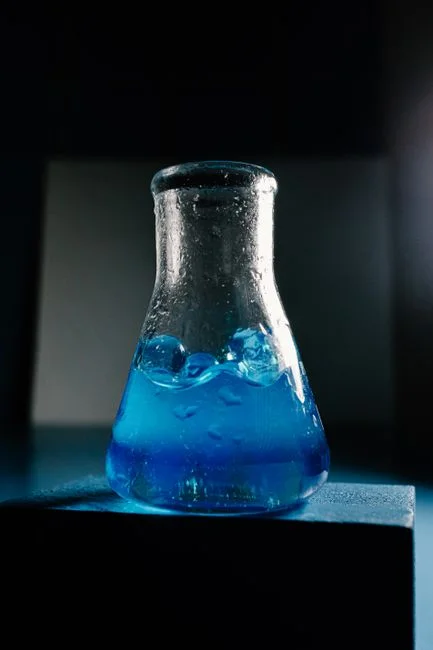
A defensible high-COD train progresses from source segregation and representative sampling through equalization, physical pretreatment, anaerobic COD reduction, aerobic polishing where required, reuse or disinfection treatment, and final monitoring. Equalization must absorb the hydraulic and load shocks that determine whether downstream biology remains stable.
Use screening where rags, plastics and fibrous debris could overload pumps or downstream equipment. Use dissolved air flotation to remove suspended solids, oil and grease, free oil, and colloidal material before biological treatment; it is not the sole treatment for soluble COD. The industrial DAF pretreatment system range extends from 4 to 300 m³/h across 13 standard models, but the selected unit still requires a documented contaminant and flow basis.
Anaerobic treatment is appropriate only after the wastewater’s biodegradability, temperature, loading, solids separation, residual-solids handling and upset controls have been established. The October 2025 review reports that a full-scale Accra UASB reactor combined with a trickling filter produced 611 ± 275 Nm³·d⁻¹ of biogas at 65% CH₄, with plant-specific energy consumption of 0.23–0.31 kWh·m⁻³ and periods near energy neutrality. Those figures demonstrate the value of wastewater energy recovery in a suitable application; they do not establish performance for every factory stream.
The UASB reactor design parameters should be used to define hydraulic and organic loading, gas handling and solids withdrawal rather than to claim universal suitability. If the stream is not sufficiently biodegradable or is inhibitory, anaerobic treatment should not be the sole COD-reduction stage.
Where compact treatment, reuse potential and skilled operation justify the energy demand, an integrated MBR wastewater treatment system combines biological treatment with membrane solids separation. The catalogue range extends from 10 to 2,000 m³/day, but effluent quality, membrane fouling controls, cleaning strategy and operator competence must be included in the comparison.
Choose a polishing technology by end use
Polishing should be selected against the required effluent function, not added automatically. The October 2025 Ghana review reports the following specific-energy ranges: UF, 0.10–0.45 kWh·m⁻³; AnMBR, 0.15–0.40 kWh·m⁻³; aerobic MBR, 0.4–2.3 kWh·m⁻³; and RO, 0.6–1.5 kWh·m⁻³. These are technology-specific review figures, not quotations for an Accra installation.
| Option | Principal role | Reported specific energy | Decision condition |
|---|---|---|---|
| UF | Low-power polishing and suspended-solid or colloid control | 0.10–0.45 kWh·m⁻³ | Select when the required result can be achieved without more energy-intensive treatment |
| AnMBR | Anaerobic biological treatment with membrane separation | 0.15–0.40 kWh·m⁻³ | Assess against biodegradability, solids separation and membrane-fouling controls |
| Aerobic MBR | Combined biological treatment and membrane solids separation | 0.4–2.3 kWh·m⁻³ | Use where reuse value, footprint and skilled operation justify the energy demand |
| RO | High-value reuse through demineralization and concentration | 0.6–1.5 kWh·m⁻³ | Require a defined brine or concentrate destination |
| Constructed wetlands | Nature-based polishing | Reported operating cost of $0.03–0.08·m⁻³ | Use where land is available; treat the figure as an incomplete lifecycle cost, not an Accra project price |
UF is appropriate for low-power polishing and solids or colloid control, while MBR combines biological treatment with membrane separation. RO should not be specified for ordinary compliance treatment merely because it can produce high-quality water; the October 2025 review limits its feasibility to high-value reuse with brine management. Constructed wetlands depend on available land, and their reported operating-cost figure excludes the capital, land, sludge and maintenance consequences that a buyer must price separately.
For batch-process effluent, improve equalization, controls and pretreatment rather than accepting a project-specific skid without a documented flow and contaminant basis. Containerized systems may be useful when they fit the required duty, but the containerized wastewater treatment specifications and costs should be checked against biological loading, sludge removal, utilities and site constraints.
Manage sludge, monitoring and permit evidence
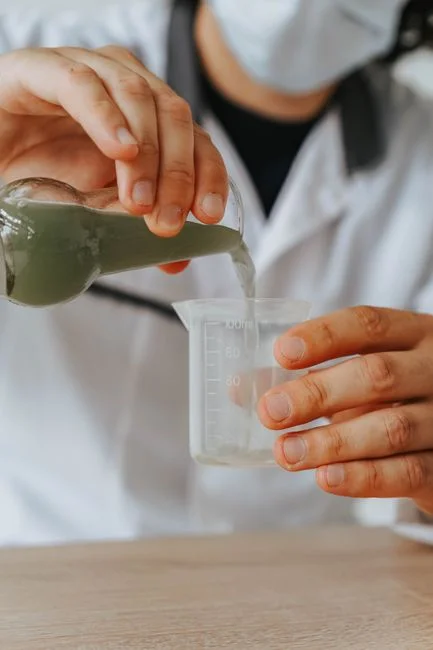
Solids management belongs in the equipment decision because DAF, biological treatment and membrane systems generate sludge or concentrated solids that require thickening, dewatering, storage and a lawful destination. Leaving this stream unpriced transfers an operating and compliance risk to the factory. For each solids stream, request its expected solids concentration, generation basis, dewatering requirement and final disposal route.
Plate-and-frame filtration can dewater sludge. The available plate-and-frame filter press range covers filtration areas from 1 m² to 500 m², with manual, hydraulic and fully automatic PLC-controlled operation. Select the operating mode and filtration area from the solids characteristics and required handling cycle rather than from chamber count alone.
Build an auditable monitoring programme that supports the monthly or quarterly compliance reports required for permit renewal. Retain analytical results, sample locations and times, calibration records, instrument-maintenance records, operating trends, deviations and corrective actions. Sampling points should cover raw effluent, treatment stages and final discharge, with event-based sampling during campaigns or upset conditions where relevant.
The February 2023 UN-Water snapshot states that EPA may conduct unannounced field visits and wastewater sampling, including at independent laboratories. Operator sampling cannot substitute for routine monitoring and ready access to sampling points. Chemical dosing should follow identification of the treatment objective and required dose control; PLC-controlled dosing can support consistency for coagulants, flocculants and pH adjustment, but calibration and chemical inventory remain part of the compliance record.
A decision framework for Accra plant buyers
Procurement should proceed as a documented sequence, with each stage resolving an uncertainty needed by the next. The final quotation should therefore connect the design basis, treatment guarantees, operating evidence and permit documentation.
- Define the permit route and end use. Record the sector-specific parameters, discharge destination, applicable Ghana EPA conditions, reuse specification and required reporting frequency. Confirm GS 1212:2019 applicability rather than assuming one standard covers every process stream.
- Characterize representative conditions. Establish peak and minimum flow, campaign loading, COD, BOD, suspended solids, oil and grease, pH, nutrients and process-specific contaminants. Include production changes and clean-up discharges in the campaign.
- Resolve physical blockers. Select equalization, screening and oil, grease or solids pretreatment according to the material identified. For a DAF-versus-clarifier comparison, examine the applicable DAF versus clarifier for chemical wastewater decision.
- Match the biological stage. Use anaerobic treatment for a demonstrably suitable biodegradable stream; use aerobic or membrane treatment where required quality, footprint, reuse value or inhibition controls justify it. Verify sludge separation and upset recovery.
- Compare costs on one boundary. Require each supplier to state energy, chemicals, labour, sludge handling, standby power, maintenance, disposal and replacement assumptions. Do not compare a bare equipment price with a full operating-cost estimate.
- Set acceptance and support requirements. Require a signed design basis, reference performance, commissioning acceptance criteria, operator training, spare-parts availability, local service capability and a defined support plan before award.
A quote based only on daily flow and one COD result is not a procurement basis. The buyer should be able to trace every capacity, chemical, energy and guarantee statement to a stated influent condition, effluent duty and acceptance test. Sludge-handling comparisons should be covered separately, including the equipment-selection issues discussed in filter-press selection for coal-mining wastewater, while recognizing that coal-mining wastewater is not an Accra trade-effluent design basis.
Frequently Asked Questions
How much will high-COD treatment cost in Accra?
There is no defensible project price without a flow and contaminant design basis, treatment objectives, site utilities and a defined cost boundary. Compare supplier quotations for energy, chemicals, labour, sludge handling, standby power, maintenance and disposal on the same basis. For initial screening, the October 2025 review reports specific energy of 0.10–0.45 kWh·m⁻³ for UF, 0.15–0.40 kWh·m⁻³ for AnMBR, 0.4–2.3 kWh·m⁻³ for aerobic MBR and 0.6–1.5 kWh·m⁻³ for RO. These are review figures, not installation quotations.
How should a supplier be selected for an Accra factory treatment train?
Require a signed design basis, commissioning acceptance criteria, reference performance, local service capability and a complete operating-cost boundary before award. The supplier should identify how each guarantee is tested under representative influent and effluent conditions, how sludge will be handled, and which documents will support permit renewal. A process drawing without operating assumptions is not an auditable offer.
What flow and COD data are needed to size the system?
Request peak and minimum flow, production-batch and campaign loading, representative COD and BOD, suspended solids, oil and grease, pH, nutrients and process-specific contaminants. Explain how clean-up operations affect the load and show the equalization strategy. A single average COD value cannot demonstrate whether the biological stage or equalization system will remain stable.
Which treatment technology will satisfy Ghana EPA permit renewal?
No named technology guarantees approval. Confirm the sector-specific Ghana EPA requirements, applicable discharge route, permit conditions and any sewer pretreatment rules with the regulator and relevant authority. The October 2025 review cites GS 1212:2019, while the February 2023 UN-Water snapshot explains that industrial discharge analysis is based on sector-specific parameters. Final compliance must therefore be demonstrated through the permitted monitoring programme and valid analytical evidence.
Related Equipment
- industrial DAF pretreatment system — specifications, capacity range, and technical data
- integrated MBR wastewater treatment system — specifications, capacity range, and technical data