What Is Containerized Wastewater Treatment?
Containerized wastewater treatment packs screening, biology, clarification, and disinfection into ISO 20-ft or 40-ft containers. Typical packages remove 90–98% COD, 92–99% BOD, and 95–99% TSS at about 1–250 m³/hr. Factory-tested skids often commission in 24–48 hours on a prepared pad. Design life is commonly about 20 years with scheduled maintenance.
A containerized plant is a modular treatment train, not merely a trailer for short rentals. Units can run as permanent assets at mines, camps, and remote towns, or scale by paralleling additional containers when load grows. Unlike rental mobile plants sized for weeks of duty, these systems use permanent piping, controls, and structural ratings suited to multi-year service.
Core trains usually include automated influent screening, a biological core such as HydropureWater’s containerized MBR systems for high-efficiency wastewater treatment, solids separation, and UV or chemical disinfection. The sequence is influent → screening → equalization or primary separation → biological treatment → disinfection → discharge or reuse. Prefabrication removes most onsite concrete basin work and field welding of process piping.
Modern packages routinely deliver 95%+ TSS removal and can match large civil plants on effluent quality when membranes or fine media are specified. High-end industrial arrays reach about 250 m³/hr by stacking identical trains rather than enlarging a single basin.
Engineering Specs: Flow Rates, Removal Efficiencies, and Footprint Data
Package flow ratings typically span 1 m³/hr for pilots to 250 m³/hr for modular arrays. Municipal packages are often quoted from 10 m³/day to about 2,000 m³/day. HydropureWater’s WSZ series covers roughly 1–80 m³/hr, while MBR skids target high-strength industrial loads that need low turbidity permeate.
Removal bands used for design checks are 90–98% COD, 92–99% BOD, and 95–99% TSS under steady operation. Where nutrient limits apply, ammonia removal of 85–95% and phosphorus removal of 70–90% are common once anoxic zones or chemical precipitation are added. These ranges support compliance checks against China’s GB 18918-2002 Class 1A and against EU urban wastewater rules. Earlier project briefs often cited Council Directive 91/271/EEC. The recast Directive (EU) 2024/3019 of 27 November 2024 keeps secondary treatment as the baseline. It phases tertiary nutrient removal for plants ≥150,000 p.e.
| Parameter | Containerized System (MBR/FBBR) | Traditional Concrete Plant | Performance Delta |
|---|---|---|---|
| Footprint (per 100 m³/day) | 15–30 m² | 50–100 m² | ~70% Reduction |
| COD Removal Efficiency | 90–98% | 85–95% | +3-5% Improvement |
| Energy Consumption | 0.5–1.2 kWh/m³ | 0.3–0.6 kWh/m³ | Higher per m³ |
| Installation Time | 24–48 Hours | 6–18 Months | 95% Faster |
| TSS Effluent Quality | < 5 mg/L | 10–20 mg/L | Superior Clarity |
Footprint is the main layout advantage: about 15–30 m² per 100 m³/day when vertical stacking and high-surface media are used. MBR energy often falls between 0.5 and 1.2 kWh/m³. Adding HydropureWater’s DAF systems for pre-treatment in containerized plants can cut FOG load before biology and reduce blower duty. Standard 20-ft and 40-ft ISO envelopes ship by truck or sea; shipping mass commonly lands near 20–30 tons depending on lining and internals.
How Modular ISO Plants Work: Step-by-Step Process Flow
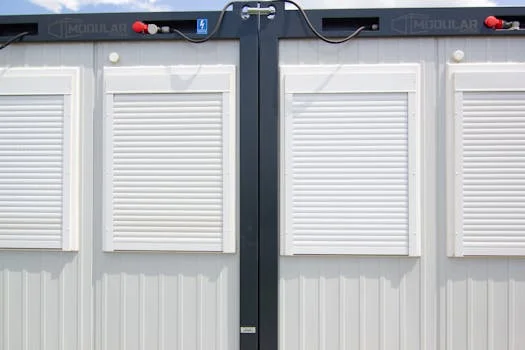
Operations start with screening. HydropureWater’s rotary bar screens for influent screening in containerized plants typically use 3–6 mm bar spacing to protect pumps and membranes. Next comes equalization or primary separation. In oily industrial feeds, DAF can remove up to about 95% of FOG and much of the settleable solids before the bioreactor.
Biological treatment is the process core. MBR trains aerate mixed liquor, then filter through membranes near 0.1 μm, blocking most bacteria and producing low-TSS permeate. Fixed-bed biofilm reactors grow biomass on submerged media and often suit remote sites that face shock loads and limited operator time.
After biology, disinfection may use UV or on-site chemistry. HydropureWater’s ClO₂ generators for on-site disinfection in containerized systems are common where a lasting residual is needed and liquid chlorine logistics are difficult. Treated water is discharged or reused for irrigation and cooling. Earlier EU discharge framing referenced Directive 91/271/EEC; designers now also track Directive (EU) 2024/3019 tertiary and quaternary timelines for larger urban plants (EUR-Lex, 2024).
Military and camp packages sized for roughly 3,000 personnel show the same sequence under sharp morning and evening peaks. With adequate equalization and aeration control, BOD in effluent can stay below 10 mg/L during those peaks when the plant is correctly loaded.
Modular Packages vs Traditional Plants: Cost and Performance
Procurement teams should compare total cost of ownership, not only equipment unit price. CAPEX for containerized trains commonly runs from about $150,000 for small units to about $2M for complex industrial packages. Equipment cost per cubic metre can look high versus a large municipal civil plant, yet project CAPEX often falls because excavation, concrete, and buildings drop by about 70–90%.
| System Capacity (m³/day) | Containerized CAPEX (2025 Est.) | Traditional CAPEX (2025 Est.) | Est. Installation Cost |
|---|---|---|---|
| 50 m³ | $150,000 - $250,000 | $400,000 - $600,000 | <$10,000 |
| 500 m³ | $600,000 - $900,000 | $1,200,000 - $2,000,000 | $30,000 - $50,000 |
| 2,000 m³ | $1.5M - $2.5M (Modular) | $4M - $8M | $100,000+ |
OPEX for labour and routine maintenance is often 20–40% lower when remote monitoring replaces full-time local staffing. Published 2025 O&M planning bands still cite about $0.15–$0.40 per m³ for containerized plants versus about $0.30–$0.70 per m³ for more labour-heavy civil plants. Relocation value remains an asset that poured concrete basins cannot match.
Schedule is the sharpest split. Civil plants commonly need 6–18 months of permitting, civil works, and commissioning. A factory-tested container can be online within about 48 hours after pad and utilities are ready. For a detailed CAPEX/OPEX breakdown for industrial wastewater treatment, compare modular ROI when the production site may move within a decade.
Field Results from Industrial and Municipal Deployments
Field results span hot deserts and polar camps. An oilfield camp system in northern Iraq has treated about 20 m³/day of domestic sewage since 2012. The plant reached about 97% COD removal and finished commissioning within two days of arrival on site.
At an Antarctica research station, an insulated ISO package kept biological temperatures workable at ambient air near −30°C and recorded about 90% ammonia removal. Pre-testing supported twelve months of operation without onsite maintenance visits, which matters when access windows are short.
Industrial trains show similar patterns. A refinery using HydropureWater’s DAF systems for pre-treatment in containerized plants processed about 250 m³/hr. FOG fell by about 98% and TSS by about 95% before biology. A semiconductor fab used HydropureWater’s containerized MBR systems for high-efficiency wastewater treatment at about 50 m³/day. Footprint fell about 60% versus a conventional MBR layout. Permeate reached reuse grade with TSS < 1 mg/L for non-critical cooling.
How to Choose the Right Modular Package: Engineer Checklist
Selection starts with peak COD, BOD, FOG, salinity, and inhibitory metals. High fats or solids need DAF or equivalent primary removal before membranes or fine media. Compact solids capture after biology often uses a High-Efficiency Sedimentation Tank (Lamella Clarifier) when footprint is tight. For dimensional standards and selection tables, see the companion 2026 engineering specifications and standards selection guide.
| Requirement | Recommended Technology | Key Benefit |
|---|---|---|
| High FOG or TSS industrial feed | DAF pre-treatment | Protects membranes and biofilm media |
| Reuse-grade low turbidity | MBR | Typical TSS < 5 mg/L permeate |
| Remote site with shock loads | FBBR / fixed-film | Lower daily operator demand |
| Compact secondary clarification | Lamella / high-rate settler | Smaller footprint than conventional clarifiers |
| Pathogen control without bulk chlorine | UV or on-site ClO₂ | Fits remote chemical logistics |
Work through this checklist before freezing a purchase order:
- Confirm peak and average flow in m³/hr and m³/day, plus diurnal factors.
- Match discharge or reuse limits for COD, BOD, TSS, N, and P.
- Decide 20-ft versus 40-ft ISO envelopes against crane and road limits.
- Budget power at 0.5–1.2 kWh/m³ for MBR-class trains unless validated otherwise.
- Plan sludge handling, spare membranes or media, and remote SCADA access.
- Verify climate controls for reactors below freezing or above 40°C ambient.
- Include pad, utilities, and commissioning in the CAPEX model, not only equipment.
Do UK Data Centres Need Abstraction Licences?
UK data centre cooling that takes more than 20 m³/day from rivers, lakes, or groundwater likely needs an Environment Agency abstraction licence in England. According to UK Environment Agency guidance, takes at or below 20 m³/day in a single operation are generally exempt. Combined takes from the same source still count toward that threshold (GOV.UK / Environment Agency). Cooling-loop makeup under the threshold still needs metering records for due diligence.
Sanitary wastewater from staff and kitchens is a separate stream from evaporative cooling makeup. Modular MBR or FBBR packages can treat campus sewage on a pad beside the hall without distant sewers. Reuse of treated effluent for non-potable duties can shrink freshwater demand that would otherwise push a site over the 20 m³/day abstraction trigger.
How Can Reuse Cut Data Centre Water Demand?
Treated sanitary effluent and carefully managed cooling blowdown recovery reduce freshwater abstraction for UK data centres facing licence scarcity. Membrane permeate with TSS < 1–5 mg/L can feed non-critical cooling or washdown when site risk assessments allow. Pairing biology with DAF and disinfection keeps FOG and pathogens out of closed loops. Where evaporative towers dominate water use, reuse alone will not replace an abstraction licence. It can still cut licensed volumes and strengthen water-efficiency filings.
Who this is for: EPC teams, plant engineers, and procurement managers sizing remote or footprint-constrained plants from roughly 10 to 2,000 m³/day. Who should look elsewhere: mega-municipal projects that already have large civil works and only need tertiary retrofits in existing tanks. Next step: send influent analyses and discharge limits for modular train sizing against the CAPEX bands above.
Frequently Asked Questions
What flow range do modular ISO wastewater plants cover?
Most commercial packages treat about 1 m³/hr to 250 m³/hr, or roughly 10–2,000 m³/day in municipal ratings. Parallel containers raise capacity without enlarging a single basin. Confirm peak hour factors, not only average day flow, before selecting ISO size and blower duty. Oversizing for rare peaks wastes aeration energy and membrane area.
How much does a containerized system cost to buy and install?
Planning CAPEX often spans about $150,000–$250,000 at 50 m³/day and about $1.5M–$2.5M for modular 2,000 m³/day arrays (2025 estimates). Civil and installation costs are usually far lower than poured plants. Always model pad, power, and sludge handling inside total project CAPEX. Freight and crane time should sit in the same budget line.
Are ISO package plants only for temporary sites?
No. Many units operate for decades as permanent plants at mines, camps, and remote towns. The ISO shell is a structural enclosure with a typical ~20-year service life when maintained. Temporary rental trailers are a different product class with shorter duty cycles. Permanent installs still need frost protection and sludge haul contracts.
What removal rates should buyers expect from these packages?
Design bands commonly cite 90–98% COD, 92–99% BOD, and 95–99% TSS under stable load. Nutrient modules can reach about 85–95% ammonia and 70–90% phosphorus removal when specified. Guarantee values must reference your influent lab data and temperature. Cold weather and toxic shocks can pull results below brochure ranges.
Do UK sites need an abstraction licence for cooling water?
In England, taking more than 20 m³/day from surface or groundwater typically requires an Environment Agency abstraction licence. Lower takes may be exempt if they stay within a single operation under that daily limit. Reuse of treated sanitary water can reduce licensed freshwater demand for non-potable duties. Keep meter logs ready for compliance checks.