Why Sludge Dewatering is Critical for Myanmar’s Industrial and Municipal Sectors
Sludge dewatering equipment in Myanmar reduces disposal costs by 30–60% and ensures compliance with local discharge standards (e.g., Yangon City Development Committee’s 2023 guidelines). The most common technologies—screw presses, centrifuges, and filter presses—vary in throughput (5–50 m³/h), solids capture rate (90–98%), and energy consumption (0.5–5 kWh/m³). For example, a screw press in a Yangon textile plant achieved 95% solids capture at 15 m³/h, cutting disposal costs from $80 to $30 per ton. This guide compares specs, costs, and supplier options to help you select the right system for your project.
In Myanmar, sludge disposal costs currently range from $50–$120 per ton (2025 data), driven by rising landfill fees at sites like Htein Bin and increased transport distances from industrial zones such as Hlaing Thar Yar and Thilawa. Industrial sectors, particularly textile dyeing and food processing, face the steepest financial burden because their sludge often contains hazardous chemical residues or high organic loads that require specialized handling. Without effective volume reduction, these plants pay for the transport of "water" rather than solids, as raw sludge is often 95–99% liquid.
Regulatory pressure is also intensifying. The Yangon City Development Committee (YCDC) and Mandalay City Development Committee (MCDC) have begun enforcing stricter sludge disposal limits, often requiring a moisture content of less than 60% for landfill acceptance. Non-compliance can result in fines reaching $10,000 per violation or temporary plant closures. A 2024 retrofit of a Yangon textile plant demonstrated the impact of modernization: by replacing an aging drying bed with a multi-disk screw press, the facility reduced sludge volume by 70%, cutting annual disposal costs from $80,000 to $24,000. This results in a payback period of less than two years for most mid-sized industrial projects.
Operational challenges unique to Myanmar further complicate selection. The unreliable power supply in Yangon and Mandalay can cause significant performance drops in centrifuges, which require high-speed stability. Additionally, the limited local availability of specialized polymer flocculants means that equipment with lower chemical requirements, such as screw presses, often offers a more resilient operational profile. Finally, a lack of local maintenance expertise for complex high-speed machinery often leads to extended downtime, making simplicity and durability key procurement priorities.
How Sludge Dewatering Equipment Works: Mechanisms and Key Parameters
Mechanical dewatering relies on physical force—pressure, centrifugal motion, or vacuum—to separate water from solid particles. To maximize efficiency, sludge must first undergo conditioning using HydropureWater’s automatic polymer dosing system for sludge conditioning, which aggregates small particles into larger "flocs."
Screw Press: Operating much like a wringing mop, a screw press uses a tapered screw rotating at low speeds (2–4 RPM) inside a cylinder composed of fixed and moving rings. As the sludge moves from the inlet toward the discharge end, the space between the screw and the rings narrows, forcing water out through the gaps while the solids are compressed. This mechanism achieves 18–25% solids content and is highly valued in Myanmar for its low maintenance requirements, as it has no high-speed bearings or belts that frequently fail.
Centrifuge: Using the principle of centrifugal force—similar to a high-speed salad spinner—a decanter centrifuge rotates at 2,500–4,000 RPM. The heavier solid particles are flung against the bowl wall and scraped out by an internal conveyor. While centrifuges produce a very dry cake (20–35% solids), they are energy-intensive (3–5 kWh/m³) and highly sensitive to power fluctuations, which are common in Myanmar’s industrial zones.
Filter Press: This technology uses a plate-and-frame design where sludge is pumped into chambers lined with filter cloth. Under high hydraulic pressure, water is forced through the cloth, leaving behind a solid "cake." It produces the highest solids content (30–40%) but is labor-intensive, as the cakes usually require manual discharge. This is often the preferred choice for inorganic sludge in chemical and tannery sectors. For projects requiring high-solids output, HydropureWater’s plate and frame filter press for high-solids sludge provides the necessary pressure to meet YCDC landfill requirements.
| Parameter | Screw Press | Centrifuge | Filter Press |
|---|---|---|---|
| Throughput (m³/h) | 5–30 | 10–50+ | 2–20 (Batch) |
| Solids Capture Rate | 90–95% | 95–98% | 98–99% |
| Energy Use (kWh/m³) | 0.5–1.2 | 3.0–5.0 | 1.5–2.5 |
| Maintenance Frequency | Weekly (Greasing) | Monthly (Bearings) | Daily (Cloth Wash) |
| Operator Skill Level | Low | High | Medium |
Screw Press vs. Centrifuge vs. Filter Press: Technical Specifications and Performance Benchmarks
Selecting the right technology requires a head-to-head comparison of performance benchmarks relative to Myanmar’s operational environment. While a centrifuge might offer the highest throughput, its performance is often compromised by the local power grid. Conversely, a screw press provides a "set and forget" solution that aligns with the technical skill levels of local plant operators.
| Feature | Multi-Disk Screw Press | Decanter Centrifuge | Plate & Frame Filter Press |
|---|---|---|---|
| Final Cake Solids | 18% – 25% | 20% – 35% | 30% – 45% |
| Polymer Demand | Low (2–4 kg/T) | Medium (4–6 kg/T) | High (5–8 kg/T) |
| Wash Water Needs | Very Low | None (Self-cleaning) | High |
| Noise Level (dB) | < 65 (Quiet) | 80 – 95 (Loud) | < 70 |
| Footprint | Small/Vertical | Medium/Horizontal | Large/Horizontal |
| Capital Cost (USD) | $20,000 – $80,000 | $50,000 – $150,000 | $30,000 – $100,000 |
Performance benchmarks in Myanmar show that screw presses achieve 90–95% solids capture in municipal and textile sludge applications (HydropureWater field data, 2025). Centrifuges remain the gold standard for oily sludge, such as those found in petrochemical plants or palm oil refineries, because the high G-force is necessary to separate oil-emulsified solids. However, for the majority of Myanmar’s food processing and textile sectors, the screw press is the most viable option. A 2024 screw press installation in a Mandalay food processing plant reduced polymer consumption by 30% compared to the previous centrifuge system, resulting in an annual chemical saving of $12,000.
When evaluating these benchmarks, engineers must consider the "solids capture rate." A low capture rate means that solids are returning to the head of the wastewater treatment plant, creating a "solids loop" that can lead to biological process failure. Screw presses typically maintain a stable capture rate even with varying sludge concentrations, whereas centrifuges require precise, constant monitoring to avoid "washout" during power dips.
Cost Analysis: Capital, Operational, and Total Cost of Ownership for Myanmar Projects
The Total Cost of Ownership (TCO) for dewatering equipment in Myanmar is heavily influenced by import logistics and operational inputs. Capital costs (CAPEX) for a standard 10 m³/h system vary significantly: a screw press ranges from $20,000 to $80,000, while a high-capacity centrifuge can exceed $150,000. Buyers must also account for a 5–10% import duty and shipping costs from regional hubs like China or Singapore, which typically add $2,000–$5,000 to the landed price.
Operational costs (OPEX) are dominated by polymer and energy. Polymer agents in Myanmar cost between $1 and $3 per kg, and because they are largely imported, prices are subject to currency fluctuations. Energy costs, while subsidized in some sectors, average $0.10–$0.15/kWh. For a plant operating 10 hours a day, the difference between a 1kW screw press and a 15kW centrifuge can amount to over $5,000 in annual energy savings. You can see a detailed cost comparison of belt thickeners and centrifuges to understand how these dynamics shift over a 10-year equipment lifespan.
| Cost Component | Annual Cost (Screw Press) | Annual Cost (Centrifuge) |
|---|---|---|
| Electricity (@ $0.12/kWh) | $450 | $6,500 |
| Polymer (@ $2.50/kg) | $8,000 | $11,500 |
| Labor (1 Operator) | $3,600 | $4,800 |
| Spare Parts/Maint. | $1,200 | $3,500 |
| Total Annual OPEX | $13,250 | $26,300 |
To calculate ROI, use this template: Annual Savings = (Previous Disposal Cost - New Disposal Cost) - (OPEX Increase). For example, a Yangon factory spending $60,000/year on sludge transport that invests $50,000 in a screw press and reduces transport costs to $15,000 (while adding $13,250 in OPEX) will see a net annual saving of $31,750. This results in a payback period of approximately 1.6 years. Financing is increasingly available through local institutions like KBZ Bank and CB Bank, which offer "green loans" for environmental equipment with interest rates between 8% and 12% and 5-year terms.
How to Choose the Right Sludge Dewatering Equipment for Your Myanmar Project
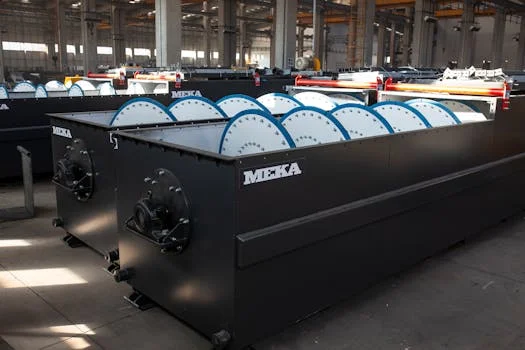
Selecting the correct equipment requires a systematic evaluation of your specific sludge characteristics and site constraints. A mismatch here can lead to clogged filters, excessive chemical use, or equipment failure within months of installation.
Step 1: Characterize your sludge. Different industries produce vastly different sludge profiles. Textile sludge is often fibrous and responds well to screw presses. Food processing sludge (e.g., from sugar or brewery plants) is highly organic and may require higher polymer dosages. Tannery sludge is often high in inorganic solids and chromium, making the filter press the safest choice for achieving high cake dryness.
Step 2: Match Sludge Type to Technology. Use the following decision logic:
- Oily Sludge (Petrochemical/F&B): Use a Decanter Centrifuge.
- Fibrous/Biological Sludge (Textile/Municipal): Use a Screw Press.
- High-Solids/Chemical Sludge (Tannery/Mining): Use a Plate and Frame Filter Press.
Step 3: Evaluate Local Constraints. In Myanmar, power reliability is the primary technical constraint. If your facility does not have a dedicated, stabilized power line or a large-scale backup generator, avoid centrifuges. assess your operator's skill level; filter presses require manual intervention every 2–4 hours, whereas screw presses can run autonomously for 24 hours with minimal supervision.
| Industry | Best Fit Technology | Primary Selection Reason |
|---|---|---|
| Textile Dyeing | Screw Press | Handles fibers without clogging; low energy. |
| Municipal WWTP | Screw Press | Ease of use for local government operators. |
| Edible Oil/Food | Centrifuge | Effective separation of fats and greases. |
| Tannery/Chemical | Filter Press | Maximum dryness for hazardous waste landfill. |
Step 4: Request Pilot Testing. Never purchase based on a datasheet alone. Reputable suppliers, including HydropureWater, often provide small-scale pilot units (1 m³/h) for 2–4 weeks. This allows your engineers to verify the actual cake dryness and polymer consumption using your facility's specific sludge, ensuring the full-scale system meets ROI projections.
Top Sludge Dewatering Equipment Suppliers in Myanmar: 2025 Comparison
Shortlisting the right vendor involves looking beyond the purchase price to their local support infrastructure. A low-cost imported machine becomes a liability if spare parts take six weeks to clear customs during an operational breakdown.
| Supplier | HQ / Local Presence | Specialty | Warranty | Lead Time |
|---|---|---|---|---|
| M.W.E.P | Yangon, Myanmar | Local integration & MCDC compliance | 1 Year | 6–8 Weeks |
| HydropureWater | China / Yangon Office | Screw presses & Pilot testing | 2 Years | 10–12 Weeks |
| KDR Myanmar | Yangon, Myanmar | Polymer supply & Small screw presses | 6 Months | 4 Weeks |
| Vikas Pumps | India / Local Partner | Centrifuges & Industrial pumps | 1 Year | 10 Weeks |
| GWWS | Singapore | Turnkey municipal solutions | 3 Years | 16 Weeks |
When evaluating these suppliers, look for "red flags" such as a lack of Myanmar-based references or the inability to provide a local technician for commissioning. To understand how regional markets compare, you can compare Myanmar’s sludge dewatering market to Oman’s, where similar challenges in power and specialized labor drive technology choices. We recommend visiting a supplier’s existing installation in Yangon or Mandalay to observe the equipment in a real-world Myanmar environment before finalizing your procurement.
Frequently Asked Questions
What is the best sludge dewatering equipment for a textile factory in Myanmar?
A multi-disk screw press is generally the best fit. It handles the fibrous nature of textile sludge without the clogging issues common in belt presses. It also consumes significantly less energy (0.8 kWh/m³) than centrifuges, which is critical given Myanmar’s high industrial electricity tariffs and grid instability.
How much does sludge dewatering equipment cost in Myanmar?
CAPEX ranges from $20,000 for small screw presses to $150,000 for high-capacity centrifuges. You must also budget for 5–10% import duties and local installation costs. Operational costs typically average $0.75 to $2.00 per cubic meter of sludge treated, depending on polymer pricing.
What are the maintenance requirements for a screw press in Myanmar?
Maintenance is minimal compared to other technologies. It requires weekly greasing of the main shaft bearings and a monthly visual inspection of the moving rings. Wear parts, such as the rings and screw segments, typically last 3–5 years and cost approximately 10–15% of the initial machine price to replace.
Can sludge dewatering equipment run on Myanmar’s unstable power grid?
Screw presses and filter presses are highly resilient to power fluctuations. By using a Variable Frequency Drive (VFD), these machines can safely shut down or restart during voltage dips. Centrifuges, however, are sensitive and often require a dedicated Voltage Regulator or a backup generator ($5,000–$10,000) to prevent bearing damage during sudden outages.
What permits are required to install sludge dewatering equipment in Yangon?
You must obtain an Environmental Compliance Certificate (ECC) from the Environmental Conservation Department (ECD). Additionally, for plants within Yangon, the YCDC Engineering Department requires an updated Sludge Management Plan. The processing time for these permits is usually 4–8 weeks, with consultant fees ranging from $500 to $2,000.