
How a belt filter press handles dairy sludge
A belt filter press for dairy wastewater can dewater sludge generated by upstream treatment by moving conditioned sludge through filtration belts and rollers, producing clarified filtrate and a solids-rich press cake. Feed is commonly pretreated with flocculant to improve separation. Correct selection requires characterization of dairy sludge—including fats, proteins and variable solids loading—plus a cake-condition target and checks on polymer use, washwater demand, odor control and installation constraints. Pilot testing is advisable because the mechanism must still be matched to the actual dairy sludge.
Alfa Laval describes the belt press as a proven solid–liquid separation technology: filtration cloths and belts guide sludge through rollers, pressure increases along the roller sequence, and water removal produces clarified filtrate and press cake (Alfa Laval, Belt press, current 2026 product information).
The operating sequence is:
- Feed conditioning, commonly with flocculant
- Gravity or feed-zone concentration
- Progressive pressure dewatering
- Optional belt and cloth washing
- Cake discharge
- Filtrate collection
Dairy sludge cannot safely be treated as generic industrial sludge. Its behavior may change with milk receipts, product mix, cleaning cycles and treatment-process operating conditions. Fats and proteins can affect conditioning demand and cake release, while fibrous material may alter filterability and blinding tendency. These are reasons to characterize representative samples rather than assume performance from feed flow alone.
The press is not an upstream wastewater-treatment process. Its duty is to dewater the sludge or residuals generated by the selected treatment train. Alfa Laval also distinguishes gravity belt thickening from belt pressing: gravity thickening uses gravity to concentrate dilute sludge and slurries before dewatering (Alfa Laval, Belt press, current 2026 product information). For a plant considering alternatives, the plate-and-frame sludge dewatering press provides a batch filtration option rather than the belt press’s continuous sequence.
Recommended dairy wastewater process flow
A dairy dewatering project should be defined as an auditable treatment train, not as an isolated machine purchase. The sequence below connects feed variability to conditioning, solids handling and acceptance testing.
- Equalization and characterization: establish the representative feed and its variability across production cycles.
- Upstream treatment: remove or biologically treat the soluble and suspended contaminants before concentrating the solids stream.
- Sludge collection: balance the selected sludge stream and its flow to the dewatering train.
- Conditioning: adjust the feed for the separation duty, commonly through flocculant dosing.
- Thickening where justified: use gravity belt thickening to concentrate dilute sludge before pressing.
- Belt pressing: dewater the conditioned sludge into clarified filtrate and press cake.
- Filtrate management: route filtrate and washwater consistently with plant hydraulic and pretreatment objectives.
- Cake handling: provide a route that satisfies the plant’s permitted handling, reuse or disposal conditions.
The automatic sludge-conditioning chemical dosing system should be specified as part of the interface between upstream treatment and the press. Its PLC-controlled injection capability can support dosing of coagulants, flocculants, pH adjusters and specialty chemicals; the selected chemistry must still be established from representative testing.
Alfa Laval states that belt-press feed is typically sludge, effluent or slurry and is often pretreated with flocculant to enhance separation performance (Alfa Laval, Belt press, current 2026 product information). The high-efficiency sludge sedimentation and thickening equipment may form part of the upstream solids-concentration stage, depending on the treatment process and project basis.
| Project input | Reason for inclusion | Information required |
|---|---|---|
| Hydraulic and solids load | Defines feed and throughput basis | Total and peak sludge flow; solids concentration; daily or shift solids production; operating hours |
| Composition and variability | Influences conditioning and filterability | Fats, proteins, fibrous material, pH and temperature across production cycles |
| Operating pattern | Determines batch or continuous suitability | Campaign operation, production schedule and peak conditions |
| Performance target | Defines the supplier’s measurable duty | Target cake condition, filtrate requirement and polymer-use constraint |
| Liquid and solids routes | Sets hydraulic and containment requirements | Filtrate destination, washwater availability, cake handling route and permitted conditions |
The supplied research establishes no universal dairy belt-press capacity, polymer dose or washwater ratio. Those values must come from representative testing and explicit supplier guarantees.
Parameters that determine the required belt press
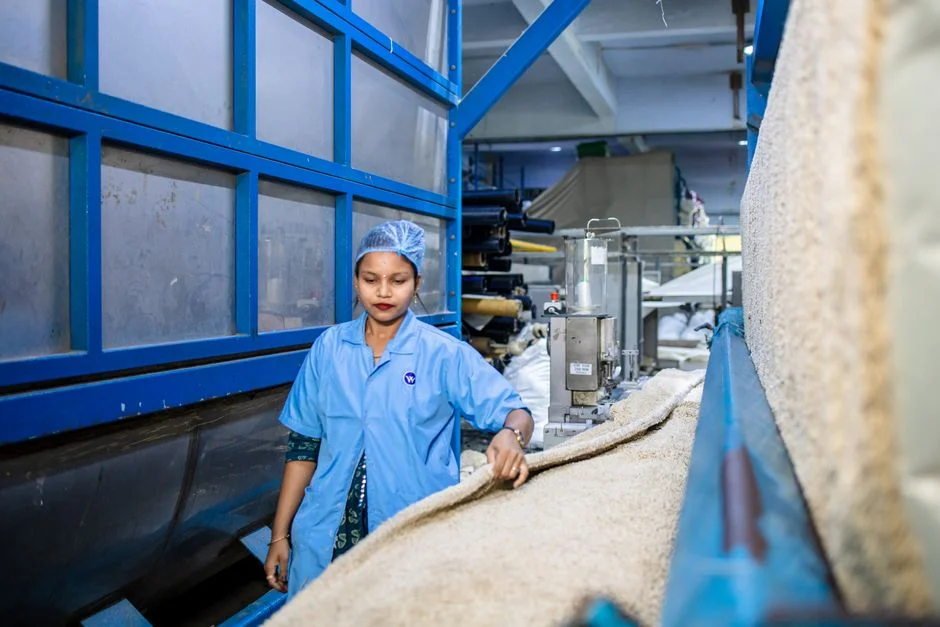
A belt press should be sized from solids production and tested treatability, not from sludge flow alone. The following worksheet converts an equipment inquiry into information a supplier can engineer and guarantee.
| Design input | Why it matters | Information needed from the dairy plant | Value established by test or guarantee |
|---|---|---|---|
| Feed basis | Sets the actual hydraulic and solids duty | Sludge flow, solids concentration, daily or shift solids production, peak conditions and operating hours | Design feed and throughput basis, including the operating schedule |
| Composition and treatability | Describes how the sludge responds to conditioning | Fat, protein and fibrous-material content; pH; temperature; variation with milk receipts and production | Conditioning approach and demonstrated separation performance |
| Performance targets | Converts equipment selection into an acceptance obligation | Required cake dryness or permitted cake moisture, filtrate-quality requirement, cake-recovery objective and acceptable polymer consumption | Agreed target under defined test conditions |
| Site constraints | Determines whether the proposed arrangement can operate | Footprint, floor loading, utilities, washwater availability, odor control, maintenance access and cake-discharge route | Confirmed layout, utility demand and included equipment scope |
The composition data should represent both normal production and adverse campaign conditions where these affect the duty. Sampling should separate soluble wastewater from the actual sludge stream because the press receives solids, not the entire dairy wastewater flow. A supplier should also state how its guaranteed feed basis differs from the plant’s design average and peak.
Performance criteria should define what is measured, where and how. This includes the cake condition, filtrate characteristics, recovered solids, polymer contribution and operating conditions. Without those definitions, a nominal guarantee can be difficult to administer at acceptance.
Alfa Laval offers a full testing laboratory to determine sludge-thickening and dewatering solutions and also offers pilot testing (Alfa Laval, AS-H Belt press for efficient sludge dewatering, current 2026 product information). That is the appropriate benchmark for a proposal: ask the bidder to demonstrate its selection method on representative dairy sludge and identify which conclusions come from testing rather than catalog data.
Do not populate the worksheet with unverified belt widths, flow rates, dosages or dryness percentages. The supplied research does not establish those values for dairy sludge, so the responsible approach is to leave them for representative test results, project design and contractual guarantees.
Belt press or plate-and-frame filter press?
The defensible distinction is operating pattern: a belt press supports continuous sludge dewatering, while a plate-and-frame press performs batch filtration. Neither technology can be preferred for dairy sludge from generic equipment descriptions alone.
| Decision variable | Continuous belt press | Batch plate-and-frame press |
|---|---|---|
| Operating mode | Continuous progression through feed, pressure and discharge zones | Discrete filter cycles with plate opening, cake release and cleaning |
| Sludge variability | Requires a stable feed and control response to changing solids and composition | Allows batch-by-batch recipe adjustment, subject to labor and cycle management |
| Throughput | Compare against continuous production and operating-hour requirements | Compare completed batches against the required production schedule |
| Staffing and automation | Evaluate continuous operation, controls and routine attendance | Evaluate PLC operation where selected, plate handling, labor and cycle consistency |
| Space and handling | Assess continuous belt layout, filtrate collection and cake discharge | Assess plate area, frame dimensions, cake removal and floor loading |
| Decision evidence | Representative pilot data and operating guarantees | Representative batch-test data and cycle commitments |
Alfa Laval states that belt presses have multiple models and configurations that can be customized, with filtration cloths and belts carrying sludge through rollers to produce clarified filtrate and press cake (Alfa Laval, Belt press, current 2026 product information). The supplied research does not provide comparable dairy footprint, cost or final-cake-performance data for the two technologies.
The catalogued plate-and-frame sludge dewatering press is available in filtration areas from 1 m² to 500 m², with manual, hydraulic or fully automatic PLC-controlled operation (HydropureWater verified product catalog, current 2026). That range supports configuration discussion, but it does not by itself establish which option fits a particular dairy installation.
Use the following decision rule: if the project requires continuous operation and the representative sludge can be conditioned to sustain that duty, compare a belt press against the continuous alternatives. If batch operation, recipe adjustment or a defined batch schedule is acceptable, include the plate-and-frame option. Then compare total cost—not purchase price alone—using equipment, polymer, washwater, labor, maintenance, energy and cake handling.
Operation, maintenance and performance safeguards
Commissioning should move from characterization to acceptance in a controlled sequence. First characterize the baseline sludge; then establish conditioning through trials; start and adjust the dewatering process; inspect filtrate and cake; and document the accepted operating condition. This creates an operating baseline for later troubleshooting and acceptance testing.
Preventive maintenance should cover:
- Belt tracking and tension
- Cloth condition and alignment
- Roller condition
- Washwater coverage and collection
- Sludge-feed consistency
- Chemical-dosing performance
- Cake-discharge reliability
Alfa Laval reports that many plants extend equipment life through targeted rebuilds and upgrades, improving performance and reliability and reducing operating costs at a fraction of the cost of new technology (Alfa Laval, Belt press, current 2026 product information). The maintenance plan should therefore identify when inspection, rebuilding or component replacement is justified rather than treating replacement of the complete press as the default response.
Record feed characteristics, polymer use, filtrate return, cake condition, operating hours, washwater use and corrective actions. The supplied research does not establish universal alarm thresholds for dairy sludge, so thresholds should be derived from the agreed design basis and pilot results.
Operators should follow a fixed troubleshooting sequence:
- Confirm current feed characterization and conditioning performance.
- Inspect the cloth and wash system.
- Check alignment and belt tension.
- Determine whether actual solids load exceeds the agreed design basis.
Odor and containment are project requirements, not afterthoughts. Dairy sludge can create sanitation and odor-management obligations that affect enclosure, ventilation, washdown, access, cake storage and the final disposal route. The selected arrangement must be reviewed with the plant’s operators and responsible environmental personnel.
How to evaluate a belt press supplier in 2026
A comparable quotation must state the design basis and place performance obligations on the bidder. A generic machine description is not enough to compare suppliers.
Require each bidder to define:
- The design feed, operating schedule and peak-load basis
- Target cake condition and filtrate requirement
- The representative dairy sludge used in any test
- The conditioning chemistry or performance contribution included in the offer
- Included and excluded utilities
- The controls, washwater, filtrate collection and cake-discharge interfaces
Ask whether pilot testing is included and whether the laboratory protocol uses representative dairy sludge. Alfa Laval specifically offers laboratory and pilot testing for sludge-thickening and dewatering solutions (Alfa Laval, AS-H Belt press for efficient sludge dewatering, current 2026 product information). The bidder should state the test protocol, sampling method and treatment of results that fall outside the agreed operating conditions.
The scope should clearly cover the machine, controls, chemical connection or dosing interface, washwater system, filtrate collection, cake conveyor or discharge, installation, training, commissioning and initial spare parts. Any exclusion should appear in the commercial schedule rather than remain an assumption.
Make the offer conditional on agreed acceptance criteria. The agreement should identify the representative feed, operating conditions, sampling method, cake target, filtrate criterion, polymer contribution and the remedy if acceptance results do not meet the guarantee. A supplier should also provide a maintenance and rebuild strategy, replacement-part availability, cloth or belt consumables and its proposed service scope; no generic equipment lifespan should be inferred without supporting information.
Use a total-cost worksheet covering capital equipment, installation, flocculant, washwater, energy, labor, preventive maintenance, rebuilds and cake disposal. The 2026 sludge dewatering equipment cost and supplier comparison framework provides a broader reference for organizing that comparison.
Supplier selection should rest on demonstrated fit for the dairy sludge, a traceable design basis and enforceable acceptance terms—not on the breadth of the catalog description alone.
Frequently Asked Questions
How much does a belt filter press for a dairy wastewater plant cost?
The supplied research provides no universal price. Request a quotation stating the sludge characterization, throughput basis, operating schedule, performance targets, utilities, controls, installation scope and acceptance conditions. Compare offers using the full operating-cost worksheet rather than a machine subtotal.
What belt width and capacity should I specify for dairy sludge?
No defensible width or capacity can be selected from flow rate alone. Give the supplier solids production, feed concentration and consistency, operating hours, peak conditions, cake and filtrate targets, and pilot-test results. Require the quotation to state its design feed basis and operating schedule.
Can a belt filter press handle fats and proteins in dairy sludge?
The research supports the belt-press mechanism and flocculant pretreatment, but it does not establish a universal performance level for every dairy matrix. Characterize representative sludge across production conditions and require conditioning and dewatering trials before setting a guarantee.
Should I choose a belt press or a plate-and-frame filter press?
Choose continuous belt pressing when the required operating pattern supports continuous dewatering; include batch plate-and-frame filtering when scheduled batches, recipe adjustment and batch labor are acceptable. Use representative test data and compare footprint, labor, utilities, performance and lifecycle cost for the specific plant.
How should a dairy plant verify the supplier’s performance guarantee?
Define the representative feed, sampling method, operating conditions, target cake performance, filtrate criterion and polymer contribution in the acceptance procedure. Record deviations such as off-spec feed or excluded utilities, and specify the corrective action, retesting or contractual remedy when results do not meet the guarantee.
Related Equipment
- high-efficiency sludge sedimentation and thickening equipment — specifications, capacity range, and technical data