Separate Sewer Pretreatment from Surface-Water Permitting
Mining and metals plants near Defiance meet pretreatment limits by treating wastewater to the applicable sewer-use ordinance and categorical standard before it enters the POTW system. A sewer discharge is regulated under Clean Water Act §307(b) and 40 CFR Part 403, not as an NPDES surface-water discharge. Part 437 applies to ore mining and dressing, while Part 433 may apply to metal finishing. The governing POTW limits and monitoring protocol must be confirmed before equipment sizing.
The first document to obtain is the receiving POTW’s current sewer-use ordinance, permit and written interpretations. EPA distinguishes NPDES permitting for point-source discharges from pretreatment controls intended to prevent interference with POTW operations (US EPA, Industrial Wastewater, current webpage). A facility can hold both authorizations: an NPDES permit may cover a separate surface-water outfall, while the sewer connection remains subject to pretreatment requirements.
Classification also depends on the actual production process. Ore mining and dressing may fall under 40 CFR Part 437. Plating, pickling or anodizing may trigger 40 CFR Part 433. Those categorical standards establish federal requirements, but the POTW’s written local limits and monitoring protocol control the site-specific compliance basis. The step-by-step pretreatment compliance workflow provides a useful adjacent-sector framework for organizing that review.
| Discharge route | Primary regulatory path | What to confirm before design |
|---|---|---|
| To a POTW sewer | Clean Water Act §307(b), 40 CFR Part 403 and the POTW sewer-use ordinance | Categorical subcategory, written local limits, monitoring frequency and approved sampling point |
| To surface water | NPDES under Clean Water Act §402 | Outfall authorization, discharge limits and monitoring requirements |
| Both | Separate sewer pretreatment and NPDES obligations | Separate compliance boundaries; do not use an NPDES permit as the sewer permit |
Build a Defiance-Area Compliance Basis
The enforceable treatment basis is the receiving POTW’s written requirements, not a generic range copied from another municipality. Begin by identifying the receiving POTW and obtaining its current sewer-use ordinance, industrial discharge permit, written interpretations, monitoring requirements and approved sampling point. Then document the plant’s production processes and categorical subcategory so the correct federal standard is attached to the permit basis.
Collect representative data by wastewater stream. The required analytes should follow the permit, but a mining or metals request normally needs flow, pH, TSS, copper, zinc, lead, cadmium, nickel, arsenic, sulfate and TDS where relevant. Include batch dumps, mill clean-outs, shift-change discharges and the maximum two-hour flow. The supplied mining and metals pretreatment source, published in 2026, directs engineers to design for the peak two-hour flow with 20–30% turndown capacity.
Do not convert examples into permit limits. The same 2026 source reports local limits for zinc at 0.3–1.0 mg/L monthly average and copper at 0.3–0.5 mg/L monthly average, but explicitly presents them as examples requiring confirmation. They are not established Defiance limits in the supplied research. Obtain the Defiance-area POTW’s current ordinance and written interpretation before selecting chemical storage, dosing controls or polishing equipment.
- Identify the receiving POTW and responsible pretreatment office.
- Confirm the categorical subcategory and production basis.
- Obtain the sewer-use ordinance, permit and written interpretations.
- Develop a stream-by-stream flow and pollutant database.
- Document batch events, peak two-hour flow and turndown conditions.
- Define enforceable monitoring and sampling requirements.
| Design input | Evidence needed | Decision affected |
|---|---|---|
| Permit basis | Current POTW ordinance, permit, written interpretation and categorical subcategory | Treatment targets and compliance monitoring |
| Hydraulic profile | Average flow, maximum two-hour flow, batch events and turndown conditions | Equalization and solids-separation capacity |
| Influent chemistry | Stream-specific pH, metals, TSS, sulfate and TDS data | Precipitation chemistry, filtration and sludge handling |
| Local examples | Verification from the controlling POTW | Whether an example may be used for preliminary screening |
Route Wastewater Through a Compliance Treatment Train
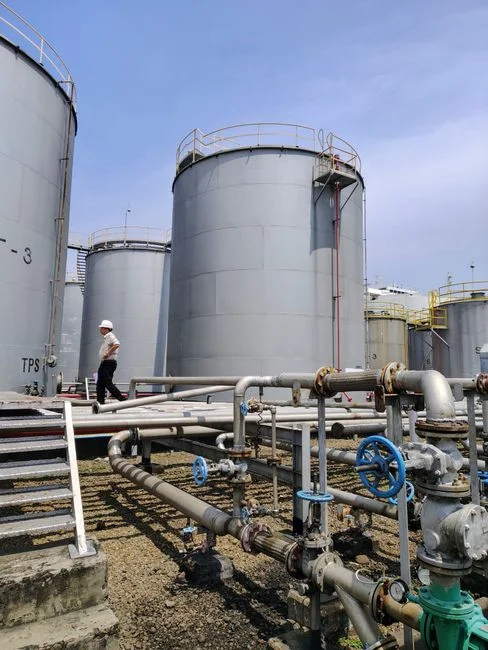
A defensible mining wastewater treatment train begins with hydraulic equalization, then controls pH before precipitating metals and separating the resulting solids. The supplied 2026 mining and metals pretreatment source specifies equalization of 8–24 hours of average daily flow to damp batch discharges. That figure is a source-reported design parameter, not a Defiance permit requirement; the final basin volume must follow the confirmed flow profile and operating strategy.
Install automatic pH control immediately downstream of equalization. The 2026 source identifies 6.5–9.0 as a common pH target, subject to the POTW limit, and recommends staged reactors when influent pH varies by more than 2 pH units. An automatic chemical dosing system for pH and precipitation control should therefore be specified around the confirmed instantaneous limit, measured influent variation and reagent selected through testing.
Hydroxide precipitation is the default because the process is established and comparatively straightforward. Sulfide polishing becomes relevant when the required residual-metal performance cannot be reached with hydroxide alone. The 2026 source reports sulfide residuals of 0.01–0.05 mg/L for copper, zinc, cadmium and nickel, compared with 0.5–2.0 mg/L for hydroxide precipitation. Those are source-reported performance ranges, not guarantees for a particular ore, reagent or pH program. Jar testing must establish the dose and parameter-specific precipitation pH.
Polymer aid may be required to strengthen flocs; the source lists 0.5–3 mg/L as a coagulant-aid range. It also reports 85–95% total-metals removal in properly controlled systems, again as a source-reported range rather than a design guarantee. If residual-solids protection is required, place a multimedia polishing filter after clarification. The source specifies a 1–2 m/h filtration rate and states that this stage can reduce residual TSS below 10 mg/L. A multimedia polishing filter for residual solids protection should be selected and backwashed against the actual duty and waste profile.
Add disinfection only when the POTW ordinance or collection-system conditions require it. The 2026 source identifies chlorine dioxide at 1–5 mg/L for conditions involving long force mains, siphons or pathogen risk. Route clarifier and DAF sludge to dewatering; evaluate any filter-press filtrate return for pollutant concentration, hydraulic loading and chemistry before returning it to the process head.
| Process step | Source-reported parameter | Engineering qualification |
|---|---|---|
| Equalization | 8–24 hours of average daily flow | Confirm against peak flow, batch controls and retention needs |
| pH control | Common target 6.5–9.0; staged control when swings exceed 2 pH units | POTW limit and precipitation optimum govern |
| Precipitation | Sulfide residuals 0.01–0.05 mg/L for Cu, Zn, Cd and Ni; hydroxide residuals 0.5–2.0 mg/L | Source-reported values; verify by parameter-specific jar testing |
| Polymer aid | 0.5–3 mg/L | Use only as a tested range |
| Polishing filtration | 1–2 m/h; residual TSS below 10 mg/L | Include filter backwash and residual-solids discharge |
| Disinfection | Chlorine dioxide at 1–5 mg/L where required | Include only when the POTW or collection system requires it |
Choose DAF or Lamella Clarification by Stream Characteristics
DAF is the stronger candidate when the wastewater contains free oil, grease or fine colloidal metals; lamella clarification is usually the better fit for predominantly metal-hydroxide sludge at higher flow or where footprint is constrained. The 2026 source reports DAF hydraulic loading of 5–25 m/h, TSS removal of 90–98% and oil-and-grease removal of 85–95% in mining and metal-finishing service. It lists lamella surface loading at 20–40 m/h.
These are source-reported operating figures, not universal guarantees. A lamella clarifier forms a dense metal-hydroxide sludge blanket, but it is less effective than DAF for free oil and colloidal fines. DAF requires reliable solids capture, recycle performance and sludge removal; otherwise float or carryover can impair downstream filtration.
A DAF system for mining wastewater solids separation and a lamella clarifier for metal-hydroxide sludge therefore have different process prerequisites. The DAF versus clarifier comparison for mining wastewater provides a separate engineering screening reference.
The 2026 source lists a vendor-catalog DAF range of 4–300 m³/h across 13 models. Use that only for equipment screening, not plant-capacity selection. The same source identifies packaged skid systems below 10 m³/h and notes that multiple DAF trains or a lamella clarifier may become more economical above 100 m³/h. Equipment selection should therefore follow verified flow, wastewater character, turndown, footprint and sludge-disposal requirements.
| Selection factor | Favors DAF | Favors lamella clarification |
|---|---|---|
| Wastewater character | Free oil, grease or fine colloidal metals | Primarily metal-hydroxide solids |
| Reported loading | 5–25 m/h hydraulic loading | 20–40 m/h surface loading |
| Reported removal | 90–98% TSS and 85–95% oil and grease | Strong handling of metal-hydroxide flocs |
| Main constraint | Needs effective float capture and sludge removal | Less effective for free oil and colloidal fines |
| Purchasing question | Can the system capture the expected float and operate through low flow? | Can the projected sludge blanket and footprint be maintained? |
Manage the Metal-Bearing Sludge and Filtrate

Clarifier and DAF sludge remains a regulated waste until its applicable disposal path is established. The liquid treatment train does not remove the obligation to characterize the concentrate. Confirm whether the cake will be landfilled or sent for metal recovery, and obtain the receiving facility’s acceptance criteria before selecting a dewatering format or sizing storage.
The supplied 2026 source reports that plate-and-frame filtration produces cake at 25–35% dry solids. That is a source-reported range, not a guaranteed cake condition. A filter press for metal-bearing mining sludge is appropriate when a stackable dewatered cake is required, but the duty cycle must follow sludge generation, wash requirements, plate capacity and the disposal route. The mineral-processing sludge dewatering guide provides a more detailed selection reference.
Evaluate filtrate return using measured residual pollutants and the hydraulic effect on equalization. Returning a steady volume may consume useful equalization capacity; returning concentrated soluble metals can also change precipitation demand. Review mass and chemistry effects before routing filtrate back to the process head.
Move from Equipment Selection to Permit-Ready Performance
A compliant proposal must tie every major item to confirmed limits, flow variation and sludge disposition. Issue requests for proposal against the receiving POTW’s written limits, categorical subcategory, influent variability, maximum two-hour flow and selected disposal route. Equipment schedules should then state duty points, control actions, utilities and performance tests rather than rely on broad removal claims.
Require jar testing before finalizing reagent storage, mixer capacity and dosing systems. Test each parameter-specific precipitation pH, compare hydroxide with sulfide polishing where necessary, and establish coagulant and polymer requirements from the actual water. The 2026 source also cites zinc and copper examples of 0.3 mg/L monthly average and an operator band of ±0.2 mg/L for zinc. These are source examples, not universal Defiance requirements.
Control-system acceptance should test the confirmed instantaneous pH range, alarm behavior, flow-paced operation, low-flow turndown and monitoring records. Commission in phases: clean-water functional testing, process-water performance testing, sampling-point verification and a documented compliance protocol. Do not release equipment for final sizing until the POTW’s written requirements and the site data package agree.
- Freeze the regulatory basis with the POTW.
- Issue a chemistry- and flow-specific equipment package.
- Complete parameter-specific jar testing.
- Verify automatic controls against confirmed limits.
- Perform clean-water and process-water commissioning.
- Document sampling, reporting and sludge-disposal procedures.
Frequently Asked Questions
How should treatment capacity be sized for a mining or metals plant near Defiance?
Size equalization, precipitation, solids separation and sludge dewatering as one linked system. Use the confirmed average flow, maximum two-hour flow, batch-discharge pattern, stream chemistry and turndown conditions; the 2026 source supports designing for peak two-hour flow with 20–30% turndown capacity and gives 8–24 hours of average daily flow as its equalization parameter. Those source-reported values support screening, but the POTW requirements and representative site data govern final sizing.
Should we buy DAF or lamella clarification for a metals wastewater stream?
Choose DAF when oil, grease or fine colloidal metals are the deciding contaminants, and choose lamella when the stream mainly produces metal-hydroxide sludge, flow is relatively high or footprint is limited. During procurement, require each supplier to identify its loading basis, turndown limits, sludge-removal arrangement and downstream polishing duty. Do not compare the systems using catalog capacity alone.
What should a wastewater-equipment supplier submit before award?
Require a process basis, duty points, control philosophy, materials of construction, testing scope and sludge-disposal assumptions. For chemical dosing, request reagent-selection calculations and control response to the confirmed pH range. For clarification, require the applicable hydraulic basis and solids-capture strategy. For dewatering, require cake and filtrate assumptions tied to the selected disposal facility.
Do federal categorical limits or example local limits determine the Defiance-area design?
No. The 2026 source describes federal Part 437 and Part 433 requirements and gives zinc and copper ranges as local examples, but it does not establish which requirements apply to a specific Defiance-area facility. Obtain the controlling POTW’s current sewer-use ordinance, permit, written interpretation, categorical subcategory and monitoring protocol. An NPDES permit may cover a separate surface-water outfall; it does not replace pretreatment approval for the sewer connection.