Start With the Wastewater Fractions, Not the Equipment Name
For mining and metals wastewater, choose a clarifier when the dominant load is dense, rapidly settling mineral fines; choose DAF when oils, conditioned colloids, or light flocs dominate; and use both when a combined stream contains both fractions. A lamella clarifier increases settling area without changing the gravity mechanism, while DAF uses roughly 30–50 micron microbubbles to float conditioned solids. Neither device alone guarantees dissolved-metal removal or final reuse quality. The defensible 2026 decision therefore rests on Cookeville site characterization, pilot testing, equalization, conditioning, sludge handling, and the applicable permit—not on flow rate or equipment name alone.
A clarifier uses gravity sedimentation to separate particles with suitable settling characteristics, with dense solids collecting as underflow. Dissolved air flotation (DAF) works differently: bubbles attach to particles, and the resulting aggregate rises to the surface for skimming. These are complementary mechanisms, not interchangeable product categories.
Start by separating the plant streams. Mineral-processing wastewater may contain dense mill fines and tailings overflow, colloidal clay, residual flotation reagents, oils and greases from equipment, and precipitated or dissolved metals. A metals-fabrication stream may add emulsified oils and rinse-water chemistry. Each fraction needs its own sampling point and analytical method.
Report total metals and dissolved metals separately. Metals carried by settleable or flocculated solids can leave with the separated sludge, while genuinely dissolved or complexed metals may require precipitation or another polishing process. The EPA Process Design Manual for Suspended Solids Removal, published in January 1975, describes soluble, colloidal, supracolloidal, and settleable solids fractions and cautions that the analytical dividing lines are approximate. That limitation matters because “total metal” alone does not show which separation mechanism can remove the metal-bearing material.
Include flow equalization in the assessment. The same EPA manual identifies flow variation and equalization as design considerations for solids-removal facilities. A batch washdown, production discharge, storm exposure, or infiltration can change both hydraulic loading and contaminant concentration. The first RFQ question should therefore be: what are the dominant fraction, flow profile, and required effluent or reuse objective for each stream?
Clarifier or DAF: How Each Unit Removes Solids
A conventional clarifier separates dense solids by gravity, while a lamella clarifier increases effective settling area with inclined plates. DAF uses microbubbles to attach conditioned particles, float them, and remove the resulting surface sludge by skimming. The equipment choice therefore depends on which physical fraction controls the design.
HydropureWater lists surface-loading rates of 20–40 m/h and chemical-consumption reduction of up to 30% for its high-efficiency lamella clarifier. Those are supplier specifications, not universal design guarantees; the selected loading must be checked against site settling behavior, hydraulic variation, sludge targets, and pilot results. Clarifier performance depends on particle settleability, hydraulic conditions, and sludge withdrawal rather than chemical demand alone.
For DAF, Clearwater Industries describes microbubbles of 30–50 microns. The industrial DAF system is generally more suitable for oils and greases, conditioned colloidal material, and flocculated precipitates. Clearwater also notes that DAF is not well suited to high levels of heavier, non-floating silt and clay; Fluence gives the same limitation in its mining-wastewater guidance. That constraint matters for raw mill discharge carrying substantial dense fines.
Chemical coagulation and flocculation alter the solids before either separation mechanism. EPA’s process-selection framework treats chemical alteration and physical separation as linked steps: the chemical program can change which solids become settleable or floatable. It should therefore be developed with the mechanical selection rather than added later as an accessory.
| Design issue | Clarifier or lamella clarifier | Dissolved air flotation |
|---|---|---|
| Primary mechanism | Gravity sedimentation; inclined plates increase effective settling area | Bubble attachment followed by surface flotation and skimming |
| Best-fit fractions | Dense, rapidly settling mineral fines and metallurgical solids | Oils, greases, conditioned colloids, and flocculated precipitates |
| Principal limitation | Does not reliably remove dissolved, buoyant, or poorly settling fractions | Not well suited to heavy, non-floating silt and clay |
| Chemical program | May assist sedimentation, but is not the sole design driver | Coagulant, pH adjustment, and flocculant performance must be established empirically |
| Sludge route | Underflow requires thickening and a defined dewatering route | Conditioned floated sludge may require little further dewatering |
| Footprint | Conventional units generally require more civil space; lamella plates reduce the required footprint | Generally more compact, but requires air generation, recirculation, and skimming |
Choose Equipment by Wastewater Stream
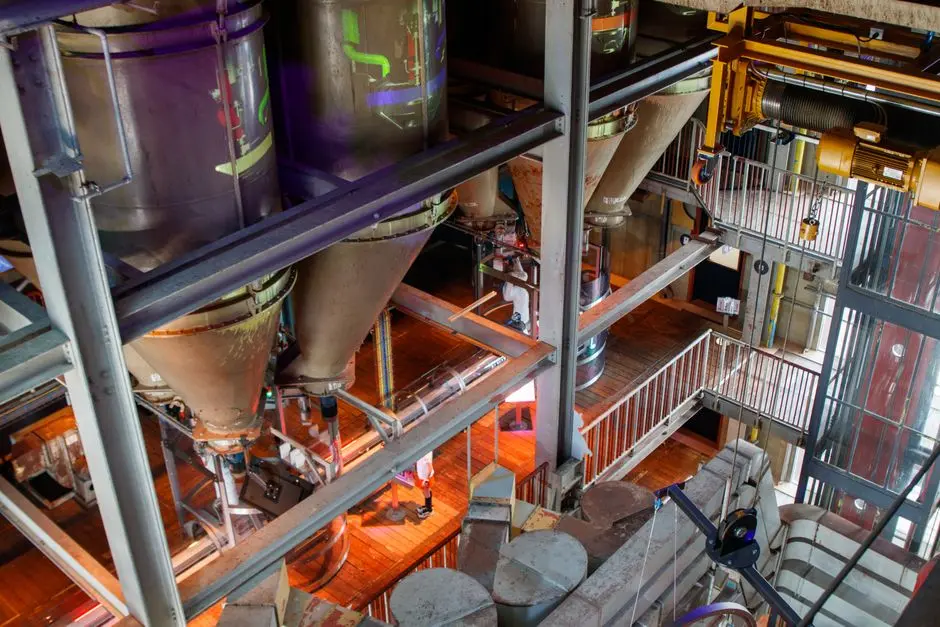
Tailings-thickener overflow or mill discharge dominated by dense mineral fines normally starts with a clarifier or thickener, subject to settling tests and underflow requirements. If the stream contains substantial clay or non-floating silt, do not assume DAF can carry that load. Establish the particle-size distribution and settleability first.
Washwater containing oil, grease, flotation reagents, or conditioned fine precipitates is a stronger DAF application. DAF can serve as the primary separation step or as a downstream polisher, depending on how much settleable material enters it. A PLC-controlled chemical dosing skid should be included where pilot testing establishes that dose control is required; the PLC-controlled chemical dosing skid is part of the treatment train, not a stand-alone accessory.
For combined mine, mill, and metals-fabrication streams, evaluate a clarifier followed by DAF. The order must be confirmed by pilot testing and by available equalization and sludge-handling capacity. This arrangement uses gravity separation for the dense fraction and flotation for conditioned material that escapes or arrives too buoyant to settle efficiently.
EPA’s distinction between coagulation, flocculation, physical separation, and downstream polishing remains important. DAF is not itself a dissolved-metals treatment technology. It can remove metals associated with captured solids, but dissolved or complexed metals may remain and require precipitation, filtration, membranes, ion exchange, or another approved polishing step.
Process-water recycling also changes the decision. Fluence identifies DAF as a technology used to recycle process water and materials in mining-waste treatment, but the clarified output still needs to satisfy the intended reuse specification. Depending on the stream, filtration or another solids-removal step may be required before reuse or discharge.
| Observed stream condition | Primary evaluation | Key confirmation |
|---|---|---|
| Dense mineral fines dominate | Clarifier or thickener | Settling test, particle size, underflow target, peak solids loading |
| Oil, grease, or flotation reagents dominate | DAF | Oil characterization, chemical demand, skimming and sludge route |
| Conditioned colloids and fine precipitates dominate | DAF, potentially after clarification | Jar test, pilot flotation performance, residual solids |
| Dense and buoyant fractions both matter | Clarifier followed by DAF | Stream-by-stream mass balance and full-train pilot |
| Dissolved metals remain in treated water | Add downstream polishing | Total and dissolved metals, pH, chemistry, reuse or discharge objective |
Where the objective is dewatering the captured solids, a filter press for mineral-processing sludge may need to be evaluated alongside the separation unit. The mineral-processing sludge dewatering guide provides a separate basis for evaluating that downstream step.
Size the Treatment Train Around Peak and Variable Flow
Neither a clarifier nor DAF can be sized from nominal flow alone. The equipment must handle peak hydraulic loading, contaminant concentration, batch-discharge behavior, and the chemical or solids condition entering each unit.
Request average and peak flow, hydraulic response time, production and washdown schedules, batch-discharge durations, storm and infiltration exposure, and required treatment time. The flow record should show whether the stream is continuous, intermittent, or periodically dumped. Those conditions determine equalization needs and how conservatively the treatment units must be rated.
The analytical package should include TSS, settleable solids, particle-size distribution, oil and grease, pH, temperature, and total and dissolved metals. Flow and solids loading must be reported together; otherwise, two streams with the same flow can impose fundamentally different duties.
No Cookeville-specific design duty is established in the supplied research, so an installation size cannot be calculated from it. EPA’s January 1975 Process Design Manual for Suspended Solids Removal supports testing across flow variations before finalizing clarification area or flotation capacity. The manual also distinguishes physical separation from the chemical and physical processes used to alter solids characteristics.
Jar or pilot testing should establish chemical dose, rise rate, surface overflow rate, flotation performance, and sludge characteristics. This is especially important because a DAF result from one application cannot be transferred as a mining-wastewater guarantee. The Logan study reported an optimum dose of 30 mg/L aluminum sulfate for algae and phosphorus removal from a municipal lagoon effluent, but that result demonstrates the need for empirical optimization; it is not a mining or metals treatment prescription.
| RFQ input | Why it matters | Decision affected |
|---|---|---|
| Average and peak flow | Establishes hydraulic capacity and equalization needs | Clarification area, flotation capacity, controls |
| Batch schedule and response time | Shows whether treatment must absorb sudden discharges | Equalization and surge handling |
| TSS and settleable solids | Quantifies the solids separation duty | Both units |
| Particle-size distribution | Identifies dense fines, colloids, and non-floating material | Unit order and feasibility of flotation |
| Oil and grease | Defines the buoyant contaminant load | DAF applicability |
| Total and dissolved metals | Distinguishes solids-associated from soluble or complexed metals | Downstream polishing |
| pH and temperature | Influence conditioning and separation behavior | Chemical program and test conditions |
Compare Operating, Sludge, and Footprint Consequences
The lowest equipment quotation is not necessarily the lowest treatment cost. Compare civil work, chemicals, utilities, controls, sludge handling, maintenance, and downstream polishing against the same effluent objective.
Conventional clarifiers generally require larger civil footprints. Lamella designs reduce that footprint by increasing effective settling area, but they retain gravity separation and still require an engineered tank, sludge collection, withdrawal, and structural supports. A compact high-efficiency lamella clarifier does not remove the need to handle underflow.
DAF generally occupies a more compact treatment footprint and is suited to oil, reagent, and conditioned-colloid loads. Its operating dependencies include air generation, recirculation, chemical conditioning, and skimming. The industrial DAF system should be compared as a system rather than as a tank price.
Sludge is a material cost difference. Clearwater Industries states that properly conditioned DAF sludge can be relatively thick and may need little or no further dewatering. Clarifier or thickener underflow still needs a defined thickening and dewatering route. For a pilot or capital request, evaluate a filter press for mineral-processing sludge where the resulting solids volume and cake handling requirements justify it.
The supplied research contains no comparable 2026 installation prices for DAF and clarifiers in Cookeville. Do not build a capital decision from an unsupported local price range. Require each supplier to quote the treatment unit, equalization, chemical dosing, controls, sludge handling, foundations or installation, utilities, maintenance, and downstream polishing. The broader mining and metals equipment comparison provides additional context, but the commercial scopes still need to be aligned.
Build a Pilot-Test and RFQ Decision Package
The RFQ should screen alternatives against the complete treatment objective, following EPA’s process-selection principle. Start with stream characterization, then run bench or pilot work, then issue a performance-based equipment package. This sequence avoids selecting a tank before establishing what the water contains and what the final use requires.
Include total and dissolved metals, TSS, settleable solids, oil and grease, particle-size distribution, pH, temperature, flow variation, and current local authorization in the RFQ. Identify the required effluent quality or reuse criteria and whether solids recovery is part of the objective. Without that boundary, “removal efficiency” has no consistent basis.
Require each supplier to state the separation mechanism, applicable contaminant fractions, sizing basis, materials of construction, chemical demand, controls, sludge yield, and downstream polishing needs. Pilot data should be tied to actual site wastewater rather than a generic metal-finishing or mining example. The Logan study’s 30 mg/L aluminum sulfate result belongs in the RFQ only as evidence that chemical optimization is empirical, not as a default dose.
Commercial terms should cover commissioning, controls integration, operator training, maintenance access, spare parts, and performance testing. Define how acceptance will be demonstrated, what data will be recorded, and what corrective work is required if the unit misses the agreed objective.
Verify the applicable Cookeville and Tennessee authorizations with the authority having jurisdiction. The supplied research does not establish a Cookeville-specific permit limit, so the team must obtain the current requirement in writing rather than infer it from a generic mining standard.
| RFQ package element | Required response | Acceptance evidence |
|---|---|---|
| Wastewater characterization | Identify stream, fraction, flow variation, and target quality | Site sampling plan and analytical results |
| Pilot program | Define test conditions, chemical range, and performance metrics | Raw data and performance report |
| Equipment basis | State hydraulic and solids sizing with margin | Calculation memorandum |
| Materials and controls | Identify corrosion assumptions, instrumentation, and integration | Specification and drawings |
| Sludge route | Estimate yield, solids concentration, and handling method | Bench results and mass balance |
| Commercial scope | Include utilities, installation, commissioning, training, and support | Like-for-like quotation |
| Authorization | Identify applicable requirements and responsible authority | Written agency confirmation |
The regional regional DAF-versus-clarifier mining guide can support internal methodology, but Cookeville’s wastewater data and actual authorization must control the final selection.
Frequently Asked Questions
What will a DAF or clarifier cost for a Cookeville mining or metals plant in 2026?
No reliable Cookeville-specific 2026 installation price can be inferred from the supplied research. Request a like-for-like quotation covering peak and average flow, TSS loading, total and dissolved metals, oil content, chemical conditioning, equalization, controls, foundations or installation, utilities, sludge handling, downstream polishing, commissioning, and maintenance. Compare net present operating and disposal costs after each supplier confirms its scope.
How should a supplier be selected for a Cookeville metals wastewater project?
Check relevant experience with metal-bearing wastewater, site-specific pilot data, transparent sizing calculations, materials selection, controls integration, commissioning support, maintenance access, and spare-parts availability. A performance guarantee should identify the test wastewater, analytical methods, flow condition, and acceptance criterion; a generic removal percentage is not enough.
Can peak flow alone determine whether we need DAF or a clarifier?
No. Capacity depends on peak hydraulic load and contaminant characteristics, including particle size, settleability, oil content, metals associations, and the effect of chemical conditioning. Jar or pilot testing should establish the chemical dose and relevant separation performance before either unit is sized.
Will the selected DAF or clarifier meet the reuse and discharge requirements?
Not necessarily. A clarifier may leave colloidal and buoyant solids, while DAF may leave dissolved or complexed metals. Process-water recycling can also require filtration or another solids-removal step. Confirm the final water objective and the current Cookeville and Tennessee authorization with the authority having jurisdiction before adding downstream treatment to the RFQ.