Which Treatment Is the Better Fit for a Lebanon Metals Factory?
For mining and metals wastewater in Lebanon, United States, factories should choose dissolved air flotation (DAF) when oil and grease, colloids, or relatively buoyant solids are important targets, especially when wastewater varies enough to justify equalization or chemical conditioning. Choose a lamella clarifier when gravity-settable solids dominate and flow conditions support dependable settling. Flotation depends on bubble generation, solid attachment, and buoyancy; design variables include air-to-solids ratio, hydraulic loading, chemical addition, pressure, and flow rate. The final choice should follow wastewater characterization and a mass-balance review, not a generic total suspended solids comparison.
That distinction matters because a metals facility may receive process water, wash water, metalworking or finishing streams, and episodic discharges with different contaminant profiles. A single nominal TSS value cannot tell a buyer whether oil will float, whether colloids will attach to bubbles, whether particles will settle, or whether dissolved metals remain in the treated water. Those questions determine which unit belongs at the front of the treatment train.
The working hypothesis is therefore conditional. DAF becomes the leading candidate where floatable or emulsified oil, grease, colloids, or buoyant particles are material to the required outcome. A lamella clarifier becomes the leading candidate where the primary load is gravity-settable solids and hydraulic conditions permit stable sludge settling. The devices may also be complementary: flotation can precede clarification or final filtration, while clarification can follow biological or chemical treatment.
Relevant literature provides mechanism and application context, not a Lebanon performance guarantee. The Durban University of Technology study examined continuous DAF for refinery and petrochemical mineral-oil wastewater characterized by COD, soap oil and grease, turbidity, and TSS. Its refinery context cannot be treated as direct proof of performance in a Lebanon metals plant. The applicable pretreatment or NPDES requirements also must be confirmed with the responsible authority for the actual facility and discharge route.
| Project condition | Leading equipment hypothesis | Reason | Information still required |
|---|---|---|---|
| Oil, grease, emulsions, or buoyant solids are dominant | DAF | Flotation can separate material that rises with attached bubbles | Representative oil and grease data, flow variation, and conditioning tests |
| Gravity-settable solids dominate | Lamella clarifier | Clarification depends on settling and solids concentration | Settling tests, solids inventory, and hydraulic profile |
| Both pollutant classes are important | DAF followed by clarification or polishing | Separate mechanisms can address separate objectives | Mass balance and downstream water-quality criteria |
| Dissolved metals are the limiting objective | Neither device alone | Dissolved ions require a targeted removal mechanism | Total-versus-dissolved metals analysis and process chemistry |
For another project-specific comparison, see the mining and metals DAF versus clarifier guide. Its decision logic applies here, but Lebanon wastewater data and the site’s actual requirements remain the governing inputs.
What Each Unit Physically Removes
DAF separates material through bubble generation, particle attachment, and buoyancy; a lamella clarifier separates material through gravity settling and inclined-plate collection. These mechanisms determine what can be removed and what must be addressed elsewhere in the treatment train.
Hahn’s Fundamentals of Wastewater Flotation (2010) describes flotation as an effective technology for suspended solids, oils, greases, and colloidal matter. Within that reviewed context, the source reports 90% oil removal. That figure is evidence from the reviewed flotation literature, not a guaranteed percentage for a Lebanon metals wastewater and not a substitute for site-specific testing. The same source identifies air-to-solids ratio, hydraulic loading, chemical addition, pressure, and flow rate as relevant operating and design variables.
A lamella clarifier provides a different route. Solids settle under gravity, and inclined plates increase the available settling area while directing separated sludge toward a collection zone. A high-efficiency lamella clarifier is therefore most defensible when the wastewater contains solids that actually settle under the expected temperature, chemical condition, and hydraulic regime.
Neither mechanism automatically removes dissolved metals. Dissolved metal ions remain in the aqueous phase unless another process transforms, binds, exchanges, filters, or biologically removes them. Potential mechanisms include precipitation, ion exchange, biological treatment, or membrane separation, but the appropriate choice and result must follow wastewater testing. Flotation may remove metal-bearing particulate material or facilitate separation after suitable conditioning; that is different from removing dissolved metal.
| Pollutant or objective | DAF mechanism | Clarifier mechanism | Engineering implication |
|---|---|---|---|
| Floatable oil and grease | Attachment to bubbles and upward transport | Limited unless buoyant and separately collected | DAF is the stronger first-stage candidate where oil removal is primary |
| Suspended solids | Bubble attachment followed by flotation | Gravity settling | Test whether the solids float, settle, or behave differently after conditioning |
| Colloids | Attachment may be promoted by suitable conditioning | May remain suspended or settle slowly | Jar tests should establish conditioning and separation behavior |
| Dissolved metals | Not removed as dissolved ions by flotation alone | Not removed as dissolved ions by settling alone | Add a targeted removal step based on water chemistry |
| Clarified-water outlet | Floated sludge removed at the surface | Settled sludge removed from the bottom | Sludge withdrawal and conditioning are part of unit performance |
For procurement, the industrial dissolved air flotation system should be evaluated for the mechanism the wastewater actually requires, not for a generic removal percentage. The DAF unit design criteria provides a structured starting point for the required design inputs.
Characterize the Wastewater Before Comparing Equipment
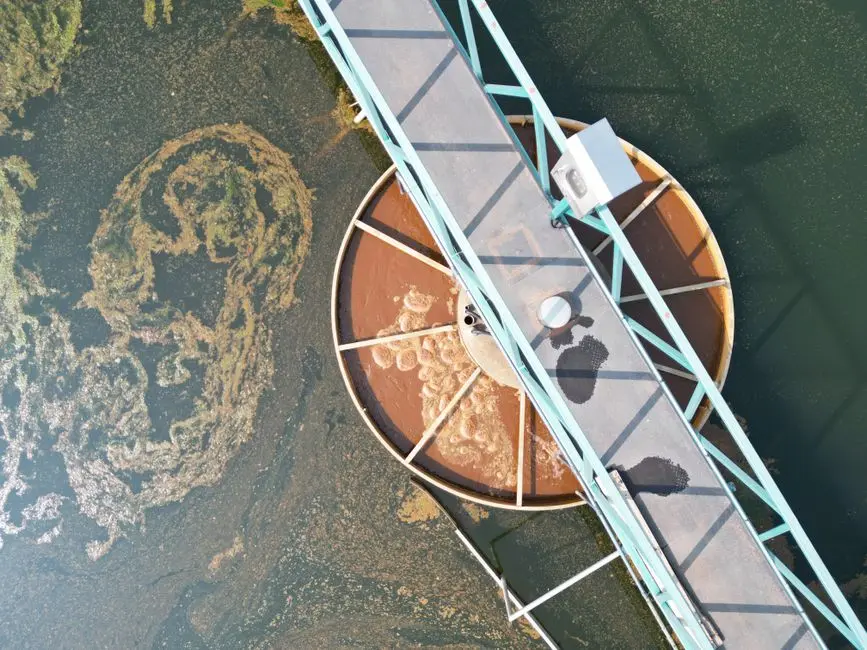
A valid DAF-or-clarifier selection requires representative wastewater data across production shifts, batch discharges, storm or wash-water events, and clean-in-place operations where applicable. A single composite sample can conceal the hydraulic and chemical conditions that determine flotation and settling performance.
Request flow data alongside pH, temperature, total suspended solids, oil and grease or soap oil and grease, turbidity, COD where relevant, and the metals and process-specific pollutants that drive the project. Where metal removal is important, distinguish total metals from dissolved metals. That split can reveal whether a metal load is attached to solids, potentially accessible to flotation or clarification, or dissolved and requiring a different removal mechanism.
Upstream characterization and solids reduction can change the downstream treatment burden. The ASABE poultry-processing study reported mean COD and total solids of 5,263 mg/L and 3,355 mg/L, respectively, in raw samples. Pre-sieving reduced mean COD by 16.6% and total solids by 10.8%. These are poultry-processing results, not mining benchmarks, but they demonstrate why source characterization and upstream solids reduction should precede equipment sizing.
The same ASABE study examined membrane treatment rather than DAF performance. It reported a maximum mean permeate flux of 115 L m⁻² h⁻¹ and 34% total-solids reduction with a 0.3 μm PVDF membrane, while the maximum mean COD reduction was 89% with a 100,000 MWCO Ultrafilic membrane. These results illustrate that a downstream polishing step can be a distinct design problem with its own membrane selection and operating considerations.
Build the engineering data request around four linked records: a flow-duration history, batch and event loads, a wastewater-chemistry inventory, and the required downstream outcome. Include chemical-use records, observed sludge behavior, settling or flotation bench tests, reuse criteria, and discharge objectives. Where production changes may affect the stream, document future operating scenarios rather than extrapolating from a normal-shift sample.
| Data category | Minimum project information | Decision supported |
|---|---|---|
| Hydraulics | Representative flow, duration, batch peaks, wash-water events | Equalization needs, hydraulic loading, peak-capacity basis |
| Physical separation | TSS, turbidity, settleable solids, oil and grease or SOG | DAF, clarification, or staged separation route |
| Water chemistry | pH, temperature, COD where relevant, metals, process-specific pollutants | Conditioning, corrosion review, and downstream treatment |
| Metal fractions | Total and dissolved metals with defined filtration | Separation versus targeted dissolved-metal removal |
| Operations | Chemical inventory, sludge observations, reuse or discharge criteria | Controls, residuals, sludge handling, and treatment objective |
Before procurement, confirm the required pretreatment chemistry and any automatic chemical dosing requirements with test results rather than assumptions. A mining and metals pretreatment compliance guide can support permit-question development, but the applicable limits must come from the site’s responsible authority.
Compare DAF and Clarifiers by Operating Condition
DAF has the operating advantage when oil, grease, emulsified material, attached colloids, or relatively buoyant solids are principal objectives; a lamella clarifier has the operating advantage when gravity-settable solids dominate and the flow regime supports dependable settling.
For DAF, the evaluation must address the air-to-solids ratio, hydraulic loading, chemical addition, operating pressure, and flow rate identified by Hahn’s Fundamentals of Wastewater Flotation (2010). These are not interchangeable nameplate capacities. They are interconnected inputs that must be established from the wastewater, separation target, recycle or saturation concept, and selected equipment configuration.
For clarification, compare settling area, hydraulic distribution, solids inventory, feed configuration, and sludge withdrawal. The high-efficiency lamella clarifier product information lists surface loading rates of 20–40 m/h and up to 30% lower chemical consumption. Those figures are product-specific and must be checked against the proposed duty, wastewater chemistry, and supplier calculations; they are not universal mining-industry values.
Hydraulic variation can change the result before either unit is purchased. Hahn states that equalization tanks stabilize variable wastewater characteristics and improve treatment efficiency. Wastewater equalization can therefore make DAF feeding or clarification more stable, support consistent chemical addition, and reduce the effect of batch shocks. It also adds footprint, pumping, residence-time, odor-control, and sludge-management considerations that belong in the comparison.
The academic paper “Combining Dissolved Air Flotation (DAF) and Modified Moving Bed Biofilm Reactors (MMBBR) for Synthetic Oily Wastewater Treatment” further supports a train-based view: flotation is evaluated alongside a biological stage rather than as a universal stand-alone solution. Its synthetic and oily-wastewater scope does not prove performance for a Lebanon metals facility, but it reinforces the need to ask what treatment follows separation.
| Decision condition | DAF | Lamella clarifier | Required check |
|---|---|---|---|
| Oil, grease, or emulsions dominate | Preferred first-stage candidate | Not the primary mechanism for floatable contaminants | Oil and grease characterization and flotation bench test |
| Attached colloids dominate | Potential route after conditioning | Performance depends on settling behavior | Jar testing and residual colloid measurement |
| Gravity-settable solids dominate | Possible if particles float after conditioning | Preferred clarification candidate | Settling velocity and solids-inventory test |
| Flow varies substantially | Benefits from stable feed and equalization | Benefits from controlled hydraulic loading | Flow-duration analysis and batch-load review |
| Chemical conditioning is needed | Must attach target material to bubbles and manage float | Must form settleable floc and manage settled sludge | Specific chemical demand and residual consequences |
| Sludge handling is constrained | Float removal and storage must be designed | Bottom sludge withdrawal and thickening must be designed | Solids concentration, volume, and dewatering test |
When preparing the technical comparison, use the industrial dissolved air flotation system and high-efficiency lamella clarifier only as candidate configurations. Use the site data—not the product labels—to determine which route deserves the detailed engineering basis.
Build the Treatment Train Around the Real Objective
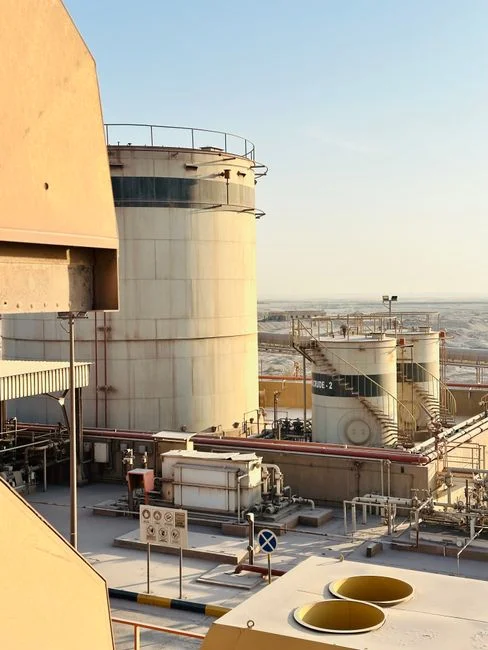
A mining or metals wastewater train should be arranged as a sequence of defined objectives: characterize and equalize the flow, condition it where justified, separate the target pollutants, handle the resulting solids, apply biological or polishing treatment where needed, and verify reuse or discharge performance.
For oily or particulate-heavy streams, DAF can serve as pretreatment ahead of clarification, filtration, or biological treatment. If dissolved metals control the result, characterize their speciation and concentration and add a targeted step such as precipitation, ion exchange, biological treatment, or membrane separation. The selected separation unit should not be expected to solve unrelated objectives.
For streams dominated by settleable solids, begin with lamella clarification. Chemical dosing and sludge recirculation may improve floc handling, but bench or jar testing should support both decisions. A recirculation system can improve solids capture only if the chemistry, recycle arrangement, and solids inventory are engineered as one system.
The supplied research does not establish one universal treatment train for mining and metals plants. The final arrangement must follow the characterization results, downstream requirements, and applicable permit conditions. Equalization and conditioning should be included when variability and chemistry show they are necessary, not inserted merely because they are common pretreatment elements.
Evaluate sludge as carefully as clarified water. DAF produces float containing oil, solids, and chemicals; clarification produces concentrated settled solids. Their volumes, concentrations, free oil content, residuals, and settling or dewatering behavior may determine the practical viability of the separation unit. A plate-frame filter press can be evaluated where recovered water and a manage dewatering objective for collected solids, but its feasibility still depends on sludge characteristics.
- Characterize representative wastewater and establish the reuse or discharge objective.
- Assess equalization against measured flow and quality variation.
- Run settling and flotation tests with project-relevant chemistry.
- Select DAF, clarification, or a staged separation route.
- Define sludge collection, transfer, storage, and dewatering.
- Add biological or polishing treatment only for objectives still remaining.
- Verify the complete train through commissioning and site acceptance tests.
Where biological treatment is being evaluated downstream, the MMBR versus conventional activated-sludge comparison is a separate design question. Separation equipment does not remove the need to match biological capacity, toxicity, nutrients, and residual solids to the actual wastewater.
Turn the Comparison into a Procurement Decision
A defensible procurement sequence begins with the objective, wastewater evidence, separation trials, treatment-train definition, sizing, and then cost—not with a preselected equipment category. The supplied research does not provide a universal purchase price for DAF or clarification, so the buyer should request a project-specific quotation tied to documented inputs.
- Define the required discharge or reuse outcome and identify the responsible regulatory authority.
- Obtain representative flow and wastewater characterization.
- Determine whether oil, colloids, settleable solids, or dissolved metals control the decision.
- Test candidate separation methods with the actual wastewater and proposed chemical regime.
- Define equalization, separation, sludge handling, downstream treatment, and controls as a complete train.
- Size the selected equipment and request operating and sludge-cost estimates for that duty.
For a DAF quotation, ask for the guaranteed flow basis, treated and untreated quality duties, air-to-solids ratio, hydraulic loading, chemical addition, operating pressure, flow, recycle or saturation concept, and the conditions behind any claimed removal percentage. For a clarifier quotation, request the surface-loading basis, solids inventory, feed arrangement, recycle arrangement, sludge-discharge method, and clarification criteria. Require calculations that can be checked against project data.
Also price the operating consequences: chemical consumption, air and power demand, equalization and pumping requirements, controls, maintenance access, materials of construction, installation utilities, commissioning support, and sludge handling. A low acquisition price can be outweighed by poor floc performance, unstable hydraulics, chemical residuals, or a sludge stream that cannot be managed at the site.
| Quotation item | DAF information required | Clarifier information required |
|---|---|---|
| Guaranteed duty | Flow, wastewater basis, treated-water target, operating mode | Flow, wastewater basis, solids-loading basis, clarified-water target |
| Core calculation | Air-to-solids ratio, hydraulic loading, pressure, flow, chemical addition | Surface loading, solids inventory, settling assumptions, recycle |
| Equipment scope | Saturation or recycle system, flotation vessel, air system, controls, sludge handling | Clarifier, feedwell, plates, launder, sludge withdrawal, recycle and controls |
| Performance evidence | Comparable wastewater and stated test conditions | Comparable wastewater, chemistry, and operating conditions |
| Project risks | Flow variation, foam stability, recovered-oil handling, downstream residuals | Floc settleability, sludge volume, withdrawal reliability, downstream residuals |
| Compliance | Evaluation against project-specific permit or pretreatment criteria | Evaluation against project-specific permit or pretreatment criteria |
Treat compliance as a project risk: obtain the applicable permit, sewer, or pretreatment limits from the responsible authority and require the selected process to be evaluated against those conditions. Do not invent numerical limits. The fabricated-metals DAF-or-clarifier decision guide can help structure the comparison, while the mining and metals pretreatment compliance guide can support the authority conversation.
Frequently Asked Questions
Should a metals factory choose DAF or a lamella clarifier?
Choose DAF as the leading first-stage candidate when oil, grease, emulsions, attached colloids, or buoyant solids dominate. Choose a lamella clarifier when gravity-settable solids dominate and flow conditions support stable settling. Confirm that choice with representative wastewater data and bench tests.
What data is needed to size the equipment?
Request flow-duration and batch-load data; TSS, turbidity, oil and grease or soap oil and grease, COD where relevant, pH, temperature, dissolved metals, and process-specific pollutants. For metal removal, include total-versus-dissolved fractions, downstream reuse criteria, and applicable discharge conditions. These inputs establish hydraulic and contaminant loading rather than equipment size by assumption.
How should buyers compare cost and supplier proposals?
Request quotations based on the same project duty and scope. For pricing, ask for itemized equipment, installation utilities, controls, chemicals, power, maintenance, commissioning, and sludge-handling costs; the research provides no universal DAF or clarifier price. For supplier selection, check engineering calculations, controls, materials, utilities, maintenance, commissioning support, sludge strategy, and evidence from comparable wastewater—not acquisition price alone.
Can equalization decide between DAF and clarification?
Equalization can materially improve both options by stabilizing variable wastewater characteristics, as stated in Hahn’s Fundamentals of Wastewater Flotation (2010). It does not decide the separation mechanism by itself. Evaluate it with the measured flow profile, then confirm whether DAF or clarification provides the required removal from the stabilized wastewater.
Related Equipment
- industrial dissolved air flotation system — specifications, capacity range, and technical data