Start with the receiving sewer's written rules
The enforceable pretreatment requirements for mining and metals wastewater near Madison are set by the authority that owns or operates the receiving sewer, not by a generic treatment-equipment specification. Before purchasing equipment, request the current industrial-user requirements and identify every numeric discharge limit, prohibited discharge, monitoring condition, and reporting obligation that applies to the proposed connection. EPA’s industrial wastewater NPDES material provides regulatory background, but it cannot supply missing Madison-area limits.
Ask the sewer authority for local limits, prohibited-discharge categories, monitoring frequency, designated sampling locations, averaging periods, resampling rules, analytical methods, compliance-reporting procedures, and requirements for bypasses or temporary discharges. Also determine whether discharges are subject to permit conditions, user agreements, or another written instrument. These inputs define what the treatment train must achieve and how performance will be judged.
Build a compliance register before equipment selection. For each requirement, record the parameter, limit or prohibition, sampling point, frequency, averaging basis, analytical method, responsible owner, and response trigger. If the sewer authority has not issued a numeric limit or specified a monitoring protocol, record that gap and obtain a written interpretation rather than substituting a general online threshold.
| Requirement to obtain | Why it affects design | Entry required in the compliance register |
|---|---|---|
| Numeric discharge limits and prohibited discharges | Defines the required treatment performance and segregation controls | Parameter, limit, unit, averaging period, and applicable stream |
| Monitoring rules | Determines sample representativeness and compliance frequency | Sampling point, method, frequency, flow representation, and resampling rule |
| Reporting and bypass rules | Establishes notification, recordkeeping, and corrective-action duties | Responsible owner, due date, notification contact, and response action |
| Connection and operational conditions | Tests whether the proposed train and controls fit the sewer’s operating environment | Written requirement, interpretation, and supporting document |
Comparable pretreatment workflows for electric-vehicle manufacturing facilities near Cookeville and chemical plants near Midland illustrate the same verification sequence: obtain the receiving authority’s rules before defining the equipment basis.
Map every mining and metals wastewater stream
A compliant discharge point can still receive an untreated batch if wastewater is segregated incorrectly upstream. The first engineering task is therefore a source-by-source process map, not equipment selection. Separate mining, processing, metalworking, equipment washdown, stormwater, groundwater, and domestic sanitary flows wherever the site layout permits.
Identify batch dumps, variable production periods, stormwater entry points, contaminated floor-wash routes, and any connection through which one stream can contaminate another. Mark clean stormwater and sanitary flows that should remain outside the regulated treatment train. Do not combine those streams with regulated process wastewater unless the receiving sewer authority expressly permits the proposed configuration.
For every stream, document flow, pH, suspended solids, oil and grease, metals, and other contaminants identified as relevant to the site or sewer requirements. Record production conditions, discharge frequency, variability, and clean-out practices. These data must be tied to the treatment train; a general characterization of the whole site can conceal the peak batch that determines equalization, pH-control, and solids-handling requirements.
- Draw the drainage and process boundaries.
- Identify every discharge route and cross-connection.
- Sample each relevant stream under representative operating conditions.
- Reconcile sample flow with production, batch, and stormwater records.
- Assign treatment only after segregation and source boundaries are defined.
Representative sampling must cover materially different production conditions. A single spot sample cannot establish peak mass loading, dilution behavior, or a reliable equipment-sizing basis. Where flows vary widely, obtain flow-paced or time-paced composites as required by the receiving sewer’s monitoring rules.
The Frankfurt manufacturers’ high-COD trade-waste guide provides a useful adjacent example of separating stream characteristics before process selection. For mining and metals operations, the North Little Rock pretreatment guide similarly emphasizes treating the wastewater as a set of distinct streams rather than one blended flow.
Build a treatment train around the contaminants
Each treatment stage should have a defined contaminant-removal mechanism and a measurable operating objective. The sequence should normally address flow variation, solids and floatables capture, pH or chemical control, any required polishing, and separated-solids handling. A unit should not be credited with removing contaminants outside its documented treatment objective.
Use flow equalization when batch dumps or production swings would overload downstream equipment. Base its selection on measured peak flow and mass-loading conditions, not an average discharge. Equalization may then smooth pH, suspended-solids, and oil-and-grease concentrations before solids capture or pH adjustment.
For streams containing suspended solids, oil and grease, FOG, or colloidal material, evaluate dissolved air flotation. The available industrial DAF pretreatment system is published in 13 standard models covering 4–300 m³/h. Published capacity is a selection screen, not proof that a model fits the site’s contaminant loading, operating schedule, or required effluent objective.
Where controlled chemical addition is required, use a PLC-controlled chemical dosing system with metering, mixing, and interlocks appropriate to the chemical program. Coagulant, flocculant, and pH-adjustment doses must be established through site-representative testing; supplier capacity does not establish the required dose.
Use filtration where the treatment objective includes lower suspended-solids or SDI performance needed to protect downstream equipment. The available multi-media filtration information describes SDI performance suitable for downstream RO membrane protection, but that objective must be reconciled with the sewer’s written requirements.
Route separated solids to dewatering and disposal. The available plate-and-frame filter presses are published with filtration areas from 1 m² to 500 m². Selection must reflect solids quantity, cake characteristics, batch frequency, filtrate destination, and handling constraints. The complete train also needs chemical storage, sludge handling, odor control, standby power, instrumentation, and safe residual-management provisions.
| Measured condition | Unit operation to evaluate | Design evidence required | Associated downstream issue |
|---|---|---|---|
| Batch flow or production-driven variation | Flow equalization | Peak flow, batch profile, mass loading, and operating duration | Wet well or basin volume, solids accumulation, and bypass risk |
| Suspended solids, oil and grease, FOG, or colloidal matter | DAF | Contaminant loading, published flow capacity, separation objective, and test data | Sludge yield, chemical use, and dewatering |
| pH or chemical demand outside the permitted condition | pH adjustment and controlled dosing | Jar-test results, reagent demand, mixing basis, and interlocks | Chemical storage, metering, downstream reaction, and residual management |
| Lower suspended-solids or SDI performance is required | Filtration | Influent quality, target objective, backwash or cleaning requirements, and filtrate disposal | Downstream protection and residual solids handling |
| Separated solids require volume reduction | Plate-and-frame filter press | Solids mass, dewatering result, batch cycle, filtrate quality, and cake disposal route | Cake handling, washwater, and chemical residues |
Select equipment from real wastewater data
Equipment should be sized from measured flow, contaminant loading, operating variability, and the receiving sewer’s removal requirements—not from peak flow alone. Before comparing proposals, define whether each quoted flow value is continuous, intermittent, or peak capacity and whether upstream equalization is required. Also identify the treated-water objective: compliance at the discharge point is a different design basis from water reuse.
The JY Series is described for mine-water treatment and industrial process water at 10–200 m³/h. That published range can be used to identify candidate configurations, but it does not replace site-specific hydraulic and contaminant loading calculations. For broader treatment objectives, the JY integrated water-purification equipment and MBR integrated wastewater treatment should be evaluated against the same written performance basis.
Require each supplier proposal to state:
- Design flow basis and operating schedule
- Influent design conditions and treated-water objective
- Removal mechanism and documented performance scope
- Footprint, utilities, controls, and installation requirements
- Chemical consumption and operating assumptions
- Sludge or residue yield and handling requirements
- Verification testing, commissioning criteria, and warranty boundaries
Use pilot or jar testing when coal, mineral-processing, or metals wastewater varies materially or supplier data cannot represent the site stream. A test should use representative wastewater and measure the contaminant and operating conditions relevant to the proposed unit. Avoid equating near-reuse-quality MBR effluent with sewer compliance; reuse quality and permit objectives require separate acceptance criteria.
| Proposal item | Question the buyer must answer | Acceptable evidence |
|---|---|---|
| Capacity | Does it cover continuous demand, intermittent batches, or only a peak? | Stated capacity basis, duty schedule, and upstream equalization basis |
| Performance | Which contaminants are covered, at what influent conditions, and to what objective? | Documented duty range, test results, and acceptance methodology |
| Site integration | Can the train be installed, operated, and maintained safely? | Footprint, utilities, access, controls, and residual-handling plan |
| Lifecycle | What consumables and solids-management burdens follow purchase? | Chemical-use basis, sludge-yield estimate, maintenance plan, and disposal assumptions |
| Verification | How will full-scale performance be demonstrated? | Commissioning protocol, test method, acceptance criterion, and data handover |
A DAF-versus-clarifier comparison for mining wastewater is useful for structuring that supplier review around treatment mechanism and site data rather than a product label.
Prove performance at the discharge point
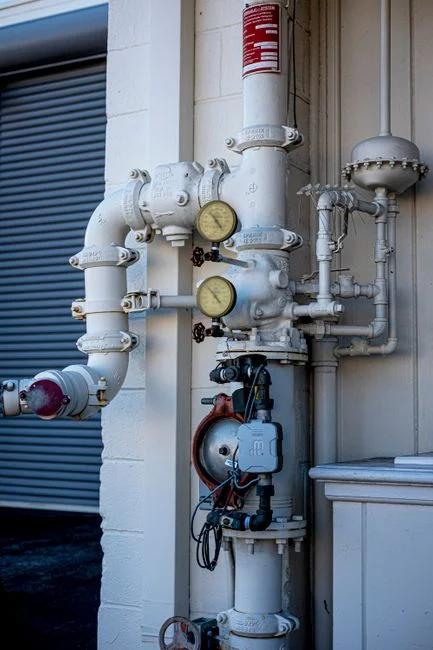
Compliance evidence must represent the final discharge condition at the point specified by the receiving sewer authority. Confirm that upstream equipment, dilution, or sampling provisions cannot obscure the condition being evaluated. The compliance sampling point and compliance-monitoring point are not necessarily the same as a favorable process sampling location.
Use the sewer authority’s required methods, parameters, frequencies, and averaging basis. Supplier demonstration data can support equipment acceptance, but it cannot replace evidence required for sewer discharge compliance. Calibrate flow meters, pH instruments, and other monitoring equipment, and retain calibration and maintenance records.
Define operating triggers before commissioning:
- Chemical-dose adjustments based on process measurements
- pH adjustment and downstream reaction checks
- DAF recirculation, solids-removal, and equipment-protection limits
- Equalization level, pump sequencing, and diversion response
- Sludge-removal frequency and dewatering readiness
- Shutdown or controlled diversion conditions
Retain batch logs, laboratory results, flow records, calibration records, chemical-use records, deviations, notifications, and corrective actions for compliance reviews. The U.S. DOE OSTI assessment, Energy from Biological Processes can provide background when energy use from biological treatment is included in the operating evaluation. It does not establish local discharge limits or replace site performance testing.
Use Cottonton mining-plant compliance guidance and mining and metals pretreatment guidance near Chappell as supporting workflow references, while applying only the requirements issued by the authority accepting the Madison-area discharge.
Avoid the compliance mistakes seen in similar plants
The most consequential design error is to size from average discharge when a batch dump or contaminated stormwater route governs the hydraulic and mass load. Equally important is assigning contaminants to equipment without a documented removal mechanism. A DAF, clarifier, filter, or pH system should be credited only within its stated treatment objective and verified influent basis.
Do not select pH adjustment without addressing reagent storage, metering, mixing, interlocks, downstream reaction, and residual handling. Do not omit sludge capture, dewatering, cake disposal, filtrate management, or chemical-residue disposal from the capital plan. Those items can determine whether a nominal treatment train can be operated continuously.
Do not declare compliance from a one-time sample. Apply the sewer authority’s monitoring frequency, averaging basis, and resampling rules. If local requirements remain unavailable, keep the gap visible in the project register and obtain written clarification before final sizing.
Finally, do not rely on generic online articles for Madison-specific limits when the receiving sewer’s current written rules are available. For solids-management planning, the mineral-processing filter-press guide and the coal-mining filter-press guide can help buyers identify information to request from dewatering suppliers.
Frequently Asked Questions
What flow and wastewater data should a mining or metals plant provide before requesting DAF or clarification equipment?
Provide measured flow by stream, production and batch schedules, pH, suspended solids, oil and grease, metals and other relevant contaminants, and the operating conditions represented by each sample. Identify stormwater entry points, clean-water exclusions, proposed equalization requirements, and the sewer authority’s written treatment objectives. These inputs are needed to compare treatment mechanisms and determine whether published flow capacity represents continuous, intermittent, or peak duty.
How should a buyer compare a DAF system with a lamella clarifier for pretreatment?
Compare them against the same site data: contaminant loading, required solids or floatables removal, flocculation needs, hydraulic variability, footprint, controls, chemical use, sludge yield, and downstream solids handling. Use the DAF and clarifier comparison for mining wastewater to structure the technical review. Do not select from nominal capacity alone, and request representative pilot or jar-test evidence where the wastewater is variable.
What should be included in an equipment supplier’s performance guarantee?
The guarantee should identify the design flow basis, influent limits, treated-water objective, test methods, operating conditions, and acceptance procedure. It should also state exclusions, remedies for failed acceptance, controls scope, chemical-use assumptions, sludge yield, utilities, installation boundaries, and required operator inputs. For a filter press, also confirm the mineral-processing sludge selection data needed for cycle time, cake handling, and filtrate management.
How much capital and operating contingency should be reserved for sludge dewatering and chemicals?
No defensible amount can be stated without measured solids production, dewatering results, reagent demand, disposal cost, and site constraints. Request a complete mass balance, chemical-use estimate, sludge and cake-handling plan, and schedule for media replacement, maintenance, and consumables. Use those inputs to establish capital and operating contingency rather than applying a generic percentage.
What is the compliance risk of sizing equipment from average wastewater flow only?
Average-flow sizing can under-size equalization, DAF, clarification, pH control, and pumping when batch discharges or contaminated stormwater produce higher peaks. The result may be overflow, unstable effluent quality, unauthorized diversion, or permit deviations. The buyer should require peak-flow and mass-loading evidence, representative sampling across operating conditions, and confirmation that the selected train includes upstream control and downstream solids handling.