What wastewater characteristics decide DAF versus clarification?
“Fabricated metals wastewater” does not identify a separator because it may combine machining coolant, grinding swarf, equipment washdown, floor wash, oily drainage, quench water, stormwater, and batch discharges with different contaminant fractions and flow profiles. Treat each source separately before combining a wastewater dataset.
For every stream, request average and peak flow, batch duration, discharge rate, TSS, particle-size distribution, oils and greases, pH, alkalinity, total metals, dissolved metals, and temperature. Total metals describe the overall inventory; dissolved metals identify what remains in solution. Neither result, alone or together, proves that a separator will meet a discharge limit.
Observe free oil and emulsified coolant behavior, then test whether representative solids float, settle, or require chemical conditioning. A daily average flow and one composite sample can hide shift-change washdown, coolant surges, and short batch dumps that determine equipment duty. Build a source-controlled spreadsheet linking each discharge to timing, flow, pollutant mass, and proposed treatment step.
| Stream to characterize | Required evidence | Decision consequence |
|---|---|---|
| Machining and grinding wastewater | Flow profile, TSS, particle size, oils and greases, coolant behavior, pH, temperature | Identifies floatable, settleable, and conditioned fractions |
| Washdown, floor wash, and oily drainage | Batch timing, discharge rate, free oil or emulsion observations, TSS, total and dissolved metals | Defines peak load, skimming demand, and pretreatment needs |
| Quench, cooling, and stormwater, where present | Source, flow, temperature, chemistry, episodic discharge pattern | Prevents dilution of production flows from hiding treatment duty |
If chips or swarf could damage pumps, valves, or downstream equipment, assess a separate rotary mechanical bar screen for gross solids. Its basis should reflect the material’s character and quantity, not merely the presence of TSS.
How DAF and clarification remove different wastewater fractions
Dissolved air flotation separates material that can be attached to microbubbles and floated, while clarification separates material that settles under gravity; a lamella clarifier shortens the effective settling path with inclined plates.
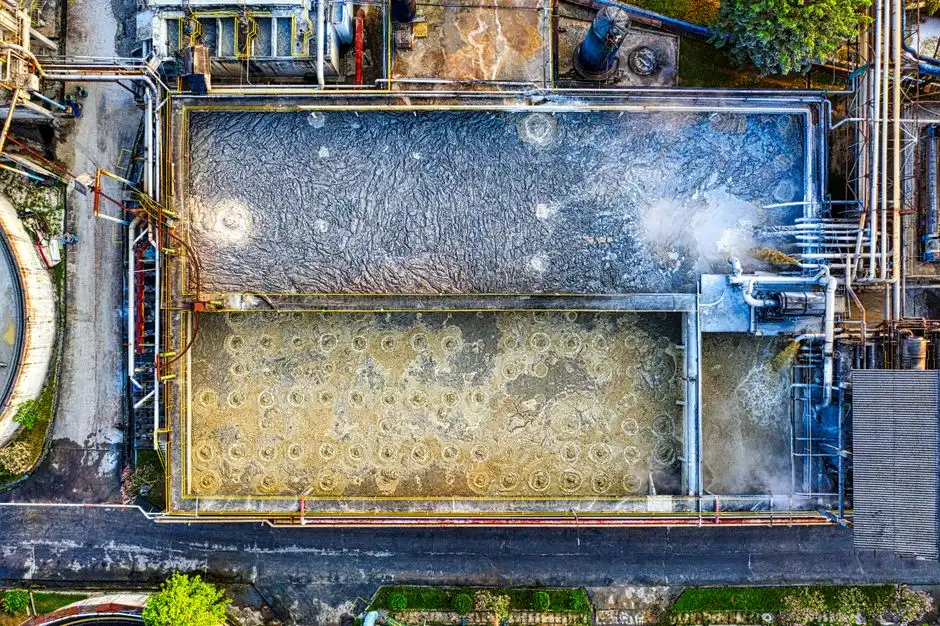
In an industrial DAF system for metalworking wastewater, pressurized air produces microbubbles that attach to floatable or conditioned particles. A surface skimmer removes the float, while heavier solids are withdrawn from a bottom collection zone. Clearwater Industries, April 27, 2026, identifies microbubbles of 30–50 microns for its DAF systems; DAF Corp separately describes its generators as producing consistent 20–40 micron bubbles. Those are supplier specifications, not a universal design rule.
Chemical coagulation and flocculation increase particle size and improve bubble contact. Clearwater Industries, April 27, 2026, states that DAF should be paired with proper conditioning and identifies serpentine flocculator tubes or chemical mix tanks as mixing arrangements. Chemical demand must therefore be established from the actual wastewater rather than inferred from TSS alone.
A high-efficiency lamella clarifier depends on flocculation and the settling area provided by inclined plates. HydropureWater’s 2026 catalog lists surface-loading references of 20–40 m/h, but those references are not a Sandy sizing conclusion.
| Mechanism | Primary removable fraction | Required verification | Metals limitation |
|---|---|---|---|
| DAF | Free oil, FOG, emulsified coolant material, floatable particles, conditioned floc | Floatability test, conditioning trial, skimmer and sediment-route review | Does not inherently remove metals dissolved in solution |
| Clarification | Swarf, grit, dense chips, floc, and precipitated metal-bearing solids | Settleability test, settling calculation, sludge-collection and underflow review | Removes particulate or precipitated metals, not the soluble fraction |
Which Sandy wastewater profile should lead each selection?
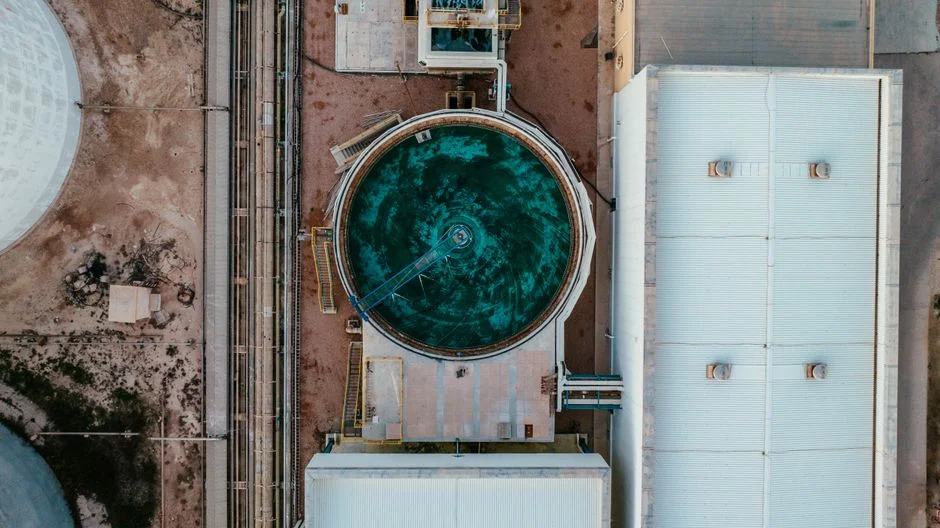
Choose DAF when measured testing shows that free oil, grease, emulsified coolant, or flocculable suspended solids dominate the load. Choose clarification when swarf, grit, dense chips, floc, or precipitated metal-bearing solids settle readily and free oil is not a significant fraction. These are contaminant-fraction decisions, not preferences between equipment manufacturers.
For a DAF-first train, require conditioning, adequate bubble contact, skimming capacity, and withdrawal of heavier bottom solids. For clarification-first duty, verify settling behavior, flocculation, recirculation, sludge collection, and a reliable underflow route. Neither separator is a substitute for removing gross chips that could obstruct or damage the installation.
Evaluate a two-stage train when testing confirms meaningful floatable and settleable fractions, or when the first separator leaves material requiring further polishing. The sequence must follow a stage-by-stage mass balance covering flow, pollutant mass, chemical addition, hydraulic capacity, and residue production. More equipment is not justified merely because two mechanisms are available.
Do not treat DAF float and clarifier underflow as interchangeable. Their moisture, volume, storage demand, and disposal route can differ materially. That difference belongs in the equipment comparison because it can change the complete treatment cost and operating reliability.
Where chemical conditioning is required, assess a PLC-controlled automatic chemical dosing system against stage-specific mixing, pH, dose, and control requirements. The dosing equipment should follow the process basis, not appear as a generic accessory.
What design basis should every Sandy bidder use?
Every bidder must size the separator from the same post-equalization average flow, peak flow, batch profile, pollutant mass loading, wastewater chemistry, chemical assumptions, and equalization basis. If the inputs differ, the proposals are not comparable.
Require each proposal to state the design flow and operating scenario behind it, including the duration, discharge rate, solids mass, and handling response for each concentrated dump. Show where equalization ends and how the resulting flow and concentration enter the DAF or clarifier. Equalization affects separator duty because detention and mixing change both hydraulic loading and pollutant concentration.
HydropureWater’s 2026 catalog lists 13 DAF models covering 4–300 m³/h. This catalog range is a reference, not a Sandy design conclusion. Require traceable calculations against actual site duty, including recycle flow, solids loading, conditioning, and operating scenario. For clarification, require the proposed settling area, flocculation and recirculation basis, sludge-collection method, underflow route, and calculation against post-equalization flow and mass loading.
| Bid item | Minimum evidence required | Reason it matters |
|---|---|---|
| Design basis | Average and peak flow, batch profile, pollutant mass loading, chemistry, chemical assumptions, equalization basis | Prevents an average-flow quotation from concealing the controlling event |
| Separator calculation | Flow and mass-loading calculation, recycle arrangement, conditioning basis, tank or settling area | Links the selected equipment to the measured duty |
| Residue handling | Skimmer and bottom-solids duty, sludge collection, underflow withdrawal, storage route | Prevents separator performance from being lost downstream |
| Commercial exclusions | Every unpriced accessory and the flow, chemistry, and performance assumptions behind each price | Makes bid totals comparable and auditable |
For wider context, compare DAF versus clarifier selection for metals-industry wastewater, but do not transfer its site data into a Sandy tender package.
How should pretreatment, controls, and utilities be specified?
A separator quotation is incomplete unless it defines the chemical system, controls, utilities, residue route, and operating sequence needed to achieve the stated result.
For DAF, require the coagulant and flocculant feed, mixing sequence, pH control, recycle arrangement, bubble-generation method, attachment-zone provisions, skimmer operation, and bottom-solids withdrawal. For clarification, require flocculation, recirculation, chemical feed, pH control, inclined-plate settling area, sludge collection, and underflow withdrawal. Accessory scope must match the treatment train and the measured chemistry.
| Package area | DAF | Clarification | Bid requirement |
|---|---|---|---|
| Conditioning | Coagulant, flocculant, mixing, pH control, recycle | Flocculation, recirculation, chemical feed, pH control | State dose assumptions and controls |
| Separation | Bubble generation, attachment zone, skimmer, bottom-solids withdrawal | Inclined-plate area, sludge collection, underflow withdrawal | Provide traceable duty calculations |
| Controls | Flow, level, pH, skimmer, sludge withdrawal, alarms, power | Flow, level, pH, sludge withdrawal, alarms, power | Document the operating sequence |
| Operations | Chemical storage, calibration, maintenance, spares, commissioning, service | Chemical storage, calibration, maintenance, spares, commissioning, service | Price the complete obligation |
Clearwater Industries, April 27, 2026, lists 304SS as standard and 316SS, polypropylene, and other materials as available on request. Require written material justification against the actual wastewater chemistry and temperature rather than accepting a default material description.
Controls also affect operator workload. Ask bidders to state how the system responds to a failed pump, abnormal level, chemical interruption, batch dump, or solids accumulation, and how those events are alarmed. The PLC-controlled automatic chemical dosing system should be evaluated against those operating requirements. Where gross solids are present, assess rotary mechanical bar screen for gross solids as a separately defined pretreatment item.
Which residue route should determine the total treatment choice?
The relevant comparison is the installed treatment package and its residue route, not the separator vessel price. Compare DAF float and clarifier underflow separately against the selected dewatering method.
Request evidence for residue quantity, moisture, storage capacity, disposal frequency, and operating response when a batch arrives or skimming or sludge withdrawal fails. These variables affect the complete package even when two separator quotations appear similar. A failed residue route can also undermine the treatment result through carryover or equipment overload.
Require itemized quotations for pretreatment, equalization, separator, controls, chemical storage and dosing, utilities, foundations, installation, commissioning, maintenance, spares, dewatering, storage, disposal, and acceptance testing. The supplied research establishes no defensible Sandy equipment price, installed footprint, or total-cost range. Procurement should therefore request current itemized quotations instead of presenting unsupported cost figures.
Evaluate a plate-and-frame filter press for DAF float and clarifier underflow against each actual residue stream. Do not assume that a press suitable for one residue will accept the other; cake formation, feed chemistry, solids distribution, and moisture must be tested before specifying the dewatering route.
Residue storage and disposal should appear in both bids, including responsibility for transfer pumps, containers, haul-off, and disposal documentation. Clarify who owns the interface between the separator and the dewatering system. An equipment boundary that stops at the tank outlet is not a complete procurement comparison.
How do you verify performance and discharge compliance?
Neither a DAF nor a clarifier establishes discharge compliance merely because the manufacturer publishes a general removal percentage. Performance must be demonstrated on the plant’s characterized wastewater under a defined operating scenario.
DAF Corp reports 92%–98% TSS removal for its FC Maximizer and 85%–90% for its RC UniMax. These are supplier-specific product claims, not promised results for a Sandy factory stream. Require bidders to distinguish catalog or benchmark claims from application-specific evidence.
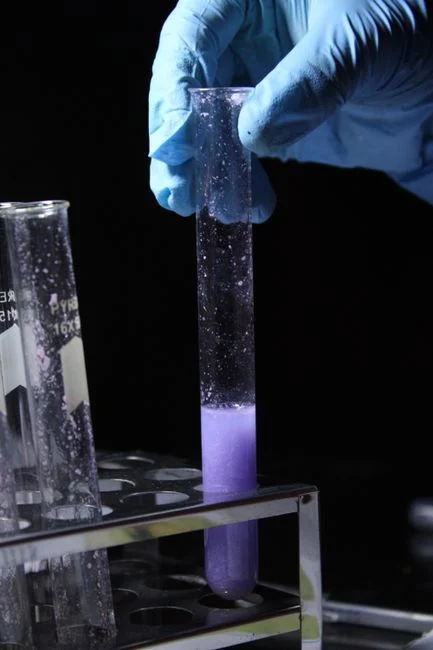
For DAF, perform a floatability test and conditioning trial. For clarification, perform a settleability test. Compare both alternatives using the same wastewater, chemical assumptions, hydraulic profile, and acceptance criteria. The test protocol should identify the wastewater source, chemical dose, flow, temperature, named test method, sampling location, sampling frequency, measured parameters, and enforceable result.
| Verification element | Required detail | Award requirement |
|---|---|---|
| Wastewater identity | Source, batch or operating event, sample identity | Confirm that the sample represents the design condition |
| Operating conditions | Chemical dose, flow, temperature, hydraulic profile, peak condition | Match the accepted design basis |
| DAF test | Floatability, conditioning response, float recovery, residue behavior | Set an enforceable performance criterion |
| Clarification test | Settleability, settling response, underflow recovery, residue behavior | Set an enforceable performance criterion |
| Compliance boundary | Current authorization, sewer-use requirements, remaining treatment steps | Assign responsibility for the final discharge route |
Confirm the current Sandy-area discharge authorization and sewer-use requirements before final award. Federal references such as 40 CFR Part 413 for electroplating and 40 CFR Part 433 for metal finishing apply only where the facility and discharge are covered by those requirements; neither establishes a general Sandy limit for every fabricator.
Use metals-plant sewer pretreatment compliance as a framework for assigning the compliance boundary. Reject generic promises that one vessel will meet every limit, and require bidders to identify any remaining pretreatment or polishing step.
Frequently Asked Questions
Which treatment is more economical for a Sandy fabricated-metals plant?
The supplied research does not establish a defensible Sandy equipment price or total-cost range. Compare itemized quotations for pretreatment, equalization, separation, controls, chemicals, utilities, installation, commissioning, maintenance, spares, dewatering, storage, disposal, and acceptance testing under the same site assumptions.
How much wastewater data should a supplier receive before quoting DAF or a clarifier?
Provide source-separated average and peak flows, batch duration and discharge rate, TSS, particle-size distribution, oils and greases, pH, alkalinity, total and dissolved metals, temperature, free-oil or emulsion observations, settleability or floatability results, equalization assumptions, and residue-handling constraints. Require the supplier to identify missing inputs rather than silently filling them with catalog assumptions.
Can DAF remove dissolved metals?
No. DAF can remove metals associated with floated material or conditioned floc, while clarification can remove precipitated metal-bearing solids, but neither inherently removes the fraction dissolved in solution. Identify any required precipitation, filtration, ion exchange, or other polishing step and assign its performance obligation.
When should a fabricator consider DAF followed by clarification?
Consider a two-stage train when testing confirms meaningful floatable and settleable fractions, or when additional polishing is required after the first separator. Require a stage-by-stage mass balance, hydraulic calculation, conditioning basis, and separate residue route rather than adding a second vessel without evidence.
Which question should be used to compare DAF and clarifier suppliers fairly?
Ask: “Using the same post-equalization flow, batch profile, wastewater chemistry, chemical assumptions, and acceptance criteria, show the traceable separator calculation, remaining contaminant fraction, complete controls scope, and final residue route.” This reveals whether the supplier designed for Sandy’s duty or selected a catalog package first. A broader biological-treatment comparison is available in the biological treatment comparison for fabricated-metals wastewater.