Start by separating the data center’s water streams
A Tanta data center generally needs treatment sized from segregated cooling blowdown and other wastewater streams, not from total site water use alone. Cooling blowdown can contain suspended solids, scale-forming minerals, corrosion-control chemicals, biocides, chlorine compounds, and glycols, so pretreatment requirements depend on measured water chemistry, cooling configuration, reuse targets, and the receiving authority’s discharge conditions. The likely train is screening or filtration for solids, pH and chemical control, softening where hardness limits reuse, disinfection, and membrane treatment when near-reuse quality is required. A 2026 lifecycle study found reclaimed-water treatment increased energy demand and GWP, although improved cooling cycles can reduce blowdown and chemical use.
The first design boundary is the cooling configuration and the origin of each discharge. University of Georgia Extension publication B1600 defines cooling-system blowdown as water removed to prevent or remove mineral and scale buildup. A data center should therefore separate cooling-tower blowdown from humidification or evaporative-scrubber waste, condenser and heat-exchanger drains, equipment washdown, laboratory wastewater, sanitary sewage, and stormwater. These streams should not be combined until their flows, contaminants, reuse value, and disposal routes are known. The same separation principle is applied in the data center wastewater and cooling blowdown treatment method and in the data-center wastewater treatment guide.
Cooling choice changes the engineering basis. Open evaporative systems evaporate water and generally discharge a blowdown stream. Closed-loop systems recirculate water in sealed pipes or coils without exposing it to air. Hybrid arrangements may combine technologies across different loads. Direct liquid cooling uses coolant at server or chip level and should be assessed separately from cooling-tower wastewater.
University of Georgia Extension reports that closed-loop systems can reduce water consumption by up to 70% compared with traditional open evaporative cooling, but they cost more and require greater system complexity. That is a technology comparison, not a Tanta design basis. For each actual stream, record its normal and peak flow, source, destination, seasonal variability, treatment objective, and whether it will be discharged, reused, evaporated, or converted to a managed sludge or concentrate.
| Stream | Indicative contaminants to verify | Treatment question |
|---|---|---|
| Cooling-tower blowdown | Scale-forming minerals, suspended solids, corrosion chemicals, biocides, chlorine compounds, glycols where applicable | Can it be reused, and does it require solids removal, conditioning, softening, disinfection, or desalination? |
| Makeup-water losses | Hardness, alkalinity, silica, chlorides, and source-water impurities | Can freshwater demand be reduced through cycles of concentration, closed-loop cooling, or treated reuse? |
| Condenser or heat-exchanger drains | Corrosion products, suspended solids, residual treatment chemicals | Does the drain require segregation, filtration, or chemical compatibility review? |
| Equipment washdown and laboratory wastewater | Detergents, suspended solids, oils, or laboratory-specific constituents | Should the stream be segregated rather than treated with cooling blowdown? |
| Sanitary sewage and stormwater | Wastewater and runoff characteristics | Should each stream follow its own sanitary or stormwater route? |
Characterize the wastewater before selecting treatment equipment
A defensible treatment train starts with measured flow and chemistry because neither stream identity nor product names establish the required unit operations. Sample cooling-tower and evaporative-system source water, makeup water, and blowdown under representative operating conditions. Record flow, temperature, pH, conductivity, total dissolved solids, suspended solids, hardness, alkalinity, silica, chlorides, and residuals of chemicals used in the installed program.
University of Georgia Extension identifies anticorrosive and antiscaling chemicals, biocides, chlorine compounds, and glycols as possible cooling-tower blowdown contaminants. The project should review safety data sheets, dosing logs, and actual concentrations rather than infer composition from chemical trade names. Each constituent must be mapped to its likely effect: scaling or precipitation, suspended solids, disinfectant demand, toxicity, corrosion, or interference with membranes and reuse equipment.
Include the freshwater and reclaimed-water options in the same assessment. The 2026 EngrXiv study, Reclaiming Cooling: Wastewater Reuse as a Strategic, used depth filtration, granular activated carbon, and chlorination as the primary reclaimed-water train for comparison with freshwater. Its analysis shows why feed chemistry and the selected endpoint matter: reuse performance cannot be inferred from an equipment catalogue.
Temperature is also a design input. University of Georgia Extension notes that circulated cooling water may return to surface waters at higher temperatures, and that thermal discharges can affect downstream water quality and aquatic life. Where discharge is contemplated, the temperature of the final effluent and receiving water must therefore be evaluated together.
No Tanta or Egyptian discharge limit is supplied in the research. US Clean Water Act and NPDES references in B1600 are not Egyptian requirements and must not be imported into the design. Obtain current conditions from the receiving authority and confirm the route of discharge, applicable Egyptian approvals, sewer or water-use requirements, monitoring obligations, and site-specific environmental constraints. The data-center wastewater treatment workflow can support the sampling and decision sequence, but it cannot replace Tanta-specific authorization.
| Parameter | Why it affects treatment | Decision output |
|---|---|---|
| Average and peak flow | Determines equalization, hydraulic loading, and redundancy | Stage-by-stage design flow |
| pH and alkalinity | Controls corrosion, precipitation, coagulation, and chemical demand | Conditioning and dosing requirements |
| Conductivity and total dissolved solids | Indicates dissolved salt load and concentration-management requirements | Need for softening, RO, or discharge review |
| Hardness and silica | Controls scaling risk in cooling loops and membranes | Softening or antiscalant strategy |
| Suspended solids and turbidity | Can foul equipment and membranes | Filtration, DAF, or UF requirement |
| Chlorides and corrosion residuals | Affects corrosion and reuse compatibility | Material and treatment controls |
| Biocide and chlorine residuals | Influences disinfection demand and downstream biological compatibility | Residual management and reuse testing |
| Temperature | Affects reaction rates, membrane performance, and thermal-discharge risk | Equipment limits and cooling-water specification |
Choose the cooling-water strategy before sizing the treatment train
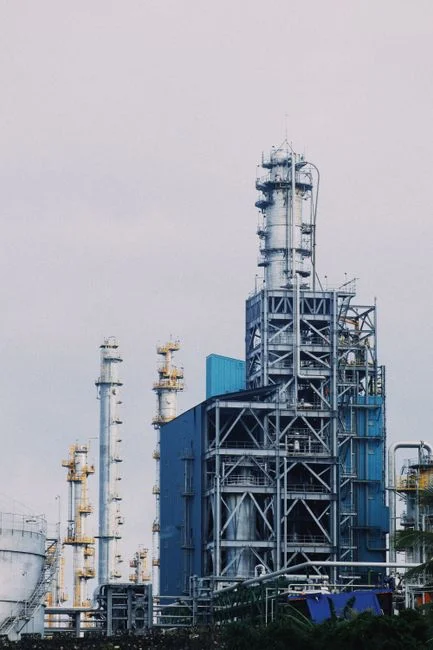
Cooling-system selection determines the quantity and quality of wastewater before treatment capacity is calculated. University of Georgia Extension describes a central tradeoff: saving water often requires more electricity for cooling, while saving electricity can increase evaporative cooling and water consumption. The project should therefore optimize the whole system rather than evaluate treatment and cooling independently.
Use open evaporative cooling where lower cooling energy is the priority and adequate water is available. Use closed-loop cooling where freshwater conservation has greater priority and the additional electrical and mechanical requirements are acceptable. Consider a hybrid arrangement where different parts of the facility have different thermal loads, redundancy needs, water-quality constraints, or capital constraints. A comparable cooling-water treatment guide illustrates why the cooling architecture must precede equipment sizing.
Cycles of concentration are part of this comparison. The 2026 EngrXiv life-cycle study found that higher cycles of concentration can reduce blowdown and chemical consumption. That benefit must be balanced against the energy demand of treatment, the risk of scaling or corrosion, and the quality of the resulting concentrate. It does not establish that reuse is environmentally preferable in every Tanta configuration.
Direct cooling and submerged-server systems should be handled as separate water-management cases. Coolant retained within server loops is not automatically a wastewater stream, while makeup, replacement, drains, and accidental discharges still require management. The decision model should compare energy use, freshwater availability and price, cooling reliability, chemical consumption, maintenance burden, reuse fraction, and discharge obligations.
| Decision condition | Preferred direction | Treatment consequence |
|---|---|---|
| Cooling energy is the dominant operational priority | Evaluate open evaporative cooling | Plan for evaporation, blowdown, chemical control, and receiving-water temperature |
| Freshwater conservation is the dominant priority | Evaluate closed-loop or suitable hybrid cooling | Focus on makeup-water quality, corrosion control, and other facility wastewater |
| Higher cycles of concentration are feasible | Increase concentration subject to chemistry and equipment limits | Reduce blowdown and chemical consumption, then reassess residuals |
| Treated blowdown is proposed for reuse | Set a defined reuse quality and compatibility specification | Add the treatment and monitoring needed for that endpoint |
| Direct liquid cooling is installed | Map coolant and leakage streams separately | Do not size a cooling-tower treatment train from server-loop inventory |
Build a source-to-discharge treatment train
A practical treatment train begins with segregation, flow measurement, equalization, and automatic or remote sampling, then follows the measured contaminant pathway. Screening or multimedia filtration removes suspended solids and protects pumps, heat exchangers, membranes, and dosing equipment. The wastewater treatment planning framework provides a useful structure for translating source characterization into a train and acceptance plan.
Chemical conditioning should be independently engineered. Automatic chemical dosing for cooling blowdown can support pH adjustment, coagulation, flocculation, antiscalant control, or another defined function, but the cooling-tower chemical program does not automatically provide acceptable wastewater chemistry. The required chemical, dose range, residual, control response, and compatibility with downstream equipment must be established from testing.
Use DAF pretreatment for solids and colloids when measured wastewater contains removable oil, grease, suspended solids, or colloidal matter that would interfere with downstream processes. DAF is not an automatic requirement for every cooling-blowdown stream. Industrial softening is justified when hardness limits cooling-loop reuse or membrane pretreatment, not simply because the source is a cooling tower.
Use UF pretreatment for cooling-water reuse when solids and colloids must be controlled ahead of sensitive membranes or higher-quality reuse systems. The supplied UF specification states a flow range of 2,000–40,000 L/h, 0.03-micron PVDF membranes, automatic backwash, and air scour. These are supplied equipment values, not a Tanta design recommendation; feed chemistry, temperature, pretreatment, and recovery still require verification.
Use industrial RO for high-quality reuse water when dissolved salts or selected ions must be reduced to meet a defined reuse or discharge target. Recovery and pretreatment must be developed from feed analysis rather than selected independently.
Disinfection is a separate decision. Chlorine dioxide disinfection for industrial cooling loops may be applicable, but the selected disinfectant must be compatible with the existing chemical program, equipment, workers, and receiving requirements. Similarly, sludge dewatering with a plate-and-frame filter press is relevant when the design creates filterable sludge; it does not remove the need for an authorized residual-management route.
Route solids, sludge, spent filter media, membrane reject, and chemical solutions separately. Treat concentrate as a residual stream, not ordinary cooling blowdown. The 2026 EngrXiv LCA found treatment energy accounted for roughly 80% of the GWP difference between its wastewater and freshwater scenarios; its UF-plus-RO scenario consumed more than five times the freshwater energy before benefits such as reduced blowdown were counted.
| Process stage | Trigger for inclusion | Principal output to manage |
|---|---|---|
| Segregation, equalization, and sampling | Variable or incompatible streams | Stable feed and representative monitoring data |
| Filtration | Suspended solids or turbidity threaten equipment | Retained solids and spent media |
| DAF | Measured removable solids, oil, or colloids | Float sludge |
| Chemical conditioning | pH, precipitation, coagulation, or scaling requires control | Sludge and chemical residual |
| Softening | Hardness limits reuse or membrane operation | Regeneration brine and hardness sludge |
| UF | Colloid control is required before sensitive membranes | Backwash concentrate and retained solids |
| RO | Dissolved salts or ions must be reduced | Concentrate |
| Disinfection | Microbiological risk and endpoint require it | Disinfectant residual and by-products |
| Sludge dewatering | Filterable sludge requires volume reduction | Dewatered sludge requiring authorized handling |
Match treatment goals to realistic discharge and reuse options

Managed discharge is acceptable only after the receiving route and authorization conditions are confirmed. The project must establish applicable temperature, pH, suspended-solids, chemical-constituent, and monitoring requirements, as well as any sewer pretreatment obligations. Until those conditions are issued by the competent Egyptian and receiving authorities, the treatment endpoint remains provisional.
Partial reuse can be considered where treated blowdown meets the chemical, thermal, biological, corrosion, and warranty requirements of a selected cooling or process duty. A stated reuse percentage is not a design parameter by itself: recovered-water quality and the operating point of the receiving system must both be demonstrated.
Higher-quality reuse needs a more complete treatment and monitoring train. The supplied research supports filtration, granular activated carbon, chlorination, UF, and RO as relevant technologies, but pilot testing or reliable feed data must determine the final configuration. Use the industrial water-reuse comparison as a technology reference, not as evidence of Tanta applicability.
Liquid minimization through concentration should be considered only with a complete residual plan. Recovered-water quality, energy demand, concentrate chemistry, handling route, reliability, and authorization must be evaluated together. Concentrating the stream does not remove the environmental burden; it transfers more of it into a smaller residual volume.
University of Georgia Extension notes that data centers generally use water for cooling rather than as a raw material, while water demand rises with facility growth, size, and complexity. Design should therefore accommodate both current load and a controlled expansion scenario, without assuming that all future water demand will become blowdown.
The 2026 EngrXiv LCA is a useful caution against treating reclaimed water as automatically superior. It found approximately twice the GWP of the freshwater case in its comparison, with treatment energy responsible for roughly 80% of that difference, although the UF-plus-RO case produced water savings that were balanced by energy and chemical burdens. Tanta decisions should use site-specific energy, water, chemical, and discharge assumptions.
| Option | Minimum evidence required | Principal unresolved issue |
|---|---|---|
| Managed discharge | Written receiving-route and authorization conditions | Whether the proposed treated water can meet all applicable limits |
| Partial reuse | Compatibility data for the intended cooling or process duty | Long-term corrosion, scaling, and biological effects |
| Higher-quality reuse | Feed analysis, pilot results, and a defined water-quality specification | Energy demand and concentrate management |
| Concentration with minimal liquid discharge | Mass balance and authorized residual-management route | Whether the concentrate can be lawfully and safely handled |
| Cooling-system minimization | Site-specific water and energy model | Whether reduced water use justifies higher electricity demand |
Size, procure, and operate the system with verifiable acceptance criteria
Treatment stages should be sized from measured average and peak flows, selected cycles of concentration, operating hours, temperature, feed-water chemistry, reuse ratio, and redundancy. Total facility water consumption is not an equivalent flow basis because much of it may be reused, evaporated, or associated with sanitary and process streams.
The procurement package should request the full operating envelope, materials of construction, control philosophy, utility demand, chemical requirements, sludge or concentrate generation, maintenance intervals, spare parts, warranty terms, and local service support. The 2026 data center wastewater treatment guide provides a useful project structure, but the commercial and operating assumptions must be replaced with Tanta data.
Specify automatic controls only for parameters relevant to the process: flow, level, pressure, differential pressure, conductivity, pH, turbidity, and dosing. Define interlocks, alarm priorities, fail-safe states, remote access, manual operating modes, and the response to an upset that stops feed to sensitive equipment.
Where treatment creates filterable sludge, evaluate a plate-and-frame filter press against the sludge characteristics, required moisture reduction, operating schedule, cleaning requirements, and authorized destination. For UF, verify the stated automatic-backwash and air-scour functions against feed chemistry, temperature, flow, pretreatment, and recovery before purchase.
The acceptance plan should measure removal performance, final-water quality, energy consumption, chemical consumption, downtime, alarm response, and compliance with discharge-authorization conditions. Include baseline and acceptance sampling, membrane or media replacement criteria, bypass rules, residual records, and a method for investigating a failure. A wastewater treatment planning framework can support this documentation sequence.
| Procurement or acceptance item | Evidence required from the supplier | Buyer’s verification |
|---|---|---|
| Design basis | Flow, chemistry, temperature, operating hours, reuse ratio, and redundancy | Reconcile with site measurements and operating scenarios |
| Performance | Stage-by-stage removal and treated-water guarantees | Define test methods and acceptance samples |
| Controls | Instrument list, alarms, interlocks, and fail-safe response | Review cause-and-effect logic |
| Operating resources | Energy, chemicals, cleaning, and maintenance demand | Price and schedule with the project |
| Residuals | Expected sludge, spent media, reject, and concentrate quantities | Confirm authorized management routes |
| Service support | Local response capability, spare parts, and warranty exclusions | Confirm contractual coverage |
| Authorization interface | Monitoring, reporting, and data-retention obligations | Obtain current conditions from the receiving authority |
Frequently Asked Questions
How much should a Tanta data center budget for cooling-blowdown treatment?
The supplied research does not support a universal cost figure for Tanta. Request a budgetary estimate after the supplier receives characterized flows, required treated-water quality, selected endpoint, site utility conditions, civil requirements, installation scope, commissioning tasks, chemical use, energy demand, and sludge or concentrate-removal costs. Require exclusions and assumptions to be stated separately so that treatment capital, operating cost, and residual disposal can be compared.
Should the project use UF, RO, DAF, or chemical dosing?
No single unit operation is automatically correct. DAF addresses removable solids, oil, and colloidal material; UF controls solids and colloids; RO reduces dissolved salts and selected ions; chemical dosing supports conditioning and pH control. Make the selection from measured composition and the required reuse or discharge endpoint, with pilot evidence where feed variability could affect performance.
How long does a wastewater treatment system take to deliver?
The supplied research provides no defensible Tanta delivery period. Ask the supplier to separate equipment fabrication, membrane supply, civil works, installation, commissioning, performance testing, and permit-related activities, and to identify dependencies on site access, utilities, and authority decisions. This gives procurement a schedule based on deliverables rather than an unsupported single lead time.
Can reclaimed wastewater be used directly in the cooling system?
Do not assume direct use is safe. Require compatibility testing for hardness, alkalinity, silica, chlorides, conductivity, temperature, microbiological risk, corrosion, and treatment residuals, followed by a staged trial with the relevant cooling equipment. The final reuse specification should also respect equipment warranties and the selected operating cycles of concentration.
Does moving to closed-loop cooling eliminate wastewater-treatment requirements?
No. University of Georgia Extension reports that closed-loop systems can reduce water consumption by up to 70% compared with traditional open evaporative cooling, but they cost more and require greater system complexity. Blowdown can fall, yet makeup-water quality, corrosion control, maintenance, electricity use, and other facility wastewater remain design issues. Closed-loop cooling changes the source-to-discharge profile; it does not remove the need for source segregation, characterization, residual management, or authorization.