
Why Mandalay Needs a Fit-for-Purpose Sewage Strategy
Domestic sewage treatment in Mandalay is best approached as a site-specific treatment and management problem, not simply an equipment purchase. The Environment and Natural Resources Journal identifies rapid urbanization, limited treatment capacity, environmental concerns and funding gaps as common challenges in Mandalay and Yangon, while research on Mandalay KanDawGyi Lake identifies sewage as a major source of pollution. For developers, municipalities and facility managers, the procurement decision must therefore connect treatment performance with collection reliability, land, sludge handling, financing, operating responsibility and the receiving environment.
Untreated sewage entering urban water bodies is a major pollution source. The KanDawGyi Lake study identifies sewage, solid waste and agricultural runoff as relevant pressures and reports that a 27 MLD primary and secondary sewage treatment plant was proposed for its Mandalay study area. That infrastructure does not automatically solve every project boundary. A municipal network, a private decentralized installation and a cluster system address different combinations of coverage, footprint and financing.
For a development or municipal project, the treatment train should be defined from the source inward:
- Separate or characterize wastewater streams entering the design basis.
- Provide reliable domestic sewage collection without uncontrolled stormwater dilution.
- Apply biological treatment, solids separation and disinfection in a defined process sequence.
- Manage the resulting sludge through an authorized collection or disposal route.
- Confirm the effluent destination and whether discharge or municipal wastewater reuse is intended.
This sequence prevents a treatment-unit quotation from becoming disconnected from the network, the operating organization or the receiving water body.
What Makes a Decentralized Approach Relevant to Mandalay
The Yangon–Mandalay comparative paper recommends an integrated approach incorporating decentralized wastewater treatment systems, rather than assuming that centralized expansion alone will resolve all coverage and financial constraints. The same paper reports that 17.5% of DEWATS users were highly satisfied and 45% were somewhat satisfied; these are reported user-satisfaction results, not guarantees of equipment performance or applicability to a particular Mandalay site.
Centralized treatment in Yangon took several years to cover the entire city, and the comparative study associated this development with revenue-expenditure coverage issues. A decentralized route can place treatment closer to the wastewater source, but “decentralized” does not mean disconnected from service requirements. It means a defined treatment arrangement with its own collection, operating, sludge and fee arrangements.
That distinction is important when reviewing engineering and implementation considerations for decentralized wastewater treatment. A septic tank used only for storage is not equivalent to a treatment system. Untreated discharge to a drain, channel or water body is not decentralized treatment either. A defensible DEWATS proposal must identify what treatment occurs, where effluent goes, who maintains the plant and how residuals are handled.
The source identifies active stakeholder involvement, community participation, training and transparency as implementation conditions. For a commercial development, this translates into defined ownership between the developer, operator, facility manager and users. For a municipal or cluster scheme, it requires consultation across the served community and a transparent mechanism for resolving operational and fee issues.
Decentralized success also depends on reliable collection, local operating responsibility, planned sludge management and an affordable fee or tariff mechanism. A system that cannot finance inspection, repairs, biological-process management or eventual replacement is not a complete solution. Environmental and social assessment should therefore begin during project definition, while there is still scope to change the site layout or treatment route.
Compare WSZ Package Plants, MBR and Decentralized Alternatives
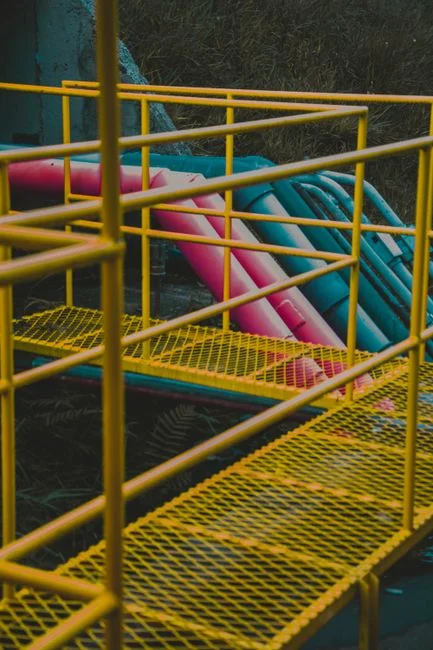
The principal selection difference is the balance between process sophistication, physical footprint, operating demands and the intended effluent use; no technology can be selected responsibly from peak flow alone. The verified WSZ underground package sewage treatment plant combines anoxic/aerobic A/O biological contact oxidation, sedimentation and disinfection in a single buried package unit. Its documented capacity is 1–80 m³/h, with fully automated operation and no resident operator required. It can be installed below grade or mounted on a trailer for mobile deployment.
The MBR membrane bioreactor system combines activated-sludge treatment with submerged PVDF membrane filtration. The verified product information states filtration below 1 μm and a footprint 60% smaller than conventional systems. Its documented capacity is 10–2,000 m³/day. These characteristics make membrane bioreactors relevant where compactness, membrane separation or reuse preparation is central to the project, subject to greater process-control, fouling-monitoring and maintenance demands.
| Treatment route | Documented configuration and capacity | Application fit | Key procurement questions |
|---|---|---|---|
| WSZ package plant | A/O contact oxidation, sedimentation and disinfection in one buried unit; 1–80 m³/h | Residential communities, hotels, hospitals, factories and rural decentralized applications | Confirm process stages, duty allocation, access points, controls, utilities, odor control and effluent destination. |
| MBR | Activated sludge with submerged PVDF membranes; filtration below 1 μm; stated 60% smaller footprint; 10–2,000 m³/day | Compact installations and projects where membrane separation or reuse preparation is important | Request membrane configuration, cleaning strategy, replacement provisions, fouling monitoring and operating-skill requirements. |
| Constructed wetland with microbial fuel cell | Academic research topic; no verified Mandalay site-performance range supplied | Potential nature-based concept requiring project-specific evaluation | Require local climatic, hydraulic, effluent and land evidence before treating it as a procurement default. |
| Vermifiltration | IntechOpen characterizes it as efficient, viable, less expertise-intensive and capable of decentralization | Potential decentralized domestic-sewage route | Require local performance evidence, sludge-handling details and operator competency before selection. |
The constructed-wetland and vermifiltration descriptions come from academic research, not verified Mandalay procurement data. For an informed comparison, see the project guides on packaged A/O and MBR systems and domestic treatment buyer requirements.
Final selection depends on influent characterization, applicable requirements, land, operating skills and the receiving environment. It must not be represented as guaranteeing a Mandalay discharge outcome. The WSZ route is a practical candidate where a compact below-grade decentralized installation matches the documented flow range. MBR is a candidate where compactness or sub-micron filtration is central and its documented capacity covers the measured requirement. Other decentralized technologies remain alternatives only when local evidence closes the performance and operating gaps.
Build the Equipment Sizing Brief Before Requesting a Quote
A technically meaningful quotation requires measured and documented site demand, because the supplied research provides no universal Mandalay design-flow value. The sizing brief should describe current and design flows, including average, peak and seasonal behavior, rather than sizing from peak flow alone. It must also establish the wastewater origin and composition, available footprint, operating responsibilities and the required effluent destination.
Use the 2026 wastewater treatment plant cost benchmarks only as a request for comparable pricing scope; the research contains no Mandalay quotation, so a defensible budget still requires a site-specific bill of quantities and supplier price.
| Information to submit | Evidence required | Supplier response required |
|---|---|---|
| Wastewater flows | Current and design average, peak and seasonal flows, including the basis and data period. | Design flow, design horizon, hydraulic assumptions and expected operating envelope. |
| Wastewater characterization | Source, occupancy or population, kitchen and laundry contributions, and any trade waste entering the same stream. | Influent assumptions, process stages, hydraulic and organic loading basis, and excluded flows. |
| Site and utilities | Footprint, burial depth, maintenance access, power supply, odor-control requirements and effluent destination or reuse point. | Layout, access arrangement, utility requirements, controls, duty allocation and redundancy philosophy. |
| MBR-specific data | Reuse expectations, membrane operating envelope and required monitoring. | Membrane configuration, cleaning strategy, replacement considerations and fouling-monitoring method. |
| Package-plant data | Site access, groundwater or excavation constraints and maintenance strategy. | A/O, sedimentation and disinfection arrangement, buried access points, controls and utilities. |
| Effluent requirements | Confirmed receiving environment, discharge point or reuse purpose and applicable requirements. | Process demonstration against the confirmed requirement; no unsupported numerical guarantee. |
The final effluent purpose must be confirmed before process selection. Although the supplied US EPA material explains that discharge limits and conditions are established through NPDES permits in the United States, it does not establish a numerical effluent standard for a Mandalay project. The receiving authority and intended reuse condition must therefore be identified locally rather than inferred from a foreign regulatory framework.
Plan Commissioning, Sludge, Fees and Long-Term Operation
The Mandalay–Yangon comparative study explicitly identifies membrane fouling, sludge disposal and monthly fees as essential implementation issues. They are not ancillary items: each can interrupt treatment, create an environmental liability or undermine the financial model after delivery.
The commissioning plan should progress through influent characterization, equipment inspection, controls verification, biological-process establishment and performance testing. Each asset should have an assigned inspection regime: screens and pumps, aeration equipment, membranes, sludge collection and disinfection assets. For MBR, the plan should define what measurements indicate fouling, who interprets them, what cleaning response is required and when membrane replacement enters the lifecycle budget.
Sludge management must be specified before acceptance. Define its expected source, collection method, storage arrangement, authorized removal route, handling responsibility and recordkeeping requirement. A treatment plant should not be commissioned with an unresolved disposal route simply because the solids are classified as “small in volume.”
For a DEWATS model, establish a transparent monthly fee or tariff mechanism, collection responsibilities and a means of financing repairs and eventual replacement. The Environment and Natural Resources Journal also recommends environmental and social impact assessment within the broader development plan. That assessment should examine the effluent pathway, sludge handling, odor, construction impacts and stakeholder responsibilities.
Training should transfer routine checks, operating records, chemical or biological-process controls, incident response and escalation. Written instructions should accompany the equipment, and responsibility for updating them should be assigned. Further operating detail can be framed through commissioning and capacity-compliance considerations and operating-cost breakdown methodology.
A Practical Selection Pathway for Mandalay Projects
The shortest defensible route to a shortlist begins with measured flow, wastewater composition, land constraints, effluent destination, reuse objectives and available operating skills. Those facts determine which treatment architectures can be compared on the same basis; an equipment catalogue cannot replace them.
Use a package plant as the primary option when a compact, below-grade decentralized installation is suitable for the documented 1–80 m³/h WSZ range. Use MBR as the primary option when compactness, sub-micron filtration or reuse preparation is central to the requirement and the documented 10–2,000 m³/day range covers site demand. Keep constructed wetlands, vermifiltration and other decentralized routes in the comparison when a low-energy or nature-based concept is relevant, but require local evidence and an O&M plan.
| Decision step | Action | Proceed only when |
|---|---|---|
| Define demand and purpose | Measure flows, characterize the wastewater and confirm discharge or reuse intent. | The design basis and receiving requirement are documented. |
| Screen architectures | Compare WSZ, MBR and relevant decentralized alternatives against the same inputs. | The candidate range covers site demand and its treatment objectives. |
| Resolve ownership | Assign collection, operations, sludge, fees, training and replacement responsibilities. | Named parties accept each lifecycle obligation. |
| Issue the RFQ | Request a traceable design basis, process description, O&M scope, commissioning plan, utility assumptions and exclusions. | Responses can be evaluated on the same technical and commercial scope. |
| Evaluate and verify | Check references, performance evidence, site suitability and commercial completeness. | The preferred route satisfies the confirmed requirement without unresolved operating assumptions. |
Each supplier should identify design exclusions, utility assumptions, commissioning prerequisites and lifecycle responsibilities in the quotation. For a more technical comparison, the guide to MBR and conventional activated sludge provides a separate basis for evaluating membrane process demands.
Frequently Asked Questions
Which treatment capacity is appropriate for a Mandalay development?
WSZ is available at 1–80 m³/h, while MBR is available at 10–2,000 m³/day. The correct selection depends on measured average, peak and seasonal site demand, wastewater composition, footprint and treatment objectives; neither range substitutes for a site-specific design basis.
What should buyers require when comparing decentralized treatment systems?
Require a traceable design basis, process description, collection assumptions, O&M scope, commissioning plan, utility assumptions and clearly identified exclusions. The Mandalay research supports an integrated DEWATS strategy and emphasizes community participation, training, monthly fees, sludge disposal and membrane fouling management.
How should decentralized treatment fees and responsibilities be defined?
Request a written monthly fee or tariff schedule, a named collection and operating party, a repair-financing mechanism and a replacement provision. Also obtain the sludge route and training plan. These controls prevent an installation from becoming an unmanaged asset after handover.
What evidence is needed before specifying reuse or discharge compliance?
Require the receiving authority or reuse condition to be confirmed, then require the proposed process to be demonstrated against that requirement. Do not accept a generic “reuse-ready” statement or an imported numerical standard without site-specific evidence and a defined sampling or acceptance plan.