What an SBR Retrofit Actually Changes
An SBR retrofit reuses the existing sequencing batch reactor tank and swaps internals — aeration, mixers, decanters, or carrier media — to lift capacity, cut energy, or hit stricter effluent limits. Documented retrofits show capacity gains of roughly 40–50% (Ringsend WwTP: 1.64 → 2.4 m PE) and can drop effluent ammonia below 0.2 mg/L while keeping the plant fully operational during works.
The sequencing batch reactor runs a five-stage cycle inside a single tank: fill, react (aerated biological treatment), settle, decant, and idle. Each stage is time-controlled by PLC rather than by separate upstream or downstream basins, which is what makes the configuration so attractive for retrofit: there is no fixed-process piping to re-plumb, only timed valves and equipment to upgrade.
The five sub-systems an engineer can change without pouring new concrete are: (1) the aeration grid and blowers, (2) the decanter mechanism, (3) the mixer, (4) the control/PLC and instrumentation layer, and (5) optional add-ons — MBBR carriers dropped into the react phase, or MBR cassettes installed in a dedicated downstream cell. The retrofit principle is to keep the civil tank and replace the internals. At Ringsend, 15 of 24 existing SBR cells had their internals changed to run as Nereda® reactors while the remaining cells continued in conventional SBR mode (CAW / FaCT3 Consortium, Ringsend SBR Retrofit Hybrid Package 1).
The range of outcomes is wide. A small-tank SBR kit retrofit can lift treatment efficiency from approximately 30% to 99% inside an existing septic tank (Biocell Water, EN 12566 tested performance: 6 mg/L BOD, 17 mg/L SS, 0.2 mg/L NH4-N). A full-scale Nereda® retrofit at municipal scale is a different scope but the same logic: tank stays, internals change. Where the goal is to add membrane polishing to a retrofitted SBR, a typical MBR installation and commissioning guide covers the cassette selection and tie-in work that follows the civil handover.
Why Operators Retrofit in 2026: Capacity, Compliance, and Cost
Three drivers force SBR upgrades in 2026: hydraulic overloading, tightening nutrient limits, and energy OPEX. Each alone can justify a retrofit; together they are usually the case for one.
Capacity stress. Plants built in the 1990s and early 2000s are now serving populations 30–60% larger than their design load. Ringsend is a textbook case: the largest WWTP in Ireland was originally designed for 1.64 million person equivalent and was upgraded in phases (Hybrid Package 1 ran October 2020 to November 2021) to a 2.4 m PE target — a 46% capacity uplift achieved by changing internals, not by pouring new tanks (CAW).
Nutrient compliance. EU UWWTD (Directive 91/271/EEC as amended, with 2010 implementing rules) and analogous Chinese GB 18918-2002 Grade 1A limits push total nitrogen and ammonia below what classic SBR reliably achieves without upgrade. Effluent ammonia targets of 1–2 mg/L are common in 2026 consent renewals; reuse applications demand NH4-N below 0.5 mg/L. The peer-reviewed evidence base for biofilm retrofits in 2026 is now strong — Sadri Moghaddam & Mahmoudisharabiani (NMCE 10(3):80–91, 2026, DOI 10.66224/NMCE.2601.1123) document a full-scale extended-aeration-to-MBBR hospital retrofit that achieved compliant hospital effluent.
Energy and chemical OPEX. Replacing coarse-bubble diffusers with fine-bubble EPDM grids and pairing them with VFD-controlled blowers typically cuts aeration energy by 20–30% (typical engineering range; specific gain depends on diffuser age and blower turndown). That is often a trigger even when no process change is needed. For plants where polymer or coagulant dosing has crept up over the years, an optimized chemical dosing review typically reveals 10–20% polymer savings as a co-benefit of a controls retrofit.
Industrial shock loads. Chemical, food, and pharma plants retrofit SBRs to add equalization, MBBR carriers, or post-MBR polishing when influent swings (FOG slugs, pH excursions, high COD pulses) damage the biomass. For these facilities the retrofit is less about capacity and more about operational resilience.
Retrofit Options Side by Side: Aeration, Nereda, MBBR, MBR, Hybrid
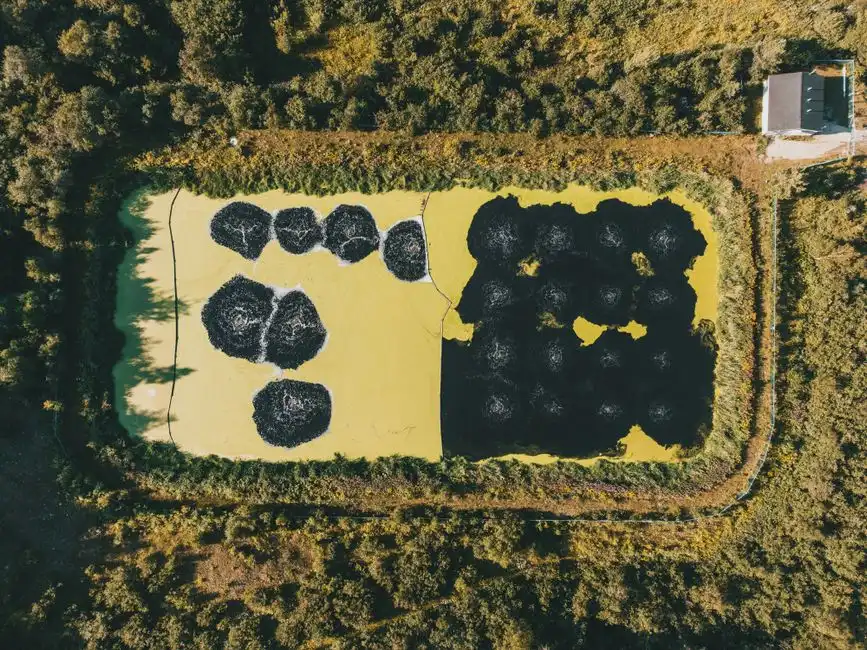
Every retrofit path on the menu in 2026 trades capex against effluent quality, footprint, and complexity. The table below summarizes the operating envelope of each option; the prose that follows explains the trade-offs engineers should pressure-test during pre-design.
| Retrofit path | Typical capacity gain | Effluent BOD / NH4-N | Energy (kWh/m³) | Footprint change | Cell downtime | Complexity |
|---|---|---|---|---|---|---|
| Aeration + control only | 10–20% | ~10–20 mg/L BOD; 1–5 mg/L NH4-N | 0.2–0.4 (typical municipal range) | None | None (in-tank tie-ins only) | Low |
| Nereda® granular-sludge (SBR conversion) | ~46% (Ringsend 1.64→2.4 m PE) | Reuse-grade with polishing; NH4-N < 1 mg/L achievable | 0.20–0.35 (Royal HaskoningDH reported Nereda range) | None (tank retained) | Phased, 2 of 24 cells offline at Ringsend | High (IP-licensed) |
| MBBR carrier addition | 20–40% nitrification capacity | NH4-N < 1 mg/L with sufficient carrier fill | 0.25–0.45 (added aeration for carriers) | None | 1–3 days per tank for carrier drop-in | Low–medium |
| MBR cassette retrofit | Footprint reduction ~60% vs conventional activated sludge | BOD < 5 mg/L; SS < 1 mg/L; near-reuse turbidity | 0.4–0.7 (membrane aeration dominates) | Footprint shrinks; effluent quality rises | 2–4 weeks per cell for cassette install + cleaning skid tie-in | Medium–high |
| Hybrid (SBR + Nereda® or SBR + MBBR polish) | 40–50% (Ringsend Hybrid Package 1) | Best of both — biological plus polish | 0.25–0.45 | None | Phased | High (multi-process integration) |
Aeration/control-only retrofit. New blowers with VFDs, fine-bubble EPDM diffuser grids, DO and MLSS probes, and a PLC rewrite. Lowest capex, ~10–20% capacity gain, 0.1 kWh/day per person benchmark achievable on small SBR kits (Biocell Water). The right answer when the tank is fine, the consent is loose, and the operator wants a payback under three years.
Nereda® granular-sludge retrofit. Convert SBR cells to aerobic granular sludge — biomass that settles as a discrete granule rather than a floc, so the same tank handles a higher mixed-liquor inventory. The Ringsend example shows the model: 15 of 24 existing cells converted under Hybrid Package 1, with the plant kept fully operational (CAW). Requires a licensed design partner and longer per-cell downtime, but no new civil works.
MBBR carrier addition. Drop biofilm carriers into the existing SBR react zone to gain nitrification capacity without building new tanks. The 2026 NMCE hospital study (Sadri Moghaddam & Mahmoudisharabiani) is the cleanest recent peer-reviewed evidence that this retrofit path is fully established, not experimental. For industrial high-COD streams, an MBBR design guide for industrial wastewater illustrates how the same approach handles FOG and slug loadings on food-plant effluent.
MBR cassette retrofit. Install submerged PVDF flat-sheet or hollow-fiber cassettes in a downstream or converted SBR cell for sub-micron filtration and near-reuse effluent. An integrated MBR membrane bioreactor system using DF series PVDF flat-sheet MBR modules (0.1 μm nominal, 80–225 m² per cassette) is the typical cassette package. MBR retrofit raises energy and membrane-cleaning OPEX, but cuts downstream footprint by roughly 60% compared to a conventional clarifier-and-filter train.
Hybrid configurations. Ringsend's Hybrid Package 1 specifically allows cells to be run in Nereda® or hybrid Nereda® mode depending on load, giving operators a turn-down lever that pure SBR does not. Hybrid SBR + MBBR polish is also common in industrial plants where the SBR handles shock loads and the MBBR carriers provide a buffer against ammonia peaks.
Small-scale kit retrofits. For decentralized, low-flow, or septic-tank upgrade cases, EN 12566-tested SBR kits (Biocell Water, 5–5,000 PE) install in roughly 20 minutes per tank and achieve 6 mg/L BOD, 17 mg/L SS, 0.2 mg/L NH4-N. Not the answer for a 2 m PE plant, but the right tool for a 200-PE industrial package plant.
Documented Retrofit Results: Ringsend and the 2026 Hospital MBBR Case
Two projects anchor the 2026 retrofit evidence base: Ringsend WwTP in Dublin and the Iranian hospital WWTP documented in the NMCE 2026 paper. Neither is a recipe, but both prove that retrofitted batch and biofilm systems can hit modern consent limits.
Ringsend WwTP, Ireland. Largest WWTP in Ireland, undergoing phased upgrade since 2018. The Hybrid Package 1 contract (CAW / TES Technology / Farrans Construction — the FaCT3 Consortium) retrofitted 15 of 24 existing SBR cells to Nereda® / hybrid Nereda® operation between October 2020 and November 2021. Delivered on time and within budget. Plant capacity lifted from 1.64 m PE to 2.4 m PE — a 46% hydraulic uplift. The plant stayed fully operational throughout: only 2 of 24 SBR cells were out of service at any moment. The work scope in each retrofitted cell included raising the sludge extraction pipework and installing sampling, process control, and monitoring instrumentation per cell (CAW).
Hospital WWTP, 2026. Sadri Moghaddam & Mahmoudisharabiani (NMCE 10(3):80–91, 2026) report a full-scale extended-aeration basin retrofitted to MBBR operation. The plant achieved compliant hospital effluent — relevant for any engineer comparing the SBR retrofit path against the biofilm retrofit path on a hospital, pharma, or similar high-strength site. A broader hospital wastewater retrofit case study covers the related compliance and equipment-selection questions.
Two caveats apply to both cases. First, every influent is different — Ringsend treats mixed municipal sewage at 2 m PE scale, not textile or food-plant wastewater. Second, the published numbers reflect full-scale steady-state operation; the first 6–12 months of a retrofit typically see a 10–20% efficiency ramp as the biomass or biofilm establishes.
How to Choose the Right Retrofit Path
The right retrofit is the one that solves the binding constraint, not the one with the best brochure. A working decision tree for 2026:
- If hydraulic capacity is the binding constraint → Nereda® granular-sludge retrofit. The Ringsend case (~46% uplift) is the cleanest data point on the menu.
- If ammonia / TN compliance is the binding constraint → MBBR carrier addition or MBR cassette polish. The 2026 NMCE hospital MBBR study is the strongest recent peer-reviewed evidence for biofilm retrofits.
- If footprint must shrink and reuse-grade effluent is the goal → MBR cassette retrofit, ~60% smaller footprint than a conventional activated-sludge train (per HydropureWater MBR system spec).
- If capex is the binding constraint and the plant is small → aeration/control-only retrofit with EN 12566-style SBR kit targets (6 mg/L BOD, 0.2 mg/L NH4-N).
- If redundancy during works matters more than peak performance → phased cell-by-cell retrofit. Ringsend capped downtime at 2 of 24 cells offline; the same approach works for any plant with at least 4–6 cells.
Any of the above should be paired with online instrumentation and a PLC upgrade. Without DO, MLSS, NH4, and flow instrumentation per cell, the new operating window of a retrofitted plant cannot be controlled. Pre-design checklist items: bar screen condition (compare against an automatic bar screen retrofit if the existing one is degraded) and automatic chemical dosing skid readiness for phosphate or polymer trim.
Cost Drivers and Downtime Planning
Because the civil tank is reused, the variable cost of an SBR retrofit is the internals and the control layer — not the concrete. That changes how the budget should be framed: greenfield cost drivers (land, excavation, major pipework) almost disappear, and the project becomes a mechanical, electrical, and process-control (MEPC) job with a short civil tail.
Major cost drivers in a typical 2026 SBR retrofit, ranked by share of total:
- Blower + aeration grid — usually the single largest line item, especially if fine-bubble EPDM diffusers and VFD blowers replace the original equipment.
- Nereda® IP/design fee or MBR cassette modules — process-licensed retrofits carry an engineering fee; MBR retrofits carry a membrane module cost (DF series: 80–225 m² per cassette).
- Instrumentation per cell — Ringsend installed sampling, process control, and monitoring instrumentation in every retrofitted cell; this is the line item most often under-estimated.
- Commissioning and pilot testing — bench- or pilot-scale trials, typically 4–12 weeks, are non-negotiable for biofilm or granular retrofits.
- PLC reprogramming, operator retraining, updated O&M manuals — soft cost, typically 5–10% of project value, frequently underestimated.
Downtime drivers are simpler to bound. The biggest schedule risk is the number of cells taken offline simultaneously: Ringsend capped this at 2 of 24 to keep the plant compliant during works. Influent equalization capacity is the second — without it, a sudden rain event during a cell handover can push the plant out of consent. Electrical and I/O tie-ins are the third. A retrofit that avoids land acquisition and major excavation is usually 30–50% faster to deliver than a greenfield upgrade of equivalent capacity, which is the single strongest argument for the retrofit path itself.
Frequently Asked Questions
What is the typical capacity gain from an SBR retrofit?
Aeration/control-only retrofits typically deliver 10–20% capacity gain. Nereda® granular-sludge retrofits have demonstrated a 46% uplift at Ringsend (1.64 m PE → 2.4 m PE). MBBR carrier additions commonly add 20–40% nitrification capacity, and MBR cassette retrofits reduce downstream footprint by ~60% while pushing effluent toward reuse grade.
Can an SBR be retrofitted without shutting down the plant?
Yes, by phasing works cell-by-cell. At Ringsend, the plant remained fully operational with only 2 of 24 SBR cells offline at any moment during the Hybrid Package 1 contract (October 2020–November 2021). The minimum practical cell count for phased retrofit is roughly 4–6 cells; below that, a temporary equalization tank or a planned short shutdown is usually required.
What effluent quality can a retrofitted SBR reach?
EN 12566-tested small-scale SBR kits reach 6 mg/L BOD, 17 mg/L SS, and 0.2 mg/L NH4-N. Nereda® and MBR retrofits can consistently reach reuse-grade quality (BOD < 5 mg/L, SS < 1 mg/L, NH4-N < 1 mg/L) when paired with appropriate polishing and instrumentation.
SBR vs MBBR retrofit — which is better?
MBBR retrofit adds nitrification capacity at low civil cost (see the 2026 NMCE hospital MBBR study, DOI 10.66224/NMCE.2601.1123). SBR-only retrofit is simpler but limited on total nitrogen. MBR adds polish but raises energy and membrane cost. The choice depends on the binding constraint: MBBR for ammonia capacity at minimum capex, MBR for reuse-grade effluent at higher OPEX, SBR-only retrofit for small plants or when simplicity dominates.
How long does an SBR retrofit take?
Phased cell-by-cell retrofits at municipal scale have been delivered in roughly 12 months per package — Ringsend Hybrid Package 1 ran from October 2020 to November 2021. Small-kit SBR installs (Biocell Water) can be done in about 20 minutes per tank, with full plant handover within a few days. Industrial MBBR retrofits typically fall between these two extremes at 2–6 months per train.