Why Chiang Mai Needs a Site-Specific Sewage Strategy
Domestic sewage treatment in Chiang Mai must account for both local infrastructure gaps and the sensitivity of nearby waters. A 2017 Chiang Mai Provincial Office assessment reported Mae Kha Canal biochemical oxygen demand (BOD) of 4.58–8.39 mg/L and dissolved oxygen (DO) of 0.17–3.1 mg/L, according to the MDPI Water study published in 2025. These historical measurements indicate limited oxygen and appreciable organic loading, so relying on dilution is not a defensible treatment strategy.
The approximately 30 km Mae Kha Canal receives wastewater and solid-waste pressures from communities along its length. Its documented problems are not interchangeable with stormwater drainage: a drainage connection conveys runoff and, in a combined system, may also convey sewage, but it does not establish that sewage will reach a permitted treatment plant. A project must first establish whether its waste stream can enter a municipal sewer and what treatment the receiving plant provides.
Sewer availability is the practical constraint. The UNESCAP Chiang Mai Old City case study, dated October 2017, reported that fewer than 10% of households were connected to the main sewer collection system and that connected households commonly used septic tanks. It also described flood susceptibility and blocked combined drainage in the Old City. These are historical findings about infrastructure conditions, not a statement of 2026 plant performance or current regulation.
| Local evidence | Engineering implication |
|---|---|
| Mae Kha Canal BOD was 4.58–8.39 mg/L and DO was 0.17–3.1 mg/L in 2017, as reported by the 2025 MDPI Water study. | A receiving water with limited DO and measurable organic demand makes upstream interception and effective treatment more important. |
| Fewer than 10% of households were connected to the main sewer in the UNESCAP October 2017 case study. | On-site or decentralized treatment may be necessary where dependable municipal access cannot be demonstrated. |
| The UNESCAP October 2017 case study described blocked drainage and flood susceptibility in Chiang Mai Old City. | Drainage, sewer availability and treatment must be investigated as separate issues. |
For developers, hotels and municipal contractors, the correct question is therefore not “Which package is available?” but “What flow and loading arrive at this site, where can the effluent legally go, and can the receiving environment accept it?”
What Counts as Domestic Sewage Treatment
Domestic sewage treatment is the controlled treatment of wastewater from residences and similar human-dominated sources, distinct from stormwater runoff and industrial process wastewater. A complete treatment train normally includes inlet screening, equalization, biological treatment, solids separation, disinfection, effluent routing and controlled sludge handling.
Each stage addresses a different treatment obligation. Screening removes bulky material; equalization moderates flow and loading variation; biological processes reduce soluble organic matter; separation captures biomass and suspended solids; disinfection reduces the relevant microbial risk before discharge; and sludge handling prevents residuals from becoming an unmanaged waste stream. Clarification or filtration alone cannot replace the biological treatment required for soluble organic load.
A packaged A/O unit combines these functions in an integrated process. The buried packaged A/O sewage treatment plant described in the WSZ Series product information combines anoxic/aerobic contact oxidation, sedimentation and disinfection in one package. Its treatment train is therefore relevant where the project requires biological treatment and solids separation within a compact footprint.
Nature-based systems are a different category, not a generic substitute for engineered treatment. The 2025 MDPI Water study reports a vetiver floating platform used within a wastewater-management system in the Mae Kha Canal. Its use may be relevant to a project with an appropriate receiving area, but the channel installation does not demonstrate that a canal polishing platform can substitute for a properly sized domestic sewage plant or meet a project-specific permit condition.
Effluent disinfection should therefore be specified as part of the selected route, not left as an optional label. Depending on the receiving water or reuse objective, the supplier should identify the disinfection stage, control method and monitored operating parameters.
Compare Packaged A/O, MBR and Decentralized Treatment
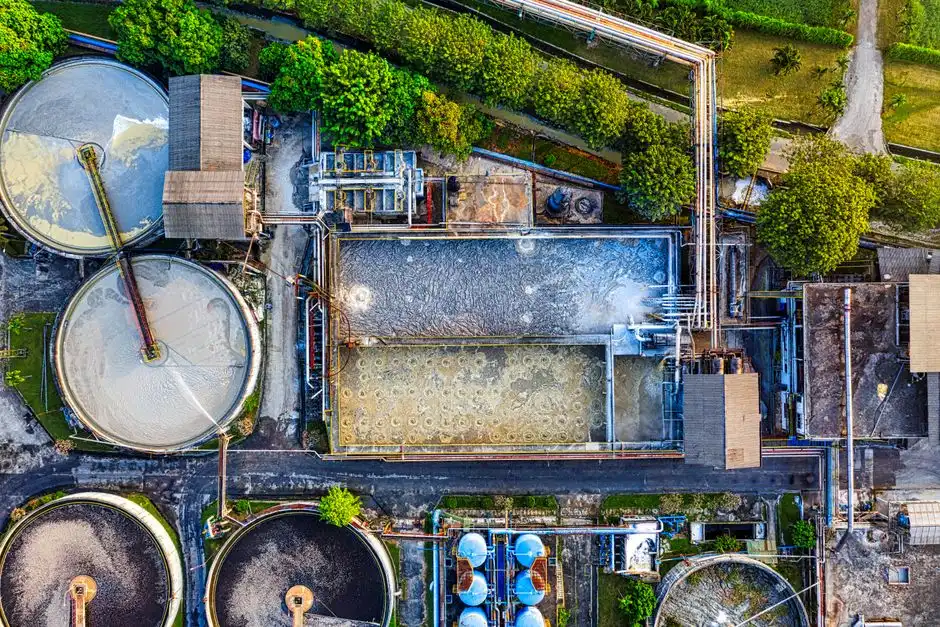
No treatment architecture is universally superior; the correct comparison begins with site flow, organic load, footprint, sewer access, receiving water, reuse objectives and Thai approval requirements. Packaged A/O, MBR and decentralized collection solve different network and process problems.
| Decision factor | Packaged A/O | MBR | Decentralized collection and treatment |
|---|---|---|---|
| Approach | Combined anoxic/aerobic contact oxidation, sedimentation and disinfection. | Biological treatment coupled with submerged membrane filtration. | Collection from multiple or dispersed sources followed by centralized or shared treatment. |
| Available product range in the supplied catalog | WSZ Series: 1–80 m³/h. | MBR catalog: 10–2,000 m³/day. | No single supplied product range; configuration depends on the collection network and receiving treatment. |
| Footprint and installation | Buried installation is available, with landscaping above. | Compact biological and membrane treatment, subject to the supplier's package design. | Requires collection infrastructure, pumping or vacuum stations and suitable treatment-site access. |
| Solids separation | Sedimentation within the integrated package. | Submerged PVDF membrane filtration; the catalog describes filtration below 1 μm. | Depends on the selected downstream treatment process. |
| Main technical attention | Flow and load matching, biological process control, residual sludge handling and disinfection. | Process complexity, membrane condition, fouling control and associated maintenance. | Network feasibility, pumping or vacuum operation, leakage control, access and operating organization. |
The WSZ range of 1–80 m³/h is a supplied product specification, not a recommended capacity for every Chiang Mai site. Similarly, the MBR catalog range of 10–2,000 m³/day and filtration below 1 μm describe equipment characteristics; pore size is neither a regulatory effluent limit nor proof that the clarified effluent is suitable for reuse.
The UNESCAP October 2017 pilot examined vacuum sewer collection because it can ease pipe installation compared with a gravity system in constrained or difficult terrain. Its estimated investment was 241,042,215 Baht, with annual operation and maintenance of 1,622,180 Baht. Those project-specific historical figures do not establish a current quotation, but they show why network scope and operating organization must be compared alongside treatment equipment. See also packaged A/O versus MBR equipment selection for a broader procurement comparison.
Size the Treatment System from Verified Site Inputs
A defensible size starts with measured site inputs, not a catalogue flow multiplied by an occupancy estimate. The buyer should complete the following sequence:
- Document wastewater flow: establish daily flow and its temporal pattern, including average, peak and minimum conditions.
- Separate black- and grey-water contributions: identify toilet, kitchen, shower and other sources, including any septic-tank bypasses.
- Establish organic and nutrient loading: obtain representative sampling rather than relying only on generic domestic-sewage assumptions.
- Survey soil, groundwater and access: determine whether burial, excavation, drainage and maintenance access are feasible.
- Confirm the footprint and collection route: establish where the plant, sludge handling, odor control and electrical equipment will be located.
- Define the discharge and approval route: confirm whether effluent will enter a municipal sewer, surface water, irrigation, groundwater or another permitted destination.
- Obtain current permit conditions: request the applicable Thai authority's written criteria for the selected route.
Average daily flow and peak flow answer different design questions. A hotel or serviced property can experience occupancy-linked peaks; housing can have morning and evening collection peaks; worker schedules can shift demand. The project record should identify those operating patterns and avoid using average flow as a proxy for equalization or peak treatment capacity.
Representative influent analysis should cover the parameters needed by the proposed process, while effluent analysis should be tied to the approved destination. The UNESCAP October 2017 case study describes Chiang Mai Old City as a basin susceptible to flooding during heavy rain and identifies blocked drainage and poor septic systems as related problems. Collection design must therefore consider stormwater entry, infiltration, odor, maintenance access and equipment flooding rather than assume a dry-weather flow.
| Supplier information to require | Acceptance question |
|---|---|
| Design flow, process capacity and influent basis | Do the stated capacities match the verified average and peak site conditions? |
| Footprint, burial depth and construction requirements | Does the proposed layout fit the surveyed plot and maintain access? |
| Power demand, controls and backup provisions | Can the plant maintain treatment during outages and documented site risks? |
| Sludge-disposal method and disinfection stage | Are residual streams and final disinfection included in the scope? |
| Commissioning tests | Are flow, BOD, DO, solids separation and disinfection tested against defined criteria? |
The containerized MBR sizing methodology provides additional detail on sequencing flow and load inputs, but its site assumptions must be replaced with Chiang Mai data.
Protect Receiving Waters and Compliant Discharge Routes
The legally approved discharge route controls the required treatment train, and receiving-water risk must be assessed for the specific site by the responsible Thai authority. Product performance, receiving-water criteria and permit compliance are related but separate questions.
The 2025 MDPI Water study cites a typical surface-water reference of DO at least 4.0 mg/L and BOD not exceeding 2.0 mg/L for water bodies receiving effluent from certain activities. That wording is qualified by its stated scope; it should not be converted into a universal discharge standard for every domestic sewage system or every Chiang Mai site.
The same study separates two periods of the Mae Kha intervention. During the vetiver floating-platform trial from October 2019 to February 2021, BOD changed from 17.00–38.70 mg/L to 9.00–12.67 mg/L, while DO changed from 0.00–2.40 mg/L to 0.80–6.00 mg/L. Following full implementation of procedures 2, 3 and 4 in March 2021, however, the study reported no significant BOD change at any location. The trial therefore demonstrates treatment potential, not stable compliance under all operating conditions.
For a development, hotel or residential project, the receiving-water assessment should identify the actual outfall, upstream and downstream conditions, erosion and flood risks, and the authority's applicable requirements. If the proposed route is irrigation or groundwater infiltration, that reuse or disposal objective needs its own quality specification and validation rather than being inferred from clear effluent or membrane pore size.
Municipal sewer discharge can also require confirmation of connection eligibility, receiving-plant capacity and any pretreatment requirements. A physical connection visible on a drainage drawing does not establish that domestic sewage can legally discharge into a municipal sewer.
Build a Supplier and Commissioning Checklist
A comparable quotation should describe the whole treatment and residual-management system, not only the tank or membrane module. Request a process flow and mass balance showing how the verified flow and loading enter every treatment stage and where solids, screenings and sludge leave the process.
The commercial submission should also identify construction materials, burial depth or above-ground arrangement, maintenance clearances, odor control, noise expectations, power supply, backup power and electrical-room requirements. For a buried package, verify excavation, groundwater and access implications. The WSZ Series is described as fully automated with no operator required, but the buyer should still define local alarms, routine inspection duties and response arrangements for abnormal conditions. The MBR domestic sewage treatment system should be compared on membrane maintenance, cleaning and replacement provisions rather than on nominal filtration alone.
Require a written start-up sequence, operator training, local or remote-control scope, alarm functions, preventive-maintenance intervals and spare-parts availability. The supplier should also specify how sludge will be removed, screenings will be managed and odors will be controlled during startup, routine operation and maintenance outages.
Commissioning should include documented tests of flow, BOD, DO, solids separation and disinfection. Acceptance criteria must link the equipment to the site's approved discharge plan and permit rather than relying on “clear effluent” photographs or a generic supplier guarantee. Ask how each test will be sampled, who will perform it and what corrective action applies if the result does not meet the agreed criterion.
A useful cross-market reference for the commercial comparison is domestic sewage technology, compliance and cost considerations, but its prices and local rules should not be transferred to a Chiang Mai project.
Make the Final Technology Decision
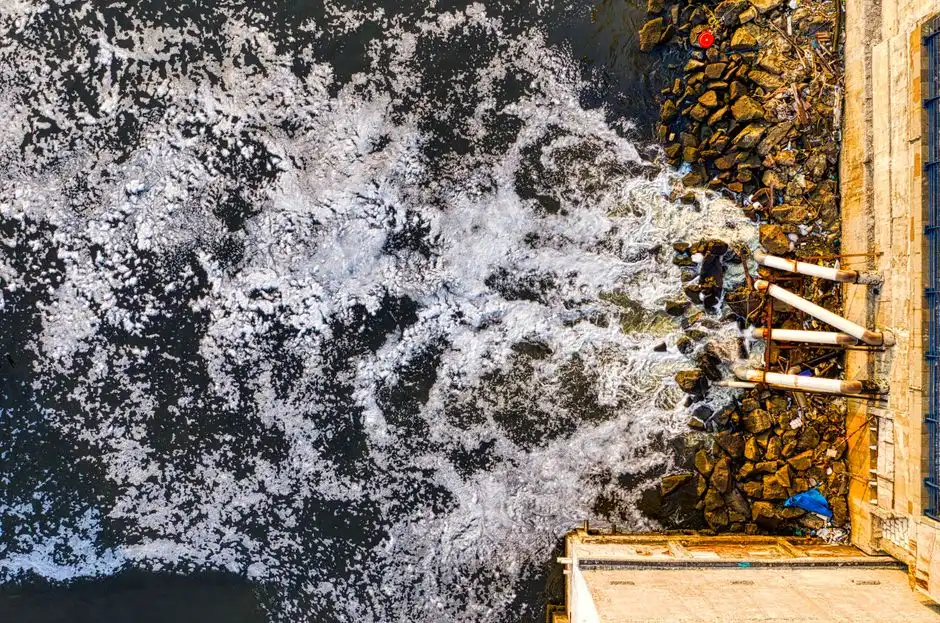
Make the decision after resolving four linked questions: where the sewage must go, what flow and load the site produces, what treatment performance the route requires and who will operate the system. The preferred architecture follows from those answers.
| If the project condition is… | Then evaluate… | Subject to… |
|---|---|---|
| A compact, automated and buried package is preferred. | Packaged A/O, such as the WSZ architecture. | Verified flow and load, available footprint, access, sludge route and disinfection. |
| Membrane solids separation and clarified effluent are important design objectives. | MBR. | Process complexity, membrane maintenance, power, controls and receiving-water or reuse criteria. |
| Several buildings or dispersed sources make individual plants less practical. | Decentralized collection and shared treatment. | Network feasibility, pumping or vacuum operation, ownership, access and operating costs. |
| Effluent must be reused. | A reuse-specific treatment train and validation plan. | An agreed quality specification; membrane pore size or visual clarity alone is insufficient. |
For a compact site with moderate footprint constraints, packaged A/O is often the simpler architectural starting point. MBR becomes more compelling where membrane separation is required and the project can support its operating burden. A decentralized network may reduce the number of small plants when sources are dispersed, but collection infrastructure can dominate the scope.
Do not convert this framework into a final award until site data, receiving-water assessment, current Thai permit confirmation and lifecycle comparison are complete. Compare purchase price together with installation, power, maintenance, sludge disposal, odor control, operator attendance and replacement risks. The decision is project-specific; the local evidence identifies the constraints that must be addressed, not a universal technology mandate.
Frequently Asked Questions
How much does domestic sewage treatment in Chiang Mai cost in 2026?
No universal 2026 equipment price can be derived from the supplied research. Request a quotation that states verified design flow, process capacity, footprint, excavation and installation, electrical works, controls, odor control, commissioning, maintenance, sludge disposal and the approved discharge route. The UNESCAP October 2017 vacuum-sewer pilot's investment of 241,042,215 Baht and annual O&M of 1,622,180 Baht relate to that historical pilot, not current packaged-plant pricing.
How do I choose between a packaged A/O plant and an MBR system?
Choose packaged A/O when a compact, automated and buried solution addresses the site's dominant constraints. Evaluate MBR when membrane solids separation and clarified effluent justify the added process and maintenance requirements. Require both suppliers to quote from the same verified flow, loading, footprint, effluent and sludge-disposal inputs.
Can a site discharge domestic sewage into a stormwater drain in Chiang Mai?
Do not assume that it can. A drainage connection and a lawful sewage-discharge route are different approvals, especially where systems are combined. Confirm the receiving route and applicable Thai authority requirements before selecting equipment or ordering construction.
What site information is needed before sizing a sewage treatment plant?
Provide average and peak flows, black- and grey-water sources, representative influent and effluent analyses, soil and groundwater conditions, available footprint, discharge route, climate and flood exposure, and current permit criteria. Also require the supplier to state process capacity, power demand, sludge disposal, disinfection, automation and commissioning tests.
Related Equipment
- buried packaged A/O sewage treatment plant — specifications, capacity range, and technical data