Which rules control a Covington-area sewer discharge?
A food or beverage plant discharging to a public sewer is an indirect industrial discharger, and the enforceable requirements come from three layers: 40 CFR Part 403, applicable categorical pretreatment standards, and the receiving publicly owned treatment works’ site-specific permit. Federal rules provide the framework; the local control authority administers local and federal pretreatment requirements. Because the receiving POTW can impose stricter conditions, the current permit—not a generic summary—must drive the design basis.
Confirm the receiving POTW before treating a Covington-area address as a single regulatory jurisdiction. A site may be outside city boundaries and connected to a POTW that has its own limits, guidance, sampling rules, surcharges, and approval process.
| Control layer | What it establishes | Documents to obtain |
|---|---|---|
| 40 CFR Part 403 | National Pretreatment Program framework for industrial dischargers sending wastewater to a POTW | Current federal and state pretreatment requirements |
| 40 CFR Parts 405–409 | Category-specific standards for dairy products, grain mills, canned and preserved fruits and vegetables, canned and preserved seafood, and meat products | Applicable category, production process, and current categorical limits |
| Site-specific POTW permit | Enforceable discharge conditions, monitoring, reporting, and local operating requirements | Industrial discharge permit, sewer-use ordinance, sector guidance, surcharge rules, and discharge-point drawings |
Review the permit hierarchy in this order:
- Identify the receiving POTW and confirm whether the plant is classified as a significant industrial user.
- Determine whether a categorical standard applies and which production process defines its scope.
- Extract every enforceable limit, monitoring frequency, sampling method, reporting deadline, and operational condition.
- Compare the permit with applicable categorical requirements and use the stricter enforceable condition.
- Submit the proposed process, guarantees, monitoring plan, and solids-handling approach for POTW review.
The framework in HydropureWater’s 2026 pretreatment article identifies Parts 405 through 409 as the principal F&B categories and explains that local POTW permits may be stricter. The food and beverage sewer-limit compliance guide provides a practical extension of that hierarchy. Do not insert a presumed Covington limit into a proposal until the receiving POTW confirms it in writing.
Build the wastewater profile before selecting equipment
Equipment selection should begin with representative wastewater data, not catalog flow capacity. HydropureWater’s 2026 pretreatment article identifies six core design parameters: BOD/COD, TSS, FOG, total phosphorus, pH, and temperature. These parameters determine whether the train needs solids removal, biological capacity, nutrient controls, equalization, or all of them.
Food-processing wastewater is unusually variable. Hixson reports that batch changes, clean-in-place cycles, and seasonal peaks can change flow, organic load, pH, and temperature, while untreated food-processing effluent can be 10 to 100 times stronger than domestic wastewater in BOD and COD terms. That is a characterization of food-processing effluent, not a covenant that every stream will have the same strength.
| Parameter | Design use | Minimum evidence to collect |
|---|---|---|
| BOD and COD | Organic-load and biological treatment basis | Representative concentrations by production condition, with flow used to calculate mass loading |
| TSS | Solids removal, clarification, filtration, and sludge-production basis | Solids profile across production and cleanup periods |
| FOG | DAF, equalization, and sewer pass-through risk | Oil-and-grease concentrations by source stream |
| Total phosphorus | Chemical precipitation or biological nutrient-removal basis | Phosphorus concentration and required removal |
| pH | Equalization, chemical dosing, and biological-process control | Continuous or time-resolved pH during production and CIP |
| Temperature | Equalization and biological-process suitability | Temperature range, duration, and peak excursions |
HydropureWater’s 2026 article gives a general raw-wastewater BOD range of 1,000–10,000 mg/L for dairy and meat processing. That range is a preliminary context, not a permit limit or a substitute for plant testing. Sample normal production, product changeover, cleanup, CIP, and peak discharge periods. Composite samples should preserve the relationship between flow and concentration; short “grab” samples may miss the slug loads that control equipment or permit performance.
Match each pollutant to a pretreatment step
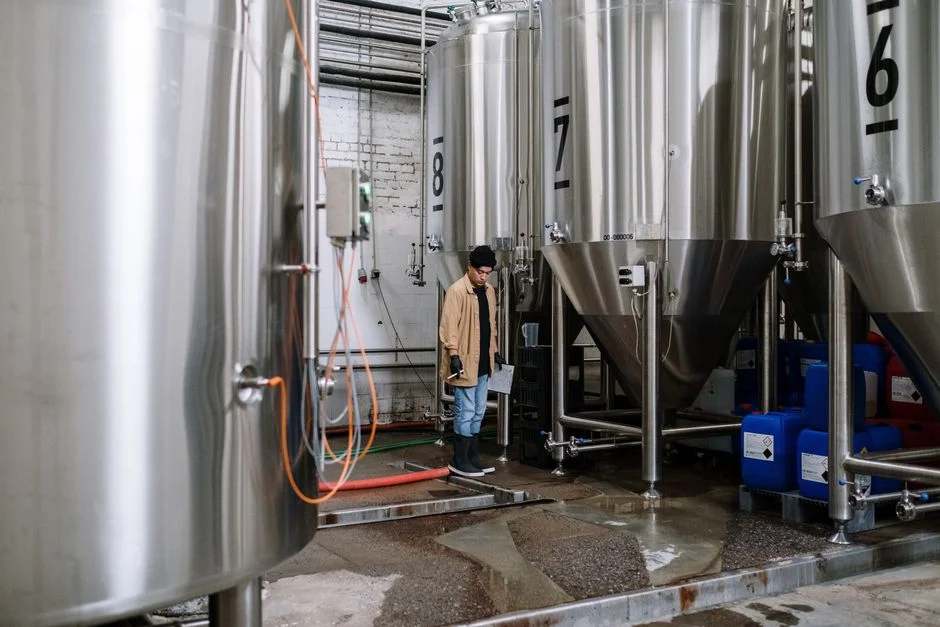
No single unit operation reliably removes every enforceable parameter. The defensible treatment sequence is screening, flow and strength equalization, DAF for FOG and suspended solids, biological treatment for BOD/COD, chemical precipitation for phosphorus, and final polishing or disinfection where the permit requires it.
| Wastewater characteristic | Primary treatment function | Reason to include it |
|---|---|---|
| Large solids and debris | Screening | Protects pumps, valves, and downstream equipment |
| Variable flow, strength, pH, and temperature | Equalization basin | Buffers production and CIP surges before biological treatment or discharge |
| FOG and suspended solids | DAF | Removes floatables that can interfere with biological treatment or sewer operations |
| Dissolved biodegradable organics | Biological treatment | Reduces BOD and COD |
| Total phosphorus | Chemical precipitation or BNR | Controls a nutrient parameter when required by the permit |
| Residual solids or permit disinfection conditions | Polishing or disinfection | Meets the remaining site-specific effluent requirement |
Hixson cites poultry-slaughterhouse field studies showing 74% suspended-solids removal and 99% oil-and-grease removal by DAF under optimized conditions. More recent poultry results cited by Hixson reached up to 99% TSS removal, 85% BOD₅ reduction, and 98% phosphate removal when coagulant selection and operating parameters were properly controlled. These are poultry-slaughterhouse results, not guaranteed performance for every F&B wastewater.
For tighter solids or organic separation, Hixson reports a beverage-facility MBR pilot with effluent COD of 16.9 mg/L, TSS of 3.8 mg/L, and 92.6% COD removal. That result can justify considering membrane polishing in a constrained footprint, but it remains pilot evidence rather than a universal guarantee. The guide to sizing pretreatment for variable beverage-process wastewater is useful for checking how upstream variability changes equipment duties.
HydropureWater reports post-DAF design targets of 25–50 mg/L for oil and grease and 50–100 mg/L for TSS. These are reported design targets, not federal limits, and must be reconciled with the current POTW permit and raw wastewater data. Chemical dosing supports coagulation, pH adjustment, and phosphorus precipitation. Select the chemical and dose through jar testing against the actual influent; control adjustments should respond to flow and process chemistry rather than rely on a fixed feed.
For an industrial DAF system for FOG and solids pretreatment, ask the supplier to define the coagulant strategy, recycle control, solids withdrawal, and performance guarantee. For an MBR system for biological treatment and final effluent polishing, require a complete performance basis that includes the permitted flow range and upstream pretreatment assumptions.
Size the DAF and biological stages from measured inputs
A defensible equipment proposal starts with forward flow, peak-to-average ratio, raw BOD, and raw FOG, the four sizing inputs identified in HydropureWater’s 2026 pretreatment article. Average daily flow alone can conceal a short production surge or concentrated CIP release that determines DAF hydraulic capacity, equalization volume, and biological feed conditions.
| Design input | Question answered | Required information |
|---|---|---|
| Forward flow | What flow must each unit handle? | Measured current flow and planned production changes |
| Peak-to-average ratio | How much equalization and surge capacity are needed? | Time-resolved flow by production condition |
| Raw BOD | What biological load and HRT basis apply? | Representative concentrations and mass loading |
| Raw FOG | What DAF and scum-handling basis apply? | Representative concentrations and source-stream variation |
For preliminary comparison, HydropureWater reports DAF hydraulic loading of 4–25 m/h and recycle of 20–40% of forward flow. Final selection must reflect actual FOG, TSS, chemistry, temperature, and the manufacturer’s duty curve. The range is a comparison basis, not a guarantee that one loading rate suits every waste stream.
For biological treatment, HydropureWater reports hydraulic retention time of 8–24 hours for conventional activated sludge and 4–10 hours for MBR. Final sizing remains a process-design task tied to permit quality, influent characteristics, equalization, solids separation, temperature, and required redundancy. HydropureWater’s stated DAF catalog covers 4–300 m³/h across 13 standard models, while its MBR range covers 10–2,000 m³/day. Buyers can use those figures to check catalog coverage, not to bypass process design.
Every quotation should state design flow, peak flow, operating hours, equalization volume, treated-water quality, solids handling, controls, and utility requirements. The comparison of MBR and conventional activated sludge provides supporting context for biological-process selection.
Turn pretreatment into a monitored compliance system
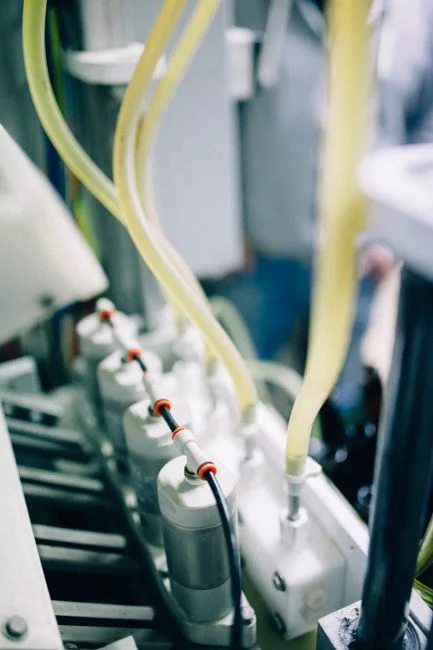
Compliance depends on continuous hydraulic and process control, not only on a passing laboratory sample. Equalization is the first control layer because it buffers production surges and concentrated CIP discharges before they overload downstream biological treatment or the sewer. The equalization basin should be evaluated for flow, strength, pH, and temperature attenuation—not used as uncontrolled storage.
HydropureWater’s 2026 pretreatment article states that most F&B categorical permits require 24-hour composite sampling for BOD, TSS, FOG, and total phosphorus at frequencies from monthly to quarterly, and that significant industrial users commonly require continuous pH and flow monitoring. The plant’s current permit must confirm which requirements apply.
Specify an operating system with these elements:
- Continuous hydraulic control: flow measurement, equalization level control, high-level alarms, and controlled discharge.
- Process control: pH monitoring where required, flow-proportional chemical dosing, and DAF or biological-stage operating feedback.
- Traceability: timestamped event logs for alarms, setpoint changes, chemical additions, bypass events, and operator actions.
- Representative compliance sampling: the method, duration, parameter, and frequency specified by the POTW.
- Escalation procedures: defined actions for pH excursions, hydraulic overload, FOG breakthrough, solids carryover, and equipment failure.
A passing sample does not prove continuous compliance. Operators need limits, alarms, ownership, and response steps before a concentrated batch or CIP event reaches the sewer. The reporting portal and deadlines must be confirmed with the receiving POTW and the applicable state authority; no particular state electronic system should be assumed for a Covington-area site.
Choose equipment and suppliers with compliance in mind
Supplier evaluation should test whether the proposed system satisfies each named permit parameter across the plant’s measured operating envelope. An average-flow demonstration is not enough. Ask bidders to show how their train responds to peak flow, CIP chemistry, variable FOG, temperature changes, solids accumulation, and equipment outages.
| Procurement check | Evidence required | Risk if omitted |
|---|---|---|
| Permit performance | Named limits, design flow, peak flow, influent basis, and guarantee method | Unproven compliance at actual plant conditions |
| Integrated scope | Pretreatment, equalization, biological treatment, polishing, controls, instrumentation, sludge handling, utilities, commissioning, training, and compliance documentation | Gaps, change orders, and interface disputes |
| Operating reliability | Alarm logic, redundancy, chemical storage, maintenance access, and support plan | Downtime and missed monitoring or reporting obligations |
| Lifecycle cost | Power, chemicals, sludge dewatering, residuals, operator labor, and disposal | Capital comparison that omits operating obligations |
Compare the lifecycle consequences of hydraulic overload, chemical overuse, excess sludge, membrane fouling, downtime, and missed compliance events rather than ranking bids by equipment price alone. The industrial pretreatment compliance framework provides a related procurement structure.
Hixson reported that, in 2025, Hanover Foods Corporation agreed to pay $1.15 million in civil penalties for more than 600 NPDES permit violations involving suspended solids, ammonia nitrogen, phosphorus, and temperature. That was a direct-discharge NPDES case, not a sewer pretreatment case, but it illustrates the financial exposure of monitoring and operating failures. Final selection still requires the current permit, measured wastewater data, production profile, discharge point, and POTW approval.
Frequently Asked Questions
What inputs are needed to size an F&B pretreatment system near Covington?
The core inputs are forward flow, peak-to-average ratio, raw BOD, and raw FOG. Add representative TSS, total phosphorus, pH, temperature, production schedules, cleanup and CIP flows, discharge-point constraints, and the current permit limits. These inputs determine equalization, DAF, biological, polishing, and solids-handling duties.
How should a supplier be selected for permit compliance?
Require demonstrated performance against the named permit parameters, complete controls and instrumentation, an integrated solids-handling concept, commissioning support, operator training, and compliance documentation. Also require the supplier to state how performance will be demonstrated at the measured peak and worst-case wastewater condition.
Which requirement controls if federal categorical standards and the POTW permit differ?
The receiving POTW’s site-specific permit is the site-specific enforceable condition and may be stricter than the categorical floor. The final design should meet both layers and obtain POTW acceptance. Do not substitute a generic Covington limit for the current permit and applicable federal category.
What should a buyer include when comparing pretreatment costs?
An equipment-only quotation is incomplete. Request a lifecycle comparison covering equalization, chemical use, power, aeration, sludge dewatering, residual disposal, monitoring, maintenance, compliance-driven redundancy, commissioning, and operator training. Because no supported quotation is available in the research, request a site-specific price built from the current permit, measured wastewater, production profile, and discharge point rather than accept a generic budget figure.