What treatment does a Malacca data center actually need?
A data center in Malacca generally needs two separate treatment trains: one for concentrated cooling-tower blowdown and one for sanitary wastewater. Blowdown contains concentrated hardness, silica, salts, inhibitors, biocides and potentially heavy metals, so treatment normally starts with solids removal and chemical control, followed by scaling control, membrane separation or softening, and disinfection where reuse or discharge requires it. Sanitary sewage should remain hydraulically separate and use biological treatment. Malaysia’s Environmental Quality (Industrial Effluent) Regulations 2009 distinguish inland-water discharge under Standard A from sewer discharge under Standard B. Malacca’s final permit and sewer limits must be confirmed before sizing.
One combined wastewater plant is therefore not a defensible concept. Cooling-tower blowdown is a scale-prone industrial stream; sanitary sewage from offices, canteens, washrooms and worker facilities is an organic and ammonia-bearing stream. The Malaysian data-center wastewater treatment planning reference describes sanitary sewage as normally handled by an MBR or underground WSZ package plant, with blowdown kept separate so biocides and heavy metals do not reach biological treatment.
Malaysia already has a relevant reuse precedent, but not a Malacca design template. Data Center Dynamics reported on August 06, 2025 that Bridge DC had signed a Memorandum of Understanding with Johor Special Water and was collaborating with Indah Water Konsortium, JSW and Permodalan Darul Ta’zim to use treated effluent as reclaimed water for cooling at a Johor facility. That establishes feasibility in Johor; it does not establish flow, chemistry, ownership or permit conditions in Malacca.
The final Malacca basis therefore remains unresolved. The design team needs the cooling configuration, cycles of concentration, measured blowdown flow, source-water analysis, inhibitor and biocide programme, discharge destination and applicable permit conditions. Until those inputs are fixed, equipment capacity and recovery claims remain assumptions rather than an RFP basis.
How Malacca's hot climate shapes the water balance
Evaporation removes water from the cooling loop while leaving dissolved solids behind, so a higher cycles-of-concentration target reduces the purge volume but increases the concentration of hardness, silica and other salts in the remaining water. The water balance must therefore be developed with the cooling designer before the wastewater plant is sized.
HydropureWater’s Penang guide, citing Genesis Water Technologies in 2026, gives an illustrative relationship in which blowdown equals 25% of make-up volume at 4 cycles of concentration and 20% at 6 cycles. Those figures demonstrate the direction of the relationship; they are not Malacca design values. The actual evaporation, drift, blowdown and operating cycles must come from the selected cooling system.
| Design input | What the buyer should obtain | Why it affects treatment |
|---|---|---|
| Cooling configuration | Cooling tower, hybrid or dry-cooler arrangement; operating schedule and peak loads | Determines whether an evaporative blowdown stream exists and how its flow varies. |
| Water balance | Average and peak evaporation, drift, make-up, blowdown and shutdown discharge | Sets equalization, treatment and storage duties. |
| Cooling chemistry | Proposed cycles of concentration, inhibitor, biocide and corrosion-control programme | Controls scaling, oxidation demand and possible metal residuals. |
| Liquid-cooling interfaces | Warm-water-loop bleed-off and other warm-water discharges | Creates a separate stream that must not be mixed with sanitary sewage or ordinary blowdown. |
IDE’s 2026 cooling-blowdown article warns that water-based cooling can become more demanding as compute density and AI workloads rise. Its reference to a 100 MW facility using up to 2 million litres per day is an industrial example, not a Malacca capacity assumption. A data-center cooling-blowdown process selection guide is useful for the treatment logic, but Malacca’s cooling-vendor data must govern the water balance.
Cooling blowdown requires a dedicated treatment sequence
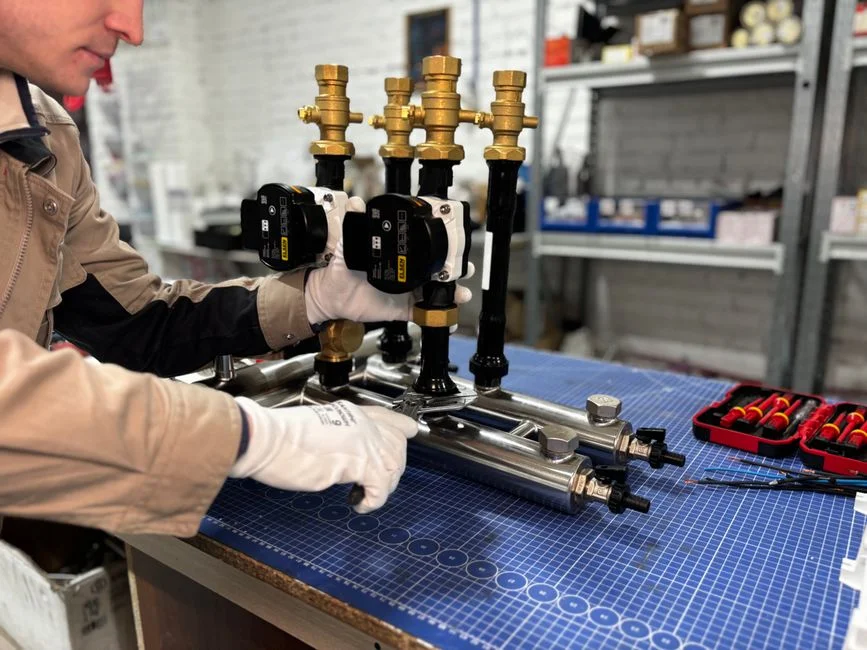
Cooling-tower blowdown needs a process sequence matched to the selected discharge or reuse route, not a fixed chain copied from another project. The defensible sequence is source segregation and characterization, equalization, screening where required, solids and oil removal, pH and biocide control, hardness or silica control, reverse osmosis where dissolved-solids removal is needed, disinfection where justified, and monitored reuse or discharge.
Suspended solids, oil and grease, and colloidal material must be characterized before selecting the solids-removal method. Where the sample confirms those fractions, dissolved air flotation can remove them together. If that is not the confirmed contaminant profile, the buyer should not treat DAF as mandatory. A multi-media filter can reduce residual suspended solids and protect downstream membranes. The dissolved-air flotation system for pretreatment should therefore be evaluated against sample results and the downstream filtration requirement.
| Stage | Function | Design condition |
|---|---|---|
| Characterization and equalization | Mix variable flows and expose the chemistry used for sizing | Representative analysis and peak-flow data are required. |
| Solids, oil and pretreatment | Remove material that could foul filters or RO | DAF or filtration should follow the measured contaminant profile. |
| Scale and silica control | Limit hardness, calcium sulfate and silica risks | Use validated softening or another process selected from full-water chemistry. |
| RO for reuse | Remove dissolved salts and produce cooling make-up water | Recovery depends on salinity, scaling, pretreatment, temperature and concentrate handling. |
| Disinfection and reuse control | Control microbiological risk | Use chlorine dioxide or UV only where the reuse and discharge basis justifies it. |
RO alone should not be treated as adequate pretreatment. Industrial softening or another validated scale-control process may be necessary where hardness and calcium sulfate risk requires it. An automatic chemical dosing system with interlocks should handle pH adjustment and the site-specific pretreatment programme, while chemical storage and dosing must reflect the actual inhibitor and biocide products.
The catalogued industrial reverse osmosis system for cooling-blowdown reuse offers recovery rates up to 95%, but that is not a guaranteed Malacca duty. IDE’s 2026 article reports that conventional brackish-water RO typically plateaus at 75–80% recovery. Its industrial reference achieved around 95% recovery and about 1 mg/L permeate silica through a high-recovery architecture controlling salt precipitation. That case demonstrates a possible route, not a performance guarantee for Malacca chemistry. If the project requires high recovery, the bid should define the concentrate outlet, precipitation or solids handling, membrane cleaning and excursion response.
Sanitary wastewater needs a separate biological train
Sanitary wastewater requires biological treatment because its organic, suspended-solids and ammonia loads differ fundamentally from those of cooling blowdown. The designer should characterize flow, BOD, COD, suspended solids, ammonia, temperature and grease, then obtain the local sewer’s written acceptance criteria before selecting a plant.
Where on-site treatment is required, an MBR membrane bioreactor for separate sanitary wastewater treatment is applicable to a compact, automated biological duty from 10 to 2,000 m³/day. A smaller site may consider the underground WSZ integrated sewage treatment package, which combines anoxic or aerobic contact oxidation, sedimentation and disinfection in a buried unit.
HydropureWater’s Kuala Lumpur guide describes sanitary sewage as normally handled by an MBR or underground WSZ package plant and kept separate from blowdown so biocides and possible heavy metals do not inhibit the biological stage or complicate downstream reuse. The equipment comparison should therefore be based on sanitary flow and analysis, not on the much larger blowdown train.
The procurement team must also establish whether sanitary wastewater will be handled on site, discharged to the public sewer, or handled through an IWK-arranged service. That decision affects the treatment scope, operating responsibility and acceptance testing. It should be confirmed in writing before bids are evaluated.
Which discharge or reuse route should the project choose?
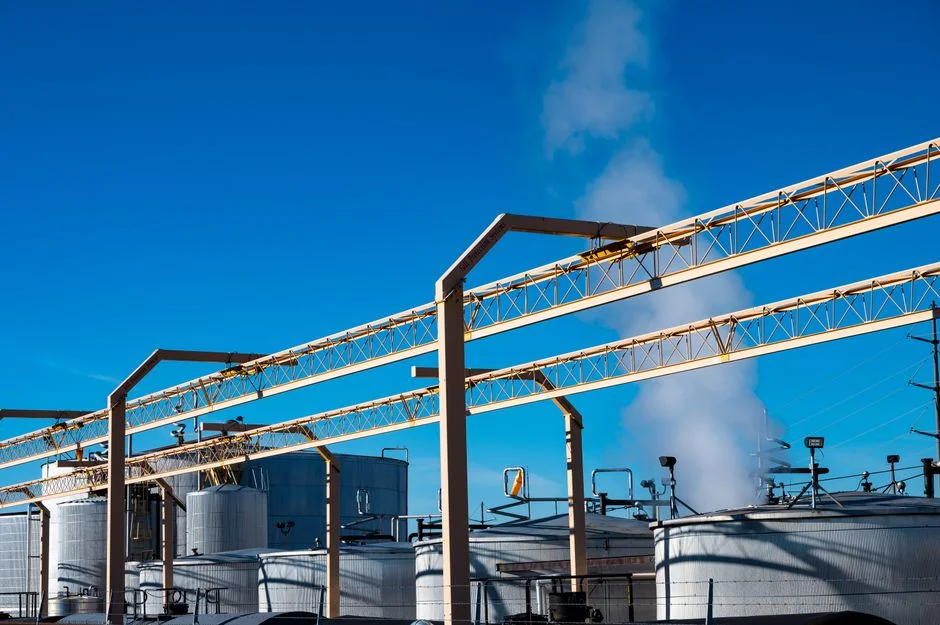
The preferred route depends on the required cooling-water quality, the available sewer or receiving water and the project’s freshwater-reduction objective. Malaysia’s 2009 industrial effluent regulations provide a baseline, but the route cannot be selected from the national limits alone.
| Route | Indicative treatment scope | Decision tests |
|---|---|---|
| Compliant sewer discharge | Characterization, equalization, solids removal, pH control, dechlorination and other treatment required by the sewer agreement | Will the sewer accept the flow and chemistry? What pretreatment and monitoring are required? |
| Inland-water discharge | Treatment for the applicable Standard A conditions, including relevant dissolved-solids and metal controls | Is this the legally available receiving route? What site-specific consent and receiving-water conditions apply? |
| Internal cooling reuse | Solids removal, scaling control, softening or RO, residual polishing and controlled make-up | Can permeate meet both the cooling loop and membrane constraints? How are excursions and concentrate handled? |
HydropureWater’s Kuala Lumpur guide summarizes the 2009 Environmental Quality (Industrial Effluent) Regulations, P.U.(A) 434, as requiring pH 5.5–9.0, temperature no more than 40°C and residual chlorine no more than 1 mg/L. It lists Standard A TSS at 100 mg/L and Standard B TSS at 50 mg/L. Where the chemical programme makes metals relevant, the same source lists zinc limits of 1.0 mg/L for Standard A and 2.0 mg/L for Standard B, copper limits of 0.2 and 1.0 mg/L, and chromium limits of 0.05 and 0.5 mg/L.
These are national baseline values, not a complete Malacca consent. The project must obtain the site-specific approval, sewer discharge agreement and receiving-water conditions in writing. A treatment train that meets an effluent limit is not automatically suitable as cooling make-up: the complete water chemistry must also satisfy the cooling loop and RO constraints.
For reuse, the industrial water softener system may be needed where hardness control is established by analysis. Where disinfection is justified, a chlorine dioxide generator can support residual control, but oxidant entering the cooling loop must be managed.
The Bridge DC Johor MoU, reported by Data Center Dynamics on August 06, 2025, confirms that reclaimed-water cooling is feasible in Malaysia. It does not remove the need to resolve Malacca-specific water quality, project governance, treatment ownership and downstream responsibility.
What must be known before equipment is sized?
Equipment sizing is defensible only after the cooling vendor and water-treatment designer have closed the water balance and source-water chemistry. The RFP should require average and peak evaporation, drift, make-up, blowdown and shutdown-discharge data, together with the proposed cycles of concentration and chemical programme.
- Obtain representative source-water and blowdown analyses covering pH, conductivity or TDS, hardness, alkalinity, silica, chloride, sulfate, calcium, suspended solids, oil and grease, residual chlorine, biocide and inhibitor residuals, and zinc, copper and chromium where relevant.
- Identify every additional stream, including warm-water-loop bleed-off, condensate, once-through cooling discharge, process wastewater, rainwater and vehicle-wash water.
- Confirm the destination and legal route for each stream, including the sewer discharge agreement or inland-water consent where applicable.
- Define availability, redundancy, automatic bypass, concentrate destination, sludge handling, membrane cleaning, chemical storage and pretreatment alarm responses.
- Require bidders to state their design basis, guaranteed permeate quality, recovery, normalized energy and chemical consumption, and the effect of untreated excursions on downstream processes.
Generic “industrial-grade” language is not an acceptable design basis. For example, “up to 95% recovery” is not useful without feed chemistry, temperature, scaling assumptions, product-water targets and concentrate management. The bidder should show how its guaranteed duty responds to a high-TDS excursion, not simply provide a nominal capacity.
Valve, filter-media and treatment-parts planning should be included in the same schedule rather than treated as an afterthought. Procurement can ask bidders to list critical spares, media, membranes, chemicals, wear parts and recommended replacement intervals using the treatment-parts, valves and filter-media reference.
How to evaluate treatment suppliers in Malacca?

A comparable bid must present a complete, source-separated treatment concept, not only a headline unit price or capacity. Each bidder should show sanitary wastewater, cooling blowdown and every other process stream separately in the flow diagram, sizing calculation, treatment description and commercial schedule.
Request the guaranteed duty, recovery, product-water chemistry, pretreatment sequence, concentrate management, redundancy, controls philosophy and commissioning acceptance criteria in writing. The bid should also identify operating availability and what happens during power loss, RO cleaning, chemical cleaning, high-TDS excursions and full-plant shutdown.
For the reuse case, ask for a complete water balance and a consequences analysis covering membrane cleaning, chemical consumption, power loss and disposal of treatment residuals. A supplier claiming high recovery should explain how scaling species are controlled and where the resulting concentrate or precipitate goes.
Service capability is part of the technical offer. Check local response coverage, PLC operator training, critical-spares availability, and plans for membrane and media replacement. The data-center wastewater treatment requirements and equipment-selection reference provides a useful structure for comparing complete trains.
IDE’s around 95% recovery industrial case can be used as a technical benchmark, but it is not evidence that every Malacca blowdown chemistry, cooling programme or RO arrangement can achieve the same result. The award should follow the guaranteed site-specific case and disclose exclusions.
Frequently Asked Questions
What capacity should a Malacca data center wastewater treatment system be sized for?
No defensible equipment capacity can be calculated until the cooling designer provides measured or guaranteed blowdown flow, peak flow, shutdown discharge, cycles of concentration and water chemistry. The bid should also distinguish sanitary sewage and any warm-water-loop bleed-off. Climate alone is not a sizing basis.
How much will the treatment system cost?
The supplied research contains no defensible Malacca quotation for the complete package. Buyers should request comparable bids covering equipment, installation, pretreatment, chemical storage, RO or biological treatment, concentrate and sludge handling, commissioning, operator training, maintenance and critical spares. Each bidder should state exclusions and price the confirmed flow and chemistry basis.
Which treatment supplier should the project select?
Select on complete-train engineering, guaranteed product-water quality, recovery under the site chemistry, concentrate handling, redundancy and local service rather than a single-unit price. Require the design basis, operating envelope, commissioning tests, exception handling and spare-parts plan in writing. A recovery headline without the supporting water balance is not a comparable offer.
What compliance risks remain before discharge or reuse is approved?
Malaysia’s 2009 industrial effluent framework is only the baseline. The final design must satisfy the Malacca consent or permit, sewer discharge agreement and receiving-water conditions obtained for the site. For reuse, compliance also has to be reconciled with cooling-loop chemistry, scaling, pretreatment, RO recovery, excursion flows and concentrate management.