Why Rajkot Data Centers Need a Dedicated Blowdown & Wastewater Plan
India holds roughly 18% of the world's population but only about 4% of its freshwater resources, per a World Bank brief dated 2026-03-19 (cited in the Schneider Electric India cooling blog, 2026-09-29). Around 75% of India's data centre facilities sit in water-stressed states, per etvbharat.com (cited 2026-08-07 in the same Schneider blog), and Rajkot/Saurashtra is a documented drought-prone belt where groundwater allocation is increasingly contested. A facility in this region should treat local freshwater as a constrained, cost-rising input rather than an unlimited utility.
The blowdown chemistry is the reason a generic "RO on the drain" answer fails. A cooling tower at 4 cycles of concentration loses approximately 25-30% of its makeup water to blowdown, and that blowdown runs 1,200-6,000 mg/L TDS — 4-8× the makeup water — with 10-50 mg/L suspended solids, accumulated biocides, corrosion inhibitors, scale inhibitors, and planktonic bacteria, per Genesis Water Technologies (genesiswatertech.com, "Advanced Blowdown Treatment Technologies for Data Center Water Recovery"). When that stream is dumped to a municipal sewer, the operator pays a direct discharge fee and loses the embedded water value; when it is reused without treatment, scaling and biofouling destroy heat exchangers within months.
India's regulatory direction makes a "do nothing" option untenable. Rules introduced in 2025 require bulk users consuming more than 5,000 litres per day to increase wastewater treatment and reuse, per indiawaterportal.org (cited in the Schneider blog, 2026-09-29). Rajasthan's 2025 data centre policy names wastewater recycling, zero liquid discharge (ZLD), rainwater harvesting and groundwater recharge, per the LSG Rajasthan order (cited in the same Schneider blog, 2026-09-29). Gujarat hosts adjacent data-centre policy momentum and the operator must clear Gujarat State PCB (GPCB) discharge norms on TDS, heavy metals, and biocide residuals. Design for the direction of policy, not today's minimum.
On-site blowdown is not the only stream. Facility sewage, RO reject from any potable polishing step, humidification bleed-off, fire-suppression test water, and (if co-sited) industrial or treated-municipal makeup each carry a separate permit and treatment obligation. A single water balance has to cover all of them.
Build the Site Water Balance Before You Pick Equipment
Start with the mass balance, not the equipment list. Makeup water equals evaporation plus drift plus blowdown; at 4 cycles of concentration, blowdown is approximately 25-30% of makeup (Genesis Water Technologies, genesiswatertech.com). A US Southeast data centre site documented in ASCE's Civil Engineering magazine (March/April 2024 issue) sized its cooling effluent handling at 20-30% of total water supplied, with a flowmeter added because actual volumes were uncertain at design time. Use that range as a sanity check for a Rajkot site that uses evaporative cooling, then re-measure once the tower is running.
Map every in/out stream separately: domestic sewage, RO reject, humidification bleed, fire-suppression test water, generator coolant, and any rainwater or treated-municipal makeup. Each has different reuse potential and a different GPCB obligation. Uptime Institute's 2021 survey, cited in the ASCE article, found that only 51% of operators tracked water use at all and only 10% across all their sites, with more than 60% citing no business justification for doing so. A written water balance is the cheapest compliance and CAPEX-defence document a Rajkot buyer can produce.
Decide the end-use objective before the equipment list is fixed. The three primary strategies are cooling-tower makeup reuse (typically 60-85% recovery), discharge compliance (TDS reduction, biocide neutralisation, fee avoidance), and zero liquid discharge (95-99% recovery, solid waste <1% of original blowdown volume) (Genesis Water Technologies, genesiswatertech.com). The treatment train, the OPEX profile, and the GPCB interaction all change with the chosen objective.
The Core Treatment Train: Side-Stream Filtration, UF, NF and RO
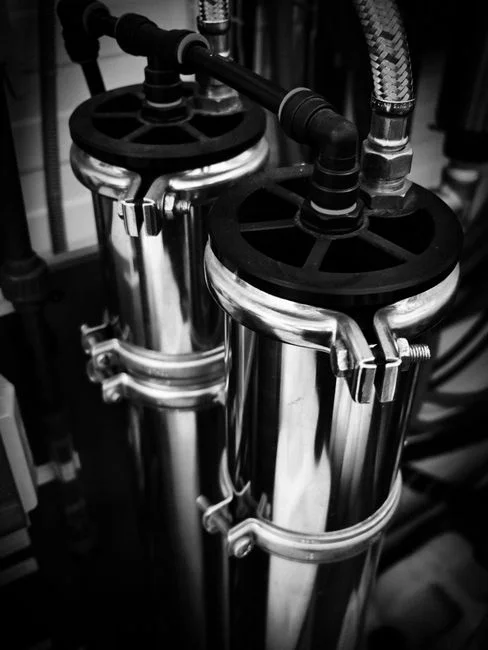
The baseline train is a three- or four-stage membrane and filtration stack, and the choice of downstream stage depends on the binding water-quality limit. Side-stream filtration feeds the cooling loop; ultrafiltration protects any downstream membrane; nanofiltration or reverse osmosis does the dissolved-solids reduction work.
Side-stream spiral filtration at 10-25 micron cuts suspended solids to a level downstream membranes can tolerate. Capital costs range from $50,000-200,000 for typical data centre installations, with minimal operating expenses beyond solids disposal and routine maintenance (Genesis Water Technologies, genesiswatertech.com). Installation capacity is typically 1-5% of total circulation flow.
Ultrafiltration with PVDF membranes at 0.01-0.1 micron pore size is the workhorse for bacteria, viruses, colloids, and biofilm fragments. Operating pressure is low (10-30 psi), recovery reaches 90-95%, backwash is done with permeate, and chemical cleaning is required every 1-3 months depending on feed water quality (Genesis Water Technologies, genesiswatertech.com). A PVDF ultrafiltration system for blowdown pretreatment anchors the front of the train.
Reverse osmosis is the right choice for high-silica or high-TDS blowdown. RO removes 95-99% of dissolved solids, hardness, silica, and most treatment chemicals; permeate typically runs 10-50 mg/L TDS, suitable for direct return to the cooling tower or for blending with standard makeup. Operating pressure is 150-400 psi, recovery 50-85% (limited by scaling potential as concentrate TDS rises), with antiscalant injection and periodic cleaning. A 50,000 GPD RO system treating blowdown costs $250,000-500,000 installed, with operating costs of $1.50-3.00 per thousand gallons treated (Genesis Water Technologies, genesiswatertech.com). An industrial RO system for blowdown recovery sized to a 2-5 MW Rajkot facility is the workhorse CAPEX line item.
Nanofiltration sits between UF and RO and is the lower-pressure path when the binding limit is calcium/magnesium hardness, not total TDS. Operating pressure 75-150 psi, recovery 70-85%, permeate TDS typically 30-50% of feed (Genesis Water Technologies, genesiswatertech.com). Genesis Water Technologies' "Treated Wastewater for Data Center Cooling" guide documents NF cutting hardness from 350 mg/L to 120 mg/L in a municipal-wastewater reference case, meeting cooling-tower specifications without a conventional softener. A multi-media filter for RO feed protection sits ahead of whichever membrane stage is selected, holding feed turbidity below 10-15 micron.
The selection rule of thumb from the same source: high-silica water → RO; calcium/magnesium-limited water → NF at lower cost; relatively clean blowdown → UF alone with headroom for future RO/NF expansion. Pretreatment discipline (feed <10-15 micron, pH-adjusted, antiscalant-dosed) matters more than membrane brand for recovery and membrane life.
| Stage | Function | Key Operating Range | Documented Recovery | Documented CAPEX (USD) |
|---|---|---|---|---|
| Side-stream spiral filter | Drop suspended solids to membrane-tolerable level | 10-25 micron; 1-5% of circulation flow | N/A (continuous) | $50,000-200,000 |
| Ultrafiltration (PVDF) | Remove bacteria, viruses, colloids, biofilm fragments | 0.01-0.1 micron; 10-30 psi; CIP every 1-3 months | 90-95% | Site-dependent (not separately quoted in S1) |
| Reverse osmosis | Reject dissolved solids, silica, hardness; produce 10-50 mg/L TDS permeate | 150-400 psi; antiscalant dosed | 50-85% | $250,000-500,000 (50,000 GPD) |
| Nanofiltration | Selective hardness/sulfate removal at lower pressure than RO | 75-150 psi | 70-85% | Site-dependent (not separately quoted in S1) |
When to Add Evaporative Concentration or Full ZLD
Evaporative concentration is justified when RO recovery hits osmotic or scaling limits and the operator still needs to push overall recovery above 80-85%. Mechanical vapour compression (MVC) achieves 95-98% recovery from concentrate streams, produces distillate below 10 mg/L TDS, and leaves a brine at 20-30% dissolved solids. Capital costs range from $1-3 million for systems processing 10,000-30,000 GPD, with energy consumption of 15-25 kWh per 1,000 US gallons of distillate produced (Genesis Water Technologies, genesiswatertech.com).
A common multi-step train combines RO at 50-75% recovery with MVC on the RO concentrate at 95% recovery, yielding overall system recovery of 85-95% with minimal liquid discharge (Genesis Water Technologies, genesiswatertech.com). The hyperscale Texas reference in the same publisher's companion guide — 2.5 million gallons per month of blowdown processed on-site, 35% reduction in municipal water consumption, elimination of blowdown discharge fees — is the documented scale benchmark for that approach.
Full ZLD (RO plus evaporation plus crystallizer) hits 95-99% overall recovery with solid waste below 1% of the original blowdown volume. Capital costs typically range from $3-8 million depending on capacity and feed water characteristics; operating costs run $5-15 per thousand gallons treated, reflecting high energy consumption, chemical usage, and maintenance (Genesis Water Technologies, genesiswatertech.com). Full ZLD is economically justified only where discharge is effectively prohibited or where freshwater alternatives are unavailable or prohibitively expensive.
Partial ZLD — concentrating blowdown to cut discharge volume by 80-90% — captures most of the recovery benefit at a fraction of full-ZLD cost. The remaining concentrated brine can be sent to deep-well injection, hauling, or periodic permitted discharge (Genesis Water Technologies, genesiswatertech.com). Rajasthan's 2025 policy names ZLD explicitly (Schneider blog, 2026-09-29), and the Bureau of Energy Efficiency's 2023 District Cooling Guidelines encourage using treated wastewater for cooling-tower makeup (AEEE-hosted guidelines, cited in the same Schneider blog, 2026-09-29). A Rajkot/Gujarat site should at least design with ZLD-ready brine handling in mind, even if day-one is reuse-only.
Matching the Train to Your End-Use Strategy
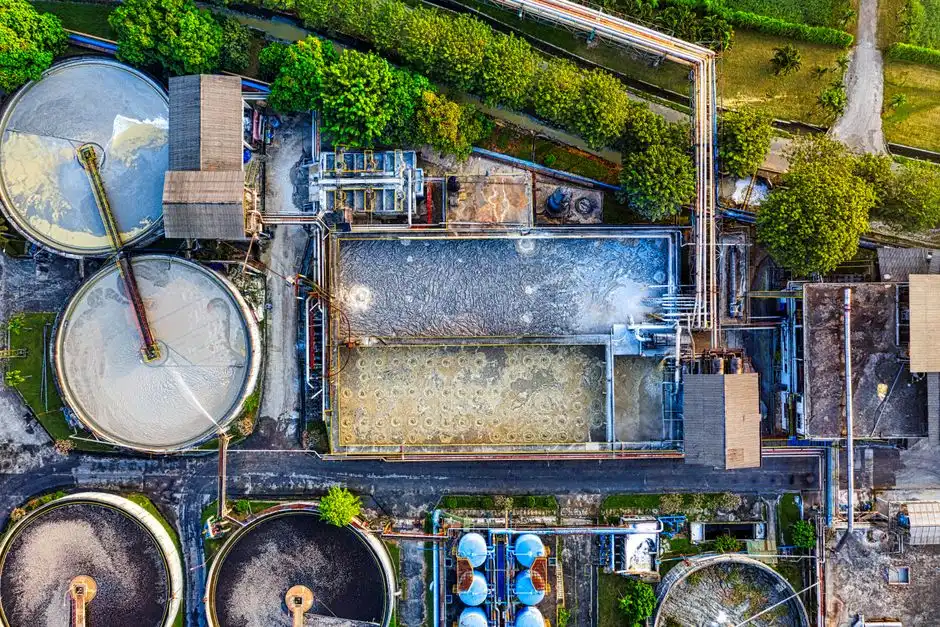
Each end-use objective has a different optimum train and a different economic justification. The same blowdown stream can support all three strategies at different capital intensities; the choice is driven by local water cost, GPCB permit pressure, and corporate ESG targets.
Cooling-tower makeup reuse delivers 60-85% recovery and is the highest value proposition for a data centre that already has an evaporative cooling system. Treatment must reduce scaling potential, remove suspended solids, and address biological content while staying compatible with the existing cooling-water chemistry program (Genesis Water Technologies, genesiswatertech.com). A hyperscale operator referenced in the same publisher's companion guide processed 2.5 million gallons monthly of blowdown on-site, cut municipal water consumption by 35%, and eliminated blowdown discharge fees entirely.
Discharge compliance is the right strategy when the municipal or GPCB discharge TDS limit is binding. Some jurisdictions already cap discharge TDS below 1,500 mg/L, and water-stressed regions charge $5-15 per thousand gallons in direct discharge fees (Genesis Water Technologies, genesiswatertech.com). The economic case is fee avoidance, not water savings, and the train leans on TDS reduction, metals removal, and biocide neutralisation.
Full ZLD targets 95-99% recovery with solid waste below 1% of original blowdown volume and is reserved for water-scarce sites or where discharge is effectively prohibited (Genesis Water Technologies, genesiswatertech.com). On the cost side, treated wastewater typically costs 30-50% less than potable water in major data centre markets, while commercial potable rates rose 43% in the past decade (Genesis Water Technologies, "Treated Wastewater for Data Center Cooling"). Reuse is now both a compliance and a cost-arbitrage play. A 2026 data center cooling water sustainability guide walks through the same reuse logic for a broader facility portfolio.
| Strategy | Typical Recovery | Focus of Treatment | Economic Justification | Best-Fit Site Condition |
|---|---|---|---|---|
| Cooling-tower makeup reuse | 60-85% | Scaling potential, suspended solids, biological control, chemistry compatibility | Avoided freshwater cost; reduced discharge volume | Site with existing evaporative cooling; moderate GPCB pressure |
| Discharge compliance | Variable | TDS reduction, metals removal, biocide neutralisation | Avoided direct discharge fees ($5-15 per 1,000 gal in water-stressed regions, per S1) | Site with access to municipal sewer; GPCB TDS limit binding |
| Zero liquid discharge | 95-99% | Maximum concentration; crystalliser for solid waste | Discharge prohibited; freshwater alternatives unavailable or cost-prohibitive | Water-scarce site; ESG mandate for zero liquid effluent |
Capital, Operating Cost & Compliance Considerations for India
Documented Genesis Water Technologies CAPEX bands are quoted in USD and are planning inputs that need an INR conversion at the time of budgeting; the conversion rate itself is a project input, not a figure stated in the research. Bands: side-stream spiral filter $50,000-200,000; 50,000 GPD RO $250,000-500,000; MVC $1-3 million for 10,000-30,000 GPD; full ZLD $3-8 million. OPEX bands: RO $1.50-3.00 per 1,000 gallons; MVC 15-25 kWh per 1,000 US gallons; ZLD $5-15 per 1,000 gallons. The ₹/kWh tariff from the local Gujarat distribution licensee is the variable that swings these numbers most for a Rajkot site, and it must be requested from the utility and reflected in the OPEX model. A 2026 wastewater treatment plant cost guide for India walks through the same conversion exercise for a broader project set.
On the cooling architecture side, closed-loop direct-to-chip cooling can recirculate more than 95% of its coolant, with small losses from maintenance or leaks (Schneider blog, 2026-09-29). On a hybrid Rajkot site with both air-cooled and liquid-cooled zones, the closed-loop loop reduces — but does not eliminate — the blowdown-recovery requirement on the cooling-tower side.
India's 2025 bulk-user rule applies above 5,000 L/day (Schneider blog, 2026-09-29). Most data centres will be in scope and must demonstrate increased treatment and reuse, so the budget should include a documented reuse accounting system alongside the equipment. Reporting should also separate consumptive use from closed-loop recirculation and track water source, because Water Usage Effectiveness (WUE) does not distinguish potable from recycled water (Schneider blog, 2026-09-29). A compliance file that distinguishes source, consumption, and discharge volumes is the artefact a GPCB auditor will ask for first.
Frequently Asked Questions
What TDS band should a Rajkot data centre target in its cooling-tower makeup reuse train?
Cooling-tower makeup is generally specified at 500-1,500 mg/L TDS, per Genesis Water Technologies' "Treated Wastewater for Data Center Cooling" guide. Source blowdown at 4 cycles of concentration sits at 1,200-6,000 mg/L TDS, so the membrane stage must do meaningful dissolved-solids rejection. The buyer should request the actual seasonal makeup-water TDS profile from the local Gujarat water utility, then size RO or NF to hit the target band; a multi-media filter for RO feed protection keeps the membrane stage within its design envelope. Avoid assuming a single TDS number — get the utility's wet-season and dry-season data and design to the worst case.
How much capital should we budget for a blowdown recovery train at a 2-5 MW Rajkot edge or colocation facility?
The research does not contain a CAPEX figure stated in INR for a Rajkot-fitted 2-5 MW facility; the Genesis Water Technologies bands are in USD and are sizing-sensitive ($50,000-200,000 for side-stream filtration, $250,000-500,000 for a 50,000 GPD RO, $1-3 million for a 10,000-30,000 GPD MVC, $3-8 million for full ZLD). The buyer should request a vendor proposal sized to the actual blowdown flow in litres per day, not gallons, and convert at the budget-day USD/INR rate from the finance team. A 2026 wastewater treatment plant cost guide for India provides a structured template for converting these USD bands into INR planning inputs.
Does our facility fall under India's 2025 bulk-user wastewater rule?
If the site consumes more than 5,000 litres per day of water, the 2025 bulk-user rule applies, per indiawaterportal.org (cited in the Schneider blog, 2026-09-29). Most data centres will be in scope. The rule requires increased wastewater treatment and reuse; budget for a documented reuse accounting system and a GPCB-compliant discharge permit alongside the equipment. The buyer should also confirm the latest GPCB consent conditions for the specific Rajkot site, because state-level discharge limits are evolving and the operator should design to the direction of policy, not today's minimum.
How do we choose between a UF-only train, UF plus NF, and UF plus RO for a Rajkot site?
The selection rule of thumb from Genesis Water Technologies: high-silica water → RO; calcium/magnesium-limited water → NF at lower cost; relatively clean blowdown → UF alone with future RO/NF expansion headroom. The buyer should request a water analysis covering TDS, hardness, silica, chloride, alkalinity, and biocide residual, then map the binding limit to the right membrane stage. A PVDF ultrafiltration system for blowdown pretreatment should be the constant across all three options; the variable is whether NF or RO follows. For a parallel Indian secondary-city reference, the data center cooling blowdown treatment in Tirunelveli, India article walks through the same selection logic in a comparable water-stress context.
Related Equipment
- PVDF ultrafiltration system for blowdown pretreatment — specifications, capacity range, and technical data
- industrial RO system for blowdown recovery — specifications, capacity range, and technical data
- multi-media filter for RO feed protection — specifications, capacity range, and technical data