What Fenton Oxidation Can Achieve in High-COD Wastewater
A Fenton oxidation system can reduce high-COD wastewater by using ferrous iron and hydrogen peroxide to generate hydroxyl radicals in an acidic reactor. It is most often evaluated as pretreatment for persistent or biologically inhibitory organics, not automatically as complete treatment. Performance must be proven on the actual wastewater: ScienceDirect reported TOC conversion above 45% at 25 °C and 60% at 50 °C for cosmetic wastewater under specific pH, Fe²⁺ and peroxide conditions. A 2024 composite-wastewater study reported maximum COD removal of 78.43%, but bench results cannot be transferred directly to full scale. Equipment selection must also cover corrosion, residual peroxide, iron sludge, toxicity and downstream biological or membrane treatment.
Classical Fenton chemistry uses Fe²⁺ to catalyze hydrogen peroxide decomposition into hydroxyl radicals that oxidize susceptible organic compounds. The reaction occurs in an acidic reactor and may deliver substantial COD reduction, but three outcomes must be separated: detoxification, improved biodegradability and complete mineralization. Partial oxidation can make an effluent less inhibitory to biology without destroying every organic compound or transformation product.
The cosmetic-wastewater experiments illustrate why biodegradability must be characterized. Two samples contained COD of 4730 and 2660 mg/L, while their BOD₅/COD ratios were 0.133 and 0.169, respectively, indicating relatively low biodegradability (ScienceDirect, Application of Fenton oxidation to cosmetic wastewaters treatment, 2006).
Disappearance of a parent compound is not equivalent to complete destruction. The RSC Advances review, published 24 August 2026, warns that analytical removal can conceal incomplete mineralization, toxic intermediates or high energy demand. A buyer should therefore define whether the objective is selective removal, detoxification, biodegradability improvement or broader mineralization before selecting an high-COD industrial wastewater treatment strategy.
Evidence from Industrial Wastewater Studies
Published Fenton results are bounded by wastewater composition, chemical conditions and reactor scale; they are not transferable performance guarantees. The strongest procurement use of these studies is to identify what must be tested on the buyer’s actual effluent.
| Study and wastewater | Reported conditions | Result | Procurement interpretation |
|---|---|---|---|
| Cosmetic wastewater, ScienceDirect, 2006 | Initial pH 3.0; Fe²⁺ 200 mg/L; H₂O₂-to-initial-COD theoretical weight ratio 2.12 | TOC conversion above 45% at 25 °C and 60% at 50 °C | Optimized laboratory conditions for one low-biodegradability wastewater; not a plant recipe |
| Composite food, beet-sugar and petrochemical wastewater, Scientific Reports, 2024 | pH 3; Fe²⁺ 1 mg/L; H₂O₂ 0.3 g/L | Maximum COD removal of 78.43% for Fenton and 84.3% for electro-Fenton | Comparative laboratory result; the 100 ml sample and 2 L beaker prevent direct hydraulic scale-up |
| Electro-Fenton cell in Scientific Reports, 2024 | Reported effective electrode surface area of 9 cm² | Included in the composite-wastewater comparison | Electrode loading and electrical performance must be re-established through pilot work |
| Mixed pharmaceutical and industrial wastewater, Research Square | pH 2.5–3.5; 1.70 × 10⁻⁴ M FeSO₄; 5% v/v H₂O₂; microwave treatment | COD reduction of 40–74% and BOD reduction up to 85% across five samples | Microwave-assisted Fenton results remain specific to the tested mixed effluent and sequence |
The composite comparison used a 100 ml sample in a 2 L beaker, while the electro-Fenton cell had a reported effective electrode surface area of 9 cm² (Scientific Reports, 2024). Those details cannot be converted directly into full-scale residence time, electrode loading or a treatment guarantee without pilot verification.
For pharmaceutical wastewater above 15,000 mg/L COD, Fenton or electrolytic oxidation alone produced only a slight biodegradability improvement; the combined Fenton–EOT sequence improved performance (Environmental Progress & Sustainable Energy, 2021). This supports process-design context for high-strength pharmaceutical wastewater, but it also shows why oxidation and biological treatment should be evaluated as a sequence rather than assumed interchangeable.
Characterize the Wastewater Before Setting a Dose

A defensible Fenton package begins with a wastewater-specific treatment matrix, because COD alone cannot determine acid demand, oxidant consumption or whether oxidation will improve downstream treatment.
| Required input | Why it affects Fenton selection | Information needed for the treatment matrix |
|---|---|---|
| COD, TOC and BOD₅ | Distinguish bulk organic load from mineralization and biodegradability | Influent values and removal or conversion at each tested condition |
| pH and alkalinity | Control iron chemistry and determine acid and base demand | Initial pH, acid consumption and final pH adjustment |
| Suspended solids, oil and grease | May consume peroxide, impair mixing or complicate iron separation | Solids and oil characterization plus pretreatment performance |
| Temperature | Influences oxidation rate and heat-management requirements | Wastewater temperature and any heat added or removed |
| Iron, manganese and other metals | Contribute catalyst demand and precipitation load | Concentrations and expected post-treatment solids |
| Halides and residual oxidant demand | Influence oxidation behavior and possible transformation products | Background demand and by-product screening |
| Target compounds and toxicity | Define whether the objective is selective removal, detoxification or broader mineralization | Compound concentrations, toxicity response and biodegradability before and after treatment |
EPA/Chemical Engineering Progress literature referenced in 2026 technical guidance identifies an ideal Fenton pH of 3.0–4.0 for many chemicals and cites a catalyst-to-peroxide ratio of 1:5 by weight as literature guidance rather than a universal recipe (EPA/Chemical Engineering Progress, 1995-12). Actual acid demand and compound-specific behavior must govern the final operating condition.
Each proposed condition should be tied to measured COD or TOC response, target-compound removal, toxicity, residual peroxide and downstream compatibility. A proposal supported only by generalized COD claims is not a treatment matrix. PLC-controlled chemical dosing for Fenton oxidation can reproduce a validated sequence, but it cannot substitute for characterization and bench optimization.
Optimize the Fenton Operating Window
The operating window must be established as a coupled sequence of pH, Fe²⁺ dose, peroxide dose, temperature, mixing and reaction time. Optimizing one variable while leaving the others undocumented does not define reproducible plant controls.
| Control variable | Evidence or test requirement | Required output |
|---|---|---|
| pH | Cosmetic-wastewater optimum of initial pH 2.5–3; other wastewater must be tested independently | Target condition, tolerance and acid/base demand |
| Fe²⁺ dose | 200 mg/L was the cited cosmetic-wastewater condition; 0.05, 0.1, 0.2, 0.3 and 0.5 g/L were the 2024 study’s tested iron ranges | Radical-generation response and resulting iron sludge |
| H₂O₂ dose | 0.5, 1, 2, 4 and 8 mg/L were the 2024 study’s tested peroxide ranges | Demand curve, treatment endpoint and residual-peroxide limit |
| Temperature and time | Cosmetic-wastewater TOC conversion increased with temperature, while the effect became less significant as Fe²⁺ increased | Validated contact time and heat-removal basis |
| Endpoint | Measure target compounds, COD, toxicity and residual peroxide | Acceptable operating range rather than ORP alone |
The 2024 Scientific Reports ranges describe what was tested in that study, not universal plant settings. Hydrogen peroxide must be treated as both reagent and possible residual: excess peroxide does not guarantee better COD removal or detoxification and must be checked against downstream biological or membrane compatibility.
ORP can support monitoring, but it does not prove that the required endpoint has been reached. The treatment endpoint should combine compound-specific data with COD or TOC, toxicity and residual peroxide. The Scientific Reports study also assessed biodegradability through a 28-day BOD period; that duration supports using a short BOD test cautiously because it may not characterize slowly degradable material (Scientific Reports, 2024).
Build the Reactor and Controls Around Corrosion and Chemical Safety
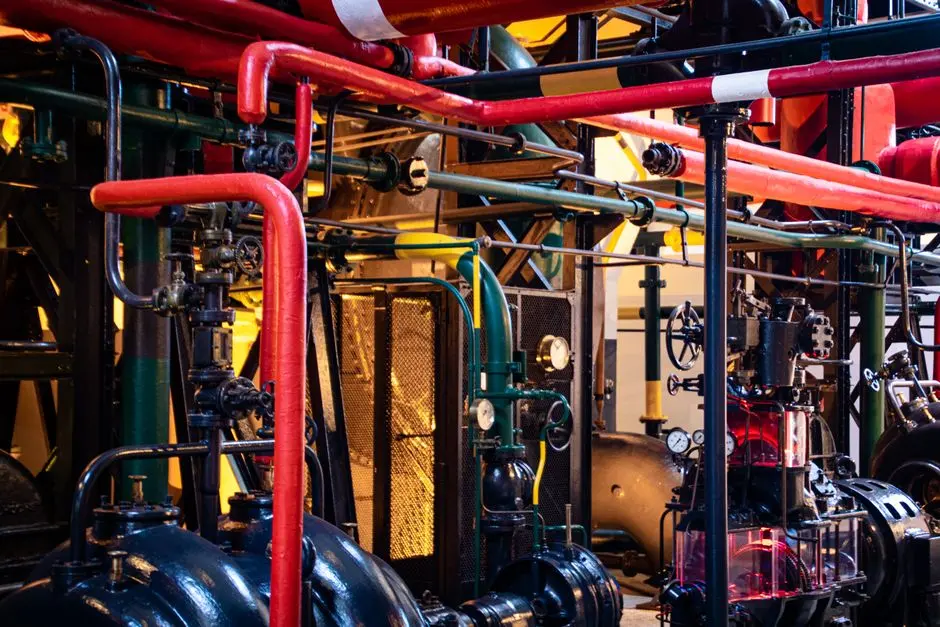
A technically complete Fenton package must contain a nonpressurized stirred reaction zone with an acid-resistant internal material schedule. Corrosion protection is an operating and maintainability requirement, not a cosmetic finish option.
The equipment scope should include controlled acid, base, ferrous sulfate and hydrogen peroxide metering; reproducible dose ranges; dosing interlocks; and residual-peroxide control. The control sequence should reproduce the validated bench program and prevent incompatible additions or unbounded peroxide exposure.
Reactor working volume and retention time must be derived from required flow, wastewater characterization, treatment objective and performance-test results. COD alone cannot determine hydraulic capacity. Where validated kinetics require elevated temperature, the package should address heating or heat removal rather than assume ambient conditions.
Mixing must distribute iron and peroxide through the wastewater without creating unmixed zones or shear conditions that damage downstream requirements. This becomes particularly important when solids, oil or grease increase oxidant demand or interfere with iron distribution.
The commercial boundaries should be explicit. The Fenton reactor and oxidation controls are not the same as post-oxidation clarification, biological treatment, membrane treatment or iron-sludge handling. Separating those scopes allows bidders to compare chemical metering, corrosion protection, sludge output, utilities and operator requirements on a common basis. The automatic chemical dosing system is a metering and control component; it does not replace the Fenton oxidation reactor, validation or post-treatment.
Manage Iron Sludge and Protect Downstream Treatment
Fenton treatment must include an iron-solids management plan; otherwise the oxidation stage transfers precipitation and filtration problems to downstream units.
| Treatment boundary | Procurement requirement | Evidence or deliverable |
|---|---|---|
| Before Fenton | Assess suspended solids, oil and grease and colloidal material for interference with mixing, oxidant demand and iron distribution | Characterization and DAF pretreatment for high-COD wastewater performance where applicable |
| After oxidation | Adjust pH to precipitate iron, then separate the solids | pH control, clarification basis, iron balance and acceptance criteria |
| Iron sludge | Define expected yield and handling requirements | Filtration or dewatering trial, residual-iron limit and disposal route |
| Biological or membrane treatment | Verify toxicity, biodegradability and solids carryover | Pilot data and confirmation that oxidized water is an acceptable feed |
DAF can remove suspended solids, oil and grease and colloidal material before oxidation, but it does not perform the Fenton reaction. Post-oxidation pH adjustment, clarification and sludge dewatering must address the iron precipitate. The Research Square microwave-assisted Fenton study neutralized wastewater to pH 8–8.5 to precipitate iron hydroxide flocs before filtration; that condition belongs to that study and should not be generalized to every plant.
Oxidized water should not be assumed to be a suitable membrane feed or to have resolved toxicity. Confirm biodegradability and compatibility with the proposed biological or membrane process, including the final discharge or reuse requirement. For solids handling, request a defined scope for iron sludge dewatering after Fenton treatment, and state whether clarification equipment, such as a high-efficiency sedimentation tank, is included.
Choose Classical, Photo-Fenton or Electro-Fenton
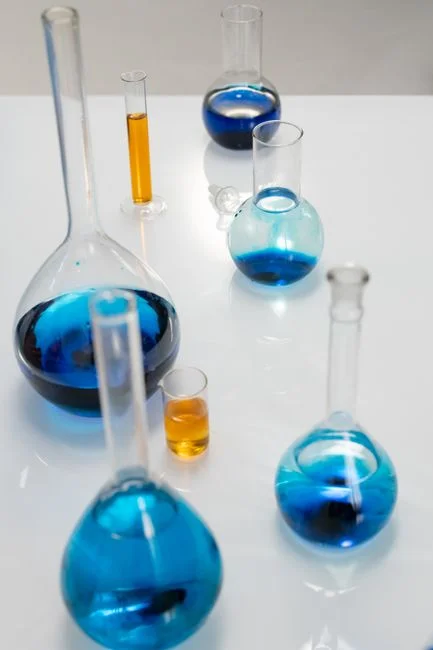
The process variant should follow the treatment objective and site constraints; a higher laboratory COD-removal percentage does not establish lower lifecycle cost or superior full-scale performance.
| Variant | Principal additions to classical Fenton | Procurement question |
|---|---|---|
| Classical Fenton | Acid reactor, ferrous iron, hydrogen peroxide, mixing and chemical controls | Can the target compounds be treated at a lower-complexity operating window? |
| Photo-Fenton | Irradiation plus associated controls, footprint and maintenance | Do the target compounds and site conditions justify the added stage? |
| Electro-Fenton | Electrodes, electrical supply, power controls and electrochemical iron regeneration | Is the electrical and operational complexity supported by site constraints and validated performance? |
The 2024 Scientific Reports study reported maximum COD removal of 84.3% for electro-Fenton at pH 3, Fe²⁺ 1 mg/L and H₂O₂ 0.3 g/L, compared with 78.43% for Fenton in the 100 ml composite-wastewater laboratory test. The comparison used a reported effective electrode surface area of 9 cm², so it cannot be used to select a commercial electrode loading or power demand.
Require separate comparison of chemical demand, electricity, operator capability, footprint, corrosion protection and downstream iron handling. Photo-Fenton must also be distinguished from UVC/H₂O₂: the former includes Fenton iron chemistry, while UVC/H₂O₂ is a separate advanced oxidation approach.
Use a Wastewater-Specific Acceptance and Scale-Up Framework
A sound procurement process separates validated wastewater chemistry from equipment sales claims through explicit technical gates.
| Gate | Required evidence | Decision rule |
|---|---|---|
| 1. Characterization and objective | Wastewater analysis, target compounds, toxicity and required endpoint | Proceed only if Fenton addresses the stated treatment objective |
| 2. Bench or pilot matrix | Compound-specific responses across pH, Fe²⁺, H₂O₂, temperature and time | Reject generalized COD claims or unmatched laboratory recipes |
| 3. Scale-up translation | Working volume, retention time, mixing, metering, heat removal and interlock concept | Verify that the full-scale package can reproduce the validated sequence |
| 4. Downstream and residuals | Residual peroxide, toxicity, biodegradability, iron balance, sludge yield and separation evidence | Do not accept Fenton alone if the downstream process remains unproven |
| 5. Commercial acceptance | Measurable COD, target-compound, toxicity and compatibility limits | Define performance before selecting the final equipment scope |
Start with the actual wastewater or a defensible representative sample. Require suppliers to provide a treatment matrix, bench or pilot report, reactor material schedule, dosing and interlock concept, residence-time basis, mixing basis, commissioning plan and measurable acceptance limits.
Bench results are the basis for scale-up, not automatic proof of commercial performance. Full-scale mixing, heat removal, solids separation and chemical metering require verification. Reject proposals that provide only a laboratory COD-removal percentage without translation into reactor volume, retention time, controls and iron-sludge handling.
Ask every bidder to state how corrosion, residual peroxide, iron sludge and transformation by-products are controlled. Size the treatment scope and downstream compatibility from required flow, wastewater characterization, treatment objective and performance-test results—not from COD alone. Commercial pricing should also separate reactor materials, dosing, electrical demand where applicable, iron precipitation and sludge removal, downstream treatment, controls and commissioning.
Frequently Asked Questions
What does a Fenton oxidation system for high-COD wastewater cost?
No defensible quotation range is available in the supplied research. Ask each supplier to price the reactor and materials, acid, base, ferrous sulfate and hydrogen peroxide metering, corrosion protection, residual-peroxide controls, iron precipitation, sludge removal, downstream treatment, electrical demand for electro-Fenton, controls and commissioning separately. Compare the same scope and operating basis rather than a generic unit price.
How should reactor size and retention time be selected?
Derive working volume from required flow and the validated reaction conditions, retention time and treatment objective. COD concentration is only one input. The reactor should then be checked against the actual mixing, heat-removal, chemical-metering and residual-control requirements demonstrated during bench or pilot testing.
Does high COD removal prove that Fenton detoxification was successful?
No. Accept the process only when COD or TOC performance is paired with target-compound analysis, residual toxicity, residual peroxide and downstream compatibility. The RSC Advances review, published 24 August 2026, notes that disappearance of a parent compound can conceal incomplete mineralization or toxic intermediates.
What should a buyer check before selecting a Fenton supplier?
Request wastewater-specific bench or pilot evidence, measurable acceptance criteria, a reactor material schedule, metering and interlock details, and a clear scope for corrosion protection, residual peroxide and iron sludge. Ask how transformation by-products will be monitored and what pilot evidence supports the proposed biological or membrane application.
What evidence is needed for discharge or reuse compliance?
COD removal alone does not establish compliance. Assess target compounds, residual toxicity, biodegradability, peroxide residual, iron solids and the applicable receiving-authority or reuse criteria. The commercial acceptance schedule should identify the governing limits and the test method or laboratory responsible for demonstrating each one.