What a Fenton Oxidation System Does
A Fenton oxidation system for toxic wastewater uses ferrous iron and hydrogen peroxide to generate hydroxyl radicals in an acidic reactor. It is best evaluated as a pretreatment step for persistent or biologically inhibitory contaminants, not automatically as a complete treatment system. Classical Fenton is chemically simple; photo-Fenton adds irradiation, while electro-Fenton adds electrochemical iron regeneration. Bench testing is essential because a 2024 composite industrial wastewater study reported maximum COD removal of 78.43% for Fenton and 84.3% for electro-Fenton under specific tested conditions. Design must also address corrosion, residual peroxide, iron sludge and possible toxic by-products.
In the Fenton process, ferrous iron catalyzes hydrogen peroxide decomposition to form hydroxyl radicals, which oxidize susceptible organic compounds. The 1995 EPA/Chemical Engineering Progress article describes the reactor as a simple, nonpressurized, typically batch vessel where the objective may be complete oxidation to carbon dioxide and water or partial oxidation that reduces toxicity or improves downstream treatability. That distinction matters: a process that improves biodegradability is not necessarily a process that fully destroys every contaminant.
The 2021 Catalysts review identifies Fenton-based advanced oxidation processes as effective for persistent organic pollutants, but also warns that targeted degradation can form toxic by-products. Applicability therefore depends on the actual organics, pH response, toxicity, suspended material, iron demand and downstream treatment requirements—not on COD alone.
Classical Fenton, Photo-Fenton and Electro-Fenton Compared
Classical Fenton, photo-Fenton and electro-Fenton differ mainly in how hydroxyl radicals are produced and what additional equipment, utilities and operating controls they impose. The process variant should follow the treatment objective and wastewater chemistry, not a generic claim of superiority. No supplied source establishes universal lifetime, energy-consumption or capital-cost figures for the three variants.
| Variant | Core mechanism | Equipment and operating implications | Selection question |
|---|---|---|---|
| Classical Fenton | Ferrous iron catalyzes hydrogen peroxide decomposition in an acidic reactor. | Typically a nonpressurized, batch stirred vessel with acid, base, ferrous sulfate and peroxide metering. | Is simple chemical oxidation sufficient for detoxification or biodegradability improvement? |
| Photo-Fenton | Adds irradiation to the Fenton reaction. | Requires an irradiation stage and associated controls, footprint and maintenance arrangements. | Does the target compound require the additional oxidation associated with irradiation? |
| Electro-Fenton | Uses an electrochemical configuration to supply iron regeneration during oxidation. | Adds electrodes, electrical supply, power controls and sludge-management requirements to the Fenton unit. | Do the target compounds and site constraints justify the added electrical and control complexity? |
Photo-Fenton must also be distinguished from UVC/H2O2: the former includes the Fenton iron chemistry, whereas UVC/H2O2 is a separate advanced oxidation approach. The 2021 Catalysts review treats photo-Fenton, UVC/H2O2, electro-Fenton and galvanic Fenton as distinct Fenton-based approaches.
The Scientific Reports 2024 study used composite industrial wastewater collected from food, beet-sugar and petrochemical operations. It provides a comparative example, not a universal ranking. Electro-Fenton achieved higher COD removal under that study’s conditions, but the buyer must still evaluate chemical demand, electrical availability, operator capability, footprint, corrosion protection and downstream iron handling before selecting a variant.
Wastewater Characterization Before Equipment Selection
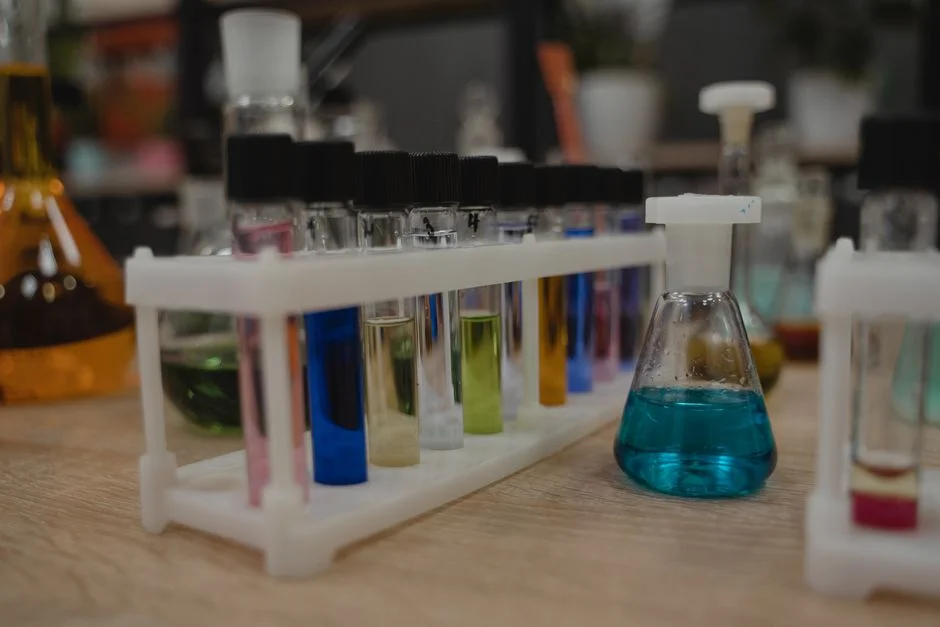
COD is a useful bulk indicator, but it cannot tell a buyer whether a Fenton process will remove the target toxic compounds or create a downstream problem. A credible analytical package identifies both the contaminants and the wastewater characteristics that affect dosing, oxidation and separation.
| Characterization item | Why it matters before reactor selection |
|---|---|
| Target compounds and concentrations | Defines whether the objective is selective treatment, detoxification, biodegradability improvement or broader mineralization. |
| pH and alkalinity | Determines acid and base demand and the conditions under which the Fenton reaction is controlled. |
| Suspended solids, oil and grease | Influences peroxide consumption, iron distribution, reactor mixing and solids separation. |
| Iron, manganese and other metals | Contributes to catalyst demand, precipitation load and downstream sludge characteristics. |
| Halides and residual oxidant demand | Helps identify compounds that may resist oxidation or create transformation by-products. |
| Toxicity and target-compound analysis | Distinguishes bulk COD removal from demonstrated detoxification. |
| Biodegradability before and after oxidation | Tests whether biological treatment downstream becomes more feasible. |
The 2024 Scientific Reports study assessed biodegradability during a 28-day BOD testing period for industrial and composite samples. That duration matters because a short BOD test does not establish the full treatment behavior of a wastewater containing slowly degradable material.
The 1995 EPA/Chemical Engineering Progress article lists acetic acid, acetone, chloroform, methyl chloride, n-paraffins and several chlorinated or halogenated compounds among compounds not oxidized by the Fenton reaction. Those listings should trigger compound-specific evaluation rather than being treated as universal predictions for every operating condition. Suppliers should provide a treatment matrix covering the actual wastewater compounds, not only an overall COD-removal claim.
Operating Parameters That Govern Fenton Performance
Fenton performance is governed by a coupled operating window, so a nominal chemical dose transferred from one wastewater to another is not defensible. The 1995 EPA/Chemical Engineering Progress article reports an ideal Fenton pH between 3.0 and 4.0 for many chemicals and cites an optimum catalyst-to-peroxide ratio of 1:5 by weight as literature guidance—not as a universal recipe.
| Variable tested or controlled | Research basis | Engineering interpretation |
|---|---|---|
| pH | Scientific Reports 2024: pH 3–11; EPA/Chemical Engineering Progress, 1995-12: ideal pH 3.0–4.0 for many chemicals. | Optimize within the wastewater’s acid demand and verify the selected condition by compound removal, COD and toxicity. |
| Fe²⁺ concentration | Scientific Reports 2024: 0.5, 1, 2, 4 and 8 mg/L. | Challenge iron dose because it controls hydroxyl-radical generation but also affects iron solids. |
| H₂O₂ concentration | Scientific Reports 2024: 0.05, 0.1, 0.2, 0.3 and 0.5 g/L. | Establish peroxide demand and residual control rather than assuming more peroxide produces better treatment. |
| Catalyst-to-peroxide relationship | EPA/Chemical Engineering Progress, 1995-12: 1:5 by weight cited as an optimum for many chemicals. | Use as a starting literature reference, then verify on the actual wastewater. |
| Reaction time and temperature | EPA/Chemical Engineering Progress, 1995-12 identifies temperature as an oxidation-rate factor. | Use oxidation kinetics to establish the contact time and temperature required for the selected endpoint. |
| ORP endpoint | EPA/Chemical Engineering Progress, 1995-12 identifies ORP endpoint determination as a bench-test output. | Define an endpoint tied to target-compound removal and residual peroxide, not an instrument reading alone. |
Acid, base, catalyst and peroxide must be metered reproducibly. An automatic chemical dosing system can implement the tested sequence, but the control logic must be tied to the validated operating window. Excess peroxide should be checked through residual-peroxide testing and assessed against downstream compatibility; it does not guarantee superior COD removal or detoxification.
Treatability, Removal Performance and By-Product Risk
The 2024 Scientific Reports study found maximum COD removal of 78.43% for Fenton and 84.3% for electro-Fenton under the same stated test condition of pH 3, Fe²⁺ 1 mg/L and H₂O₂ 0.3 g/L. These are results for a specific composite industrial wastewater, not guaranteed performance for other toxic streams.
| Reported parameter | Fenton | Electro-Fenton |
|---|---|---|
| COD removal | 78.43% | 84.3% |
| Oil and grease removal | 66% | 69% |
| BOD removal | 69% | 85% |
| TSS removal | 70.1% | 72% |
| TKN removal | 61% | 71.27% |
The source scope matters. The composite sample combined food, beet-sugar and petrochemical industrial wastewaters. It was a laboratory investigation using a 100 ml sample in a 2 L beaker; electro-Fenton used electrodes with a reported effective surface area of 9 cm². Those conditions cannot be converted directly into a full-scale hydraulic residence time, electrode loading or treatment guarantee without pilot work.
The 2021 Catalysts review supports pairing COD analysis with toxicity measurement because Fenton-based degradation of a targeted pollutant may generate potentially toxic by-products. Commercial acceptance criteria should therefore include target-compound concentrations, residual toxicity, downstream biodegradability, residual peroxide, and the applicable discharge or reuse limits. A COD-removal percentage alone does not demonstrate detoxification or complete destruction.
Designing the Reactor, Chemical System and Downstream Treatment
The reactor package must reproduce validated chemistry while containing corrosion and separating the iron-rich solids created after oxidation. EPA/Chemical Engineering Progress describes a batch Fenton reactor as a nonpressurized stirred vessel with metering pumps for acid, base, ferrous sulfate catalyst solution and industrial-strength 35–50% hydrogen peroxide.
| Process area | Specified function | Buyer’s required evidence |
|---|---|---|
| Reactor | Nonpressurized stirred reaction zone with acid-resistant internal materials. | Materials specification, corrosion assessment, mixing arrangement, working-volume basis and maintenance access. |
| Chemical system | Controlled acid, base, ferrous sulfate and peroxide addition. | Dosing sequence, metering ranges, interlocks, residual-peroxide control and confirmation that the selected operating window can be reproduced. |
| Post-oxidation solids treatment | pH adjustment to 6–9 for iron hydroxide precipitation, followed by separation and sludge handling. | Clarification, sludge yield, filtration or dewatering basis, and residual-iron acceptance criteria. |
| Upstream pretreatment | Remove suspended solids, oil and grease, and colloidal material before oxidation. | Oil and solids characterization and proof that the pretreatment stage does not conflict with the Fenton chemistry. |
| Downstream biological or membrane treatment | Remove oxidized residual solids and provide biological separation where required. | Post-treatment biodegradability, membrane compatibility, pilot data and the final discharge or reuse requirement. |
The aggressive acidic reagent environment makes reactor materials a maintainability issue, not a finish-selection detail. The 1995 EPA/Chemical Engineering Progress article specifically recommends an acid-resistant interior because corrosion can become a serious operational problem.
A DAF system for wastewater pretreatment can remove suspended solids, oil and grease and colloidal matter before Fenton, but it does not perform the Fenton reaction. After oxidation, pH adjustment, clarification and sludge dewatering must address the iron precipitate. Where biological separation or tighter solids control is required, pilot testing should establish compatibility with an UF or MBR stage rather than assume that oxidation alone produces a suitable membrane feed.
A Practical Decision Framework for Buyers

A sound purchase decision starts by defining the treatment objective and then requires wastewater-specific evidence before selecting equipment. The sequence below prevents a supplier from substituting a bulk COD percentage for proof of detoxification.
- Define the objective: detoxification, biodegradability improvement, selective contaminant destruction or complete mineralization.
- Characterize the wastewater, including target compounds, pH response, toxicity, suspended material, metals, halides, iron demand and residual oxidant demand.
- Select the variants to test: classical Fenton for the simple chemical baseline; photo-Fenton where irradiation is justified; electro-Fenton where iron regeneration and electrical treatment fit the objective.
- Run a bench or pilot protocol that challenges pH, iron dose, peroxide dose and reaction time.
- Measure COD, target pollutants, toxicity, residual peroxide and downstream biodegradability under the same conditions.
- Translate the accepted condition into reactor materials, metering, controls, separation and sludge handling.
- Require commercial acceptance criteria and a scale-up plan before ordering.
| Buyer condition | Required supplier response | Rejection basis |
|---|---|---|
| Scope-matched bench evidence | Provide a compound-specific treatment matrix and test report for the actual wastewater or a defensible representative sample. | A proposal supported only by generalized COD claims. |
| Industrial reproducibility | Identify reactor material, metering concept, control strategy, iron-sludge output, operator requirements and utility demand. | A laboratory recipe without an equipment and controls translation. |
| Scale-up basis | Provide residence-time, mixing, heat-removal, solids-separation and pilot-transition logic. | Assumption that laboratory results transfer directly to full scale. |
| Performance guarantee | State measurable acceptance limits for target compounds, toxicity, COD and downstream compatibility. | Acceptance defined solely by COD removal. |
The 1995 EPA/Chemical Engineering Progress article states that a successful bench procedure can usually be translated to a larger industrial unit, but that is not a substitute for engineering review of materials, mixing, dosing and downstream solids. Treat bench results as the basis for scale-up, not automatic proof of commercial performance.
Frequently Asked Questions
How should a Fenton reactor be sized for toxic wastewater?
Size it from required flow, wastewater characterization, treatment objective and performance-test results—not from COD alone. The commercial package should identify reactor working volume, retention-time basis, mixing, chemical capacity, post-oxidation pH adjustment and iron-sludge handling. The 2024 Scientific Reports study provides a comparative laboratory dataset, not a sizing rule.
What should a buyer request in a Fenton system price?
Request separate pricing for the reactor and materials, acid, base, ferrous sulfate and peroxide dosing, electrical demand if electro-Fenton is proposed, corrosion protection, iron precipitation and sludge removal, downstream biological or membrane treatment, commissioning and controls. No supplied source provides a defensible quotation range, so compare scopes and operating inputs rather than a generic unit price.
Which evidence should be used to select a Fenton supplier?
Ask for wastewater-specific bench or pilot evidence, the compound-specific treatment matrix, reactor material schedule, metering and interlock concept, operator requirements, commissioning plan and measurable acceptance criteria. The supplier should also state how residual peroxide, iron sludge, corrosion and transformation by-products are controlled. Generalized COD claims are not enough.
Does COD reduction prove that treated wastewater complies with discharge or reuse requirements?
No. Compliance must be assessed against target-compound concentrations, residual toxicity and the receiving-authority or reuse criteria applicable to the project. The 2021 Catalysts review warns that targeted Fenton degradation can form toxic by-products, so paired COD and toxicity evidence is required before treating the wastewater as fit for its intended destination.