
Why a numerical DAF capacity is not yet defensible
No defensible DAF capacity can yet be calculated for Volkswagen's new EV assembly plant in India because the supplied research contains no verified plant wastewater flow, peak-flow basis, wastewater profile, permit limit, reuse target or expansion schedule. Vehicle-production rate cannot substitute for measured wastewater generation, and an expansion may change both hydraulic demand and wastewater composition. HydropureWater's 4–300 m³/h range across 13 standard models is a catalogue equipment envelope, not the plant's calculated requirement or a clean-water performance guarantee.
Public production claims may support forecasts, but they do not establish the wastewater flow entering a DAF unit. Vehicle washing, production utilities and process drains can operate on different schedules, while expansion support or commissioning streams can create temporary conditions not represented by a daily average. The engineering basis must instead proceed from measured stream flows, constituent analyses, applicable permit and sewer-authority requirements, the intended reuse specification, operating schedules and agreed redundancy criteria.
This distinction follows the evidence hierarchy applied in HydropureWater's 2026 analysis of a Volkswagen EV assembly plant in Texas, which likewise states that catalogue capacity does not reveal how much wastewater the plant generates, when it arrives or what the treatment system must remove. For India, those missing project records must be closed before an industrial DAF system can be selected defensibly. The 4–300 m³/h range across 13 standard DAF models is an equipment envelope; it is not a plant design guarantee.
Build the wastewater flow from every discharge stream
The hydraulic duty must be built from individual discharge streams because the coordinated peak scenario may govern DAF capacity even when the plant average looks manageable. Vehicle washing, production utilities, process drains and expansion-related support or commissioning flows should be measured and reconciled separately, not averaged into one total at the outset.
Request continuous monitoring by stream for average flow, maximum sustained flow, peak instantaneous flow, start-up and shutdown conditions and abnormal discharges. Batch-held washing flows must be linked to the washing schedule and downstream storage capacity so that a short discharge cannot be concealed by the plant average. The monitoring period should cover normal production and representative washing, cleaning and operating-transition conditions.
- Identify the stream's origin and intended route.
- Classify it as continuous, batch-held, equalised, segregated or diverted.
- Record discharge timing, flow regime and constituent data.
- Reconcile simultaneous and sequential discharges against equalisation storage.
- Select the governing design condition.
A rotary mechanical bar screen may protect downstream equipment where gross solids are present, but screening does not establish the wastewater boundary or remove the need for characterisation. After the records are reconciled, the design flow should be based on the largest sustained wastewater flow, the most demanding batch discharge or an abnormal condition, according to which scenario controls the treatment train.
| Discharge stream | Evidence required | Design issue to resolve |
|---|---|---|
| Vehicle washing | Stream-level flow record, wash-cycle schedule and constituent analyses | Determine whether batch-held washing flow requires equalisation or a higher treatment peak |
| Production utilities | Continuous monitoring, operating profile, cleaning frequency and sampling results | Separate routine discharge from cleaning and abnormal events |
| Process drains | Origin, discharge timing, concentration data and proposed routing | Prevent concentrated contaminants from being averaged with dilute streams |
| Expansion-related support or commissioning streams | Commissioning assumptions, temporary-flow schedule and diversion plan | Determine whether temporary demand requires separate capacity or diversion |
Check contaminant load rather than selecting by flow alone

Equal hydraulic capacity does not establish equal contaminant-removal duty. The analytical programme should cover suspended solids, oil and grease, floatable material and colloidal matter because HydropureWater's 2026 Texas analysis identifies these as the stated DAF removal priorities for EV assembly wastewater pretreatment. It should also determine whether contaminants occur separately or in recurring combinations.
For each stream, calculate contaminant load from measured flow and concentration, then assess the combined load entering the selected treatment route. Equalisation can change both the hydraulic profile and contaminant-loading basis: it may reduce a short peak while producing a more concentrated discharge later. Segregation may therefore be preferable where process drains carry material that would impair the main DAF duty.
Verify the flotation-zone duty, surface-loading conditions, sludge handling and chemical-conditioning response against the treatment objective. A clean-water rating does not show whether the equipment can remove the specified oil, grease, suspended solids or floatable solids from project wastewater. Supplier calculations should expose their assumptions and identify which inputs require verification.
The 2026 DAF engineering specifications provide three generic design references: 3–6 bar saturation pressure, 20–100 μm bubble size and a 20–60-minute saturation-related parameter, as identified in the canonical DAF engineering guide cited in the research. They are equipment-design context only. None establishes contaminant removal or compliance on Volkswagen's Indian plant wastewater.
| Check | Project-specific evidence | Why a catalogue rating is insufficient |
|---|---|---|
| Hydraulic treatment duty | Reconciled stream monitoring and agreed operating scenarios | A model rating does not represent the coordinated project peak |
| Contaminant loading | Stream flow and concentration data linked to treatment objectives | Water capacity does not demonstrate load-handling capability |
| Flotation and conditioning | Design calculations and response to actual wastewater characteristics | Generic pressure, bubble and saturation parameters are not a project guarantee |
| Performance | Defined sampling protocol, acceptance conditions and worst-case loads | Clean-water testing does not demonstrate project removal performance |
Convert the design duty into a procurement-ready DAF specification
A comparable DAF quotation must price a defined project duty rather than a catalogue model alone. Include verified or measured wastewater flow, constituent analyses, treatment objectives, equalisation assumptions, operating hours and residual-handling requirements. Reject a clean-water rating presented as evidence that the equipment meets the plant's contaminant-removal obligation.
The specification should state an agreed influent condition and hydraulic duty connected to defined treatment outcomes. It should also allocate responsibility for sampling, laboratory analysis, excursions from the agreed influent envelope, deviation reporting and corrective action. These are contractual as well as technical matters; without them, the buyer cannot determine what happens when wastewater characteristics differ from the design basis.
Treat chemical dosing, controls and containment as part of the treatment interface. The PLC-controlled chemical dosing system should be specified against the selected conditioning strategy, required control sequence, chemical inventory, containment and operating interface. Sludge handling must be linked to measured solids characteristics, expected solids yield, operating schedule and disposal route.
Where dewatering is required, a sludge dewatering filter press should be quoted against the DAF solids feed basis rather than an assumed dry-solids output. The procurement package should also allocate storage, transfer, loading and responsibility for final off-site handling. This creates an auditable boundary between equipment selection, process performance and residual management.
Decide whether DAF alone completes the treatment train
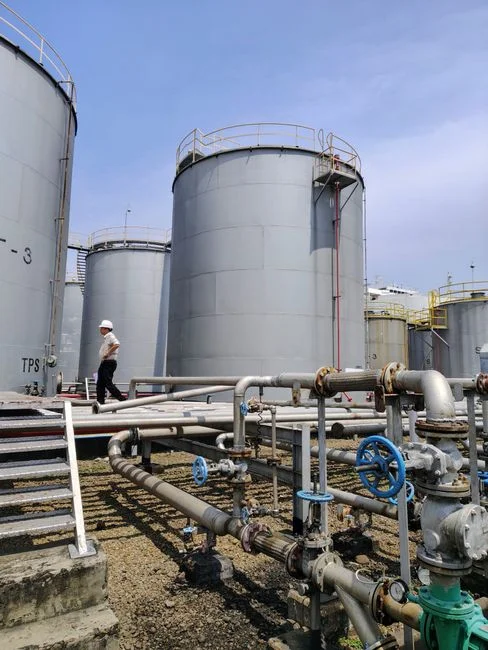
DAF is appropriate when suspended solids and floatable contaminants such as oil and grease are the primary treatment priorities, but it may be only one part of the required train. Source-specific screening may be needed before DAF; biological treatment, membrane separation or polishing may be required after it. The treatment objective—not the available equipment catalogue—must determine the route.
HydropureWater's 2026 catalogue data describes an MBR wastewater treatment system at 10–2,000 m³/day with filtration below 1 μm. MBR becomes relevant where biological treatment and membrane-based solids separation are required and the influent is suitable for the selected process. These are catalogue attributes, not a confirmed duty for the Indian EV assembly plant.
An ultrafiltration pretreatment and polishing system is described in the same 2026 catalogue data at 2,000–40,000 L/h, with 0.03 μm PVDF membranes, automatic backwash and air scour. UF may be appropriate for membrane pretreatment or polishing only where feed analysis, pore-selection requirements and target water quality support that duty.
| If the treatment priority is | Potential route | Required decision evidence |
|---|---|---|
| Removing suspended solids and floatable material | Screening followed by DAF | Characterisation confirms these contaminants are the priority and the DAF configuration can meet the removal objective |
| Providing biological treatment and membrane solids separation | MBR-based route | Influent suitability, required effluent quality and hydraulic duty support the biological and membrane process |
| Membrane pretreatment or polishing | UF-based route | Feed analysis, pore-selection requirements and target water quality support the membrane duty |
| Delivering industrial wastewater reuse | DAF, UF, MBR or a combined route | The selected train meets permit, sewer-authority and end-use quality requirements |
Compare reuse routes using the same criteria: treated-water quality, hydraulic capacity, energy demand, consumables, residuals, monitoring, implementation constraints and recovered-water value. The value of reuse does not relax permit conditions, sewer-authority requirements or water-quality targets.
Frequently Asked Questions
What DAF capacity is required for Volkswagen's new EV assembly plant in India?
No numerical capacity is established because the supplied research contains no verified peak wastewater flow, constituent analyses, permit limits or reuse targets. First reconcile stream-level flow monitoring and constituent sampling, then calculate the coordinated peak and contaminant-loading duty.
How should the DAF catalogue range guide equipment selection?
Use the 4–300 m³/h catalogue envelope to identify possible equipment configurations, not to infer plant capacity. Compare each candidate against the verified project hydraulic duty, contaminant-loading checks, operating scenarios and agreed redundancy criteria.
What should a supplier include in a performance guarantee?
Require defined influent and hydraulic conditions linked to measurable treatment outcomes. The agreement should cover the sampling protocol, laboratory methods, operating deviations, corrective action and the treatment of worst-case loads.
When should MBR or UF be selected instead of relying on DAF alone?
Choose MBR when biological treatment and membrane solids separation are required and the influent is suitable. Choose UF for membrane pretreatment or polishing when feed quality, pore selection and the target water specification support it.