
What DAF capacity is actually required for the Texas EV plant?
A defensible DAF capacity for Volkswagen’s Texas EV assembly plant cannot be calculated from the supplied information because no verified plant wastewater flow, peak-flow basis, wastewater profile, permit limit, reuse target, or expansion schedule is available. Capacity should be based on the maximum coordinated wastewater flow—including vehicle washing, production utilities, process drains, and expansion-related streams—after characterising suspended solids, oil and grease, floatable material, and colloidal contaminants. DAF is a candidate where these contaminants are the treatment priority, but its catalogue range of 4–300 m³/h across 13 standard models is not a plant design guarantee.
That distinction is central to sizing DAF for the Volkswagen EV assembly plant in Texas. The catalogue range describes available equipment envelopes; it does not tell the project team how much wastewater the plant will generate, when that wastewater will arrive, or what the treatment system must remove. A numerical selection made before those records are reconciled would convert catalogue information into an unsupported design assumption.
An EV assembly expansion alters both hydraulic demand and wastewater composition. Vehicle-washing flows may change with production, pretreatment, rinsing and wash cycles. Production utilities may discharge continuously or in response to operating conditions. Process drains can concentrate contaminants, while expansion-related support systems can introduce new discharge points or temporary commissioning flows. The 2026 DAF engineering specifications provide equipment context, not a Volkswagen design load.
Before sizing, the engineering team needs a reconciled flow record, a stream-by-stream contaminant dataset, applicable permit and sewer-authority limits, the intended reuse specification, operating schedules, and agreed redundancy criteria. The following sections explain how to assemble those inputs and convert them into a procurement basis for an industrial DAF system.
Wastewater streams that must enter the DAF design flow
The design flow must be assembled from individual discharge streams rather than inferred from vehicle-production rate or an average plant total. Each stream should be measured separately before the project team decides which flows enter the DAF train, which are equalised upstream, and which require separate treatment or diversion.
Request continuous flow monitoring by stream, with enough duration to establish average flow, maximum sustained flow, peak instantaneous flow, start-up and shutdown conditions, and abnormal discharges. These are required inputs, not values that can be assumed from the expansion description. Batch-held washing flows should be linked to the washing schedule and downstream storage capacity so that a short average does not conceal a concentrated discharge.
| Design input | Evidence required from the project team | Why it affects DAF sizing |
|---|---|---|
| Vehicle-washing wastewater | Stream-level flow record, production and wash-cycle schedule, batch or continuous discharge status, and constituent analyses | Establishes hydraulic peaks and the load of suspended material, oil and grease, and floatable contaminants |
| Production-utility discharges | Continuous monitoring, operating profile, cleaning frequency, and sampling results | Separates routine flow from cleaning and abnormal discharges |
| Process drains | Origin, discharge timing, concentration data, and proposed routing | Prevents concentrated process contaminants from being averaged with larger dilute streams |
| Expansion-related support streams | Commissioning assumptions, temporary-flow schedule, and diversion plan | Identifies project conditions that may affect equalisation, peak handling, and commissioning |
The analytical program should cover suspended solids, oil and grease, floatable material and colloidal matter because these are the stated removal targets for DAF in EV assembly wastewater pretreatment, according to HydropureWater’s article on the Volkswagen expansion. Sampling should identify whether contaminants are segregated or recurring in combination, since equalisation can change both the hydraulic and contaminant-loading basis.
Oilfield brine must remain analytically separate from EV assembly wastewater. Inside Climate News reported on 2025-03-24 that Texas produced water can be up to seven times as salty as the sea and may contain drilling chemicals, hydrocarbons, ammonia, and radioactive elements. Those findings describe produced water, not an EV assembly wastewater load, and must not be transferred into the plant design.
For each stream, document whether it is continuous, batch-held, equalised, segregated or diverted. A mechanical rotary mechanical bar screen may be relevant where gross solids require upstream protection, but screening does not replace wastewater characterisation or establish the downstream flow boundary.
The sizing calculation: from measured flow to DAF duty
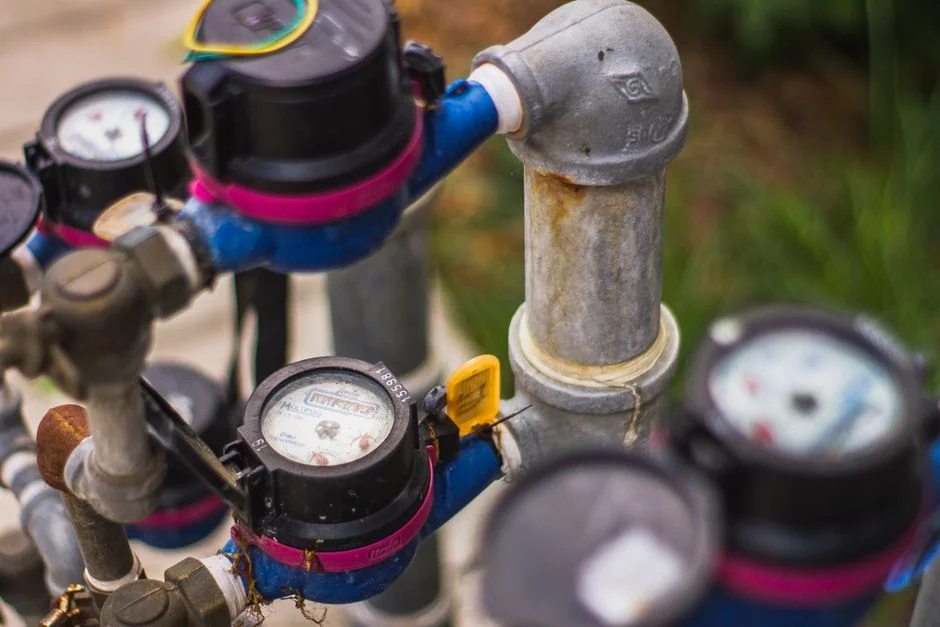
The sizing calculation should begin with the coordinated peak design flow, not vehicle-production rate or average flow alone. Once stream-level measurements have been reconciled, the engineering team can determine whether the largest sustained wastewater flow, the most demanding batch discharge, or an abnormal condition governs the hydraulic duty.
- Reconcile the flow boundary. Align continuous-flow records with washing cycles, utility dumps, process-drain events and expansion-related commissioning conditions.
- Determine the coordinated peak. Identify the condition requiring treatment simultaneously, including any agreed allowance for storage, equalisation or temporary batch discharges.
- Build the contaminant-loading basis. Pair measured flow with concentration data for suspended solids, oil and grease, floatable material and colloidal matter.
- Check treatment performance against project wastewater. Confirm that the proposed DAF configuration can meet the stated removal and treated-water objectives under those loads.
- Design the hydraulic envelope. Evaluate equalisation, turndown, redundancy, standby capacity and provisions for peak bypass or storage with the architect and wastewater contractor.
The contaminant-loading calculation is the engineering test of capacity. A DAF unit may have adequate hydraulic capacity yet lack the surface loading, flotation zone, sludge-handling arrangement or chemical-conditioning response needed for the project wastewater. The selected configuration must therefore be verified against the treatment objective, not merely matched to a model’s clean-water rating.
| Sizing parameter | Project-specific basis required | Use in the DAF decision |
|---|---|---|
| Coordinated peak design flow | Reconciled monitoring data and agreed operating scenarios | Sets the hydraulic treatment duty |
| Contaminant mass loading | Stream flow and concentration data | Tests whether the selected configuration can meet the removal objective |
| Saturation pressure | 3–6 bar in the canonical DAF engineering guide | Provides equipment-design context, not project performance evidence |
| Bubble size | 20–100 μm in the canonical DAF engineering guide | Provides flotation-design context, not a Volkswagen-specific guarantee |
| Saturation-related parameter | 20–60 minutes in the canonical guide, reviewed in its original context | Applied only where appropriate to the selected equipment and process design |
| Hydraulic and performance verification | Tests or guarantees using the stated project wastewater | Replaces reliance on catalogue ratings or clean-water capacity |
The 3–6 bar saturation pressure, 20–100 μm bubble size and 20–60-minute saturation-related parameter come from the canonical DAF engineering guide cited in the research. They help frame equipment selection, but none establishes that a particular configuration will treat Volkswagen’s wastewater to the required standard.
Project-specific verification remains essential. HydropureWater’s Volkswagen article states that clean-water capacity and catalogue ratings are not performance guarantees. The technical package should therefore state how hydraulic capacity and contaminant removal will be demonstrated on the actual wastewater, including the sampling protocol, acceptance conditions and treatment of worst-case loads.
When DAF is the right treatment route
DAF belongs in the treatment train when suspended solids and floatable contaminants such as oil and grease are the primary treatment priorities. Screening plus DAF may provide source-specific pretreatment for an automotive factory, but DAF does not replace wastewater characterisation or any required downstream treatment.
MBR is the relevant alternative when the treatment objective includes biological treatment and membrane-based solids separation. HydropureWater’s MBR wastewater treatment system catalogue covers 10–2,000 m³/day and describes near-reuse-quality effluent with filtration below 1 μm. Those figures are catalogue attributes, not guarantees for Volkswagen’s project wastewater or a basis for selecting a plant capacity.
UF is appropriate as membrane pretreatment or polishing when the required feed and effluent quality support that duty. HydropureWater’s ultrafiltration wastewater treatment system catalogue covers 2,000–40,000 L/h, uses 0.03 μm PVDF membranes, and includes automatic backwash and air scour. Again, those specifications describe the offered configuration rather than confirmed performance on the plant’s wastewater.
| Treatment objective | Potential route | Decision condition |
|---|---|---|
| Remove suspended solids and floatable material | Screening followed by DAF | Characterised wastewater confirms these contaminants are the priority and DAF is the appropriate pretreatment duty |
| Provide biological treatment and membrane solids separation | MBR | Influent is suitable for the selected biological process and the required effluent quality justifies the route |
| Provide membrane pretreatment or polishing | UF | Feed analysis, pore-selection requirements and target water quality support the membrane duty |
| Deliver industrial wastewater reuse | DAF, UF, MBR or a combined route | The full treatment train meets permit, sewer-authority and end-use water-quality requirements |
For industrial wastewater reuse, compare routes using the same criteria: treated-water quality, hydraulic capacity, energy demand, consumables, residuals, monitoring, implementation constraints and recovered-water value. The DAF versus clarifier for EV and automotive wastewater comparison provides a useful technical starting point for that evaluation.
Texas water scarcity does not relax compliance. Inside Climate News reported on 2025-03-24 that Texas faced shortages predicted by 2030, with existing water sources heavily allocated. Scarcity raises the value of reuse, but permit conditions, sewer-authority requirements, water-quality targets and residual capacity still govern the decision.
Data and guarantees to request before ordering equipment
The procurement package should require guaranteed performance on the stated project wastewater rather than accept clean-water capacity or a catalogue model rating as proof of suitability. The guarantee should connect an agreed influent condition and hydraulic duty to defined treatment outcomes, with responsibilities for sampling, laboratory analysis, deviations and corrective action stated clearly.
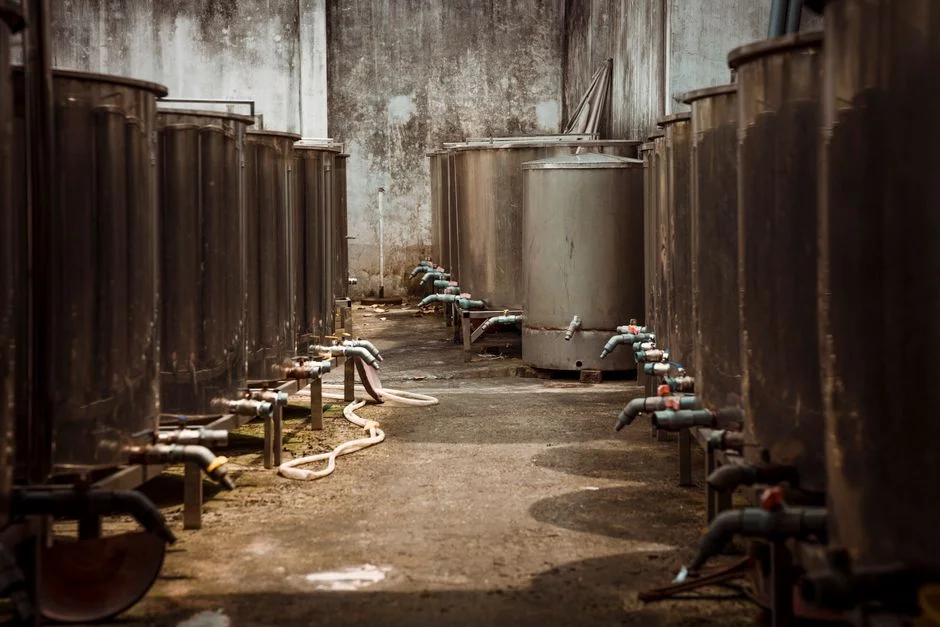
Request a balanced plant that identifies storage capacity, transfer methods, loading provisions and responsibility boundaries for off-site handling. This is especially important where washing flows are intermittent or residuals are removed from site. The Texas industrial plant RO capacity assessment illustrates the broader need to distinguish equipment selection from a project-specific design basis.
Every residual stream needs a documented origin, composition basis, storage location, transport method and regulatory endpoint. The list should cover UF reject, RO concentrate, DAF sludge, chemical sludge, biological residuals and discarded media. A chemical system is part of this interface: the project specification should identify the automatic chemical dosing system duty, controls and containment rather than treating dosing as an accessory line item.
Sludge dewatering requirements should be tied to the measured solids characteristics and disposal route. Where a sludge dewatering filter press is considered, specify the feed basis, expected solids yield, operating schedule and off-site handover responsibility. A responsible budget requires project wastewater data, treatment objectives and a residual plan rather than production volume alone.
Frequently Asked Questions
Is the 4–300 m³/h DAF range the capacity required for Volkswagen’s Texas EV assembly plant?
No. The range covers 13 standard DAF models in HydropureWater’s catalogue, not the calculated Volkswagen plant requirement. Plant capacity must come from reconciled peak wastewater flow, contaminant loads and operating scenarios.
What should be checked before requesting a DAF price or ordering equipment?
Require the supplier to price a defined project duty: measured or verified wastewater flow, constituent analyses, treatment objectives, equalisation assumptions, operating hours and residuals. A catalogue-model quotation without those inputs is not comparable, and clean-water capacity should not be presented as project performance.