What RO capacity is actually confirmed?
No verified reverse-osmosis capacity is confirmed for Panasonic Energy’s new Texas battery plant from the supplied evidence, because the site-specific flow, production forecast, wastewater characterization, reuse demand, P&IDs and permit limits are unavailable. HydropureWater’s 2026 acquisition guide uses a 1,500 m³/day DAF–MBR–RO plant only as a defined screening benchmark. It is not a bid-ready Panasonic Energy design capacity. The procurement-grade answer is to size the RO train from verified streams, worst-case wastewater conditions, pretreatment performance and the available disposal or reuse route.
The missing inputs are fundamental rather than minor equipment-selection details: current and projected production; current and proposed wastewater flows; cathode-rinse reuse demand; source-by-source water analyses; acquired P&IDs; metering records; site-specific permit limits; and the operating scenarios that produce hydraulic and contaminant peaks. Without them, neither the number of RO trains nor their permeate capacity can be defended.
An unrelated project cannot close that gap. Construction Dive reported that the Robert W. Goldsworthy Desalter expansion in Southern California would treat up to 9 million gallons per day of brackish groundwater for drinking-water production. That municipal-scale RO project has a different feed, product and regulatory purpose, so its capacity cannot substitute for a Texas battery-process design basis.
| Item | Status in the supplied evidence | Procurement consequence |
|---|---|---|
| Panasonic Energy Texas RO capacity | Not verified | Do not award equipment against a nominal capacity alone |
| 1,500 m³/day DAF–MBR–RO | HydropureWater’s 2026 screening benchmark | Use only for initial equipment and capital screening |
| Plant design flow | Not provided | Obtain current and projected peak flows |
| Influent and reuse-water analyses | Not provided | Require source-specific characterization |
| Acquired P&IDs and permit limits | Not provided | Confirm routing, discharge points and guaranteed outlet criteria |
For preliminary budgeting, an engineer can evaluate an industrial RO system for battery-process rinse reuse against the benchmark, but the final capacity should remain conditional on the acquired design documents and verified operating data.
Map the wastewater streams before calculating RO capacity
HydropureWater’s 2026 acquisition guide assumes an NMC battery operation with cathode coating using NMP solvent, anode lines carrying graphite slurry, metal-finishing rinse streams and associated sanitary wastewater; each stream has a different contaminant profile and cannot be combined automatically into one RO feed.
Cathode coating is the first routing decision. If coating remains in-house and NMP is recovered, the solvent mass balance, solvent inventory and wastewater flow change, and closed-loop recovery may belong in the capital scope. If coating is outsourced, the NMP recovery line may be removed—but the remaining flow and contaminant balance must then be recalculated rather than merely reduced by assumption.
The industrial RO duty identified in the 2026 guide is treatment of cathode-coating rinse water for reuse, with residual dissolved solids concentrated into a smaller reject stream. That duty should not be expanded automatically into general industrial pure-water production. Sanitary wastewater, graphite-slurry streams and NMP recovery equipment remain separate scopes unless the acquired P&IDs demonstrate that they join the RO feed before treatment.
- Assign every source stream to its actual destination: sanitary system, pretreatment, RO feed, recovery process or disposal.
- Measure each stream rather than infer flow from battery output.
- Characterize nickel, cobalt, TSS and pH at the source.
- Identify the reuse destination and required water quality.
- Reconcile the resulting mass balance with production and operating scenarios.
The buyer should request source-by-source flow-meter records, wastewater-characterization results, production forecasts, operating scenarios and the acquired P&IDs. Chemical inventories, NMP usage and solvent-recovery records are also needed where cathode coating remains in-house. This stream map is a prerequisite for deciding whether an industrial RO system for battery-process rinse reuse is the correct equipment boundary.
Use the permit threshold as a compliance gate, not an RO design flow
According to HydropureWater’s 2026 acquisition guide, combined process and sanitary flow above 50,000 gpd requires an individual TPDES industrial wastewater permit. An eligible satellite operation below 50,000 gpd may use general permit TXR050000 only when its SIC codes and process flows satisfy the multi-sector general-permit eligibility conditions.
The guide illustrates the distinction with a 30,000 gpd eligible satellite operation associated with general permit TXR050000 and a 60,000 gpd assembly-cell operation requiring an individual permit. Those cases establish a permit-selection framework; they do not establish RO feed or product-water capacity.
| Decision point | 2026 guide example | Engineering implication |
|---|---|---|
| Combined process and sanitary flow below 50,000 gpd | 30,000 gpd eligible satellite operation | Potential TXR050000 route if SIC codes and process flows qualify |
| Combined process and sanitary flow above 50,000 gpd | 60,000 gpd assembly-cell operation | Individual TPDES permit required |
| RO sizing | No plant-specific flow supplied | Use verified treatment-stream design flow, not the permit threshold |
A nominal daily average also does not establish compliance by itself. HydropureWater’s 2026 guide advises obtaining a written permit assessment and the application engineering report rather than inferring eligibility from one flow figure. The permit application, receiving-stream model, site-specific limits under 30 TAC Chapter 307 and applicable categorical requirements under 40 CFR 433 should define the required outlet performance.
The Panasonic Energy Texas wastewater acquisition guide also distinguishes permit authorization from the legal right to convey wastewater. Pipeline routes, easements and the discharge point therefore require separate diligence; they do not alter the RO hydraulic calculation.
Build the RO sizing calculation from verified data
The transparent calculation starts with a verified RO-eligible feed flow, then applies a selected recovery rate to determine permeate production and concentrate generation. No Panasonic Energy flow can be inserted into that calculation until the acquired stream routing, metering records and worst-case operating scenarios are available.
HydropureWater’s 2026 benchmark uses 70%–85% RO recovery and a 15%–30% brine reject. The selected recovery must reflect feed chemistry, pretreatment performance, reuse-water quality and concentrate-disposal constraints. It should not be chosen merely because it produces an attractive water-reuse balance.
- Establish the RO-eligible stream and verified design flow.
- Apply the selected recovery rate to calculate permeate and concentrate flow.
- Confirm that the reuse demand can absorb the calculated permeate at the required quality.
- Route the concentrate to a permitted discharge, evaporation system or licensed industrial hauler.
- Check equalization, pretreatment and membrane systems against peak hydraulic and contaminant loads.
Pretreatment is part of the sizing case. In HydropureWater’s 2026 benchmark, the MBR stage uses PVDF hollow-fiber modules, produces effluent turbidity below 1 NTU and operates with MLSS of 8,000–12,000 mg/L. The DAF skid range is 4–300 m³/h, with 80%–95% FOG removal and downstream TSS typically below 100 mg/L. The guide places nickel, cobalt and lithium precipitation at pH 9–10, with metal-rich sludge sent to a separate filter press.
| Design input | HydropureWater 2026 benchmark | Why it affects RO capacity |
|---|---|---|
| RO recovery | 70%–85% | Determines the split between permeate and concentrate |
| Brine reject | 15%–30% of benchmark feed | Defines downstream disposal or evaporation duty |
| MBR effluent | Turbidity below 1 NTU; MLSS 8,000–12,000 mg/L | Provides the stated pretreatment condition |
| DAF performance | 4–300 m³/h; 80%–95% FOG removal; downstream TSS typically below 100 mg/L | Controls the solids and load entering metal removal and MBR |
| Metal precipitation | pH 9–10 with dedicated sludge filter press | Protects downstream treatment and creates a separate solids-handling scope |
Equalization, chemical compatibility, hydraulic peaks and sludge handling must therefore be explicit procurement inputs. The MBR pretreatment for battery wastewater RO and the upstream DAF system for removal of floatables should be sized together rather than purchased as isolated capacity claims.
Choose the treatment train around reuse and reject management
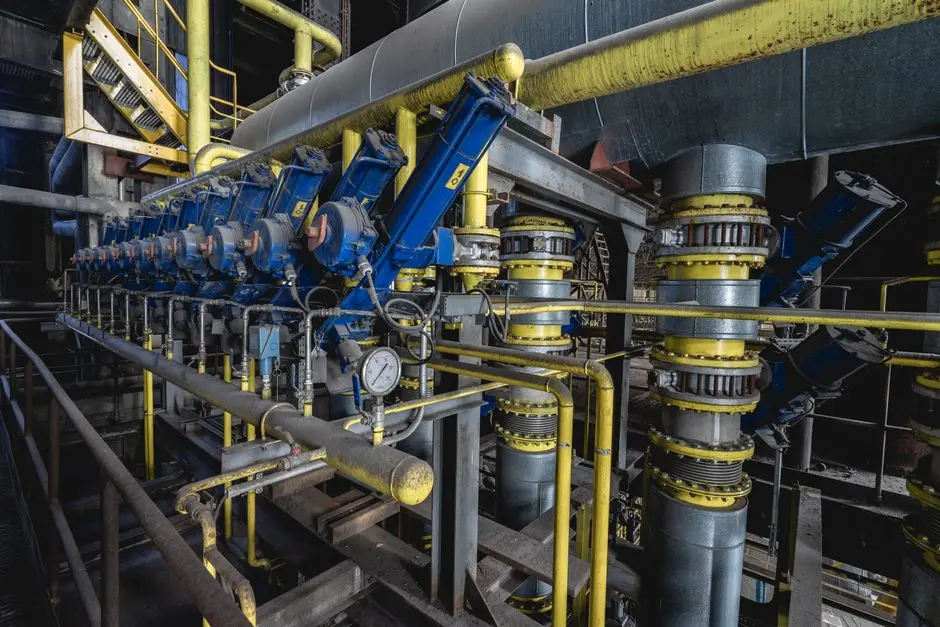
HydropureWater’s 2026 benchmark arranges the baseline sequence as equalization, DAF, metal precipitation and clarification, MBR, then RO where verified flows and chemistry support that route. Each stage has a defined duty: hydraulic and pH control, removal of floatables, removal of precipitated metals, biological treatment and solids separation, and production of cathode-coating rinse reuse water.
NMP vacuum distillation is a process-recovery decision, not an RO discharge-compliance unit. It remains relevant where cathode coating is performed in-house; if coating is outsourced, the guide directs buyers to remove the line and reassess the flow and contaminant balance. A high-efficiency sedimentation tank for metal precipitation and clarification can be evaluated within that conditional treatment boundary.
RO reject is the decisive downstream variable. Under the benchmark’s 70%–85% recovery range, 15%–30% of the RO feed becomes concentrate and must be routed to evaporation or a licensed industrial hauler. Brine hauling is therefore an operating-cost and continuity issue, while ZLD is a capital decision driven by permit restrictions, discharge paths or corporate commitments.
| Scope element | Function | Procurement treatment |
|---|---|---|
| DAF–MBR–RO base train | Compliance treatment and cathode-rinse reuse | Scope against verified permit and reuse requirements |
| NMP vacuum distillation | Closed-loop coating-solvent recovery | Include only where in-house coating and solvent recovery require it |
| Metal-sludge filter press | Separates precipitation-stage metal-rich sludge | Budget as a separate installation |
| Evaporator or crystallizer | Concentrates RO reject for zero-liquid-discharge treatment | Make conditional on disposal and corporate requirements |
HydropureWater’s 2026 guide treats ZLD as strategic unless the permit, discharge path or corporate commitment requires it. It assigns an evaporator or crystallizer a 1.5x–2.5x increment to base-train capital expenditure. A plate-and-frame filter press for metal-rich sludge should remain distinguishable from the RO-concentrate system: one handles precipitation sludge, while the other handles concentrate.
Screen capital cost and procurement risk
HydropureWater’s 2026 benchmark places the defined 1,500 m³/day DAF–MBR–RO treatment case at $1.5 million–$6 million, equivalent to $1,000–$4,000 per m³/day. This is an equipment-screening envelope, not a Panasonic Energy capital estimate, because the plant-specific flow, wastewater characterization and site conditions are not established.
The exclusions matter. The base treatment-train description does not include NMP vacuum distillation, an evaporator or a separately installed metal-sludge filter press. In-house NMP recovery moves the project toward the upper end of the base range, while outsourcing cathode coating can remove NMP recovery from scope after the flow and contaminant balance are reassessed.
Disposal economics should also be treated as sensitivity analysis. HydropureWater’s 2026 guide calculates an avoided-disposal credit of roughly $48 per day, or about $17,500 per year, at 300 m³/day of RO reject and $0.60 per 1,000 gallons. That calculation is not a quotation for the Texas site; local disposal, water and hauling tariffs must be verified.
| Budget item | 2026 evidence | Approval condition |
|---|---|---|
| Defined 1,500 m³/day DAF–MBR–RO case | $1.5 million–$6 million; $1,000–$4,000 per m³/day | Use only for screening until verified design data are available |
| NMP vacuum distillation | Excluded from base treatment train | Add only if in-house coating requires solvent recovery |
| Evaporator or crystallizer | Excluded from base treatment train; 1.5x–2.5x increment for ZLD | Require a permit, disposal or corporate basis |
| Metal-sludge filter press | Separately installed equipment | Price with sludge characteristics and disposal route |
Chemical dosing should be specified with the same rigor. The supplier must define the chemical assumptions behind equalization and precipitation, including any automatic dosing system for pH and coagulant control. Award documents should guarantee outlet parameters, chemical and sludge assumptions, the NMP mass balance where applicable, and responsibility for integration with existing piping, controls and monitoring.
A binding proposal should be conditioned on the acquired P&IDs, verified design flow, worst-case wastewater characterization, site conditions and an equipment quotation. A generic statement such as “1,500 m³/day RO” is not an adequate basis for award because it does not identify the verified stream, recovery, product quality, peak load, concentrate route or compliance guarantees.
Frequently Asked Questions
Is the required RO capacity for Panasonic Energy’s Texas plant 1,500 m³/day?
No. HydropureWater’s 2026 acquisition guide uses 1,500 m³/day as a defined DAF–MBR–RO screening benchmark, not as a verified Panasonic Energy Texas value. The buyer must first obtain acquired P&IDs, source-specific flows, production forecasts, wastewater analyses, reuse demand and permit limits.
What budget should a buyer use for Panasonic Energy Texas wastewater treatment?
Use HydropureWater’s 2026 screening range of $1.5 million–$6 million for the defined 1,500 m³/day DAF–MBR–RO case, equivalent to $1,000–$4,000 per m³/day. Before requesting a binding estimate, require the buyer to define actual peak flow, pretreatment requirements, reuse quality, NMP recovery scope, concentrate disposal and excluded installations such as the metal-sludge filter press.
Can one vendor select the RO system without more site data?
No. HydropureWater’s 2026 guide requires sizing from verified design flow, worst-case wastewater characterization and acquired permit limits. A supplier should also guarantee outlet parameters, chemical and sludge assumptions, the NMP mass balance where applicable, and integration responsibilities.
Does the 50,000 gpd permit threshold determine RO capacity?
No. HydropureWater’s 2026 guide identifies 50,000 gpd as the combined process and sanitary flow boundary for individual-permit versus eligible general-permit treatment. It is a permit gate, not a treatment-system flow. The RO calculation must use the verified RO-eligible stream and its design conditions.
Should Panasonic Energy specify ZLD immediately?
Not unless the permit, discharge path or corporate commitment requires it. HydropureWater’s 2026 guide treats ZLD as a strategic expansion and assigns an evaporator or crystallizer a 1.5x–2.5x increment to base-train capital expenditure. The buyer should test disposal alternatives before prescribing ZLD.
Related Equipment
- MBR pretreatment for battery wastewater RO — specifications, capacity range, and technical data