

What Changes When Panasonic Energy Acquires the Texas Plant?
Wastewater should be treated as a transferred environmental liability, not assumed to reset under new ownership. The buyer must file TCEQ’s CORE change-of-ownership form within 30 days of closing so the existing TPDES permit can be re-issued in the successor’s legal name. Diligence must review at least eight quarters of DMRs, notices of violation, enforcement actions, stormwater permits, conveyance easements and three years of EPCRA Section 313 Form R filings. Treatment must comply with site-specific limits under 30 TAC Chapter 307 and 40 CFR 433, including categorical maximums below 1.0 mg/L for total nickel and total cobalt. A DAF–MBR–RO train may be appropriate, while NMP recovery and ZLD remain process-specific investment decisions.
Ownership changes accountability without erasing the site’s compliance record. The existing permit number carries over, but TCEQ reissues the permit in the successor’s legal name after the CORE filing. The public record still contains the seller’s DMR history, Notice of Violation ledger, open Enforcement Actions and Agreed Orders. Reissuance therefore does not provide a clean-slate defense for violations associated with the acquired operation.
Four compliance rails must be reviewed together:
- The TPDES individual or general permit and its monitoring, flow and discharge conditions.
- Site-specific water-quality limits under 30 TAC Chapter 307.
- The metal-finishing categorical standards under 40 CFR 433.
- EPCRA Section 313 Toxic Release Inventory reporting.
The permitting consequence of this interaction depends on the site’s actual process streams. If combined process and sanitary flow exceeds 50,000 gpd, an individual TPDES permit is required; an eligible satellite operation below that boundary may use general permit TXR050000, according to HydropureWater’s 2026 acquisition guide. A permit, however, does not by itself establish the legal right to convey wastewater through public property or across private easements.
Water infrastructure is also an operating dependency, not a back-office issue. At the De Soto, Kansas, battery plant, a $43 million municipal water-treatment expansion increased capacity to 8 MGD in 14 months and included a new 4 MGD softening basin, as reported by WaterWorld in 2025. A Texas buyer should therefore test both wastewater treatment and the plant’s water-supply assumptions against the actual acquired production plan.
This analysis assumes an NMC cathode-coating operation, anode lines, metal-finishing rinse streams and associated sanitary flows. The final liability and retrofit scope must be verified against the acquired P&IDs, permit, process description and actual wastewater characterization.
Classify the Wastewater Before Signing the Purchase Agreement
The wastewater classification must precede equipment selection because permit eligibility, discharge quality and pretreatment needs depend on the source streams and combined flow. Do not begin with a generic battery-plant ETP layout. Map each stream separately, establish where it goes, and then identify the legal basis for its discharge.
| Wastewater category to map | Acquisition issue | Required evidence |
|---|---|---|
| NMC cathode coating with NMP solvent | Determines whether NMP closed-loop recovery belongs in the project scope. | Cathode-line P&IDs, solvent inventory, NMP usage and recovery records. |
| Anode lines carrying graphite slurry | Changes solids loading, equalization demand and pretreatment design. | Flow records, slurry characterization and waste concentration. |
| Metal-finishing rinse streams | Establishes the applicable 40 CFR 433 and site-specific treatment requirements. | Source-by-source nickel, cobalt, TSS, pH and flow data. |
| Process wastewater | Defines hydraulic and contaminant peaks entering the ETP. | Meter records, operating scenarios and production forecast. |
| Sanitary flow | Counts toward the combined-flow permit boundary and discharge authorization. | Current and projected sanitary flow. |
| Stormwater and construction runoff | May require separate NOI coverage and SWPPP controls. | NOIs, SWPPPs, inspection logs and site plans. |
The 50,000 gpd combined-flow threshold is a permit decision, not a treatment-plant capacity calculation. Above it, an individual TPDES permit is required. Below it, a satellite operation may qualify for TXR050000 if its SIC codes and process flows fit the multi-sector general-permit eligibility list, according to HydropureWater’s 2026 guide. The buyer should obtain a written permit assessment rather than infer eligibility from a nominal daily average.
Next, reconcile the discharge route with property records. HydropureWater’s 2026 guide cites a Robstown TPDES permit issued on January 15, 2025 that expressly stated that issuance did not grant the right to use private or public property for wastewater conveyance. A February 2026 discovery of a pipe crossing a drainage-district easement triggered a dispute even though the permit was less than 12 months old. For the Texas acquisition, obtain the receiving stream, discharge point, drainage-district records, county records, pipeline route and every recorded easement crossing.
Permit authorization and conveyance rights are separate tests. Obtain the permit application engineering report and receiving-stream model, then compare the model’s assumptions with the seller's DMR history. Site-specific limits under 30 TAC Chapter 307 may be tighter than the categorical ceilings in 40 CFR 433 where the receiving stream has limited assimilative capacity.
Before signing, request current P&IDs, flow-meter records, wastewater characterization results, chemical inventories, source-control practices, the stormwater NOI and SWPPP files, and the records supporting battery plant ETP engineering requirements. The pretreatment-limit framework for industrial metals plants provides a useful cross-check for how source streams may be regulated before final discharge.
Build a Four-Rail Compliance Diligence File

The compliance file should reconcile operating records, permits and property rights rather than collect permits alone. The purpose is to identify every liability that survives closing and connect each one to a permit condition, treatment requirement or contract remedy.
| Compliance rail | Diligence pull | Decision resulting from review |
|---|---|---|
| TPDES authorization | Permit, application engineering report, receiving-stream model, flow authorization, monitoring points and limits. | Determine permit continuity, required modifications and equipment guarantees. |
| 30 TAC Chapter 307 | Site-specific limits and supporting receiving-stream analysis. | Identify any limit tighter than categorical standards. |
| 40 CFR 433 | Metal-finishing source data and DMR results for nickel, cobalt and other applicable parameters. | Define the minimum treatment performance required at the discharge point. |
| EPCRA Section 313 | Form R filings for the prior three reporting years and reporting credentials. | Allocate pre-closing reporting failures and penalties to the seller. |
Start with at least eight quarters of DMRs from EPA ECHO. HydropureWater’s 2026 guide identifies the rolling two-year exceedance window as the first item reviewers reopen after assignment, so eight quarters provide the required review coverage. Compare every reported result with the permit limits and investigate isolated anomalies, recurring excursions and missing samples before accepting the seller’s compliance characterization.
Next, reconcile the NOV ledger, Enforcement Actions and Agreed Orders against agency records and the site’s public correspondence. Do not net an open action against expected operational improvement. Each inherited action should receive a named owner, a quantified reserve in the environmental indemnity schedule and a defined technical or financial remedy.
Audit Section 313 compliance for the prior three reporting years. HydropureWater’s 2026 guide identifies nickel, cobalt and NMP as threshold-quantity triggers at an NMC battery plant and states that Form R filings are due July 1 for the prior calendar year. A missed seller filing can become the successor’s obligation, so the contract should expressly allocate pre-closing TRI liabilities and penalties to the seller.
Verify TPDES stormwater construction and general NOI coverage, SWPPP currency and inspection logs for active construction. These requirements sit alongside the industrial discharge permit and cannot be inferred from the wastewater authorization.
Map conveyance rights separately. A valid permit does not establish permission to occupy a drainage-district easement or cross private property. For a permit-by-permit review of metals-process controls, use the fabricated-metals pretreatment-limit review as a diligence model.
Use an environmental indemnity and escrow mechanism that survives closing long enough to cover the applicable two-year DMR exceedance review. HydropureWater’s 2026 guide recommends allocating each open action to a specific reserve and sizing escrow against the applicable penalty exposure and two-year DMR risk.
Select the Treatment Train the Acquired Process Actually Needs
The treatment train should follow the acquired P&ID and permit limits, with each stage assigned a measurable contaminant or process-control duty. A generic ETP configuration can either miss a site-specific limit or add unnecessary treatment and capital cost.
| Stage | Function | Design basis from the 2026 supplied benchmark |
|---|---|---|
| 1. Equalization | Controls hydraulic variation and pH before treatment. | Handles mixed-stream pH swings from 2 to 11; PLC-controlled coagulant and pH dosing targets 6.5–7.5 upstream. |
| 2. DAF | Removes free oil, grease and floated solids. | 4–300 m³/h skids, 80%–95% FOG removal and downstream TSS typically below 100 mg/L. |
| 3. Lamella clarification | Precipitates Ni, Co and Li and separates metal-rich sludge. | Operates at pH 9–10 with specified surface loading of 20–40 m/h; sludge goes to a filter press. |
| 4. NMP vacuum distillation | Recovers coating solvent in a closed loop. | Process control rather than wastewater treatment; omit if cathode coating is outsourced. |
| 5. Submerged MBR | Provides biological treatment and solids separation. | PVDF hollow-fiber modules, effluent turbidity below 1 NTU and MLSS of 8,000–12,000 mg/L. |
| 6. Two-pass industrial RO | Produces cathode-coating rinse reuse water and concentrates residual dissolved solids. | 70%–85% recovery; 15%–30% brine reject routed to evaporation or a licensed industrial hauler. |
| 7. Disinfection | Controls remaining pathogens at the reuse or discharge point. | Chlorine dioxide or UV. |
Equalization must precede the metal-removal train because cathode coating, anode rinse, electrolyte salt flushes and body-shop streams can produce incompatible pH and load conditions. The industrial battery wastewater DAF system can follow equalization for oil, grease and floatables. The precipitation stage then requires a high-efficiency lamella sedimentation tank and a dedicated metal-rich sludge filter press.
NMP recovery is a process decision, not a discharge-compliance unit. Include vacuum distillation only where cathode coating is performed in-house and solvent recovery is required by the actual process. If coating is outsourced, remove that line and reassess the flow and contaminant balance.
The biological and membrane stages should be specified against the permit and reuse destination, not selected by analogy. A submerged MBR wastewater treatment system can support the stated solids-separation performance, while the industrial RO system must be checked against rinse-water quality, recovery, pretreatment and concentrate-disposal requirements.
Compare Treatment Investment and Zero-Liquid-Discharge Options
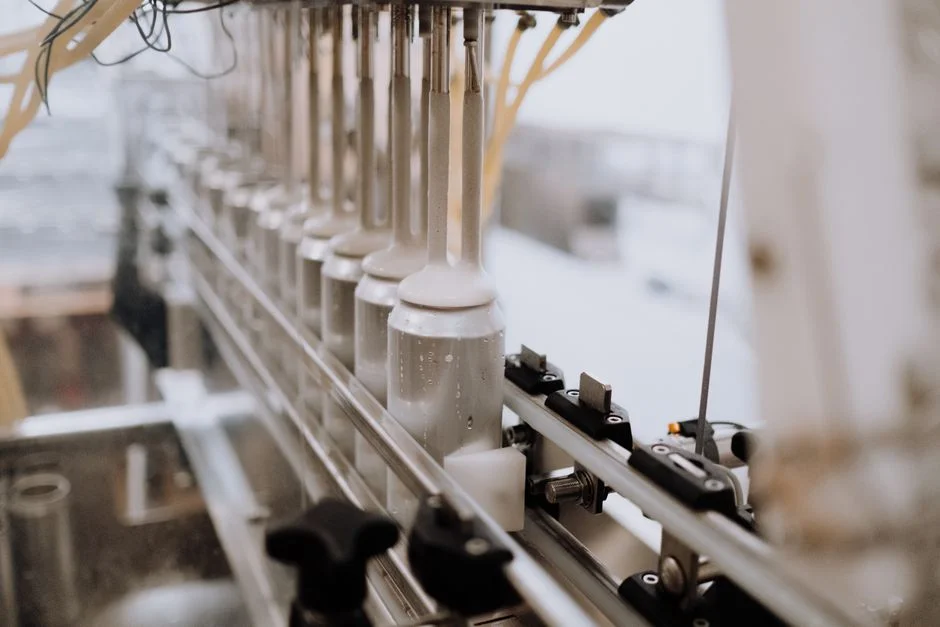
The capital screen must separate mandatory compliance work from strategic reuse and zero-liquid-discharge expansion. The first category protects permit continuity; the second changes the site’s long-term water and waste strategy.
| Investment case | Scope | Cost evidence |
|---|---|---|
| Base compliance and reuse train | DAF, MBR and RO for a 1,500 m³/day plant; no NMP distillation or evaporator. | $1.5 million–$6 million, or $1,000–$4,000 per m³/day, from HydropureWater’s 2026 benchmark. |
| In-house NMP recovery | Base train plus vacuum distillation. | Moves the project toward the upper end of the base range when cathode coating remains in scope. |
| Metal-rich sludge dewatering | Dedicated filter-press line for precipitation-stage sludge. | Budget as a separate installation because it is not contained in the treatment-train description. |
| ZLD alignment | Evaporator or crystallizer for the RO reject. | Adds 1.5x–2.5x to base-train CAPEX, according to HydropureWater’s 2026 benchmark. |
Use the $1.5 million–$6 million benchmark only as a screening envelope for the defined 1,500 m³/day DAF–MBR–RO case. It excludes NMP vacuum distillation and an evaporator. Adding in-house solvent recovery moves the project toward the upper end; outsourcing cathode coating can remove NMP recovery from scope. A binding estimate still requires the acquired flow, wastewater characterization, site conditions and equipment quotation.
ZLD is strategic unless the permit, discharge path or corporate commitment requires it. The 1.5x–2.5x CAPEX increment adds an evaporator or crystallizer, while brine hauling remains an operating cost. HydropureWater’s 2026 calculation shows an avoided-disposal credit of roughly $48 per day, or about $17,500 per year, at 300 m³/day of RO reject and $0.60 per 1,000 gallons. Confirm local water, disposal and hauling tariffs before using that credit in an investment case.
Size any final proposal from actual flow, worst-case pollutant concentrations, reuse demand, disposal contracts and the corporate 2030 zero-discharge roadmap. The industrial water reuse and ZLD economics should inform that business case, but it should not turn an optional expansion into a presumed acquisition condition.
Execute the Wastewater Transition in the First 90 Days
The first 90 days should establish legal continuity, verify inherited performance and create a controlled basis for capital approval. Delaying the permit and reporting checks until after treatment procurement creates avoidable operational risk.
- Days 0–30: File TCEQ’s CORE change-of-ownership form. Establish EPA ECHO and EPA TRI access in the successor’s legal name, and verify credentials for DMR and Form R reporting.
- Days 31–60: Complete independent influent and effluent sampling for nickel, cobalt, TSS, pH and flow. Reconcile the results against the seller’s DMRs, operating logs and permit model.
- Days 61–90: Refresh stormwater NOIs and SWPPPs where necessary. Align Section 313 reporting with the new operating SIC codes, and confirm the NMP closed-loop mass balance for every cathode line.
- Day 90 onward: Begin ZLD planning only if the corporate 2030 roadmap and site economics support it. Otherwise, prioritize permit continuity, metal removal and identified water-reuse improvements.
Assign separate owners for regulatory filings, sampling, stormwater controls and process verification. The contract should preserve the seller’s responsibility for pre-closing penalties, missed filings and unresolved enforcement actions. Engineering work should then proceed against the actual permit limits and verified process loads, not the acquisition model’s unverified assumptions.
Frequently Asked Questions
What happens to the TPDES permit when Panasonic Energy acquires a Texas battery plant?
The existing permit transfers, but the successor must file TCEQ’s CORE change-of-ownership form within 30 days of closing so the permit can be re-issued in its legal name. That filing does not erase the seller’s DMR history, NOV ledger, Enforcement Actions or Agreed Orders. The buyer should complete the filing and continue documenting compliance under the successor’s accounts.
How should wastewater treatment capacity be sized for the acquired plant?
Start with the 50,000 gpd combined-flow permit boundary, not with a treatment vendor’s preliminary skid size. HydropureWater’s 2026 guide uses a 30,000 gpd eligible satellite operation as a possible TXR050000 case and a 60,000 gpd assembly-cell operation as an individual-permit case. The final treatment design also requires verified peak flows, wastewater concentrations, reuse demand and the site-specific permit limits.
How much should the wastewater retrofit cost?
HydropureWater’s 2026 benchmark places a 1,500 m³/day DAF–MBR–RO plant without NMP distillation or an evaporator at $1.5 million–$6 million, or $1,000–$4,000 per m³/day. NMP recovery can move the project toward the upper end, while a dedicated metal-sludge filter press should be budgeted separately. For ZLD, the same source indicates an increment of 1.5x–2.5x to base-train CAPEX.
How should a wastewater treatment supplier be selected for an acquired battery plant?
Require the supplier to size equipment from verified design flow, worst-case wastewater characterization and the acquired permit limits. The proposal should define guaranteed outlet parameters, chemical and sludge assumptions, NMP mass balance if applicable, and responsibility for integrating each unit with existing piping, controls and monitoring. A generic capacity statement is not an adequate basis for award.
What compliance risks should remain in the purchase agreement?
Allocate pre-closing NOVs, Agreed Orders, penalties, missed DMRs and missed Form R filings to the seller through a defined indemnity and escrow. Conveyance rights should be protected separately because the TPDES permit does not grant pipeline or easement rights. Diligence should cover at least eight quarters of DMRs, the prior three reporting years of Form R filings, stormwater records and the complete discharge route.