Why Industrial Plants Are Closing the Water Loop
Circular economy management cuts freshwater intake by 30-60% and discharge costs by 25-40% when trains match influent, reuse grade, and flow. Core blocks are MBR at about 99% pathogen removal, DAF at 92-97% TSS removal, and RO for high-purity reuse. Well-scoped industrial payback often lands in 2-8 years at local water and discharge tariffs.
Industrial plants still face rising freshwater prices and tighter effluent limits. Discharge fees and intake costs commonly climb about 8-12% per year in stressed basins. Industrial withdrawals remain a large share of global freshwater use, so plants that stay on a linear take-use-discharge path carry both supply and compliance risk. Closed-loop design is now a sizing and ROI problem, not a branding exercise.
Three practical drivers keep projects moving:
- Scarcity and tariff pressure: Plants in water-stressed regions lose production when intake is curtailed. A semiconductor facility reported in earlier plant data cut freshwater dependence by 58% with a reverse osmosis train and saved about $1.8 million per year in water costs.
- Regulatory push toward reuse: Earlier commentary often cited a hard 30% industrial reuse mandate under the EU Industrial Emissions Directive by 2027. The current EU rule set is different: Directive (EU) 2024/3019 Article 15 requires Member States to systematically promote reuse of treated wastewater where appropriate, especially in water-stressed areas, and to keep reuse safe for people and receiving waters (EUR-Lex consolidated text, 2024). China's 14th Five-Year Plan still targets a 15% cut in industrial water use per unit of GDP. U.S. non-compliance penalties can exceed $500,000 per incident for some facilities under EPA enforcement practice cited in prior plant reviews.
- Resource recovery: Anaerobic digestion of high-COD wastewater can yield about 0.3-0.5 kWh/m³ as biogas energy equivalent. Struvite recovery can offset roughly 20-30% of phosphorus fertilizer demand for food processors when sludge chemistry supports it.
World Bank WICER work frames circular water as delivering resilient services, designing out waste, and regenerating natural systems. According to the World Bank WICER report (2021), circular investments can recover capital in under three years when utilities cut non-revenue water and energy losses, and can create revenue by selling recovered water, energy, or nutrients. For plant engineers, the decision is which train fits influent, reuse grade, and CAPEX—not whether reuse belongs on the roadmap.
Circular Economy Management for Industrial Water Systems
Circular economy management replaces linear discharge with reduction, reuse, recycling, recovery, and restoration inside the process battery limits. Plants integrate pretreatment, biological treatment, and polishing so each stream meets a defined reuse or discharge spec. The Ellen MacArthur ReSOLVE ideas map cleanly onto unit operations:
| Principle | Engineering Application | Measurable Outcome |
|---|---|---|
| Regenerate | Rainwater harvesting + aquifer recharge | 20-40% reduction in freshwater demand (per WEF 2024) |
| Share | Shared treatment facilities for industrial parks | 30% lower CAPEX through economies of scale |
| Optimize | Real-time monitoring (SCADA) + AI-driven flow control | 15-25% reduction in energy use (HydropureWater field data, 2025) |
| Loop | Water reuse (MBR/RO) + resource recovery (biogas, struvite) | 30-70% water reuse rate (industry-dependent) |
| Virtualize | Digital twins for water system optimization | 20% reduction in OPEX through predictive maintenance |
| Exchange | Switch to water-efficient processes (e.g., counter-current rinsing) | 10-30% reduction in specific water consumption |
The 5 R's turn those principles into plant actions:
- Reduce: Low-flow fixtures, leak detection, and process changes. A pulp and paper mill in Finland cut water use by 22% with counter-current washing.
- Reuse: Treat greywater for cooling, irrigation, or washdown. A U.S. food plant reuses 65% of effluent for CIP with an MBR system for circular water management.
- Recycle: Upgrade with MBR or RO for process water. A semiconductor site in Singapore reports 95% recovery with three-stage RO.
- Recover: Pull energy and nutrients from sludge. A Dutch brewery recovers about 0.4 kWh/m³ of biogas from wastewater.
- Restore: Return treated water to aquifers or shared watershed projects where permits allow.
Track four KPIs from day one: water reuse rate (often 30-70% by industry), specific water consumption in m³ per product unit, discharge compliance (typical industrial targets BOD < 30 mg/L, COD < 150 mg/L, TSS < 30 mg/L), and recovery yield (biogas 0.3-0.5 kWh/m³; struvite about 20-30% of phosphorus input).
Most plants we size for reuse still start with solids and FOG control. DAF systems remove 92-97% TSS and 85-90% FOG before biology. MBR then delivers about 95% COD removal and 99% pathogen removal for non-potable reuse. RO polishing produces water with SDI < 3 for high-purity duties. For footprint reduction tactics beyond treatment hardware, see 7 proven industrial water reduction strategies with cost-efficiency data.
Technology Comparison: Which Circular Water System Fits Your Plant?
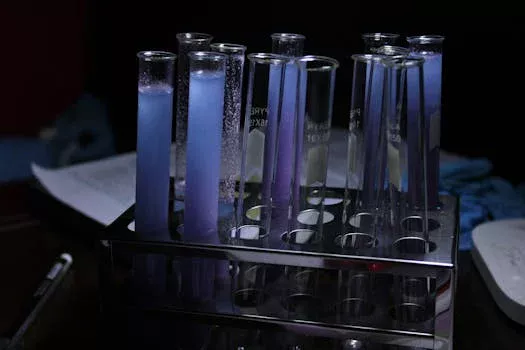
Technology choice hinges on influent quality, reuse standard, and plant capacity. The comparison below keeps the engineering thresholds used for industrial screening:
| Technology | Influent Quality Thresholds | Removal Efficiency | Energy Use (kWh/m³) | Footprint (m²/100 m³/day) | CAPEX ($/m³/day) | OPEX ($/m³) | Best For |
|---|---|---|---|---|---|---|---|
| MBR (Membrane Bioreactor) | TSS < 300 mg/L, FOG < 50 mg/L | 99% pathogens, 95% COD, 98% TSS | 0.4-0.8 | 15-25 | $1,200-$2,500 | $0.20-$0.40 | Food/beverage, pharmaceuticals, high-quality reuse |
| DAF (Dissolved Air Flotation) | TSS 500-5,000 mg/L, FOG 100-1,000 mg/L | 92-97% TSS, 85-90% FOG | 0.1-0.3 | 5-10 | $50,000-$300,000 (4-300 m³/h) | $0.05-$0.15 | Pretreatment for pulp/paper, textiles, metalworking |
| RO (Reverse Osmosis) | SDI < 3, turbidity < 0.5 NTU | 95-99% salts, 99% pathogens | 0.5-1.5 | 10-20 | $800-$1,500 | $0.30-$0.60 | Semiconductors, power generation, ultra-pure water |
| Anaerobic Digestion | COD 2,000-50,000 mg/L | 70-90% COD, 50-70% sludge volume | 0.2-0.4 (net energy positive) | 30-50 | $1,500-$3,000 | $0.10-$0.25 | Breweries, distilleries, high-COD wastewater |
| Constructed Wetlands | BOD < 200 mg/L, TSS < 100 mg/L | 70-90% BOD, 80-95% TSS | 0.05-0.1 | 100-200 | $200-$500 | $0.02-$0.08 | Low-flow applications, polishing, rural plants |
Technology Deep Dives
MBR systems use PVDF membranes near 0.1 μm for pathogen control, with flux held at 10-15 LMH to limit fouling. Energy use sits around 0.4-0.8 kWh/m³; VFDs often trim another 20-30%. Footprint is about 15-25 m² per 100 m³/day—roughly half of conventional activated sludge. Food, beverage, and pharma plants that need CIP-grade non-potable water are the usual fit. A Dutch dairy plant reuses about 70% of effluent for cooling and washdown on an MBR system.
DAF systems run air-to-solids ratios of 0.02-0.06 and hydraulic loading near 5-10 m/h for 92-97% TSS removal. Polymer doses of 0.5-2 mg/L stabilize flocs. Footprint stays compact at 5-10 m² per 100 m³/day. Pulp/paper, textiles, and metalworking lines with TSS 500-5,000 mg/L and FOG 100-1,000 mg/L need this step before membranes. A Turkish textile plant cut TSS from 3,200 mg/L to 120 mg/L on a DAF system, which then protected downstream MBR membranes.
RO systems target 75-95% recovery when feed SDI stays below 3. Energy use is 0.5-1.5 kWh/m³; energy recovery devices can cut that by about 30%. Antiscalant at 2-5 mg/L controls carbonate and sulfate scale. Semiconductor and power plants that need resistivity above 18 MΩ·cm lean on multi-stage RO system trains; one Taiwan semiconductor site reports 95% water recovery on three-stage RO.
Decision Framework: Matching Technology to Your Plant
After DAF pretreatment, an MBR system is the usual bridge to non-potable reuse when TSS stays below 300 mg/L and FOG below 50 mg/L.
Use this five-step screen before freezing P&IDs:
- Analyze influent. TSS > 500 mg/L or FOG > 100 mg/L → start with DAF. COD > 2,000 mg/L → evaluate anaerobic digestion for energy recovery.
- Define reuse grade. Cooling or irrigation can stop at MBR or wetlands. Ultra-pure process water needs RO.
- Check capacity. Flows under 100 m³/day often favor compact MBR or wetlands. Flows above 1,000 m³/day usually scale as DAF plus MBR or RO.
- Match budget bands. Low CAPEX $200-$500/m³/day (wetlands/DAF), moderate $800-$1,500/m³/day (MBR/RO), high $1,500-$3,000/m³/day (anaerobic plus membranes).
- Pilot 3-6 months. Confirm removal, energy, and fouling. Hold MBR flux in the 10-15 LMH band before full build.
| Factor | DAF | MBR | RO |
|---|---|---|---|
| Influent Quality | TSS 500-5,000 mg/L, FOG 100-1,000 mg/L | TSS < 300 mg/L, FOG < 50 mg/L | SDI < 3, turbidity < 0.5 NTU |
| Reuse Application | Pretreatment (not for direct reuse) | Non-potable reuse (cooling towers, irrigation) | Ultra-pure water (semiconductors, CIP) |
| CAPEX | $50,000-$300,000 (4-300 m³/h) | $1,200-$2,500/m³/day | $800-$1,500/m³/day |
| OPEX | $0.05-$0.15/m³ | $0.20-$0.40/m³ | $0.30-$0.60/m³ |
| Best For | Pulp/paper, textiles, metalworking | Food/beverage, pharmaceuticals | Semiconductors, power generation |
How Do Circular Economy and ZLD Strategies Work in Electroplating?
Circular economy and zero-liquid discharge strategies in electroplating wastewater treatment start with segregated rinse loops, then concentrate salts and metals instead of sending dilute baths to the sewer. Drag-out recovery and counter-current rinsing cut rinse volume first. Remaining rinse water usually needs clarification, often with DAF or settling, then RO. The RO reject goes to evaporation or crystallization so almost no liquid leaves the site.
Metal-bearing concentrates are candidates for electrowinning or precipitation recovery when bath chemistry is stable. Most plating shops we audit fail ZLD when they mix cyanide, chrome, and general rinses before treatment. Keep streams separate, then size RO recovery at 75-95% only after SDI and turbidity meet membrane limits. ZLD raises OPEX through evaporator energy, so plants often stage toward high recycle first and add thermal concentration when discharge permits or intake quotas force it.
Designing a Circular Water System: Process Flow and Engineering Parameters
Effective circular trains combine unit operations in series. The design table below lists the parameters plants should lock during FEED:
| Process Step | Technology | Key Design Parameters | Common Pitfalls | Mitigation Strategies |
|---|---|---|---|---|
| Influent Screening | Bar screens, grit chambers | Screen size: 6-12 mm; grit removal: 95% of particles > 0.2 mm | Clogging, excessive headloss | Self-cleaning screens, regular maintenance |
| Pretreatment | DAF, coagulation/flocculation | A/S ratio: 0.02-0.06; HRT: 20-40 minutes | Poor floc formation, high chemical costs | Jar testing to optimize polymer dose, real-time monitoring |
| Biological Treatment | Activated sludge, MBR | HRT: 4-8 hours; SRT: 10-20 days; MLSS: 8,000-12,000 mg/L | Sludge bulking, membrane fouling | Anoxic selectors, flux limits (10-15 LMH) |
| Polishing | RO, UV disinfection | Recovery rate: 75-95%; SDI < 3 | Scaling, fouling, high energy use | Antiscalant dosing, energy recovery devices |
| Resource Recovery | Anaerobic digestion, struvite precipitation | Biogas yield: 0.3-0.5 kWh/m³; struvite recovery: 20-30% of P | Low biogas production, struvite scaling | pH adjustment (7.5-8.5), magnesium dosing |
| Reuse/Discharge | Storage tanks, distribution pumps | Storage capacity: 1-2 days of reuse demand | Cross-contamination, pump failures | Dual piping systems, redundant pumps |
Process Flow Diagram
A simplified food-plant circular flow looks like this:
- Influent: 5,000 m³/day, COD 3,000 mg/L, TSS 1,200 mg/L.
- Screening: Bar screens remove large debris.
- Pretreatment: DAF system reduces TSS to 100 mg/L (92% removal).
- Biological treatment: MBR system reduces COD to 150 mg/L (95% removal) and pathogens to < 1 CFU/100 mL (99% removal).
- Polishing: RO produces ultra-pure water (resistivity > 18 MΩ·cm) for CIP.
- Resource recovery: Anaerobic digestion yields about 0.4 kWh/m³ of biogas.
- Reuse: About 65% of treated effluent returns to cooling and washdown.
Critical Design Considerations
MBR feed should stay below TSS 300 mg/L and FOG 50 mg/L. RO feed needs SDI < 3 and turbidity < 0.5 NTU. VFDs on blowers and pumps can cut energy 20-30%. Pressure exchangers can trim RO energy about 30%. MBR footprints of 15-25 m² per 100 m³/day beat wetlands at 100-200 m² per 100 m³/day when land is scarce. Modular containerized MBR packages can shrink installed footprint by about 40% on brownfield sites.
If COD or solids stay high after commissioning, use the diagnostics in our guides on COD reduction strategies and high turbidity fixes.
What Is Changing in Circular Water Treatment in 2026?
Circular water treatment news in 2026 centers on regulation that promotes reuse rather than a single EU industrial percentage mandate. Directive (EU) 2024/3019, in force from December 2024, tells Member States to promote treated wastewater reuse across urban plants where it fits, with extra care in water-stressed basins, and to align agricultural reuse with Regulation (EU) 2020/741. Plants selling into EU supply chains should expect permit writers to ask for reuse assessments even when the site itself is industrial.
On the project side, buyers still price MBR, DAF, and RO on the same CAPEX/OPEX bands shown above. The shift is governance: energy audits, nutrient recovery, and documented reuse potential now sit beside classic BOD/COD limits. World Bank WICER materials remain the clearest public playbook for linking reuse projects to resilience and private finance, even though the core report dates to 2021.
Cost-Benefit Analysis: ROI of Circular Water Systems for Industrial Plants
Upfront cost is real, but tariff savings and avoided discharge fees usually carry the case. Benchmark ranges:
| Technology | CAPEX ($/m³/day) | OPEX ($/m³) | Payback Period (Years) | Annual Savings ($/100 m³/day) | Hidden Cost Savings |
|---|---|---|---|---|---|
| MBR | $1,200-$2,500 | $0.20-$0.40 | 2-5 | $15,000-$30,000 | Reduced discharge fees (25-40%), lower freshwater costs (30-60%) |
| DAF | $50,000-$300,000 (4-300 m³/h) | $0.05-$0.15 | 3-7 | $8,000-$15,000 | Lower chemical costs for downstream treatment, reduced sludge disposal fees |
| RO | $800-$1,500 | $0.30-$0.60 | 4-8 | $20,000-$40,000 | Ultra-pure water reduces equipment scaling, extends asset lifespan |
CAPEX Breakdown
A 1,000 m³/day MBR package typically splits as membranes $300,000-$500,000 (30-40%), biological reactor $200,000-$300,000 (20-25%), pumps/blowers/instrumentation $150,000-$250,000 (15-20%), and civil works $200,000-$300,000 (20-25%).
OPEX Drivers
Annual OPEX for that 1,000 m³/day MBR often lands near energy $70,000-$140,000 at 0.4-0.8 kWh/m³ and $0.10/kWh, membrane replacement $50,000-$100,000 every 5-7 years, chemicals $30,000-$60,000, and labor $40,000-$80,000 for 1-2 operators.
ROI Calculation Framework
Estimate freshwater savings as intake × reuse rate × local water tariff. Add discharge savings as discharge volume × reduction rate × fee. Add recovery revenue from biogas at 0.3-0.5 kWh/m³ or struvite sales. Subtract OPEX, then divide CAPEX by net annual savings. Example: 500,000 m³/year × 50% reuse × $1.50/m³ = $375,000 water savings; 400,000 m³/year × 40% cut × $2.00/m³ = $320,000 discharge savings; 500,000 m³/year × 0.4 kWh/m³ × $0.12/kWh = $24,000 energy credit. Net of $120,000 OPEX leaves about $600,000 per year, or a 3.3-year payback on $2,000,000 CAPEX.
Financing Options
Green bonds, development-bank circular water programs under the WICER umbrella, local recycling grants such as California cost-share schemes, and performance contracts all appear in industrial project finance. For unit-cost context, see the 2025 wastewater treatment cost guide.
Case Study: Circular Water Management in a Food Processing Plant
A 5,000 m³/day dairy plant in Jiangsu, China, faced COD near 3,000 mg/L, TSS near 1,200 mg/L, discharge limits of BOD < 30 mg/L and COD < 150 mg/L, and freshwater tariffs rising about 12% per year.
The plant built a four-block train: DAF system pretreatment cut TSS to 100 mg/L (92%) and FOG to 30 mg/L (95%); an MBR system brought COD to 150 mg/L (95%) and pathogens below 1 CFU/100 mL; RO polished CIP water above 18 MΩ·cm; anaerobic digestion of sludge delivered about 0.4 kWh/m³ of biogas to boilers.
Results after stabilization: 65% reuse for cooling, washdown, and CIP; 40% freshwater cost cut ($450,000/year); 35% discharge fee cut ($300,000/year); 20% energy cost cut from biogas ($120,000/year); payback 3.2 years. Flux had to drop from 15 LMH to 12 LMH after early fouling. A two-week operator program cut downtime about 50% during ramp-up. SCADA on flux, TMP, and energy trimmed OPEX about 15% through dosing and predictive maintenance.
For food-industry wastewater details, see the technical guide. For monitoring architecture, see the complete guide.
Who This Is For and Next Step
This approach fits food/beverage, textile, pulp/paper, plating, and semiconductor plants that already meter intake and discharge and can fund a 3-6 month pilot. It is a poor fit for sites with no segregated drains, no reuse customer inside the fence, or CAPEX below roughly $200/m³/day when ultra-pure water is mandatory.
Selection checklist before RFQ: (1) influent TSS/FOG/COD ranges, (2) reuse water quality grade, (3) daily flow and peaking factor, (4) local intake and discharge tariffs, (5) land and power limits, (6) operator skill and SCADA readiness, (7) concentrate or sludge outlet path. If those seven items are ready, request a sized train and payback model through our plant reuse sizing and quote request form.
Frequently Asked Questions
What are the 5 R's of circular economy water management?
The 5 R's are Reduce, Reuse, Recycle, Recover, and Restore. Reduce cuts intake through process changes. Reuse sends treated greywater to non-potable duties. Recycle upgrades water with MBR or RO for process return. Recover extracts biogas or nutrients from sludge. Restore returns treated water to aquifers or shared watershed projects when permits allow. Plants that run all five usually see the largest drop in specific water consumption.
How much can a circular water system reduce water costs?
Industrial plants typically cut freshwater costs by 30-60% and discharge fees by 25-40% when reuse rates land in the 30-70% band. A textile example in prior project data cut intake about 55% on MBR and saved about $1.2 million per year. A semiconductor RO train cut water spend about 58%, saving roughly $1.8 million per year. Brewery digestion cases often trim discharge fees near 40% while selling surplus biogas.
What are the key challenges in implementing circular water systems?
High CAPEX of about $800-$2,500/m³/day for MBR or RO is the first barrier; green bonds, grants, and performance contracts spread that load. Membrane fouling is next—hold MBR flux at 10-15 LMH and keep RO feed SDI below 3. Operator skill gaps cause early downtime; pilot testing plus two weeks of hands-on training usually halves ramp-up trips. Concentrate and sludge outlets must be designed before mechanical completion.
Which industries benefit most from circular water management?
Food and beverage plants often reach 50-70% reuse with MBR and can pull 0.3-0.5 kWh/m³ of biogas from high-COD streams. Textile mills commonly cut water use 30-50% with DAF plus MBR. Pulp and paper lines lean on DAF for 92-97% TSS removal and sludge energy recovery. Semiconductor fabs use RO for resistivity above 18 MΩ·cm and report recovery near 95% on multi-stage trains.
How do I choose between MBR, DAF, and RO for my plant?
Match the unit to influent and reuse grade. DAF fits TSS 500-5,000 mg/L and FOG 100-1,000 mg/L as pretreatment only. MBR fits TSS below 300 mg/L when you need non-potable reuse at about $1,200-$2,500/m³/day CAPEX. RO fits polished feed with SDI below 3 when you need ultra-pure water at about $800-$1,500/m³/day. Combine DAF plus MBR for dirty cooling-water reuse, and add RO when CIP or process purity demands it.