
Why the plant-specific DAF capacity cannot yet be stated
No supplied Volkswagen disclosure identifies the wastewater flow, pollutant concentrations, reuse plan, discharge route or DAF operating basis for the new EV assembly plant in Mexico. The correct approach is to build those inputs from a 12-month wastewater balance, apply peak and redundancy factors, then size DAF from both hydraulic loading and solids load. Volkswagen’s disclosures confirm that water is vital to paint-shop, cooling and sanitary processes and that it aims to keep company-wide consumption below 3 m³ per vehicle, but these are screening benchmarks—not a plant-specific DAF rating.
Volkswagen’s 2023 Water Security report covers January 1 to December 31, 2022 and lists Mexico among the countries where the Group operates, but it does not publish the Mexican EV plant’s DAF duty. Production capacity, annual vehicle output, freshwater use and wastewater flow are related through the plant water balance, but they are not interchangeable. Water recycling, process-water losses, sanitary segregation and stormwater exclusion all change the flow that enters the flotation unit.
The defensible output is therefore a sizing and verification method, not a fabricated m³/h rating. For tender documents, the engineer should request the plant wastewater balance, measured flow record, contaminant data, treatment objectives and operating scenarios. Only after those inputs are fixed can suppliers be asked to size and guarantee an industrial DAF system for Volkswagen Mexico wastewater against a common design basis.
What Volkswagen's water data can and cannot tell us
Volkswagen’s 2023 Water Security report states that freshwater use per vehicle fell 17.4% from 2010 to 2022 and retains a medium-term company-wide goal of no more than 3 m³ of water consumption per vehicle.
The 3 m³-per-vehicle figure is not an effluent-flow factor. It covers company-wide water consumption, not the wastewater generated by one Mexican assembly plant, and it does not identify what proportion is returned to a sewer, discharged to surface water, reused or lost through evaporation and product. Multiplying it by projected vehicle output would therefore create a resource-efficiency extrapolation, not a DAF sizing calculation.
Volkswagen’s 2021 Water Security report provides historical context: it reported a 17.7% reduction in freshwater use per vehicle from 2010 to 2020 and described the same medium-term goal of 3 m³ per vehicle. The later 2023 disclosure extends the reduction period through 2022, but neither report provides a DAF duty for the new Mexican EV plant.
The operating context is more useful than the group metric. Volkswagen identifies paint shop, cooling and sanitary purposes as freshwater uses. It also distinguishes directly discharging sites, where an internal wastewater treatment plant treats wastewater before discharge, from indirectly discharging sites connected to an external municipal wastewater treatment plant. Because effluent can be recycled, the proposed DAF design must separately identify treatment, reuse and final-discharge duties.
| Published evidence | Scope and date | Valid use in DAF sizing | Invalid use |
|---|---|---|---|
| Freshwater use per vehicle fell 17.4% from 2010 to 2022 | Volkswagen Group, Water Security 2023; reporting year 2022 | Shows the direction of water-efficiency improvement | Does not establish plant wastewater flow or contaminant load |
| Medium-term goal of no more than 3 m³ water consumption per vehicle | Company-wide target in Volkswagen Water Security 2023 | Screening context for the water balance | Must not be converted directly into a DAF m³/h rating |
| Freshwater use per vehicle fell 17.7% from 2010 to 2020 | Volkswagen Group, Water Security 2021; reporting year 2020 | Historical context on recycling and water-reducing processes | Does not supersede site-specific 2022 and plant data |
| Direct and indirect discharge arrangements, including possible effluent reuse | Volkswagen Group, Water Security 2023; reporting year 2022 | Defines which treatment duty applies to each stream | Does not identify the Mexican plant configuration or capacity |
Build the wastewater design basis
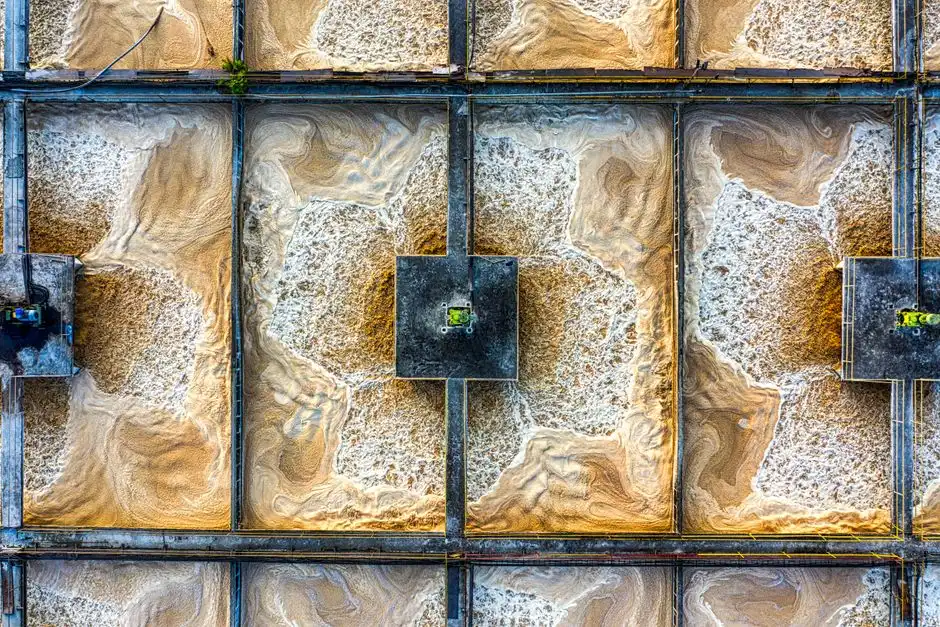
The plant design basis should begin with one full year of metered wastewater data where available, supplemented by at least 12 representative operating-day samples.
Define sampling locations before results are reviewed, then align samples with production shifts, campaign conditions, line start-up, shutdown, changeovers, rain and utility-flushing events. A “representative” day is not enough if it omits the condition that governs peak wastewater flow or contaminant loading.
Segregate streams by origin and treatment objective. At an automotive assembly plant, this may include body-shop and paint-shop process water, cooling-blowdown or recirculation streams, oily or emulsified water, general shop-floor wash water, sanitary wastewater, stormwater, and laboratory or battery-related process water where actually present. Each stream then needs a defined destination: municipal sewer, on-site treatment, production reuse, or separate regulation.
Request flow, pH, TSS, COD, BOD, oil and grease, and applicable dissolved metals. Add conductivity, temperature and process-specific contaminants only where the stream characteristics or permit justify them. The deliverable is a mass balance, not a list of laboratory results: flow and concentration must be paired for each stream and operating condition.
| Design-basis field | Evidence to request | Why it affects the DAF train |
|---|---|---|
| Stream inventory and destination | Source, treatment route, discharge point and reuse status | Determines which flow belongs in the DAF hydraulic balance |
| Flow record | Minimum, average, maximum and peak simultaneous flows | Sets hydraulic capacity and equalization requirements |
| Quality record | pH, TSS, COD, BOD, oil and grease, applicable dissolved metals | Sets chemical demand, separation duty and performance tests |
| Operating conditions | Shifts, campaigns, changeovers, start-up, shutdown, rain and flushing | Exposes coincident hydraulic and contaminant peaks |
| Measurement method | Meter location, calibration, data frequency and calculation method | Establishes whether the flow record can support design |
| Reuse and discharge criteria | Permit limits, receiving authority requirements and end-use quality | Defines the required outlet performance |
Volkswagen’s 2023 report says discharge flow is generally measured continuously using analog or digital flow meters, but also describes cases where discharge is estimated from freshwater input, permitted COD or BOD loads, or site withdrawal data and consumption references. Those exceptions should be identified explicitly. An estimated discharge value may be useful for corporate reporting, but it is weaker than a calibrated flow record for DAF design unless its uncertainty and operating correlation are demonstrated.
Calculate DAF capacity from hydraulic and solids loading
Start the DAF calculation with the simultaneous average wastewater flow that must be treated, then apply a documented peak factor supported by measured operating data, permit requirements and the selected operating philosophy.
The hydraulic relationship is:
Required surface area = design flow ÷ selected hydraulic loading rate
Flow and loading-rate units must match. The Mexico industrial screening range cited in HydropureWater’s 2025 DAF guide is 5–15 m/h, and the guide identifies 15 m/h as the maximum surface-loading rate under NOM-001-SEMARNAT. Use that range for early screening, not as the final plant rating without confirming the selected loading rate against the actual wastewater, equipment configuration and applicable requirements. The DAF system engineering specifications provide the context for comparing equipment proposals.
Check contaminant duty independently:
Solids load = design flow × influent concentration
Apply the calculation to TSS and any other solids-forming parameter relevant to the treatment objective, including COD or FOG where the supplier’s validated design envelope uses those parameters. Compare the calculated load with the selected equipment’s rated solids-handling capability. The supplied research provides no DAF-specific solids-loading value, so the acceptable limit must come from vendor design data rather than an assumed rule.
HydropureWater’s 2025 Mexico guide reports 92–97% TSS removal and 85–90% FOG reduction at influent loads of 500–5,000 mg/L. That is useful performance context, not an automatic guarantee for automotive assembly wastewater. Require the supplier to demonstrate that the plant’s actual TSS and FOG conditions fall within a validated treatment envelope.
| Calculation output | Required definition | Supplier evidence |
|---|---|---|
| Design flow | Simultaneous peak flow assigned to the DAF duty | Measured hydrograph and selected peak basis |
| Hydraulic loading rate | Selected m/h, with units checked | Process basis and applicable design reference |
| Calculated surface area | Design flow divided by loading rate | Guaranteed available flotation area |
| Solids load | Design flow multiplied by concentration | Rated solids-handling envelope |
| Recycle and pressure | Selected saturation and recycle conditions | Compressor, recycle pump and pressure-rating data |
| Chemical demand | Coagulant and flocculant conditions established by testing | Jar-test or pilot basis and dosing schedule |
| Redundancy | Explicit operating philosophy during outages | Duty/standby or N+1 arrangement and permit consequence |
Add redundancy only after establishing each unit’s hydraulic and solids duty. Specify whether N+1 means one full-duty standby unit, duty/standby sharing, or an alternate treatment route, and document the permitted discharge arrangement if the duty unit is unavailable. The final DAF datasheet should present design flow, loading rate, calculated area, selected area, solids load, recycle ratio, pressure rating, chemical demand and redundancy as separate verified outputs.
Choose the DAF treatment train and manage residuals
DAF should be selected as part of a treatment train, not treated as a stand-alone plant.
Match upstream pretreatment to the stream. Screening may be needed for workshop wash water; equalization can limit hydraulic and pollutant shocks; oil and emulsion removal may be required before flotation; pH control may be necessary for coagulation and flocculation. These conclusions must follow from wastewater characteristics and permit requirements. Equalization also affects peak-flow selection: an adequately buffered system can reduce the treatment peak, but only when the buffer volume, return rate and contingency conditions are documented.
Evaluate downstream treatment against the actual discharge or reuse route. A DAF effluent that meets a discharge requirement may still be unsuitable for process reuse because reuse generally imposes additional quality and reliability conditions. Do not assume that removal of TSS or FOG alone establishes reuse suitability.
Connect chemical dosing to the influent rather than a generic recipe. Jar tests or pilot work should establish coagulant, flocculant, pH adjustment and any emulsion-breaking requirements. A PLC-controlled coagulant and flocculant dosing system should be specified around those verified demands, including storage, containment, calibration and fail-safe operation.
Require the DAF supplier to define float-scrum characteristics, including expected solids and water content. Route that information into the residuals assessment rather than treating collected float as an unquantified by-product. Where further solids separation is required, the plate-and-frame filter press option should be evaluated against the waste characteristics, operating cycle and disposal route.
| Decision point | If the wastewater indicates | Required design response |
|---|---|---|
| Equalization | Variable production or batch discharges | Define working volume, mixing, return rate and high-level contingency |
| Oil and emulsion pretreatment | Free oil or stable emulsions | Provide dedicated removal before DAF and validate residual FOG |
| Chemical conditioning | Poor floatability at the selected dose range | Run jar or pilot tests and define controls from the results |
| Downstream treatment | Permit or reuse requirements exceed DAF effluent quality | Add filtration, biological or other polishing as required |
| Residual handling | Float-scrum volume or water content presents handling risk | Specify dewatering, storage, transport and final disposal |
| Monitoring | COD, pH, TSS and BOD are relevant to permit compliance and plant operation | Define sampling frequency, instrumentation and control responses |
Volkswagen’s 2023 report states that COD and site-specific parameters such as pH, TSS and BOD support permit compliance and wastewater-treatment-plant operation. It also distinguishes direct discharge, handled by an internal wastewater treatment plant, from indirect discharge to an external municipal plant. The procurement scope should therefore follow the actual route: direct discharge requires a complete on-site train and discharge-control basis; indirect discharge requires the pretreatment quality expected by the sewer authority and receiving plant.
Budget, supplier selection and procurement risks
Published DAF prices are market context, not a Volkswagen plant estimate.
HydropureWater’s 2025 Mexico guide gives broad CAPEX benchmarks of $50,000 for 4–20 m³/h systems and $500,000-plus for 100–300 m³/h systems. These figures come from a generic cost guide and cannot be applied to the new Mexican EV assembly plant because its flow, treatment envelope, construction requirements, pretreatment and residuals handling remain unknown.
Require every bidder to submit its design basis and calculation. The tender should identify the treated streams, average and peak flow, hydraulic loading rate, solids-load check, available tank area, recycle arrangement, pressure rating, controls, redundancy, construction materials and performance guarantees. Suppliers should document the expected TSS, COD, FOG and oil-and-grease characteristics against a validated treatment envelope or provide bench or pilot evidence.
The 92–97% TSS removal and 85–90% FOG reduction figures cited in HydropureWater’s 2025 Mexico guide should therefore be used as technical context, not pasted into a bid as a guaranteed outcome without wastewater-specific validation.
| Cost or risk boundary | Information required for pricing | Commercial check |
|---|---|---|
| Equipment CAPEX | Design flow, tank area, recycle system, pressure rating, materials and controls | Clear equipment scope and priced exclusions |
| Pretreatment and equalization | Stream characteristics, hydraulic peaks and storage basis | Supply-chain responsibility is allocated |
| Operating cost | Chemical demand, saturation-system power, sludge handling and maintenance | Lifecycle estimate uses verified consumption inputs |
| Performance and compliance | Discharge route, permit limits and validated influent envelope | Acceptance criteria and remedy are defined |
| Schedule and support | Delivery scope, milestones, FAT/SAT, training and spare parts | Local service capability and schedule risk are contractual |
Evaluate an industrial DAF system for Volkswagen Mexico wastewater on demonstrated design capability rather than a quoted flow alone. Treat permit and schedule risk as technical selection issues: require commissioning milestones, local-service capability, a spare-parts strategy, FAT and SAT protocols, operator training, and a process-performance test tied to the agreed influent and discharge basis.
Frequently Asked Questions
What DAF capacity is required for Volkswagen’s new EV assembly plant in Mexico?
A defensible m³/h rating cannot yet be stated from the supplied public evidence. Calculate it from the simultaneous peak flow assigned to DAF, the selected hydraulic loading rate, and an independent solids-load check. The request to the plant must include flow records, stream segregation, contaminant data, equalization performance, reuse objectives and discharge conditions.
How much will the DAF system cost?
The cited $50,000 benchmark for 4–20 m³/h and $500,000-plus benchmark for 100–300 m³/h are generic Mexico market figures, not a project estimate. Request itemized pricing for DAF equipment, equalization, pretreatment, chemical dosing, saturation and recycle systems, controls, installation, commissioning, sludge handling, utilities, maintenance and spare parts.
How should DAF suppliers be selected?
Require each supplier to show the design basis, average and peak flow, loading-rate calculation, solids-load check, available area, recycle system, pressure rating, redundancy philosophy, controls and validated TSS, COD, FOG and oil-and-grease treatment envelope. Also request FAT/SAT criteria, commissioning milestones, local support, training and a spare-parts plan.
Does choosing DAF establish regulatory compliance?
No. Technology selection alone does not establish compliance. The discharge route, permit limits and receiving authority govern final performance requirements. For direct discharge, define the complete on-site treatment and monitoring train; for indirect discharge, define the pretreatment quality required by the municipal wastewater treatment plant and applicable sewer requirements.