What the 2025 Masina wastewater study means for Kinshasa manufacturers
The 2025 Masina study provides the strongest supplied location-specific evidence for planning treatment of biodegradable high-strength organic wastewater in Kinshasa, but its results describe one public-abattoir stream rather than every factory discharge. The study used 16 sampling campaigns across wet and dry seasons, comprising ten in-situ measurement events and six laboratory-analysis events. Samples came from the slaughter area, collector, discharge point, and an upstream reference site on the N’djili River.
At the collector, COD reached 190.27 ± 1.07 mg/L and BOD5 reached 121.13 ± 3.83 mg/L. Nitrate reached 450.46 ± 2.53 mg/L. Across sampling points, BOD5/COD ratios ranged from 0.54 to 0.65, which the study interpreted as confirming that the effluents were highly biodegradable. These values support biological COD reduction as a technically credible treatment step, but they are not automatic design loads for another factory (Orapuh Journal, 2025).
Pollutant concentrations were consistently higher during the dry season, and seasonal variation was significant at p < .05 in the Orapuh Journal study. That finding is a design warning: allow for seasonal peak wastewater loading and verify whether the factory’s operating schedule, production volume, or discharge route changes that pattern. The study also concluded that untreated Masina abattoir effluent contributes to degradation of water quality in the N’djili River.
The practical implication is a sequenced treatment train rather than a COD-only device. The MBR versus conventional activated-sludge comparison for industrial wastewater is relevant when deciding how the biological stage should be organized, but the selection still needs factory-specific characterization.
Characterize the trade waste before selecting treatment equipment
A defensible equipment brief requires representative industrial effluent characterization across operating conditions, not one laboratory sample collected during an ordinary shift. The buyer should define the treatment objective and route—sewer discharge, controlled river discharge, containment, or reuse—before comparing equipment. For biological treatment, the BOD5/COD biodegradability ratio is a screening indicator of organic biodegradability, but it must be combined with flow, solids, fat, pH, and toxicity data.
Request sampling across production shifts, batch dumps, cleaning cycles, wet and dry operating periods, and abnormal discharges. Measure average flow and peak flow separately, including recurring batch discharges and accidental events. Daily COD and BOD5 mass loads then become the basis for biological and equalization sizing.
| Required input | Why it affects equipment selection | Buyer evidence to request |
|---|---|---|
| Average and peak flow | Sets hydraulic capacity, equalization volume, and peak biological load. | Continuous or campaign flow records, operating hours, batch-dump schedule, and abnormal-event log. |
| COD and BOD5 | Defines organic loading and the evidence supporting biological treatment. | Dated results by sampling point, analytical method, and the measured BOD5/COD ratio. |
| TSS and settleable solids | Determines solids capture, clarification, and sludge-handling duties. | Representative suspended-solids and settleable-solids data. |
| Oil and grease | Identifies the need for local FOG removal and possible interference with biology or membranes. | Oil and grease concentrations across production and cleaning periods. |
| pH, temperature, conductivity, nutrients | Influences biological activity, equalization, dosing, and process control. | Diurnal and seasonal results with the sampling method identified. |
| Toxicity and relevant metals | Identifies inhibition risks and the need for source control or pretreatment. | Waste-specific toxicity screen and a process-derived metals inventory. |
For slaughterhouse, food-processing, and similar plants, identify blood, fats, tissue, sanitizers, and cleaning chemicals during the factory survey. The Masina collector results—COD 190.27 ± 1.07 mg/L and BOD5 121.13 ± 3.83 mg/L—provide a local reference point for testing, not a substitute for the factory’s own data (Orapuh Journal, 2025).
Metal screening should be included where the factory inventory justifies it. A 2020 academic study examined toxic metals in sediments from seven stations in the Maluku-Kinsuka section of the Congo River near Kinshasa; it supports environmental screening but does not establish that every industrial effluent contains metals (Environmental Chemistry and Ecotoxicology, 2020). A rotary mechanical bar screen for local solids removal can address gross screenings, but it does not replace upstream characterization.
Build a treatment train that protects biology and removes COD
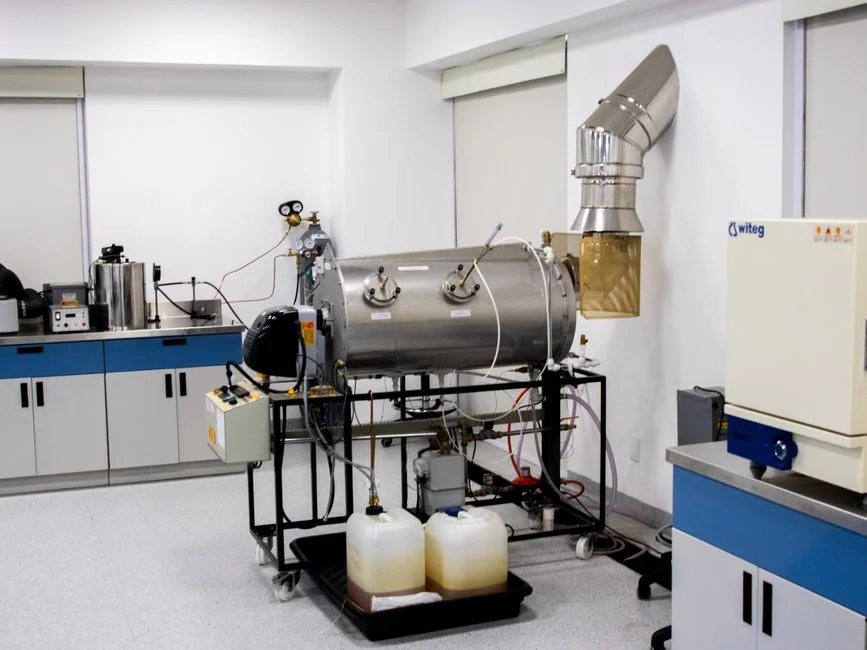
The appropriate process flow begins with screening and local pretreatment, followed by flow equalization, physical removal of solids or FOG, biological COD reduction, secondary clarification or membrane separation, risk-based disinfection, and sludge dewatering. Each barrier should address a measured failure mechanism. The train should not be assembled from a generic equipment list.
- Screen and pretreat locally: remove packaging, tissue, hair, bones, and other gross material before it reaches pumps, biological vessels, or membranes.
- Equalize flow: buffer batch dumps and production peaks before biological treatment, while checking whether equalization requires pH or temperature control.
- Remove FOG, colloids, and floatable solids where present: use a DAF system for oil, grease, colloids, and suspended solids when the characterization shows that these contaminants threaten downstream biology.
- Reduce dissolved organics biologically: the Masina BOD5/COD ratios of 0.54–0.65 support this stage for that stream (Orapuh Journal, 2025).
- Separate residual solids: select secondary clarification or an MBR membrane bioreactor for compact biological treatment and solids separation, according to the required effluent quality, footprint, reuse plan, and fouling risk.
- Disinfect where justified: apply an additional barrier when the receiving route, pathogen exposure, reuse plan, or approval requires it.
- Capture and dewater sludge: evaluate sludge yield and properties before selecting clarification and sludge-dewatering equipment.
| Process stage | Use it when | Core design inputs | Main operating concern |
|---|---|---|---|
| DAF | Oil, grease, colloids, or floatable solids threaten the biological stage. | Flow, FOG, TSS, particle characteristics, and required removal duty. | Recycle performance, float-solids removal, and chemical use. |
| Lamella clarification | Settled or flocculated solids are the main pretreatment target. | Peak flow, TSS, settleability, flocculation, sludge-recirculation arrangement. | Sludge withdrawal and carryover. |
| Conventional activated sludge | Land, loading variation, and local operating capability justify a larger biological footprint. | COD/BOD5 load, flow variability, settleability, aeration, sludge age. | Process control, biomass separation, and operator capability. |
| MBR | Compact treatment, integrated solids separation, and reuse-oriented effluent are priorities. | Flow, COD, BOD5, TSS, FOG, toxicity, membrane configuration, fouling profile. | Foaming, membrane cleaning, energy use, and solids handling. |
| Plate-and-frame dewatering | Captured sludge characteristics and disposal logistics support mechanical dewatering. | Sludge yield, solids content, compressibility, cake handling, filtrate route. | Feed conditioning, cake discharge, and filtrate management. |
DAF and lamella clarification are physical barriers, not guarantees of biological COD removal. Conversely, biological treatment will not reliably compensate for uncontrolled FOG, screenings, batch dumps, or inhibitory pH. A high-efficiency sedimentation tank addresses clarification; a plate-and-frame filter press addresses dewatering only after the sludge stream and disposal route are defined.
Compare the equipment options against actual wastewater risks
Equipment selection should follow the dominant contaminant and required function, with no option accepted on flow capacity alone. The supplied evidence does not establish universal DAF, MBR, or clarification loading rates for Kinshasa trade waste, so project design must use the measured waste profile and the equipment supplier’s design data.
| Option | Target role | Inputs needed for comparison | Decision warning |
|---|---|---|---|
| DAF | Removes FOG, oil, colloids, floatable material, and part of the suspended-solids load. | Peak flow, FOG, TSS, COD, BOD5, pH, toxicity, and floatable-solids properties. | Do not use it as the sole biological COD-removal guarantee. |
| Lamella clarification | Separates settled or flocculated solids; can support chemical dosing and sludge recirculation. | Flow, TSS, settleability, pH, chemical demand, sludge characteristics, and required solids capture. | Confirm integration with sludge withdrawal and equalization. |
| Conventional activated sludge | Reduces biodegradable organics through a biological process and supports conventional sludge handling. | COD, BOD5, flow profile, temperature, nutrients, pH, toxicity, settleability, and land availability. | Operating variability and local operator capability can govern feasibility. |
| MBR | Combines biological treatment with membrane solids separation in a compact arrangement. | COD, BOD5, TSS, FOG, peak flow, fouling constituents, reuse target, power, and maintenance access. | Verify membrane suitability and cleaning logistics against the actual stream. |
For biological selection, compare conventional activated sludge and MBR against organic load, footprint, effluent objective, reuse requirements, energy availability, operator skill, and maintenance support. The MBR versus conventional activated-sludge comparison for industrial wastewater provides decision context, while the regional guide to high-COD trade-waste treatment shows how pretreatment, biological treatment, and sludge handling fit into a complete train.
Do not ask suppliers to compare DAF and MBR as equivalent products. DAF addresses a physical contaminant-removal duty; MBR combines a biological stage with membrane separation. Lamella clarification can be upstream or downstream depending on the solids objective. The correct comparison is whether each unit removes the contaminant that threatens the next process stage.
Turn the wastewater profile into a defensible equipment specification
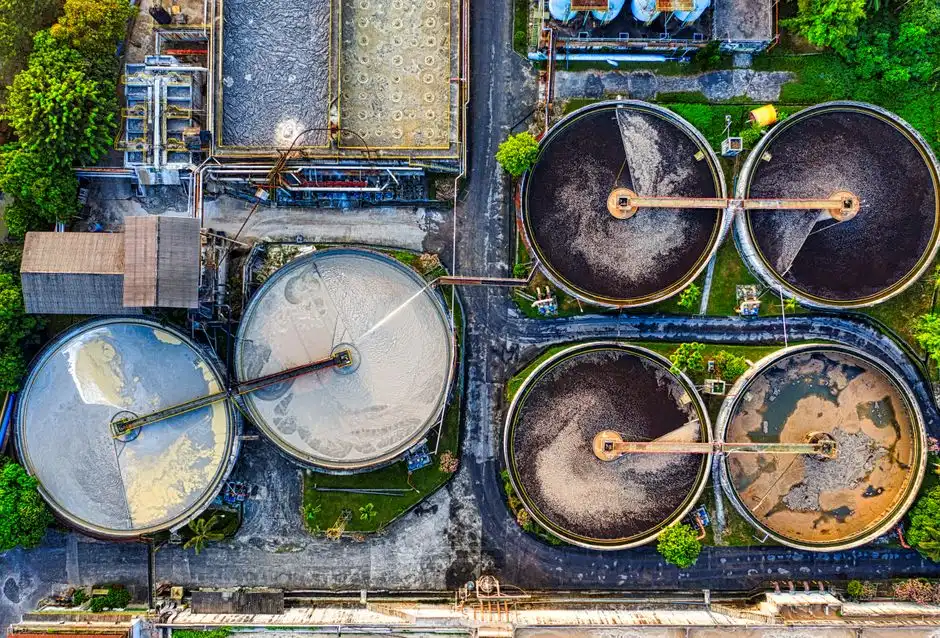
A supplier should size equipment from an agreed influent envelope and treatment objective, not from a single COD value or an assumed operating pattern. Put the design basis, sampling basis, operating hours, batch controls, guarantees, and boundary conditions into the enquiry and purchase specification.
| Specification item | Minimum information required | Why it belongs in the tender |
|---|---|---|
| Hydraulic basis | Average flow, peak flow, operating hours, recurring batch discharges, and abnormal-discharge controls. | Defines equalization and peak treatment capacity. |
| Organic load | COD and BOD5 with sampling dates, locations, methods, and the BOD5/COD ratio. | Supports biological process selection and loading calculations. |
| Physical and chemical profile | TSS, settleable solids, FOG, pH, temperature, conductivity, nutrients, toxicity, and relevant metals. | Identifies fouling, inhibition, separation, and pretreatment risks. |
| Effluent objective | Discharge route, reuse requirement, applicable approval basis, and monitoring requirements. | Prevents a generic treatment package being purchased. |
| Sludge and residuals | Expected yield, characteristics, chemical use, dewatering route, cake handling, filtrate destination, and disposal arrangement. | Integrates clarification, biological, and dewatering equipment. |
| Performance guarantee | Agreed influent limits, representative test method, test protocol, and remedy for non-compliance. | Makes the guarantee technically measurable. |
| Execution conditions | Power, operator skill, maintenance access, reagents, local service, commissioning, and training. | Tests whether the package can operate after handover. |
The Masina collector COD of 190.27 ± 1.07 mg/L and BOD5 of 121.13 ± 3.83 mg/L are contextual reference values from a 2025 abattoir study, not default design loads (Orapuh Journal, 2025). Request sludge yield and characteristics before accepting a dewatering proposal; biological COD removal concentrates material that must be captured and managed.
Where chemical dosing is part of the train, specify reagent type, metering range, control signal, containment, and operator interface. An automatic chemical dosing system should be tied to measured treatment demand rather than added as an unattributed accessory. Do not accept a performance guarantee written without an influent envelope, because COD, BOD5, TSS, FOG, pH, and toxicity can change the required equipment and operating performance.
Verify compliance, commissioning, and environmental-risk controls
The supplied research does not establish the current numerical discharge limits applicable to a 2026 Kinshasa installation. Before final process selection, the facility must confirm its obligations with the competent DRC or Kinshasa environmental authority and, where relevant, the receiving sewer or river-discharge authority. The Masina measurements are monitoring results, not regulatory thresholds.
Seasonal monitoring is a specific environmental-risk control. The Orapuh Journal’s 2025 Masina study found consistently higher pollutant concentrations during the dry season and significant seasonal variation at p < .05. The commissioning and operating plan should therefore revisit peak-load assumptions under dry-season conditions rather than accepting one wet-season sampling set.
For hospital or healthcare effluent, do not treat general trade-waste equipment selection as a substitute for pathogen and antimicrobial-resistance controls. The supplied ICARS source concerns hospital wastewater and AMR surveillance in Kinshasa, but its underlying technical performance was not accessible; it cannot support a treatment-performance claim. A separate project should define pathogen treatment, disinfection validation, antimicrobial-resistance monitoring, and clinical-waste controls with the relevant authorities.
- Establish a baseline through representative influent and receiving-water sampling.
- Define startup, shutdown, upset, bypass, and automatic diversion procedures.
- Set alarms for flow, pH, aeration, solids separation, and any critical process variable.
- Train operators before stable operation and test access to maintenance and spare parts.
- Agree a sampling plan covering operating shifts and wet and dry periods.
- Verify treated-effluent quality and sludge handling against the current permit or receiving-system criteria.
- Add disinfection only where the risk assessment, reuse plan, or approval requires it; where chlorine dioxide is selected, define generation, storage, dosing, monitoring, and operator controls through a chlorine dioxide generator package assessment.
Do not reuse the article’s COD, BOD5, or nitrate values as acceptance limits. They characterize one study location. Compliance acceptance must use the applicable 2026 criteria confirmed for the facility’s specific receiving route.
Frequently Asked Questions
How should manufacturers in Kinshasa, DR Congo treat trade waste and high-COD effluent in 2026?
Start with industrial effluent characterization, then use the measured failure risks to place equipment in sequence. DAF addresses FOG, colloids, and floatable solids; lamella clarification addresses settled or flocculated solids; biological treatment reduces biodegradable organics; MBR combines biological treatment with membrane solids separation; disinfection is added when the receiving route or reuse plan requires it; and sludge dewatering completes the solids-handling pathway. The regional guide to high-COD trade-waste treatment provides a useful comparative framework, but the final train must follow local characterization.
What measurements are needed to size treatment equipment?
Request average and peak flow, operating hours, batch-discharge information, COD, BOD5, TSS, FOG, pH, temperature, nutrients, toxicity, and relevant metals, together with sludge yield and disposal requirements. Use the high-COD trade-waste treatment guide as a comparison resource, not as a source of capacity. The supplied research provides no universal DAF, MBR, or clarification loading rate for Kinshasa, so suppliers must base sizing on the factory’s measured envelope and their own design data.
What are the main compliance risks for a Kinshasa industrial wastewater project?
The principal risk is treating monitoring data or a generic treatment standard as a permit. The 2025 Masina study measured an abattoir stream and identified dry-season concentration increases, but it did not provide a complete 2026 Kinshasa regulatory framework or universal discharge limits. Obtain the current requirements from the competent environmental authority and the receiving sewer or river-discharge authority before fixing the treatment objective or buying final equipment.
How should a treatment-equipment supplier be selected?
Require a written influent envelope, agreed treatment objective, performance guarantee linked to a representative test method, clear scope boundary, commissioning plan, operator training, maintenance support, and local service arrangement. Check that the supplier has sized every unit against the same wastewater profile and has not treated DAF, clarification, biological treatment, MBR, and dewatering as interchangeable products. This check prevents an inadequately characterized package from reaching site.
Related Equipment
- DAF system for oil, grease, colloids, and suspended solids — specifications, capacity range, and technical data