Why high-COD trade waste can overwhelm a Toronto sewer connection
High-strength industrial wastewater can upset both liquid and solids treatment at a municipal wastewater treatment plant while consuming organic treatment capacity that could otherwise serve other users, according to MDPI AG’s 2023 Waste Activated Sludge-High Rate study. Chemical oxygen demand (COD) estimates the oxygen required to oxidize material in wastewater and serves as a design indicator for organic loading, but it does not by itself establish discharge compliance. For a Toronto manufacturer, the controlling path starts with source control, representative characterization, pretreatment and a legally applicable sewer use or discharge authorization.
Toronto’s municipal infrastructure does not remove that obligation. The Ashbridges Bay source reports that approximately 25% of the current sewer system consists of combined sewers. It also describes a $3 billion CAD DR&CW program intended to capture combined-sewer wastewater and divert it to Ashbridges Bay for treatment. Those municipal facts describe Toronto’s wastewater network; they do not demonstrate that a manufacturer’s industrial effluent will be accepted without treatment or local limits.
Before selecting equipment, request the following from the receiving authority:
- The permitted discharge point and any allocated flow.
- Prohibited discharges and restrictions on batch releases.
- Local COD, suspended solids, pH and oil-and-grease limits.
- Monitoring, sampling and reporting requirements.
- Surcharge rules and consequences of non-compliance.
This screening step is part of the source-controlled approach developed in this 2026 guide to treating trade waste and high-COD effluent and in these high-COD trade-waste treatment strategies.
Characterize the wastewater before selecting a treatment train
Representative sampling across production, cleanup and washdown periods is the minimum basis for sizing a treatment train because a single grab sample can conceal batch peaks and changing wastewater fractions. The engineering intake should separate soluble organic load from particulate COD, free and emulsified oil, colloids and potentially inhibitory compounds. A supplier should not select DAF, biological treatment or advanced oxidation from COD alone.
Ask for COD, biochemical oxygen demand, suspended solids, oil and grease, pH, temperature, flow, conductivity, nitrogen and phosphorus data as applicable to the process and authorization. Identify whether toxic, readily biodegradable or slowly biodegradable compounds may be present, since each changes biological treatment expectations. Document peak, average and minimum flows, batch-discharge patterns, production schedules and washdown concentrations. Equalization and biological loading must reflect the actual operating cycle rather than an averaged daily flow.
MDPI AG’s 2023 electrocoagulation study demonstrates why operating variables matter. Its mineral-processing wastewater had an initial COD of 424.29 mg/L, and the study examined anode material, current density, initial pH and additives. That work does not prescribe a treatment train for a Toronto manufacturer, but it shows why a single COD value cannot define chemical use or process performance.
| Information to obtain | Why it affects design | Evidence needed from the supplier |
|---|---|---|
| Representative COD and flow data | Sets organic and hydraulic loading. | Peak, average and minimum design basis. |
| Suspended solids and particle distribution | Indicates the load on clarification and membranes. | Separation method and solids-capture objective. |
| Oil and grease characterization | Determines whether free oil, emulsified oil or both are present. | DAF pretreatment and scum-handling design. |
| pH, temperature and conductivity | Influence biological activity, chemical dosing and corrosion control. | Operating range and control strategy. |
| Nitrogen, phosphorus and toxicity | Can constrain biological nutrient removal or inhibit treatment. | Applicability limits and monitoring plan. |
| Batch-release pattern | Controls equalization requirements and downstream shock loading. | Equalization volume and mixing assumptions. |
Screening and metering can be addressed through a rotary mechanical bar screen, while pH or chemical corrections require an automatic chemical dosing system configured from test data rather than a generic dose.
Build a pretreatment train that protects downstream biology
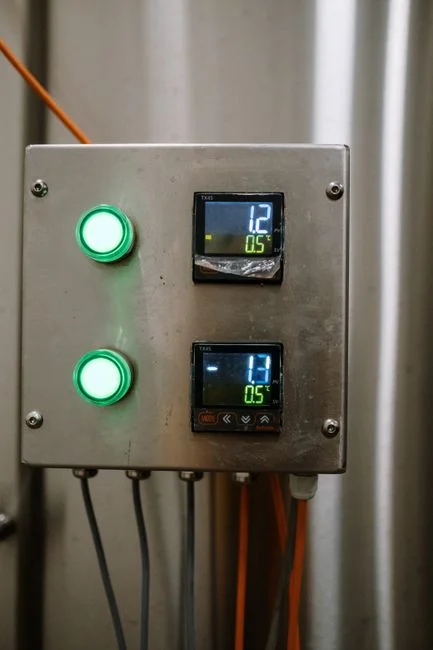
A defensible treatment train sequences source control and screening, flow equalization, pH control where required, suspended-solids and oil removal, biological treatment, sludge separation, and final disinfection or reuse treatment. The sequence exists to reduce shock loading and remove material that would impair biology or membranes. It is not valid to place a biological reactor ahead of known oil, FOG or particulate loads without demonstrating why those fractions will not overtax the system.
- Source control and screening: prevent incompatible production materials and coarse solids from entering the treatment train.
- Equalization: blend high-strength batch effluent and buffer hydraulic and organic peaks.
- pH control where needed: protect biological treatment and chemical conditioning within their applicable operating ranges.
- DAF or equivalent clarification: remove suspended solids, FOG, oil and grease, and colloidal material.
- Biological treatment: remove biodegradable organics after the pretreatment objectives are defined.
- Sludge separation, handling and final treatment: provide a managed solids stream and meet the required discharge or reuse outcome.
DAF is a logical pretreatment step when oil, grease or particulate COD is material because it separates those fractions before they consume biological capacity or foul downstream membranes. An industrial DAF wastewater pretreatment system should therefore be evaluated around wastewater fractions, hydraulic variation and sludge or scum handling—not selected by its nominal capacity alone.
Equalization is equally important. A production slug released over a short period can impose more organic and hydraulic demand than the same daily volume dispersed continuously. The MDPI AG 2023 WASHR study found that high-strength wastewater can disrupt both liquid and solids treatment capacity at municipal plants, which is the consequence that pretreatment is intended to reduce.
| Process stage | Primary function | Design information required |
|---|---|---|
| Screening | Remove coarse and abrasive solids. | Screen aperture, extracted-solids handling and flow profile. |
| Equalization | Buffer hydraulic and organic loading. | Peak batch volume, mixing method and residence time. |
| pH control | Bring wastewater into the required process range. | Batch data, chemical demand and discharge limits. |
| DAF | Remove suspended solids, FOG and colloidal material. | Fractional loading, flotation performance and scum removal. |
| Biological treatment | Remove biodegradable organic load. | Biodegradability, loading rate, nutrients and inhibition criteria. |
Automatic chemical dosing is a control layer for pH adjustment, coagulation and flocculation. Chemical selection, dose, recirculation and equipment configuration require wastewater testing and engineering design. No universal dose can be inferred from COD alone. A mechanical screening unit and controlled chemical-dosing package must therefore fit the complete process sequence.
Compare biological routes for high-strength industrial effluent
An MBR combines activated-sludge treatment with submerged membrane filtration, separating biological treatment from membrane-based solids separation. The catalog system described for this guide is intended for municipal sewage, industrial process water and reuse projects from 10 to 2,000 m³/day. That range describes the offered configuration; it does not establish that a plant’s wastewater can be treated successfully at either end of the range.
The principal trade-off is footprint versus operating complexity. Membrane solids separation can support a compact, reuse-oriented train and produce clarified effluent, but aeration, membrane maintenance, pretreatment and sludge management remain essential. Conventional activated sludge generally separates solids through clarification and requires less membrane-specific maintenance, while offering less compact solids separation. Neither route independently solves variable industrial influent, inhibitory compounds or non-biodegradable COD.
| Decision point | MBR route | Conventional activated-sludge route |
|---|---|---|
| Biological treatment and solids separation | Integrated activated sludge and submerged membrane filtration. | Activated sludge followed by clarification. |
| Footprint | Potentially compact because membrane separation replaces some conventional clarification functions. | Typically requires separate aeration and clarification areas. |
| Industrial pretreatment | Essential where FOG, particulates or colloids could foul membranes. | Still required where particulates or FOG would overload biology or disrupt settling. |
| Maintenance and operations | Adds membrane cleaning, fouling control and membrane replacement considerations. | Requires sludge-return, settling and clarifier operation. |
| Variation response | Can be unstable if equalization, pretreatment or biology is undersized. | Can also be unstable under variable or inhibitory loading. |
| Reuse potential | Can support polishing-oriented designs when the biological objective is achieved. | May require additional solids-removal and disinfection steps. |
Where oil, FOG or particulate COD is significant, DAF ahead of either biological route protects aeration capacity, sludge settleability and membrane surfaces. An integrated MBR wastewater treatment system should therefore be evaluated with pretreatment assumptions included.
BioTerraVa’s commercial technical page advertises 90–99% pollutant removal for custom DAF and moving-bed biofilm reactor systems. Because that is a vendor-specific claim without the underlying wastewater and acceptance basis in the supplied research, it should not be treated as guaranteed performance. Require pilot or full-scale testing under representative loading. More detailed MBR comparisons are available in MBR versus conventional activated sludge for industrial wastewater.
If soluble COD is not biodegradable, adding biological capacity may not resolve the objective. The route may need source reduction, biological treatment and advanced polishing rather than a larger bioreactor alone.
Handle sludge and confirm the discharge or reuse pathway
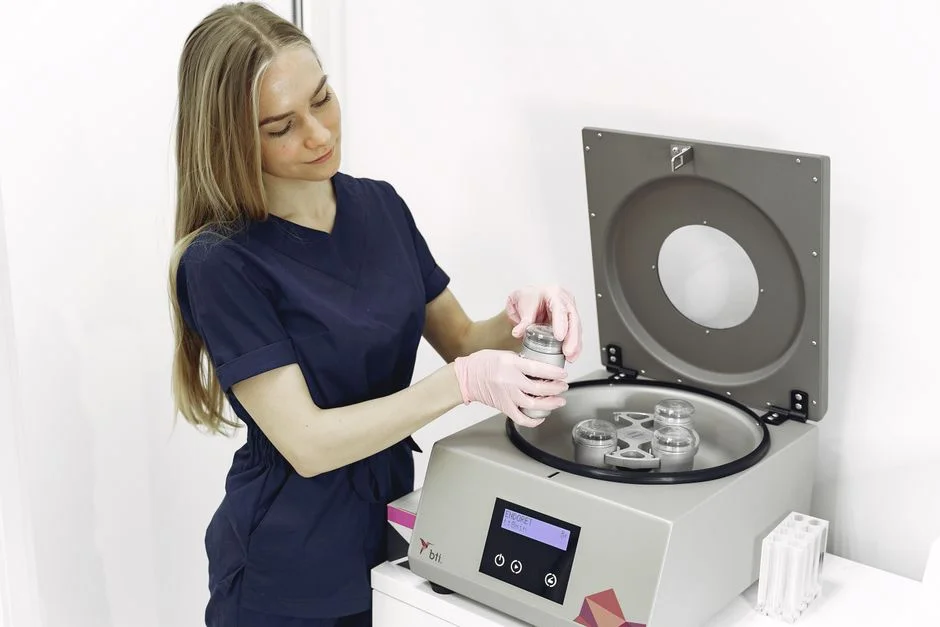
DAF and biological treatment both generate sludge, so treatment should not end at the effluent tank. The solids stream requires thickening, dewatering, storage and a disposal or reuse route defined by applicable requirements. Removing contaminants from the water does not eliminate the obligation to manage the concentrated residues created during treatment.
A plate and frame filter press is one dewatering option. The cited catalog information describes filtration areas from 1 m² to 500 m² and manual, hydraulic or fully automatic PLC-controlled operation. The appropriate configuration depends on sludge characteristics, batch size, desired cake dryness and operating labour; catalogue range alone is not a sizing analysis.
The intended discharge pathway determines the remaining treatment and evidence:
- Sanitary sewer discharge: the sewer-use authorization, local limits, monitoring and surcharge rules control the design basis.
- Direct environmental discharge: the applicable environmental authorization and receiving-water considerations govern the required treatment.
- Controlled reuse: the reuse specification must define physical, chemical and microbiological quality, not simply reduced COD.
- Zero liquid discharge: liquid-recovery and concentrate-management requirements must be included from the beginning.
For reuse, define the biological and solids-removal requirements before selecting ultrafiltration. The cited UF catalog system removes bacteria, colloids and suspended solids without chemicals and accepts feed turbidity up to 300 ppm. That intake limit is not a guarantee of reuse suitability; upstream treatment must keep feed quality within it. A UV sterilizer may then form part of a disinfection train where required, but it does not replace biological treatment or solids separation.
Commissioning should test continuous flow, load variation, upset response, solids capture, biological stability, monitoring records and operator training. The acceptance method should use the same operating conditions and sampling points that define contractual performance. See the plate-and-frame sludge dewatering options and ultrafiltration system details when developing that test plan.
Use a 2026 equipment-selection and supplier-vetting checklist
A comparable bid should define the same design basis, outlet objective and permit basis. Require each supplier to state the design influent, required final quality, applicable authorization, process assumptions, equipment sizing basis and exclusions. If two proposals use different flow, COD or solids assumptions, their prices and removal claims are not comparable.
Ask whether pretreatment, equalization, chemical storage, aeration, sludge handling, controls and monitoring are included or excluded. The 2026 food and beverage pretreatment-limit guidance illustrates the broader need to connect process equipment with sewer requirements, while the chemical-plant pretreatment guide for 2026 supports treating local limits as an engineering input.
| Procurement check | Evidence to request | Risk if omitted |
|---|---|---|
| Design basis | Flow, COD, suspended solids, FOG, pH and variability assumptions. | Undersized equalization, biology or solids handling. |
| Scope boundary | Included equipment, utilities, controls, sludge handling and civil works. | Change-order exposure after award. |
| Performance commitment | Test method, sampling points, operating conditions and acceptance criteria. | Ambiguous removal or effluent claims. |
| Non-compliance remedy | Defined investigation, correction and contractual consequence. | Dispute when the system misses performance. |
| Lifecycle inputs | Energy, chemicals, maintenance, operator hours, spares and sludge disposal. | Low purchase cost with higher operating burden. |
| Local support | Ontario service capability, references and commissioning responsibilities. | Delayed troubleshooting or incomplete handover. |
| Compliance pathway | Applicable sewer or discharge requirements incorporated into the design. | Equipment that cannot lawfully serve the intended outlet. |
Keep contractual guarantees separate from marketing language. “High removal,” “suitable for reuse” and “municipal quality” are incomplete unless tied to measurable outlet parameters and representative test conditions. Request Ontario field evidence, but do not use Ashbridges Bay’s municipal capacity figures as proof that an industrial treatment system will perform acceptably.
Use authorization as a procurement gate: obtain the applicable receiving requirements before ordering, incorporate them into the design basis, and verify them through commissioning. A treatment train that fails its intended permit or reuse specification is not complete even if its individual units operate as designed.
Frequently Asked Questions
Should a temporary high-COD event be handled by a permanent treatment train?
Not necessarily. A temporary event may require containment, controlled transfer, added equalization and temporary treatment, depending on its volume, composition and authorized disposal route. The permanent train should be justified by recurring wastewater characteristics and required operating capacity. If the event recurs or the discharge authorization requires continuous compliance, a permanent train with tested pretreatment, biological loading and solids handling is more defensible than relying on emergency dilution or haul-off.
How should equipment be sized when COD and flow both matter?
Size against the governing combination of hydraulic and organic loading, including peak and minimum flows, batch releases, COD variability, suspended solids and FOG. Daily flow alone can understate a short high-strength slug, while COD alone can ignore the flow and equalization required to protect downstream biology. A supplier’s design basis should reconcile representative wastewater data with equalization, DAF, biological loading and solids-handling calculations.
Which supplier qualifications reduce scale-up and compliance risk?
Require representative pilot data or a full-scale performance test with stated sampling points, analytical methods and operating conditions. Also request a clear performance guarantee, remedy for non-compliance, Ontario service capability, operator training and complete design documentation. A custom DAF and MBBR supplier’s advertised 90–99% pollutant-removal claim from BioTerraVa should not substitute for project-specific evidence because it is vendor-specific and the supplied research does not establish its test basis.
How should the budget compare treatment options without a misleading price estimate?
Compare the complete installed and operating cost: equipment, civil work, pretreatment, equalization, chemical storage and use, aeration, membranes or DAF maintenance, sludge dewatering and disposal, monitoring, energy, operator labour and eventual replacement. Request itemized quotations using the same design influent and outlet specification. No supported price range was provided in the research, so a defensible budget cannot be stated without the wastewater characterization, required flow, treatment objectives and site constraints.
Does Toronto’s municipal treatment capacity replace manufacturer pretreatment?
No. Ashbridges Bay is Toronto’s main sewage treatment facility, and the cited municipal source reports that approximately 25% of the current sewer system consists of combined sewers and that a $3 billion CAD DR&CW program is intended to capture and divert combined-sewer wastewater for treatment. Those facts do not authorize industrial discharge, replace local pretreatment requirements or establish the outlet limits applicable to a manufacturer. The applicable sewer use or discharge authorization remains a separate condition of the project.
Related Equipment
- industrial DAF wastewater pretreatment — specifications, capacity range, and technical data