What Changes When Activated Sludge Is Combined with MBR?
For mining and metals wastewater, conventional activated sludge is usually the more familiar biological process, while MBR adds membrane-based solids separation to biological treatment. MBR is most compelling when a Napoleon-area facility needs a compact installation, low suspended-solids effluent, or a direct route toward reuse. It does not eliminate the need to characterize toxic metals, variable flows, and contaminant loads or to provide suitable pretreatment. The right choice depends on wastewater chemistry, required reuse or discharge quality, available footprint, sludge handling, operating capability, and verified site data rather than membrane brand alone.
Conventional activated sludge, or CAS, treats biodegradable material biologically and then separates the resulting biomass through conventional solids-handling equipment. A membrane bioreactor retains that biological stage but replaces part of the separation function with membrane filtration. The academic review of membrane bioreactor technology, The Advancement in Membrane Bioreactor (MBR) Technology (PubMed Central, 2023), describes membranes as a physical separation barrier. That barrier strengthens the treatment case where discharge limits are strict, the receiving environment is sensitive, or treated water is intended for reuse.
HydropureWater’s integrated submerged PVDF MBR system combines activated sludge treatment with submerged membrane filtration and is specified for effluent filtration below 1 μm. The verified HydropureWater catalog also lists capacities from 10 to 2,000 m³/day. This is a product specification, not a universal performance claim for every MBR or mine-water application.
Membrane solids separation does not automatically remove dissolved toxic metals. Whether CAS or MBR is appropriate depends on wastewater characterization, upstream removal or control of inhibiting constituents, and the applicable permit, sewer, discharge, or reuse requirements. The MBR cost and selection guide is useful as part of that evaluation, but it should not be read as proof that membrane technology resolves contaminants that the biological process cannot tolerate.
Start with the Mining Wastewater Profile
A defensible MBR-versus-CAS decision starts with the actual wastewater profile, including how it changes across production, drainage, and rainfall conditions. The supplied research contains no Napoleon-specific contaminant concentrations, flow distribution, toxicity results, or reuse criteria. Without those inputs, no biological process or equipment capacity can responsibly be declared suitable in advance.
Request flow and mass-loading data rather than relying only on average daily flow. The sampling program should cover pH, metals, hardness, salinity, suspended solids, organics, toxicity indicators, and the discharge or reuse target. These parameters affect equalization, chemical dosing, biological compatibility, membrane feed quality, and the selection of downstream polishing.
| Project input | What the buyer needs | Why it affects the treatment decision |
|---|---|---|
| Flow and loading history | Average, peak, minimum, storm-related, and production-linked flow and contaminant loading | Determines equalization needs, biological sizing, hydraulic loading, and recovery targets |
| Water chemistry | pH, metals, hardness, salinity, suspended solids, organics, and toxicity indicators | Identifies biological inhibition, precipitation requirements, and membrane-fouling risks |
| Treatment objective | Discharge, sewer, receiving-water, and reuse requirements | Defines the required separation and polishing performance |
| Site constraints | Available footprint, residual-handling route, utilities, and operating staff | Distinguishes a technically attractive train from a practical plant configuration |
Potential pretreatment includes equalization, pH adjustment, source control, and solids removal where the characterization shows they are necessary. HydropureWater’s JY Series integrated water purification system is listed for surface water and mine-water applications at capacities from 10 to 200 m³/h. That catalog range provides equipment context only; site testing must establish applicability for the actual wastewater.
Compare MBR and Conventional Activated Sludge
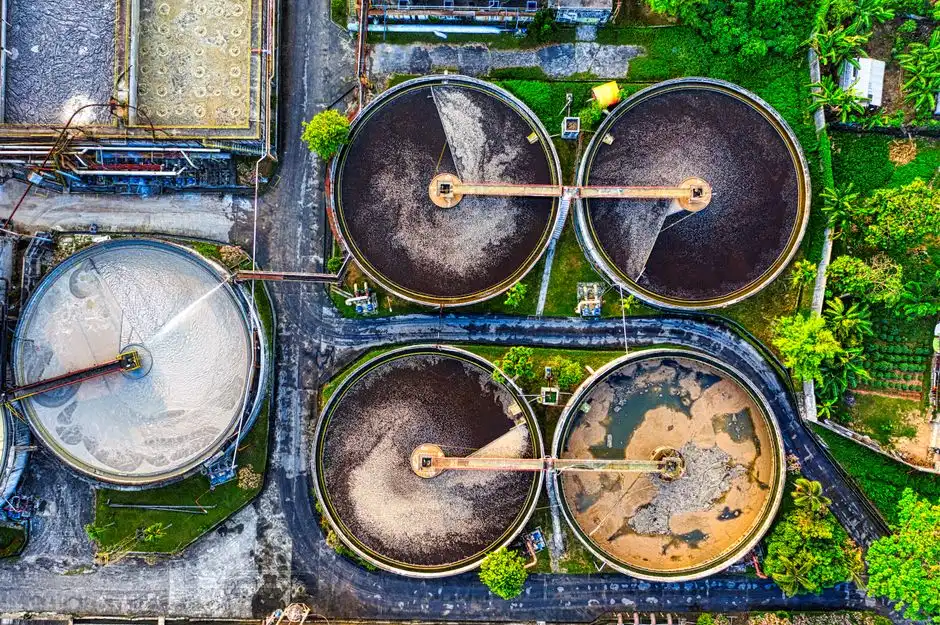
MBR and CAS provide biological treatment, but they differ in how solids are separated, how the equipment is operated, and what must be managed as residuals. The comparison should follow the parameters that control performance and operability rather than treating “MBR” as a generic quality upgrade.
| Parameter | Conventional activated sludge | MBR |
|---|---|---|
| Biological treatment | Uses activated sludge biology | Retains activated sludge biology and couples it with membrane filtration |
| Solids separation | Conventional clarification or related solids separation | Physical membrane barrier retains biomass and solids |
| Footprint | Requires space for biological and solids-separation equipment | HydropureWater specifies a 60% smaller footprint for its integrated system than conventional systems; this is a product claim, not an industry-wide benchmark |
| Residuals | Produces sludge requiring thickening, dewatering, and disposal | Also produces concentrated biological solids; comparative sludge-volume data were not supplied |
| Maintenance | No routine membrane replacement or membrane-cleaning program | Requires membrane-fouling control, cleaning, and replaceable-element management |
| Reuse readiness | May require additional solids separation or polishing | Can provide a stronger solids-separation stage for reuse, subject to chemistry and validation |
HydropureWater’s DF Series is described as consuming 10–20× less energy than external cross-flow systems. That comparison is limited to those architectures; total plant energy still requires an engineering estimate for the selected configuration. The DF Series flat-sheet MBR modules use 0.1 μm flat-sheet modules, operate at 32–135 m³/day per stated production range, and are offered in 80–225 m² configurations. By comparison, the integrated submerged PVDF system is cataloged at 10–2,000 m³/day.
Cost, membrane life, sludge volume, energy consumption for the complete plant, and effluent performance cannot be selected from catalog architecture alone. They require a site-specific bid, performance guarantees, or representative pilot testing.
Where MBR Has a Stronger Case
MBR deserves priority evaluation when low suspended-solids effluent, water reuse, a constrained footprint, or a sensitive receiving environment is central to the project brief. The academic MBR source discusses stricter discharge requirements, sensitive sites, and reuse as conditions favoring membrane-based treatment. These are application drivers, not evidence that MBR will meet a mine’s permit without characterization.
The integrated submerged PVDF MBR system provides filtration below 1 μm, while the DF flat-sheet modules are specified at 0.1 μm. These separation specifications do not imply universal removal of dissolved metals. Precipitation, adsorption, ion exchange, biological transformation, or other polishing may still be needed depending on the wastewater and discharge or reuse target.
Membrane review must include fouling potential, feed chemistry, cleaning strategy, aeration arrangement, and replaceable-element design. The supplied research contains no mine-water MBR pilot results for the site, so final suitability requires representative testing. A bench or pilot campaign should examine the actual blend of flows and contaminants rather than a clean-water sample.
The practical MBR case is conditional: if solids separation and footprint are the binding constraints, and the feed can be made compatible with biology and membrane operation, MBR may remove a conventional clarification step from the train. If water chemistry is unresolved, changing the solids-separation technology does not resolve the upstream problem.
Where Conventional Activated Sludge Remains Practical
CAS remains a practical baseline when the wastewater is biologically compatible, the treatment objective is adequately met, and the site has sufficient footprint and operating resources. Its operating model avoids routine membrane replacement and membrane-fouling management. That does not make it universally lower cost: the supplied research provides no comparative lifecycle-cost analysis for Napoleon mining or metals facilities.
Treatment robustness and treatment quality are separate questions. CAS may withstand a stable, biologically amenable wastewater after suitable equalization and pretreatment, but neither CAS nor MBR should be selected before flow, toxicity, metals, and target performance are characterized. A membrane cannot make inhibitory wastewater biologically acceptable, and a conventional system cannot compensate for undefined contaminant loads.
Where suspended solids or floatables could burden downstream biology, preliminary dissolved air flotation or clarification may be considered. HydropureWater’s DAF machine is cataloged for metalworking and industrial pretreatment. Its application to a particular mining stream requires site-specific testing; it should not be treated as a proven mine-water solution by analogy.
A like-for-like lifecycle assessment should include biological media, sludge handling, chemicals, energy, membrane replacement, cleaning, and downtime where applicable. The accompanying comparison of DAF versus clarifier selection for mining wastewater provides a useful pretreatment frame without supplying a complete CAS-versus-MBR cost comparison.
Select the Complete Treatment Train
A mining wastewater approval package should evaluate the complete train in a fixed sequence, rather than selecting a reactor before defining the wastewater and receiving requirement.
- Characterize the wastewater: establish flow, mass loading, chemistry, variability, and toxicity.
- Define the target: identify applicable discharge, sewer, receiving-water, or reuse criteria.
- Control inhibiting constituents: determine whether source control, equalization, pH adjustment, precipitation, or solids removal is required.
- Select biological treatment: establish whether the treated wastewater is biologically compatible and whether variable loading requires equalization.
- Select solids separation: compare conventional clarification with submerged or flat-sheet membrane separation.
- Define residual handling: evaluate thickening, dewatering, and the destination of the resulting solids.
- Validate the complete train: confirm performance with representative testing and site-specific guarantees.
Use the submerged configuration when its integrated architecture, capacity range, footprint, aeration arrangement, and maintenance access fit the site. Evaluate the DF flat-sheet architecture when the required configuration, footprint, module arrangement, and element-replacement strategy are preferable. Expansion requirements and maintenance access should be included in that comparison.
| Decision gate | Question for the project team | Required supporting information |
|---|---|---|
| Wastewater characterization | Is the feed biologically compatible after controlled pretreatment? | Representative sampling across relevant operating conditions |
| Solids separation | Does the required quality justify MBR, or can CAS meet the target? | Target-based comparison, footprint review, and fouling assessment |
| Residual handling | Where will concentrated solids go, and what dewatering capacity is required? | Residual production estimate, site layout, and disposal route |
| Permit and reuse | Which analytes and local limits apply to the complete effluent? | Current permit, sewer requirements, receiving-water information, and reuse specification |
| Commercial validation | Which performance and operating commitments will the supplier provide? | Site-specific guarantees, pilot results, controls scope, cleaning plan, and replacement terms |
Sludge dewatering must be included. HydropureWater’s plate-and-frame filter press has a stated filtration-area range of 1–500 m², providing relevant equipment context for residual dewatering but not a project recommendation. The final permit and sewer-approval package should follow the site’s actual analyte list and applicable local limits; the mining and metals wastewater compliance workflow provides a structured starting point. For pretreatment selection, the related DAF versus clarifier selection for mining wastewater should be adapted to the site’s chemistry.
Frequently Asked Questions
How much will MBR cost compared with conventional activated sludge for a Napoleon mining or metals facility?
The supplied research provides no Napoleon-specific MBR-versus-CAS price. Request a like-for-like bid separating equipment, biological and solids-handling equipment, pretreatment, controls, installation
Frequently Asked Questions
Is MBR better than conventional activated sludge for mining and metals wastewater?
MBR (Membrane Bioreactor) technology is generally superior for mining wastewater due to its ability to achieve complete solids separation, producing effluent with turbidity often below 0.2 NTU. Unlike conventional activated sludge (CAS), which relies on gravity clarification and is susceptible to sludge bulking from complex mining chemistry, MBRs operate at higher Mixed Liquor Suspended Solids (MLSS) concentrations, typically ranging from 8,000 to 15,000 mg/L. This allows for a significantly smaller footprint and superior removal of heavy metals adsorbed onto biomass.
How much does an MBR cost compared with activated sludge for a mining wastewater plant in Napoleon?
In Napoleon, capital expenditures (CAPEX) for an MBR system are typically 20% to 40% higher than a conventional activated sludge plant due to the cost of membrane modules and sophisticated air scouring systems. However, operational expenditures (OPEX) for MBRs are increasingly competitive when accounting for the total cost of water; while MBRs require higher energy for aeration (typically 0.5–1.0 kWh/m³), they eliminate the need for tertiary filtration and secondary clarifier maintenance, reducing the overall lifecycle cost over a 15-year horizon.
What MBR size is needed for a mining wastewater flow in Napoleon?
The sizing of an MBR for a mining facility in Napoleon depends on the specific flux rates, which typically range from 15 to 25 LMH (liters per square meter per hour) for mining-influenced water. If your facility processes 1,000 m³/day, you would require approximately 42 to 67 square meters of membrane surface area, though this must be adjusted upward by 15–20% to account for Clean-in-Place (CIP) cycles and periodic membrane maintenance downtime.
How do I compare MBR suppliers and avoid membrane performance risks?
To mitigate performance risks, evaluate suppliers based on their track record with high-salinity and high-metal-loading influent, which can cause rapid membrane fouling. Require potential vendors to provide pilot study data demonstrating critical flux values, resistance to chemical cleaning agents (pH 1–13 tolerance), and documented transmembrane pressure (TMP) recovery rates. Ensure the supplier offers a formal membrane life guarantee, typically based on a 5-year pro-rated replacement schedule under specified operational parameters.
Can MBR wastewater treatment meet reuse requirements for a mine or metals plant?
Yes, MBR effluent is highly suitable for industrial reuse, including cooling tower makeup, dust suppression, and ore processing. Because the membrane pore size (typically 0.03 to 0.4 microns) acts as an absolute barrier to bacteria and suspended solids, the treated water consistently meets stringent discharge standards and can be further processed via Reverse Osmosis (RO) if the mining operation requires high-purity water for boiler feed or sensitive metallurgical processes.