
What Determines MBR or Activated Sludge for a Billingsley Mine?
For mining and metals wastewater in Billingsley, neither technology wins by default: MBR is usually stronger where land is constrained, flow is moderate or variable, and reuse or brine-disposal value supports tighter solids separation. Conventional activated sludge often remains more economical for large, dilute flows with serviceable aeration and clarifier assets. Neither process removes dissolved metals by itself, so equalization, pH control, precipitation, screening, and site-specific testing remain necessary. Final selection should follow the current permit, at least 30 days of representative influent and effluent data, an existing-asset review, and a 60–90 day pilot using actual Billingsley site wastewater.
Conventional activated sludge separates mixed liquor by gravity in a secondary clarifier. A membrane bioreactor retains activated-sludge biomass and uses submerged membranes as the solids-separation barrier. The difference changes footprint, solids handling, operating dependencies, and failure modes; it does not create a dissolved-metals removal mechanism.
Begin with the current discharge permit: daily-maximum and monthly-average limits, discharge point, reuse specifications, and applicable state or local conditions. Obtain at least 30 days of representative influent and effluent data before selecting a treatment train. Then classify the project as a new installation, a retrofit using existing aeration and clarifier assets, or a polishing-only upgrade. That distinction frames the real choice as full-flow MBR, retained conventional activated sludge, or a hybrid.
The MBR cost per m³ and selection guide provides a useful structure, but site data—not generic “mine water” assumptions—must determine the process scope.
How the Wastewater Matrix Changes the Choice
HydropureWater’s 2026 field observations identify BOD/COD below 0.3, sulfate above 1,000 mg/L, TDS above 5,000 mg/L, and hardness in the thousands of mg/L as CaCO₃ as screening flags; these are observations, not universal design limits, and each requires confirmation through Billingsley sampling.
First classify the feed as mine drainage, process water, contact water, or a variable blend. Characterize flow, pH, BOD, COD, sulfate, TDS, hardness, soluble and particulate metals, and toxicity. Low biodegradability changes the biological-loading calculation: retaining more biomass or increasing mixed liquor suspended solids cannot correct a feed that has insufficient biodegradable carbon or material that inhibits the organisms.
| Wastewater characteristic | Decision implication | Evidence or required input |
|---|---|---|
| BOD/COD below 0.3 | Review biological loading before crediting either architecture with treatment capacity. | HydropureWater 2026 field observation; confirm with site analysis. |
| Sulfate above 1,000 mg/L | Flag biological operating and membrane-fouling risk. | HydropureWater 2026 field observation; confirm site sulfate and loading. |
| TDS above 5,000 mg/L | Verify biological tolerance and membrane compatibility. | HydropureWater 2026 field observation; obtain representative testing. |
| Hardness in the thousands of mg/L as CaCO₃ | Include precipitation chemistry and solids-handling review. | HydropureWater 2026 field observation; test alkalinity, hardness, and metals. |
| Soluble metals | Evaluate precipitation and subsequent solids separation. | Site metals matrix and precipitation tests. |
| Particulate metals | Evaluate upstream solids capture before biological treatment. | Solids fractionation and site solids analysis. |
Soluble and particulate metals need different pathways. Soluble metals may require dissolved metals precipitation before the biological stage; particulate metals may respond to upstream solids removal. An automatic chemical dosing system can support pH control and precipitation, but reagent selection and dose must come from the actual metals, alkalinity, and water chemistry—not a generic recipe.
MBR and Conventional Activated Sludge Side by Side
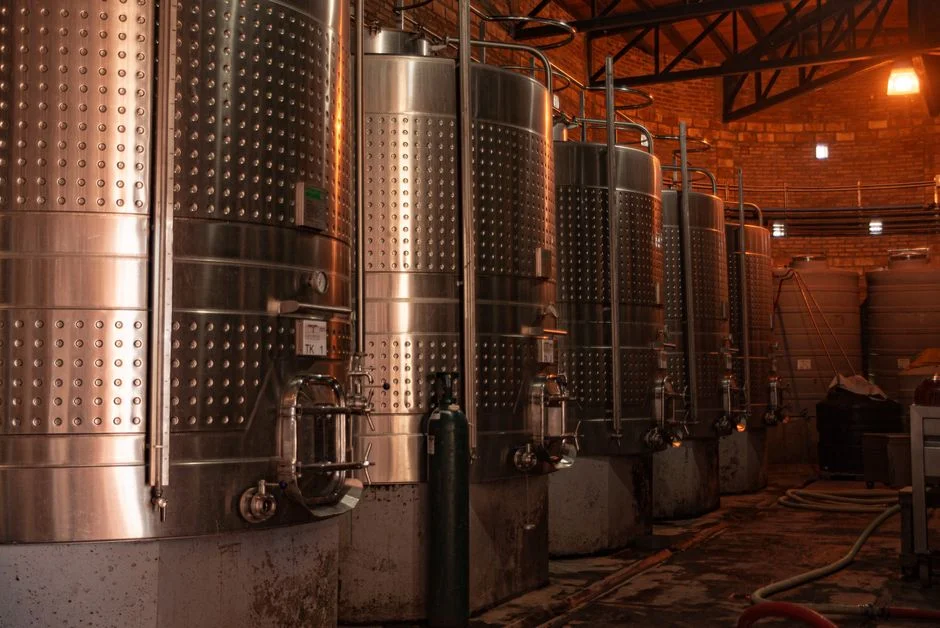
HydropureWater’s 2026 comparison reports CAS MLSS of 2,000–4,000 mg/L, with 5–15 days SRT for non-nitrifying service and 1–5 days for nitrifying service; the same comparison identifies MBR operation at 8,000–12,000 mg/L MLSS, with operation up to 15,000 mg/L.
Higher MLSS does not remove upstream pretreatment duties. CAS performance depends on sludge settleability, clarifier capacity, biomass control, and solids handling. MBR depends on air scour, cleaning, permeate pumping, PLC controls, and membrane-replacement planning. Its failure modes shift from clarifier carryover toward fouling, elevated transmembrane pressure, and membrane replacement.
| Item | Conventional activated sludge | MBR |
|---|---|---|
| Biological solids separation | Secondary clarifier and gravity settling. | Submerged membranes; biomass remains in the reactor. |
| MLSS reported by HydropureWater, 2026 comparison | 2,000–4,000 mg/L. | 8,000–12,000 mg/L, with operation up to 15,000 mg/L. |
| SRT reported by HydropureWater, 2026 comparison | 5–15 days for non-nitrifying service; 1–5 days for nitrifying service. | Set from biological objectives and the selected process configuration. |
| Principal operating dependency | Settleability, clarifier capacity, biomass control, and solids handling. | Air scour, cleaning, permeate pumping, controls, fouling control, and replacement planning. |
| Principal separation failure | Clarifier overload or solids carryover. | Fouling, elevated transmembrane pressure, or membrane failure. |
| Metals pretreatment | Required where dissolved metals are present. | Required where dissolved metals are present. |
| Footprint | Existing basin and clarifier assets may reduce civil scope. | HydropureWater’s verified catalog states approximately 60% smaller footprint for its integrated system; the installed layout still needs module depth, access, equalization, washdown, and replacement handling. |
EPA MBR Fact Sheet data cited in the research report give effluent turbidity of 0.01–1.31 NTU and BOD of 0.10–0.72 mg/L. These are not guarantees for a Billingsley mine-water matrix; biodegradability, pretreatment, sludge age, temperature, loading, and membrane design affect results.
Shock loading remains material. HydropureWater’s 2026 field data reports a 30–60% CAS removal-efficiency loss for 24–72 hours after a metal pulse. MBR retains biomass, but metals can still inhibit biology, foul membranes, and alter mixed-liquor properties. The integrated submerged-PVDF MBR system addresses solids separation; it does not replace precipitation. Module selection should also account for the DF Series flat-sheet MBR modules identified in the comparison.
Build the Treatment Train Before Choosing the Bioreactor
The source-described treatment sequence is equalization, pH control and precipitation where required, fine screening, biological treatment, reuse-specific polishing, and sludge dewatering; poor upstream control can erase an MBR’s operating or economic advantage before the membrane stage.
Under that approach, pH 8.5–9.5 is used for CAS and pH 6.5–7.5 for MBR to maintain metals in hydroxide form. These values must be validated against the actual metals, alkalinity, and water chemistry at the Billingsley site. MBR improves solids separation but does not replace upstream precipitation.
Match fine screening to membrane format. The source comparison specifies 1–2 mm screening for hollow-fiber modules and 2–3 mm for flat-plate modules. The GX Series fine screening system should therefore be checked against the selected configuration rather than specified generically.
Define filtration, disinfection, or reverse osmosis from the reuse specification and brine-disposal route. Do not assign those units automatically to MBR scope; doing so would omit required capital and operating costs. If dewatering is required, evaluate biological and precipitation solids together when considering a plate-and-frame filter press. The solids are one combined waste stream, not separate disposal problems.
Choose Full-Flow MBR, Conventional Sludge, or a Hybrid
The correct architecture follows five gates: permit, influent matrix, existing assets, reuse and disposal value, and pilot evidence. The commercial screening point of approximately 5,000 m³/day above which CAS can be favorable is not a design rule; it assumes electricity below approximately $0.07/kWh and a usable basin.
| Configuration | Conditions favoring selection | Required validation |
|---|---|---|
| Full-flow MBR | Constrained land, moderate flow, variable or shock-prone influent, and meaningful reuse or brine-disposal value. | Permit review, metals matrix, pretreatment design, and site pilot. |
| Retained conventional activated sludge | Large, dilute flow with a serviceable aeration basin and clarifier. | Asset-condition assessment, shock response, and equal-duty total-cost comparison. |
| Hybrid | Serviceable CAS can treat bulk flow while MBR polishes a defined reuse stream. | Reuse specification, polishing pilot, pretreatment review, and membrane-scope boundary. |
| Do not proceed to final procurement | Poor pretreatment control or unrepresentative wastewater. | Establish equalization, screening, pH control, precipitation, and representative shock testing first. |
Billingsley’s actual tariff, flow profile, asset condition, discharge permit, and reuse requirements must be obtained before applying the screening assumptions. The mining and metals wastewater compliance guide and mine-site wastewater treatment process guide provide useful review frameworks, but they do not replace site-specific evidence.
Compare Capital, Operating, and Recovery Costs
In the cited 1,000 m³/day commercial scenario, MBR CAPEX is 20–40% above equivalent-flow CAS and OPEX is 15–30% higher per m³; these are scenario assumptions, not quotations or universal percentages.
| Cost boundary | Items to obtain or compare | Evidence needed |
|---|---|---|
| Capital | Membrane cassettes, fine screens, permeate pumps, PLC work, equalization, headworks modifications, civil changes, air scour, and pretreatment. | Equal-flow, equal-duty site-specific pricing. |
| Operations and maintenance | Cleaning chemicals, membrane replacement, labor, electricity, and downstream polishing or disposal. | Supplier consumption assumptions and site utility rates. |
| Existing assets | Retained basin and clarifier value, avoided civil work, and retired equipment. | Asset-condition and replacement-cost review. |
| Recovery value | Avoided make-up water, avoided brine-disposal cost, and usable recovered water. | Actual volumes, rates, quality, and take-up schedule. |
| Residuals and polishing | Filtration, disinfection, reverse osmosis, and residual or brine handling. | Reuse specification and disposal route. |
The commercial source cites approximately $2/m³ make-up-water value and a 4–6 year payback where a meaningful reuse or brine-disposal driver exists. Both are site-specific values to validate, not guaranteed outcomes. Run sensitivity checks for electricity tariff, recovered-water value, membrane life, chemical consumption, and pretreatment scope. Use the MBR cost per m³ and selection guide to structure the worksheet, then require vendor and site inputs.
Validate the Decision with a 60–90 Day Site Pilot
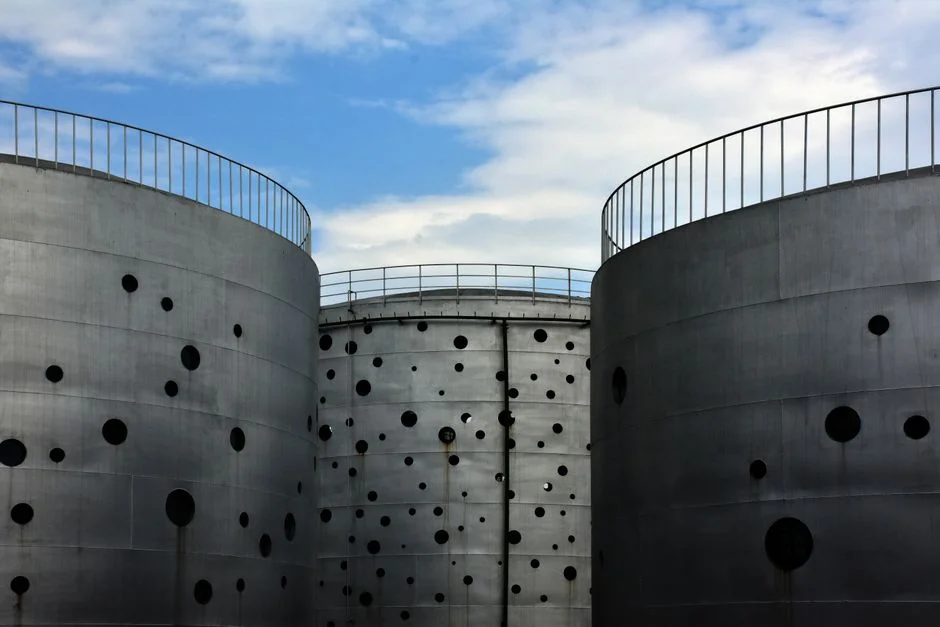
A 60–90 day pilot using actual Billingsley site wastewater is the appropriate gate before full-scale procurement because the critical risks are the complete metals matrix, shock response, membrane fouling, and recovery after upsets—not membrane filtration in isolation.
Size the pilot around a defensible fraction of proposed full-scale flow and state that basis in the test plan. Monitor flow, pH, temperature, sulfate, TDS, hardness, soluble and particulate metals, turbidity, MLSS, SRT, transmembrane pressure, cleaning frequency, effluent TSS, and BOD. These measurements connect the biological reaction, solids separation, metals pretreatment, and membrane condition.
Exercise representative metal-loading and shock events. Record each event’s magnitude, duration, removal response, recovery time, and effect on membrane fouling. HydropureWater’s DF Series configurations span 80–225 m² and produce 32–135 m³/day; use the module configuration as pilot guidance, not as proof of full-scale mine-water performance.
Before testing, define acceptance criteria in writing against the current permit, reuse or polishing specification, and recovery after agreed shock events. The procurement record should also establish data ownership, deviation handling, remediation responsibilities, membrane warranty terms, replacement pricing, and references from comparable mining or metals duty. If the pilot fails after appropriate remediation, revisit pretreatment scope or process selection before issuing the equipment order.
Frequently Asked Questions
How much more does MBR cost than conventional activated sludge for mining wastewater in Billingsley?
HydropureWater’s 2026 commercial scenario places MBR CAPEX 20–40% above equivalent-flow CAS and OPEX 15–30% higher per m³ at 1,000 m³/day. These figures are not quotations. Request equal-flow, equal-duty pricing covering membranes, controls, equalization, civil work, chemicals, replacement, labor, pretreatment, and polishing, then compare those costs with actual avoided water purchases, brine-disposal savings, recovered-water value, and existing-asset savings.
What flow rate and wastewater characteristics justify an MBR instead of retaining conventional activated sludge?
MBR becomes more defensible when land is constrained, flow is moderate or variable, shock-prone influent requires tighter solids separation, or reuse creates measurable value. The commercial source uses approximately 5,000 m³/day as a CAS-favorability screening point under specified cost conditions—not a design rule. Validate Billingsley’s flow profile, tariff, wastewater matrix, asset condition, and reuse specification.
Which supplier requirements should be included in an MBR proposal for mining and metals wastewater?
Require an explicit responsibility matrix covering equalization, screening, pH control, precipitation, biological treatment, controls, polishing, and solids handling. Also request actual site-water pilot results, comparable mining or metals references, data ownership rules, remediation duties, membrane warranty terms, replacement pricing, and complete operating-consumption assumptions.
Can MBR meet the discharge permit without additional precipitation or polishing?
Not automatically. MBR improves solids separation but does not remove dissolved metals by itself. The source-described approach uses pH 8.5–9.5 for CAS and pH 6.5–7.5 for MBR to maintain metals in hydroxide form, but those values require site validation. Additional polishing depends on the discharge permit, reuse specification, and brine-disposal route.