Which Rules Control a Sewer Discharge Near Troy?
A mining or metals plant near Troy discharges to a municipal sewer under Clean Water Act §307(b) pretreatment rules, not an NPDES permit for direct surface-water discharge. The controlling requirements are 40 CFR Part 403, any applicable categorical standard, and the receiving POTW’s site-specific local limits at the point-of-connection discharge. Treatment equipment should therefore be selected after verifying the industrial user permit, sewer-use ordinance, local-limit worksheet and actual wastewater chemistry—not from federal limits alone.
EPA identifies 40 CFR Part 437 for ore mining and dressing and 40 CFR Part 433 for applicable metal-finishing operations. The permit writer must confirm the facility’s categorical status, subcategory and production basis; a mine and a metal-finishing plant can have different categorical obligations even when both discharge metals-bearing wastewater. A related mining and metals sewer-limit compliance guide provides a broader sector framework.
For pretreatment, NPDES regulates direct discharges to waters of the United States under Clean Water Act §402. A POTW discharge is an indirect discharge subject to Part 403. The fabricated-metals pretreatment workflow applies the same permit-first principle to related industrial operations.
| Requirement | What the engineer must establish | Why it controls equipment selection |
|---|---|---|
| 40 CFR Part 403 | Industrial user status, prohibited discharges, monitoring, reporting and local-limit authority | Defines the legal pretreatment framework |
| 40 CFR Part 437 or 433 | Applicable activity, subcategory and production basis | Determines categorical applicability and numerical requirements |
| POTW local limits | Current written limits at the point of connection | Frequently becomes the tighter treatment target |
| Industrial user permit | Monitoring point, frequency, flow limits, reporting and slug-discharge procedures | Converts limits into operating and documentation duties |
EPA states that POTWs impose local limits at the end-of-pipe discharge, meaning the industrial user’s point of connection to the collection system. EPA may also enforce local limits developed under 40 CFR Part 403.5(c), so accepting a POTW permit does not end the federal inquiry.
Obtain the industrial user permit, current sewer-use ordinance, local-limit worksheets, POTW discharge application, monitoring and reporting provisions, and any slug-loading notification requirements. The HydropureWater research article, published in 2026, identifies representative 2026 local limits of 0.3–1.0 mg/L monthly average for zinc and 0.3–0.5 mg/L monthly average for copper. It cites a 40 CFR Part 437 zinc standard of 1.0 mg/L daily maximum and 0.5 mg/L monthly average. These are comparison points, not substitutes for Troy-area limits in the receiving POTW’s current ordinance and permit.
Characterize Every Waste Stream Before Sizing Equipment
Waste streams must be characterized separately because acid mine drainage, spent solutions, runoff and cleaning water can have incompatible pH, solids and metal loadings. The 2026 mining and metals pretreatment research article reports raw acidic streams at pH 2–4, TSS in the hundreds to several thousand mg/L, and elevated sulfate and TDS in mining water. Those values are investigation starting points—not Troy site design values.
Sample each relevant stream under normal production and identifiable batch conditions. The program should cover pH, TSS and dissolved metals including lead, copper, zinc, cadmium, nickel and arsenic. Where relevant, add sulfate, TDS, oil and grease. Record flow continuously or through a verified campaign that captures the daily profile; an average daily flow alone will hide the discharge that determines basin and clarifier capacity.
| Input to establish | Collection method | Design decision supported |
|---|---|---|
| Average and peak flow | Continuous flow monitoring plus batch-event review | Equalization volume and treatment capacity |
| pH variability | Representative samples and time-series monitoring | Reactor staging, reagent demand and precipitation control |
| Dissolved metals and TDS | Stream-specific laboratory analysis | Precipitation chemistry and residual-polishing need |
| TSS, oil and colloid character | Settled and unsettled solids testing | DAF, lamella and filtration selection |
| Batch events | Shift, dump-leach and clean-out operating records | Equalization, diversion and notification design |
Do not combine streams merely because they enter one header. Keep separate records for shift changes, dump-leach cycles and mill clean-outs, then test combinations that represent credible worst-case treatment loads. The mine-site water reuse and capacity sizing guide provides related guidance on developing a water-balance basis.
Jar testing should precede final reagent doses, precipitation pH and solids-separation selection. Test each stream and relevant blended condition, then verify residual metals and solids carryover after filtration. A federal categorical limit does not characterize the plant’s effluent: current permit limits, local limits and actual process chemistry define the design basis.
Build a Compliance Treatment Train in the Right Order

The compliance train should proceed from flow and chemistry control to solids removal, polishing, sludge handling and discharge monitoring. Each stage needs an operating signal and a link to a permit requirement; otherwise the equipment train cannot demonstrate why it is necessary.
- Equalize the wastewater. The 2026 research article recommends an equalization basin sized at 8–24 hours of average daily flow to damp batch discharges. It warns that a four-hour basin can pass upstream spikes directly into the clarifier.
- Control pH. Use PLC-controlled reagent dosing and target pH 6.5–9.0, as described in the same 2026 research. Stage dosing across two reactors when influent pH varies by more than two pH units.
- Precipitate dissolved metals. Hydroxide precipitation is the default because the chemistry is established and reagent cost is generally lower. The research attributes 85–95% total-metals removal to properly controlled precipitation systems, based on its 2024-11 citation.
- Remove the solids. Select DAF or lamella clarification according to oil, colloid content, flow and footprint constraints. Add polymer only at the jar-tested dose; the research gives 0.5–3 mg/L as a representative range for metal-hydroxide flocculation.
- Polish and disinfect only as required. Use multimedia filtration where residual TSS control is required. Add chlorine dioxide only where the POTW ordinance or collection-system risk assessment requires disinfection.
| Stage | Design input | Operating criterion | Compliance output |
|---|---|---|---|
| Equalization | Average flow and verified batch volume | Level and diversion controls | Damped discharge concentration and flow |
| pH adjustment | Influent pH range | Permit pH range and precipitation target | Stable metals-removal chemistry |
| Hydroxide precipitation | Jar-test dose and optimum pH | Reactor pH and reagent flow | Metals-bearing sludge |
| Polishing | Residual metals and TSS after clarification | Filtration rate and differential pressure | Compliance with applicable solids limit |
| Disinfection | Written POTW requirement | Verified residual | Collection-system protection |
Where the verified local limit requires residual metals below 0.3 mg/L, evaluate sulfide polishing. The 2026 research cites residual copper, zinc, cadmium and nickel of 0.01–0.05 mg/L for sulfide, compared with 0.5–2.0 mg/L for hydroxide. The same source reports sulfide reagent cost at two to four times higher and requires sealed reactors with hydrogen sulfide scrubbing. Treat that as a justified application, not the default.
The research gives multimedia filtration rates of 1–2 m/h and residual TSS below 10 mg/L; these are design guidance, not guaranteed Troy performance. It also cites chlorine dioxide dosing of 1–5 mg/L and contrasts it with chlorine’s trihalomethane formation. A PLC-controlled pH and coagulant dosing skid can implement the control logic, but the guarantee must follow jar tests and the verified permit.
Choose DAF or Lamella Clarification from the Waste Profile
DAF is the better fit when the wastewater contains oil, grease, fine colloidal metals or other floatable material; lamella clarification is generally more suitable for metal-hydroxide sludge at higher flow where footprint is constrained. Neither choice should be made from flow alone.
The 2026 research reports DAF performance of 90–98% TSS removal and 85–95% oil-and-grease removal in mining or metal-finishing service. It gives a DAF hydraulic-loading range of 5–25 m/h and states that 13 models cover 4–300 m³/h. Those figures are useful for preliminary screening, but they are product-range information rather than a performance guarantee for a Troy waste stream.
| Decision point | Prefer DAF when | Prefer lamella clarification when |
|---|---|---|
| Waste character | Oil, grease, floatable solids or fine colloids dominate | Metal-hydroxide sludge is the principal solids stream |
| Hydraulic loading | Project loading falls within the vendor’s validated range | Higher-flow treatment is required within the validated range |
| Footprint | Available area supports the selected DAF configuration | Compact plate-pack geometry is advantageous |
| Performance basis | Oil and colloid removal is the governing duty | Solids capture from precipitation sludge governs |
The 2026 research identifies packaged DAF skids as common below 10 m³/h and says that above 100 m³/h, parallel DAF trains or a lamella clarifier typically becomes more economical. It recommends design around the peak two-hour flow with 20–30% turndown. Use those values as screening points, then require a supplier to validate the actual waste blend, solids loading and required effluent performance.
For the equipment review, compare an industrial DAF system for mining wastewater against lamella clarification using the same influent data, guarantee criteria and sludge criteria. The DAF versus clarifier selection guide provides a useful side-by-side framework, although the waste chemistry still governs the choice.
Treat the Resulting Sludge as a Compliance Requirement
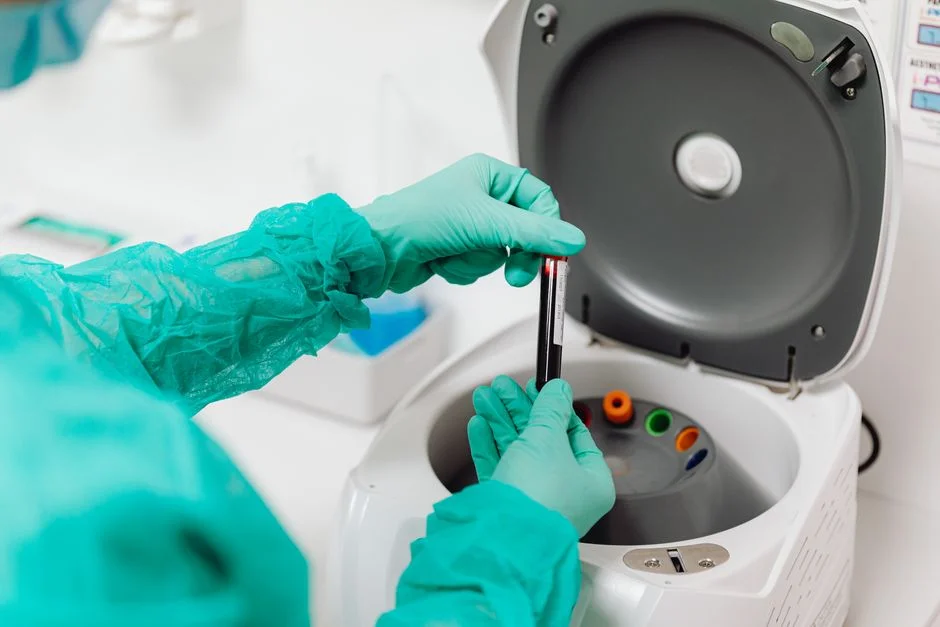
Clarifier and DAF sludge must be managed as a regulated waste, not left as an unresolved consequence of the water-treatment design. The project scope should cover collection, conditioning, storage, dewatering, transport and final disposal, including the facility’s generator status and waste-code determination.
The 2026 research describes plate-and-frame filtration producing sludge at 25–35% dry solids and returning filtrate to the plant headworks. Those figures are source benchmarks rather than guarantees for site-specific mining sludge. Evaluate the plate-and-frame filter press against actual solids rheology, cake handling and required dewatering performance.
The same research identifies a subtitle-D landfill option or delivery to a smelter where metals are recoverable. Neither route should be assumed: final classification and acceptance depend on the actual waste, generator status and receiving facility. Solids removal also creates a return stream. Include filtrate flow and chemistry in equalization and hydraulic-loading calculations so dewatering does not generate an unaccounted surge. Where polishing requires a multi-media filtration system, coordinate backwash waste and filtrate return with that same mass balance.
Turn the Permit into Monitoring and Enforcement Controls
A defensible pretreatment system converts every permit requirement into a sampling point, frequency, analytical method, alarm threshold, operating response and retained record. A treatment skid is not the compliance system unless the controls and operating evidence are included.
| Control element | Minimum engineering requirement | Audit evidence |
|---|---|---|
| Parameter compliance matrix | Limit, sample location, frequency, method and responsible operator | Current permit and signed matrix |
| pH and feed control | Automatic control with defined operating band | Trend, calibration and reagent-use records |
| Batch and high-flow response | Interlock, automatic diversion or safe-hold provision | Alarm, batch and notification records |
| Laboratory monitoring | Approved analytical method and representative sampling | Laboratory reports and chain of custody |
| Corrective action | Trigger, responsible party and verification step | Nonconformance and closeout records |
The 2026 research states that a common PLC skid can maintain pH within a ±0.2 band. That control precision is relevant when the applicable zinc monthly average is 0.3 mg/L, but it does not replace effluent monitoring. Configure high-flow, high-pH, high-metal and instrument-failure interlocks, along with diversion or safe-hold provisions and notification procedures for slug loads.
Retain calibration records, reagent-use logs, batch-discharge records, laboratory results and corrective-action reports. These records show whether treatment capacity, chemistry and sampling protocols operated as represented.
Williams Mullen’s 2017-03-30 account of the EMD Millipore settlement describes alleged pass-through or interference, failure to notify the POTW of slug loadings and violations of permitted flow limits. The settlement required treatment upgrades, operator training, sampling, analysis and quarterly monitoring, with a $385,000 civil penalty. The 2026 research also cites Clean Water Act §309 civil penalties of up to $25,000 per day of violation. Those cases support controls that prevent, detect and document excursions; they do not replace current permit requirements. Additional operational context appears in this industrial pretreatment monitoring workflow.
Watch Regulatory Changes Without Redesigning Around Uncertainty
Regulatory watch items should be tracked separately from confirmed permit obligations because a federal direction or POTW review does not automatically impose a new limit on a specific industrial user. The engineering baseline remains the current Troy-area POTW permit, categorical determination and written local limits.
The 2026 research identifies three watch items. It describes the Lead and Copper Rule Revisions as pushing lead action levels toward 10 µg/L and potentially prompting POTWs to rederive local limits. It reports a 2024 EPA Multi-Sector General Permit monitoring suite—PFOS, PFOA, PFHxS and PFNA—for sectors including metal mining and says local authorities may adopt the same suite. It also identifies ore-mining BAT revisions dated 2025-03.
| Watch item | Date or status in the 2026 research | Required confirmation |
|---|---|---|
| Lead action level direction | Toward 10 µg/L; presented as a POTW reevaluation risk | EPA status and any revised POTW local limit |
| PFAS monitoring suite | PFOS, PFOA, PFHxS and PFNA; 2024 permit development cited | Written POTW requirement, method and reporting instruction |
| Ore-mining BAT revisions | 2025-03 | Applicability to the facility’s renewal and whether it affects sewer obligations |
For each item, document the source, date, responsible person, agency correspondence and implementation status. Obtain written confirmation from the receiving POTW before adding routine sampling or changing treatment equipment. BAT requirements for a direct-discharge or mine-permit program should not be relabeled as automatic sewer-discharge limits, and a local-limit review should not be treated as an amended permit until the controlling authority confirms it.
Budget, Supplier and Sizing Questions to Ask Before Ordering?
Equipment bids should be evaluated as complete compliance systems, not as isolated tank or pump prices. Ask bidders to price equalization, mixing, chemical storage, dosing, precipitation, clarification, polishing, sludge dewatering, controls, utilities and commissioning. Require a clear boundary between treatment equipment, site civil work, electrical service, laboratory support and permit-related engineering.
Compare operating and residual-disposal costs over the same influent and production basis. The 2026 research identifies hydroxide precipitation as the lower-cost default and states sulfide reagent cost is two to four times higher. Also compare expected sludge volume, labor, hydrogen-sulfide controls, filtrate return, maintenance and final disposal. A cheaper skid that cannot maintain the verified local limit during a batch discharge is not the lower-compliance-cost option.
Each supplier should state its design flow, hydraulic loading, turndown, redundancy, materials of construction, control philosophy and performance guarantee. The guarantee must identify the waste blend, sampling location, analytical method and conditions under which compliance is demonstrated. It should also state how the system responds to batch discharges, excessive pH, high metal loading, high flow, reagent loss and instrument failure.
Do not accept a categorical-standard calculation as the compliance guarantee. Require the bid to identify the receiving POTW, applicable industrial user permit, written local limits, monitoring duties and sludge route. For equalization, use the cited 8–24-hour guidance and peak two-hour flow with 20–30% turndown as initial screening points, then refine them from actual operating data and jar tests.
Request a factory and site acceptance test plan covering feed-water chemistry, automatic pH control, alarms, sampling, sludge handling and operator training. The acceptance test should reproduce the accepted influent basis and demonstrate automatic response to at least one upset condition. Use the DAF versus clarifier selection guide to structure clarification bids, but require each equipment proposal to meet the same end-of-pipe criteria.
Frequently Asked Questions
Can a mining or metals plant near Troy rely on the federal categorical standard instead of POTW local limits?
No. Confirm the industrial user permit, sewer-use ordinance, local-limit worksheet and categorical applicability with the receiving POTW and counsel. 40 CFR Part 403 and applicable categorical standards form the framework, but the POTW’s written local limits at the point of connection can control the equipment design. EPA identifies Part 437 for ore mining and dressing and Part 433 for applicable metal-finishing operations.
What information is needed before sizing equalization and clarification equipment?
Request measured average and peak flow, wastewater chemistry and documented batch events. The 2026 research gives 8–24 hours of average daily flow for equalization and peak two-hour flow with 20–30% turndown as screening guidance. Final sizing also requires influent testing, jar tests, the verified local limits and the selected solids-removal duty.
Should a plant use hydroxide precipitation or sulfide treatment?
Hydroxide precipitation is generally the lower-cost default. Evaluate sulfide polishing when the verified local limit requires residual metals below 0.3 mg/L. The 2026 research identifies sulfide residuals of 0.01–0.05 mg/L, compared with 0.5–2.0 mg/L for hydroxide, but also two to four times higher reagent cost and a need for sealed reactors with hydrogen-sulfide scrubbing.
How should buyers compare treatment suppliers and control the budget?
Compare bids using guaranteed end-of-pipe performance, hydraulic capacity, controls, redundancy, sludge handling, reagent consumption and lifecycle costs rather than equipment price alone. Ask for the design flow, validated waste blend, local-limit guarantee, upset-response test, FAT and SAT scope, commissioning plan, utilities and all excluded site costs.
Which documents should be obtained before ordering a treatment train?
Request the current POTW permit and ordinance, applicable category or subcategory, written local limits, analytical methods, monitoring schedule, flow restrictions and slug-loading rules. Also obtain the site’s process-water balance, influent data, jar-test plan and waste-characterization records. The mining and metals sewer-limit compliance guide can support the internal review, but the Troy-area POTW’s current documents must control.