Separate the data center's wastewater streams
Routine cooling-tower blowdown, construction fill-and-flush wastewater, and other process or sanitary wastewater require separate design bases because their contaminants and acceptance conditions differ. Evaporative cooling removes water while concentrating dissolved and suspended constituents in the circulating loop. UGA Extension, in its 2026 bulletin Understanding How Data Centers Impact Surface and Ground Waters, notes that cooling-system blowdown can contain chemicals and may require permits or treatment before discharge.
Construction fill-and-flush water is not routine blowdown. Pipes may be cleaned with corrosion inhibitors or other chemicals, leaving wastewater whose composition is not established by the cooling-water balance. In its 2026 report Data centers face a new environmental concern, eNews reports that Loudoun Water requires developers to test fill-and-flush water before it enters the wastewater system and independently verifies the results.
Characterize routine blowdown for TDS, silica, calcium, magnesium, alkalinity, suspended solids, microbiological indicators, corrosion and scale inhibitors, biocides, dispersants, and metals. Give construction water a separate sampling plan covering construction chemicals and unexpected contaminants. Other process wastewater and sanitary sewage should remain separate streams unless the receiving utility accepts a combined route.
The U.S. examples establish testing and acceptance principles, not Makhachkala legal thresholds. The supplied research establishes no current numeric Makhachkala discharge limits. This comparison of regional data-center blowdown treatment approaches shows why local conditions must replace assumptions carried over from another jurisdiction.
Build the site water and contaminant balance
The blowdown balance must follow measured cooling-system data: blowdown equals evaporation plus drift plus any other uncontrolled purge, while the concentration of solids in that blowdown depends on cycles of concentration and incoming-water chemistry. A generic percentage cannot substitute for site inputs. Establishing accurate site inputs ensures the treatment system is correctly sized for the specific facility.
The HydropureWater Krasnoyarsk article, citing Genesis Water Tech, reports that a cooling tower operating at four cycles of concentration loses 25%–30% of makeup water to blowdown. It also reports blowdown TDS at 4–8 times makeup-water TDS, typically 1,200–6,000 mg/L. These values provide an operating envelope, not a Makhachkala design calculation.
| Design input | Why it is required |
|---|---|
| Makeup-water flow and analysis | Establishes incoming dissolved-solids and scaling loads. |
| Evaporation, drift, measured blowdown and other purge | Closes the site water balance and determines hydraulic duty. |
| Target cycles of concentration | Relates circulating-water chemistry to blowdown concentration. |
| Temperature and pressure | Defines cooling-system conditions and equipment basis. |
| Complete cooling-chemical inventory | Identifies membrane-fouling, product-quality, and disposal constraints. |
The sampling plan should include silica, calcium, magnesium, alkalinity, conductivity, suspended solids, and microbiological indicators, together with the concentrations and dosing regimes of every cooling chemical. Membrane-element selection can follow only after these measured values are available.
Do not calculate a project-specific Makhachkala mass balance from generic percentages. The required sequence is: measure makeup and blowdown, reconcile the water balance, fix the operating cycles, calculate constituent loads, and only then size equalization, pretreatment, membranes, and concentrate management.
Match treatment technology to the discharge or reuse endpoint
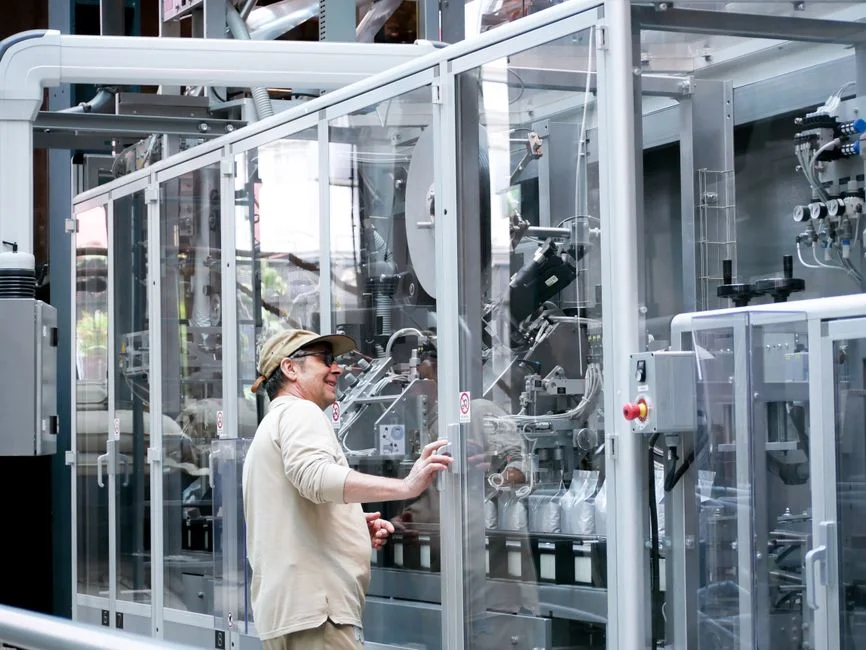
Treatment technology must follow the required endpoint and the fate of the concentrate. A high membrane recovery rate has little value if the remaining concentrate has no lawful or technically viable route. Selecting the correct technology requires matching the system's capabilities to specific local discharge requirements.
| Endpoint and route | Research-supported performance | Validating condition | Principal failure mode | Information still required |
|---|---|---|---|---|
| Cooling-tower makeup reuse | The HydropureWater Krasnoyarsk article, citing Genesis Water Tech, reports 60%–85% recovery from the blowdown stream. | Permitted reuse and a manageable concentrate destination. | Accumulated salts and treatment chemicals degrade makeup quality. | Source chemistry, cycles, concentrate flow and quality, local limits. |
| Nanofiltration | The same article reports 75–150 psi operating pressure, 70%–85% recovery, and permeate TDS at 30%–50% of feed TDS. | Hardness, rather than total dissolved solids, governs the requirement. | Residual hardness or sulfate passes through; membrane scaling limits recovery. | Full ionic analysis and the required hardness removal. |
| Reverse osmosis | The article reports 95%–99% dissolved-solids removal, 10–50 mg/L permeate TDS, and 50%–85% blowdown recovery depending on scaling potential. | High-quality reuse or substantial TDS reduction is required. | Scaling or fouling lowers recovery and flux. | Scaling analysis, pretreatment design, recovery target, and concentrate route. |
| Partial or full ZLD | The article reports 95%–99% overall recovery and 1%–3% solid waste. | Discharge is prohibited or unavailable, or freshwater constraints justify the added complexity. | Thermal-stage fouling, salt precipitation, high energy demand, or unusable residual solids. | Complete salt balance, waste classification, heat source, and residual-disposal acceptance. |
Where a thermal stage is justified, mechanical vapor compression is reported by the HydropureWater Krasnoyarsk article, citing Genesis Water Tech, at 95%–98% recovery, distillate below 10 mg/L TDS, and 15–25 kWh per 1,000 gallons. The same source reports $1–3 million capital cost for a 10,000–30,000 GPD MVC system.
For reuse, assess industrial RO blowdown treatment. Where solids removal must protect the desalination stage, evaluate UF pretreatment for cooling blowdown. Multi-media filtration may be required upstream where the measured feed demands it. This step-by-step data-center treatment selection illustrates the endpoint-first sequence.
None of these routes is established as approved for Makhachkala. The final branch requires current discharge conditions, receiving-water or utility constraints, the intended reuse point, and a tested concentrate-management route.
Protect membranes and contain the cold-climate risk
A defensible pretreatment train starts with equalization and chemical control, followed by side-stream filtration, multi-media filtration where required, UF, membrane desalination, and a defined concentrate or reuse route. Each stage should have a measurable removal or control objective. Proper protection prevents premature membrane failure caused by site-specific water contaminants.
The HydropureWater Krasnoyarsk article, citing Genesis Water Tech, gives pretreatment targets of feed filtration below 10–15 microns, antiscalant dosing matched to scaling chemistry, and pH adjustment for membrane compatibility. RO antiscalant pretreatment is therefore a process requirement, not a discretionary chemical package.
The same article reports UF operation at 10–30 psi with 90%–95% recovery. UF’s principal function here is UF membrane fouling protection: removing material that would otherwise foul the downstream desalination membrane, rather than delivering most of the final water yield. A controlled chemical-dosing arrangement should verify chemical strength, mixing, injection point, and fail-safe response.
For side-stream filtration, the article reports 10–25 micron filters treating 1%–5% of circulation flow. Through its Genesis Water Tech references, it gives a typical data-center capital-cost range of $50,000–$200,000. Confirm that applicability through measured suspended-solids loading and the required filter duty.
Winterization belongs in the equipment specification. Require bidders to define enclosure, heat tracing, freeze protection for chemical lines, drainability, low-temperature operating limits, and shutdown and restart procedures for outdoor skids, membrane vessels, piping, and dosing systems. Tie each measure to the site winter ambient design temperature; a generic cold-weather statement is insufficient.
Chemical inventory remains part of the water-quality specification. The HydropureWater Krasnoyarsk article notes that biocides, corrosion and scale inhibitors, and dispersants accumulate as cycles increase. Their residuals can affect membrane compatibility, downstream safety, reuse quality, and discharge acceptance. Confirm the compatibility of valves, media, and treatment materials with the complete chemical program.
Set budget, procurement and performance guarantees
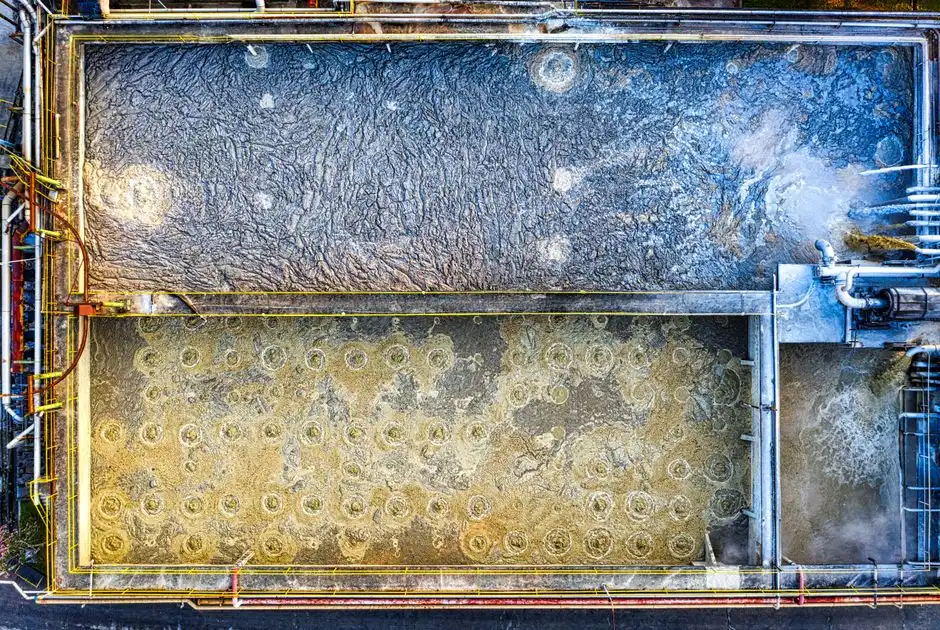
Compare bids on a common process scope and separate each capital category. The directional benchmarks below come from the HydropureWater Krasnoyarsk article’s Genesis Water Tech references and are not Makhachkala quotations. Establishing a clear scope ensures that all bidders provide comparable cost estimates.
| Equipment scope | Reported capital benchmark | Permitted use in this decision |
|---|---|---|
| 50,000 GPD RO skid | $250,000–$500,000 | Directional comparison only; not a basis for sizing or a local price. |
| 10,000–30,000 GPD MVC system | $1 million–$3 million | Thermal-stage comparison only; feed chemistry, heat source, and recovery remain undefined. |
| Full data-center ZLD | $3 million–$8 million | Strategic comparison for a prohibited-discharge or highly constrained case. |
| Side-stream filtration | $50,000–$200,000 | Directional filter-package reference; project loading is not established. |
The same source reports full ZLD operating cost at $5–15 per thousand gallons treated. Treat this as a comparative benchmark, not a Makhachkala operating estimate.
Require each bid to price pretreatment, membranes, pumps, electrical work, winterization, buildings, chemical storage, commissioning, concentrate management, and membrane or media replacement separately. Where ancillary treatment is relevant, make softener or disinfection requirements explicit rather than allowing them to disappear into a generic skid.
Require a process guarantee naming feed flow, cycles of concentration, recovery, permeate or treated-water TDS, silica, membrane flux, and the applicable test conditions. Also require documentary evidence of local execution: an installed footprint, cold-climate references, utility coordination, and a named basis for permit compliance.
Any Makhachkala price must be revisited when source chemistry, blowdown flow, cycles, discharge conditions, or endpoint requirements change. Compare bids for industrial pretreatment and, where disinfection is part of the basis of design, require a defined disinfection-system scope rather than an undefined performance claim.
Complete the local information request
Close the design only after receiving five input groups from the operator and relevant authorities. Securing this data is necessary to finalize the treatment train and ensure regulatory compliance.
- Current makeup-water analysis, measured blowdown flow, evaporation and drift data, and target cycles of concentration.
- Complete cooling-chemical inventory, including biocides, corrosion and scale inhibitors, dispersants, and construction products.
- Current Makhachkala and applicable Russian discharge conditions from the responsible authorities and receiving utility.
- Winter ambient design temperature, available generator or district-heating waste-heat sources, freshwater and discharge costs, and the intended reuse endpoint.
- Separate sampling plans and acceptance criteria for routine blowdown and construction fill-and-flush wastewater.
The supplied research does not establish current numeric discharge limits for Makhachkala. Final equipment selection and any compliance statement therefore require site-specific design values, current permits, influent testing, and the final equipment proposal. The regional treatment comparison can structure the decision, but local evidence must determine the Makhachkala outcome.
Frequently Asked Questions
How should treatment capacity be sized for a Makhachkala data center?
Frequently Asked Questions
How do I size the treatment system for a data center in Makhachkala?
System sizing is determined by the peak evaporative cooling demand, typically calculated at 0.5 to 1.0 liters per kWh of IT load. You must account for the local water quality of the Caspian Sea region, which often exhibits high salinity and mineral concentrations, requiring an analysis of the Cycles of Concentration (CoC). A standard design should accommodate a blowdown rate of 3% to 5% of the total recirculating water volume to prevent scaling and corrosion in the heat exchangers.
What does cooling-tower blowdown treatment cost in 2026?
Capital expenditure (CAPEX) for a mid-sized modular treatment system in 2026 is estimated between $150,000 and $450,000, depending on the required effluent quality. Operating expenses (OPEX) generally range from $1.50 to $4.00 per cubic meter of treated water, accounting for membrane replacement, chemical dosing, and energy consumption. Costs are heavily influenced by the specific concentration of total dissolved solids (TDS) and silica levels in the local Makhachkala supply.
Should the Makhachkala data center use RO, NF or zero liquid discharge?
Reverse Osmosis (RO) is the preferred standard for high-TDS water to ensure the protection of cooling equipment. Nanofiltration (NF) may be sufficient if the goal is selective ion removal, such as hardness and sulfates, while maintaining higher permeate flux. Zero Liquid Discharge (ZLD) is generally not recommended unless local municipal discharge regulations strictly prohibit all liquid waste, as ZLD systems typically involve high energy consumption and capital costs that exceed 300% of standard RO-based treatment systems.
What should I require from a wastewater equipment supplier in a cold climate?
Suppliers must provide equipment housed in climate-controlled, insulated enclosures with heat tracing for all external piping to prevent freezing during Makhachkala’s winter months. You should require a minimum IP65 ingress protection rating for electrical components and documented performance testing for system operation at temperatures as low as -15°C. Additionally, ensure the system includes automated drain-down features to prevent stagnant water from freezing in internal manifolds during system downtime.
Can construction fill-and-flush water be sent to the municipal wastewater system?
Discharge into the municipal sewer is generally prohibited unless the water meets specific pre-treatment standards for pH (typically 6.5–8.5), heavy metals, and suspended solids. Construction flush water often contains high concentrations of silt, pipe scale, and chemical inhibitors used during commissioning. You must conduct a laboratory analysis of the flush water and obtain a formal discharge permit from the local Makhachkala water utility, as unauthorized discharge can lead to significant regulatory fines and disruption of municipal biological treatment plants.