
Choosing Domestic Sewage Treatment for a Córdoba Site
Domestic sewage treatment in Córdoba should begin with the receiving environment, available footprint, wastewater variability and the required effluent use. For small decentralized sites, an underground package plant can combine anoxic/aerobic biological contact oxidation, sedimentation and disinfection; the WSZ Series covers 1–80 m³/h and can be buried below landscaped ground. Larger or reuse-focused projects may justify MBR treatment, while ponds, wetlands and anaerobic systems require more land and careful siting. Low-temperature research at 13 °C showed that pretreatment and staged anaerobic treatment can remove COD effectively, but the results are site-specific and must be validated through wastewater characterization and pilot or supplier performance data.
The decision should not be made from daily flow alone. Before selecting a process, establish average and peak flow, organic and solids loading, wastewater strength, groundwater and soil conditions, flood exposure, maintenance access, receiving-water sensitivity and any reuse requirement. These inputs distinguish a compact buried installation from a process that needs more land, operator attention or a higher level of solids separation.
Ayapel provides a useful Córdoba-specific warning point. The municipality of Ayapel, in Córdoba, was the subject of four field samplings to characterize domestic wastewater and assess its potential impact on water quality in the Ciénaga de Ayapel wetland, according to the study published by the Revista Facultad de Ingeniería Universidad de Antioquia. The study did not establish a universal technology rule, but it demonstrates why the receiving environment must be considered before an outlet or infiltration arrangement is selected.
Three procurement paths are available. An underground WSZ sewage treatment plant suits compact decentralized deployment. An MBR membrane bioreactor system is relevant where higher-quality separation and reuse-oriented applications justify additional equipment and operating complexity. Ponds, constructed wetlands, anaerobic processes and vermifiltration can be appropriate where land, siting and maintenance conditions support them.
How Córdoba Conditions Affect the Treatment Train
Screening and solids removal should precede biological and polishing stages because they protect downstream biological capacity, reduce solids carryover and make treatment performance easier to control. A rotary mechanical screen can be considered where incoming domestic wastewater contains hair, plastics, wipes or other material that could obstruct pumps, aerators or membranes, but the selected pretreatment must match the collection system rather than simply add equipment.
Temperature and rainfall can alter process behavior. In the Wageningen University thesis Anaerobic treatment of domestic sewage at low temperature, researchers compared an anaerobic filter and an anaerobic hybrid reactor at 13 °C using a 4-hour hydraulic retention time. The anaerobic filter removed 82% of suspended COD, compared with 53% for the anaerobic hybrid reactor, and its performance was more stable during rainy periods. This is measured research evidence for that experimental system, not a guarantee for a commercial installation in Córdoba.
The same study also showed why wastewater fractions must be separated during design. At a 4+8-hour hydraulic retention time, the staged anaerobic filter and anaerobic hybrid system achieved 71% total COD removal, comprising 92% suspended COD removal, 60% colloidal COD removal and 55% dissolved COD removal. Dissolved and colloidal material therefore cannot be treated as if it behaves like settleable solids.
Rainfall, groundwater and flood exposure should be assessed before deciding whether the final outlet is a controlled discharge, infiltration or reuse. The designer must identify nearby sensitive waters, groundwater uses, seasonal water-level changes and the consequences of overflow or untreated bypass. In Córdoba, these site checks are as important as the nominal treatment capacity because they affect both hydraulic resilience and the environmental route of the effluent.
Where pumping or inlet control is required, ask the supplier to document how solids, odour, access and maintenance are handled. The treatment train should be designed as a sequence: incoming sewage, screening or inlet control, biological treatment, sedimentation, disinfection and the agreed discharge or reuse destination. A rotary mechanical bar screen is an example of pretreatment equipment, not a substitute for biological treatment.
Compare Package Plants, MBR Systems and Low-Land Footprint Alternatives
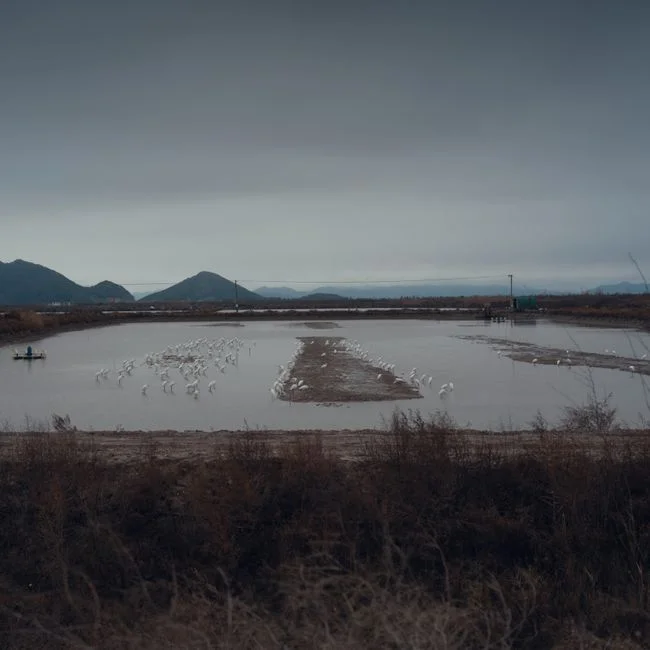
The WSZ, MBR and nature-based or anaerobic options solve different constraints: WSZ prioritizes compact deployment, MBR prioritizes membrane-based solids separation, and pond, wetland, vermifiltration or anaerobic routes depend more heavily on land, climate, siting and operating arrangements. The comparison below uses only the verified catalog facts for WSZ and MBR; it does not treat supplier claims as independent performance evidence.
| Criterion | WSZ underground package plant | MBR membrane bioreactor system | Nature-based or anaerobic alternatives |
|---|---|---|---|
| Verified process configuration | Anoxic/aerobic biological contact oxidation, sedimentation and disinfection in one buried package unit | Activated sludge with submerged PVDF membrane filtration | Ponds, constructed wetlands, vermifiltration, UASB reactors, biofilters, aerated lagoons and oxidation ditches are described in the supplied research |
| Verified flow or filtration basis | 1–80 m³/h | 10–2,000 m³/day | No common equipment flow range established in the supplied research |
| Footprint | Installed below grade with landscaping above | Catalog claim of 60% smaller footprint than conventional systems | Generally requires a larger treatment area; project-specific design is required |
| Automation and operation | Fully automated; catalog states no operator required | Requires membrane operation, control and maintenance planning | May require operator attention, sludge management and site maintenance |
| Applications stated in the WSZ catalog | Residential communities, hotels, hospitals, factories and rural areas | No comparable application list established in the supplied research | Decentralized sites where land and operating conditions support the process |
| Deployment option | Buried installation or trailer mounting for mobile deployment | Containerized or site-integrated arrangement to be defined by the supplier | Generally civil, landscape and hydraulic works are more extensive |
The WSZ configuration is appropriate for a compact site with a defined domestic wastewater stream and limited surface area. Its verified catalog scope includes the biological, sedimentation and disinfection stages in one buried unit, while the HydropureWater verified product catalog lists 1–80 m³/h capacity and fully automated operation. Those facts do not replace hydraulic, structural or effluent-compliance calculations.
MBR should be considered when the project requires more effective solids separation or has a reuse objective. The verified MBR catalog states that the process uses activated sludge with submerged PVDF membrane filtration below 1 μm, a capacity of 10–2,000 m³/day and a footprint 60% smaller than conventional systems. The comparative implication is straightforward: MBR adds membrane-specific requirements, while the package plant concentrates conventional biological, settling and disinfection stages into a buried unit. Buyers evaluating membrane-based and conventional biological systems can use the MBR versus conventional activated-sludge discussion as a follow-up, while checking that any comparison uses comparable wastewater and effluent requirements.
Ponds and constructed wetlands require land, hydraulic control and site-specific design. The supplied Domestic Wastewater Treatment in Developing Countries reference, published by PSEU in 2004, covers ponds, wetlands, UASB reactors, biofilters, aerated lagoons and oxidation ditches. A 2023 IntechOpen study describes vermifiltration as a decentralizable technique combining filtration and earthworms. These processes should be evaluated against local land availability, groundwater risk, climate and maintenance capability, not treated as generic low-cost substitutes.
The 13 °C AF+AH study remains useful as a comparison of pretreatment and staged biological treatment, but its results must remain research evidence. The same principle applies when comparing decentralized sewage treatment systems or package, MBR and decentralized sewage treatment options: process descriptions and catalog capacities do not replace site-specific performance data.
Build a Project-Specific Equipment Specification
A quotation becomes comparable only when every supplier is given the same influent, site, compliance and deliverable requirements. The specification should distinguish measured wastewater data from design assumptions, especially where a project is a hotel, hospital, residential development, factory or rural facility with different occupancy and operating profiles.
- Wastewater inputs: average and peak flow, population or occupancy, operating hours, wastewater strength, suspended-solids characteristics and any industrial inputs.
- Site inputs: available area, soil and groundwater conditions, flood level, access route, installation depth, power availability and proposed effluent destination.
- Performance and compliance inputs: applicable Córdoba and national requirements, receiving-water sensitivity, monitoring parameters, effluent reuse target and sampling and reporting obligations.
- Supplier deliverables: process flow, hydraulic calculations, equipment drawings, control philosophy, installation requirements, commissioning tests, operating manual, training and maintenance schedule.
The table below identifies the information that should be requested and the decision each item supports. It does not assume a universal flow, footprint, cost or effluent limit.
| Information to obtain | Data or document required | Decision supported |
|---|---|---|
| Influent characterization | Average and peak flow; occupancy; operating hours; COD, BOD, suspended solids and other relevant fractions; industrial inputs | Process selection, hydraulic sizing and pretreatment |
| Site characterization | Area, soil, groundwater, flood level, access, installation depth, power and effluent destination | Buried versus above-ground installation and civil design |
| Performance basis | Design flow, influent range, operating mode, guaranteed parameters, test method and sampling protocol | Equipment comparison and acceptance |
| Permitting and monitoring | Applicable Córdoba and national requirements, receiving-water constraints, reporting and monitoring responsibilities | Compliance risk and operating obligations |
| Engineering deliverables | Process flow, hydraulic calculations, drawings, controls, installation requirements, commissioning tests, manuals and training | Constructability and operational readiness |
| Commercial scope | Equipment, freight, civil works, installation, commissioning, consumables, maintenance and sludge disposal | Whole-life budget comparison |
Evidence should match the project risk. Ask for reference installations, guarantees tied to agreed influent and effluent conditions, membrane or replacement-part details, and a method for managing seasonal variation. For an MBR proposal, request details of membrane cleaning, replacement, fouling control and performance limits. For a package plant, request the hydraulic basis, operating sequence, sludge handling, inspection access and proof that the proposed unit matches the characterized design flow and load.
Do not assign a generic price or payback period without a project-specific quotation. The supplied research contains no Córdoba-specific cost for domestic sewage treatment. Request separate prices for equipment, freight, civil works, installation, commissioning, consumables, maintenance and sludge disposal, and state the site assumptions on which each amount depends.
The sizing an MBR sewage treatment plant reference can support a structured sizing request, while the package wastewater treatment plant engineering guide is useful for checking the completeness of civil and operating deliverables. Neither should be used to infer Córdoba conditions or prices without verification.
Plan Installation, Commissioning and Long-Term Operation
A package installation should be commissioned as a complete treatment sequence rather than as an isolated equipment test. Confirm incoming sewage connection, screening or inlet control, biological treatment, sedimentation, disinfection and the agreed discharge or reuse destination. Each stage needs an operating response, safe access and a defined point for sampling.
For a buried WSZ system, below-grade installation can leave landscaping above the treatment unit and reduce surface-area competition. It also transfers design responsibility to structural loading, buoyancy, soil, groundwater and access checks. The civil designer should define excavation, support, lifting, waterproofing, ventilation, odor control and maintenance access before installation.
Commissioning should verify hydraulic loading, biological start-up, equipment interlocks, disinfection, sampling and training for the maintenance team. The acceptance test should use the same influent basis and analytical methods used in the equipment guarantee. Where the selected system includes membranes, separate acceptance criteria should address cleaning and membrane performance rather than treating them as ordinary start-up activities.
Ongoing operation should include effluent-quality monitoring, performance evaluation, and data storage and analysis, as specified in the operational framework of Domestic Wastewater Treatment in Developing Countries, published by PSEU in 2004. The monitoring programme should identify who samples, which parameters are recorded, how results are reviewed and what action follows a deviation.
Predictive maintenance and level-sensor references can support the maintenance plan. A predictive maintenance system reference can inform condition-based tasks, while a IIoT level-sensor reference can support remote level monitoring. These are operational tools, not substitutes for site inspection, local spare parts, trained personnel and an agreed response plan.
Maintenance responsibility must be clear before handover. The scope should cover routine inspection, sludge removal, screening or media maintenance, membrane cleaning where applicable, chemical use, effluent sampling, power-failure response and emergency contact arrangements. For remote or rural sites, confirm whether those activities can be performed by local staff or require visiting technicians.
Questions to Ask Before Ordering a Córdoba Sewage Treatment System
A useful procurement scorecard exposes omissions before a supplier fixes the price. Ask for written answers and attach them to the quotation so that equivalent scopes can be compared.
- What exact process configuration is proposed? Require the process flow, treatment stages, operating mode and design flow rather than a generic description such as “sewage treatment plant”.
- What performance is guaranteed? Tie guarantees to the documented influent range, design flow, operating mode, sampling method and test protocol.
- What is excluded from the quoted scope? Check civil works, pumps, screens, odour control, power supply, sludge removal, commissioning, final sampling and training.
- What are the operating commitments? Request consumables, replacement intervals, spare-parts availability, local or remote support and response arrangements.
- How has the process been adapted to this site? Require an explanation of temperature variation, rainfall sensitivity, receiving water, groundwater and reuse requirements.
- Are quotations life-cycle scopes? Compare equipment, installation, commissioning, maintenance, consumables and sludge-disposal costs rather than comparing only the quoted equipment.
For a buried package plant, request the WSZ underground integrated treatment documentation and confirm that the selected unit matches the characterized flow and load. For valves, filter media and other consumables, verify compatibility and replacement intervals using the supplier’s water-treatment parts reference.
Any quotation that relies only on a daily flow, omits site conditions or guarantees results without an influent basis should be returned for clarification. That discipline is more useful than comparing brochure headlines: the procurement file should show why the selected process fits Córdoba conditions and what the supplier is contractually responsible for delivering.
Frequently Asked Questions
What package-plant capacity is suitable for domestic sewage treatment in Córdoba?
The verified WSZ catalog lists a capacity range of 1–80 m³/h, but that range does not determine the correct unit for a site. Request average and peak wastewater flows, occupancy, load characteristics and operating hours, then require the supplier to demonstrate that the selected unit matches the characterized design flow and load.
How much does domestic sewage treatment cost in Córdoba?
The supplied research contains no Córdoba-specific price, so a defensible numerical budget cannot be stated. Request separate quotations for equipment, freight, civil works, installation, commissioning, consumables, maintenance and sludge disposal, and ask the supplier to identify the site assumptions and exclusions behind each amount.
How should I qualify a sewage treatment equipment supplier?
Check for process-specific performance guarantees, hydraulic calculations, equipment drawings, control documentation, commissioning tests, operating manuals, training, reference installations, spare-parts availability and support arrangements. The supplier should also state the influent, groundwater, rainfall, installation and power assumptions on which its offer depends.
Does a technically suitable system automatically satisfy Córdoba discharge and reuse requirements?
No. Technical selection is separate from legal approval. Before ordering, confirm the applicable Córdoba, national and receiving-water requirements with the responsible authorities, including the intended effluent destination, monitoring parameters, sampling and reporting obligations, and any reuse restrictions.